Selama produksi tablet dan kapsul, bubuk berperilaku seperti anak-anak dengan kepribadian berbeda; tergantung pada karakteristik spesifiknya, mereka mungkin mengalir, mengikuti, memisahkan, atau berkumpul bersama. Hal ini menimbulkan tantangan besar bagi produsen obat-obatan dan suplemen kesehatan.
Granulasi adalah metode granulasi standar yang digunakan untuk menjinakkan bubuk yang sulit diatur ini. Dengan mengubah bubuk menjadi butiran, yang kemudian dimasukkan ke dalamnya mesin press tablet, produsen dapat membuat bahan yang menawarkan kemampuan mengalir bubuk yang sangat baik dan kompresibilitas yang ditingkatkan. Jadi, mana yang lebih baik: granulasi basah atau kering? Artikel ini membahas pro dan kontra dari kedua teknik tersebut, membantu produsen memilih metode granulasi yang paling sesuai untuk memproduksi tablet, kapsul, dan bentuk sediaan padat oral lainnya.
Poin Penting
- Apa arti granulasi farmasi dalam produksi farmasi.
- Cara kerja granulasi kering dan granulasi basah.
- Kontras komprehensif antara granulasi kering vs granulasi basah.
- Kelebihan dan kekurangan teknik granulasi tipe kering dan basah.
- Bagaimana memilih proses granulasi bubuk dan peralatan granulaton yang tepat untuk produksi Anda.
1. Apa Itu Granulasi Dalam Manufaktur Farmasi?
Sebelum membandingkan granulasi kering dan granulasi basah, mari masuk ke ruang produksi nyata. Bayangkan sebuah pabrik yang memproduksi tablet vitamin, kapsul suplemen herbal, atau produk dosis padat oral yang diresepkan. Anda memasukkan bahan ke dalam hopper, dan masalah pun dimulai: beberapa bubuk mengalir terlalu cepat, beberapa jembatan di outlet, dan ada pula yang gagal membentuk tablet padat. Apakah suatu padatan dihancurkan menjadi bubuk, perubahan wujudnya terjadi secara fisika atau kimia, menangani bubuk mentah secara langsung selalu merupakan mimpi buruk!
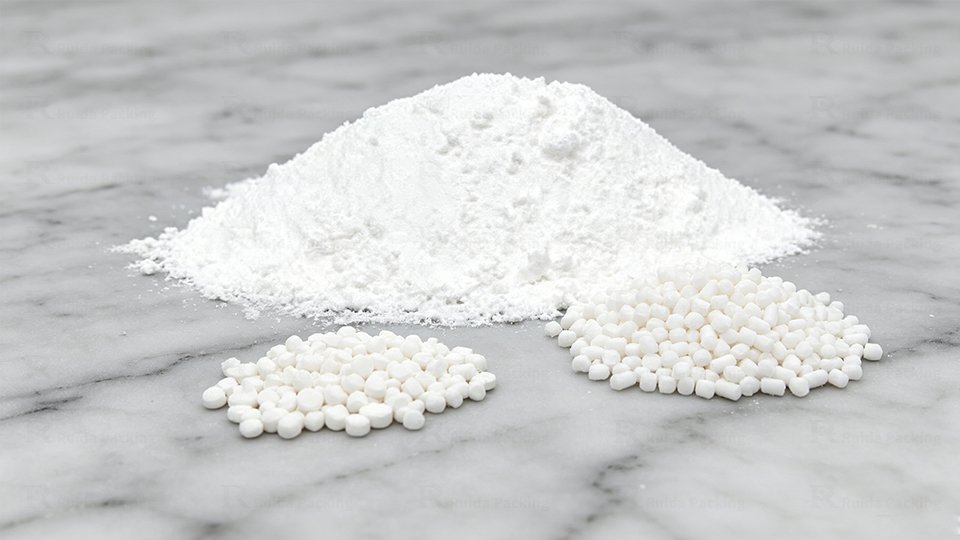
Itu sebabnya kita membutuhkan granulasi bubuk. Bagaimana sebenarnya proses granulasinya? Ini adalah teknik selama pemrosesan farmasi yang mengubah bubuk menjadi butiran untuk meningkatkan kemampuan mengalir dan kemampuan proses..
Namun kenyataannya, di banyak pabrik, pertanyaannya bukan sekadar apa proses granulasinya. Pertanyaan sebenarnya adalah: granulasi bubuk mana yang memberikan keseimbangan terbaik antara kualitas, biaya, kecepatan, dan keamanan formulasi?
Itu membawa kita pada perbandingan klasik: granulasi kering vs granulasi basah di modern pembuatan tablet dan pembuatan kapsul.
2. Apa itu Granulasi Kering?
Granulasi kering merupakan metode granulasi yang membentuk butiran tanpa menambahkan bahan pengikat cair atau menggunakan tahap pengeringan granulasi. Alih-alih lembab, itu menggunakan kekuatan mekanis. Bubuk ditekan menjadi massa yang lebih besar terlebih dahulu, lalu digiling menjadi butiran.
Kalau granulasi basah seperti membuat adonan dengan air, granulasi kering lebih seperti menekan salju menjadi balok padat dan memecahnya menjadi potongan-potongan yang dapat digunakan. Bubuknya diperas, dan dibentuk kembali, tapi tidak dibasahi.
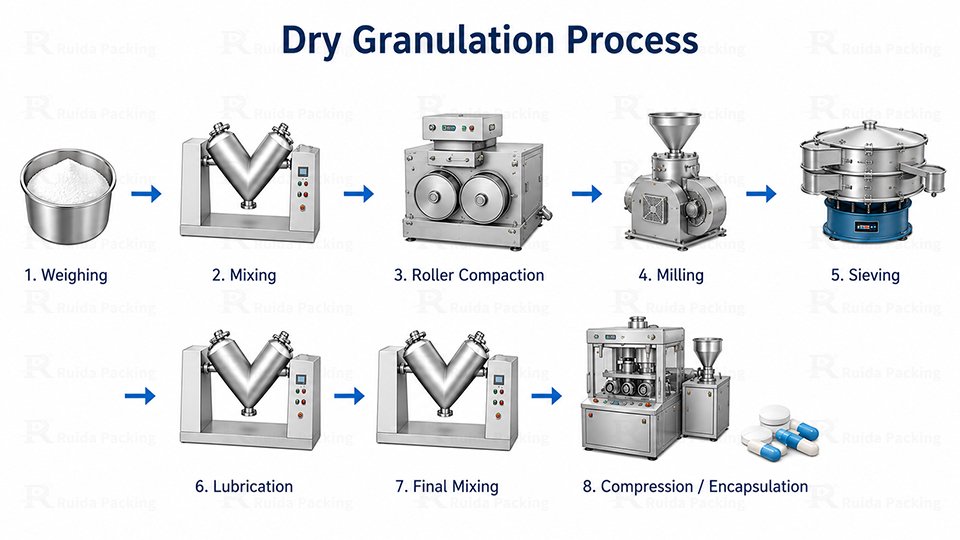
Metode granulasi kering modern yang paling umum adalah granulasi kering pemadatan rol. Dalam proses ini, bubuk melewati antara dua rol kompresi di bawah tekanan. Rol memampatkan bubuk menjadi pita. Pita-pita ini kemudian digiling menjadi butiran.
Proses granulasi kering yang khas meliputi:
- Pemberian bubuk
- Mengompresi melalui pemadatan roller
- Pembentukan pita
- Pembumian
- Pencampuran terakhir
3. Apa itu Granulasi Basah?
Granulasi basah adalah metode granulasi yang menggunakan bahan pengikat cair untuk membantu partikel bubuk saling menempel. Dibandingkan dengan granulasi kering, ini lebih seperti memanggang roti: bahan kering dicampur, cairan ditambahkan, struktur bentuk massa, dan pengeringan terkontrol memberikan kekuatan pada bahan akhir.
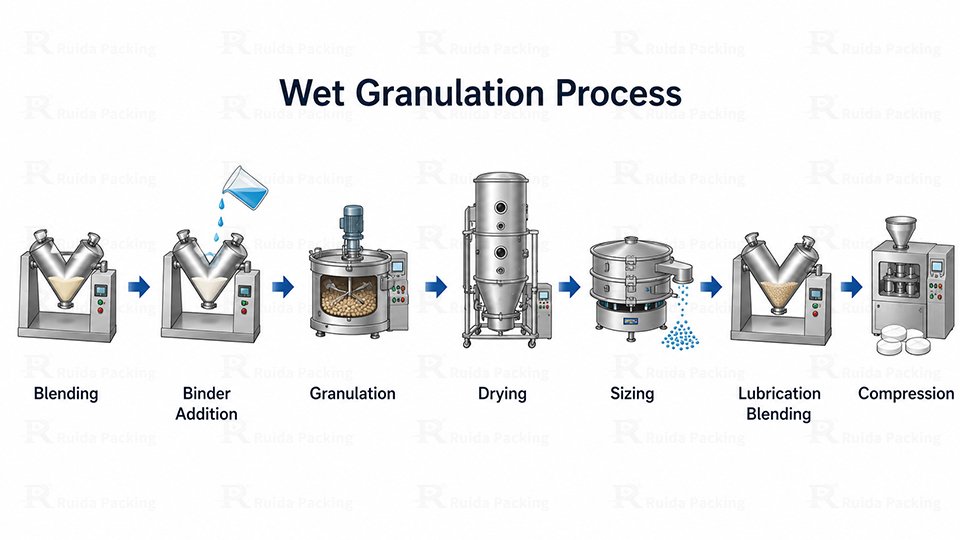
Dalam proses granulasi basah yang khas, bubuk dicampur terlebih dahulu. Kemudian larutan pengikat disemprotkan atau ditambahkan ke dalam campuran bubuk. Saat pencampuran berlanjut, partikel bertabrakan dan terikat bersama untuk membentuk butiran basah. Setelah itu, butiran ini dikeringkan dan dicampur sebelum dikompresi atau diisi.
Metode granulasi basah yang umum dalam pembuatan tablet meliputi:
- Pencampuran bubuk kering
- Larutan pengikat untuk dicampur dengan bedak
- Pembentukan massa basah melalui granulasi pencampuran basah
- Pengeringan granulasi
- Pembumian
- Pelumasan dan pencampuran akhir
4. Granulasi Kering Vs Granulasi Basah: Perbandingan Berdampingan
Jika kita hanya mempertimbangkan prosesnya, kedua teknik granulasi baik-baik saja, tapi untuk produsen, mereka biasanya lebih peduli pada pertanyaan-pertanyaan praktis: Apakah itu akan mempengaruhi efek produk? Will membutuhkan banyak biaya? Untuk mengatasi kekhawatiran ini, mari kita bandingkan kedua proses granulasi ini dengan apa yang paling dipedulikan oleh produsen.
Meja 1- Perbandingan antara granulasi kering dan granulasi basah
| Dimensi Perbandingan | Granulasi Kering | Granulasi Basah |
| Sensitivitas API | Cocok untuk API yang sensitif terhadap kelembapan dan API yang sensitif terhadap panas | Tidak cocok |
| Kompleksitas Proses | Proses granulasi lebih singkat | Proses granulasi basah lebih lama |
| Kualitas Butiran | Meningkatkan kemampuan mengalir bubuk, tetapi mungkin menghasilkan bubuk yang lebih halus | Keseragaman konten yang lebih baik, dan membaik kompresibilitas bubuk. |
| Biaya dan Efisiensi | Lebih rendah | Lebih tinggi |
Pro Dan Kontra Granulasi Kering
Keuntungan terbesar dari granulasi kering adalah melindungi bahan-bahan sensitif secara maksimal. Untuk bahan seperti vitamin atau probiotik, setelah kelembapan memasuki campuran, stabilitas mungkin menurun, dan umur simpan mungkin terganggu.
Kelebihan granulasi kering meliputi:
Tidak diperlukan pengikat cair: Hal ini membuat metode granulasi kering ideal untuk API yang sensitif terhadap kelembaban dan API yang sensitif terhadap panas.
Tidak ada pengeringan granulasi: Menghilangkan pengeringan granulasi mengurangi waktu, konsumsi energi, dan tekanan termal.
Biaya operasional lebih rendah: Lebih sedikit langkah sering kali berarti lebih sedikit tenaga kerja, kurang pembersihan, dan lebih sedikit permintaan utilitas.
Insinyur kami, Victor, dapat meringkasnya seperti ini: “Granulasi kering menarik karena menghilangkan salah satu tahapan yang paling bervariasi, tahap pengeringan. ini membuat prosesnya lebih terkendali dan mudah.” Oleh karena itu, ini adalah pilihan utama bagi banyak produsen.
Kontra dari granulasi kering meliputi:
Tidak cocok untuk semua bedak: Beberapa bubuk tidak dapat dipadatkan dengan baik tanpa bahan pengikat.
Mungkin baik-baik saja bubuk masalah: Tekanan roller atau pengaturan penggilingan yang buruk dapat menghasilkan partikel halus berlebih.
Kekerasan tablet mungkin berbeda-beda: Jika kekuatan granul lemah, manufaktur tablet hilir atau manufaktur kapsul mungkin akan menderita.
Misalnya, produsen yang memproduksi tablet ekstrak herbal yang peka terhadap kelembapan dapat memperoleh manfaat dari granulasi kering. Tetapi jika produk yang sama memiliki kompresibilitas bubuk yang sangat buruk, granulasi kering saja mungkin tidak memberikan kekuatan ikatan yang cukup. Kalau begitu, penyesuaian formulasi atau granulasi basah dapat dipertimbangkan.
Pro Dan Kontra Granulasi Basah
Dibandingkan dengan granulasi kering, granulasi basah lebih mudah untuk campuran bubuk yang sulit. Saat bubuk sulit ditangani, granulasi basah dapat mengubahnya menjadi butiran kuat dengan aliran dan perilaku kompresi yang lebih baik.
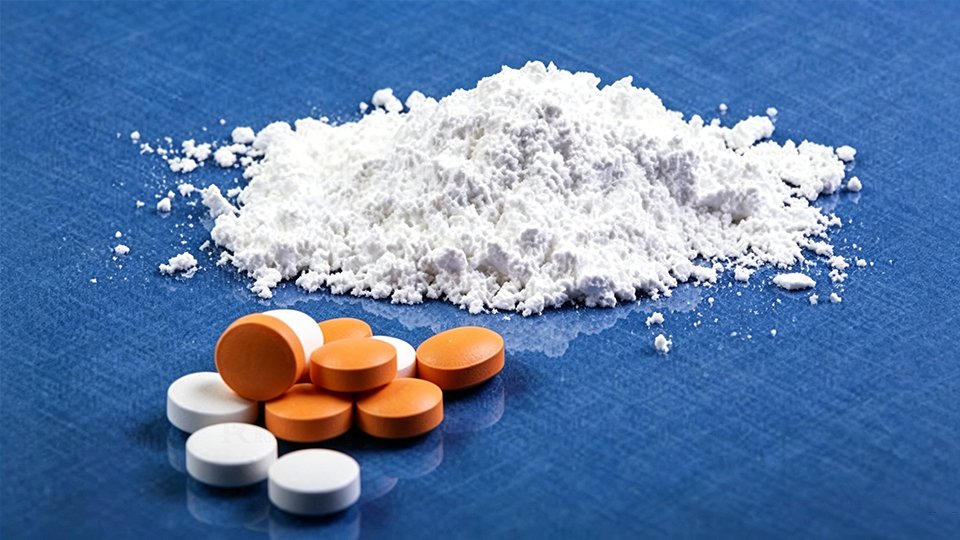
Kelebihan granulasi basah meliputi:
Pembentukan granul yang kuat: Pengikat membantu partikel saling menempel lebih andal melalui granulasi pencampuran basah.
Keseragaman konten yang lebih baik: Massa basah dapat mengurangi segregasi, terutama untuk API dosis rendah.
Peningkatan kompresibilitas bubuk: Butiran sering kali dikompres menjadi lebih keras, tablet yang lebih stabil.
Badan Obat Eropa dan FDA sama-sama menekankan pengendalian parameter proses penting dalam produksi farmasi. Seperti yang mungkin dikatakan oleh kepala teknisi kami, Victor, “Granulasi basah memberi Anda kontrol yang kuat, namun sebagai balasannya mereka meminta kontrol yang disiplin.” Itu adalah gambaran yang wajar: metodenya kuat, tapi itu memerlukan perhatian.
Kontra dari granulasi basah meliputi:
Lebih tinggi Biaya: Hal ini membutuhkan lebih banyak energi dan meningkatkan biaya pemrosesan farmasi.
Risiko kelembaban dan panas: Tidak cocok untuk bahan yang sensitif terhadap kelembapan atau suhu tinggi.
Lebih banyak pembersihan dan validasi: Banyak komponen dari granulator basah bersentuhan dengan bahan sehingga perlu dibersihkan dengan hati-hati.
Sulit dikendalikan: Kuantitas cair, waktu pencampuran, titik akhir pengeringan, dan ukuran butiran semuanya mempengaruhi kualitas akhir.
5. Memilih Antara Granulasi Kering Vs Granulasi Basah: Mana yang Lebih Baik?
Untuk produsen, “lebih baik” berarti lebih baik untuk produk Anda, pabrik Anda, dan tujuan komersial Anda. Berikut adalah panduan keputusan praktis.
Pilih granulasi kering kapan:
- Jika bahan Anda sensitif terhadap kelembapan atau suhu
- Jika prioritas Anda adalah biaya energi yang lebih rendah dan waktu pemrosesan yang lebih singkat
- Jika bahan Anda mudah dikompres menjadi tablet.
Memilih basah granulasi kapan:
- Jika bedak Anda memiliki daya alir yang buruk dan sulit dibentuk
- Jika Anda membutuhkan butiran yang lebih kuat dan lebih baik kekerasan tablet
- Jika formulasi Anda tahan terhadap air, bahan pengikat, dan panas
Alasannya sederhana. Granulasi kering melindungi bahan sensitif dan menyederhanakan produksi. Granulasi basah membangun ikatan partikel yang lebih kuat dan menyelamatkan bubuk yang sulit. Saat membandingkan granulasi kering dan granulasi basah, granulasi kering seringkali merupakan pilihan yang lebih ramping, sedangkan granulasi basah seringkali merupakan alat koreksi formulasi yang lebih ampuh.
Pendeknya, memilih granulasi kering atau granulasi basah bukanlah soal mana yang terdengar lebih maju. Ini tentang proses mana yang membuat bedak Anda berperilaku, mesin Anda berjalan dengan lancar, dan tim kualitas Anda tidur lebih nyenyak di malam hari.
6. Peralatan Granulasi Mana yang Anda Butuhkan?
Pengenalan Peralatan Granulasi
Dengan baik, mari kita lihat sekilas peralatan granulasi sebelum memutuskan mana yang lebih baik.
Untuk granulasi kering, produsen biasanya memerlukan peralatan berikut:
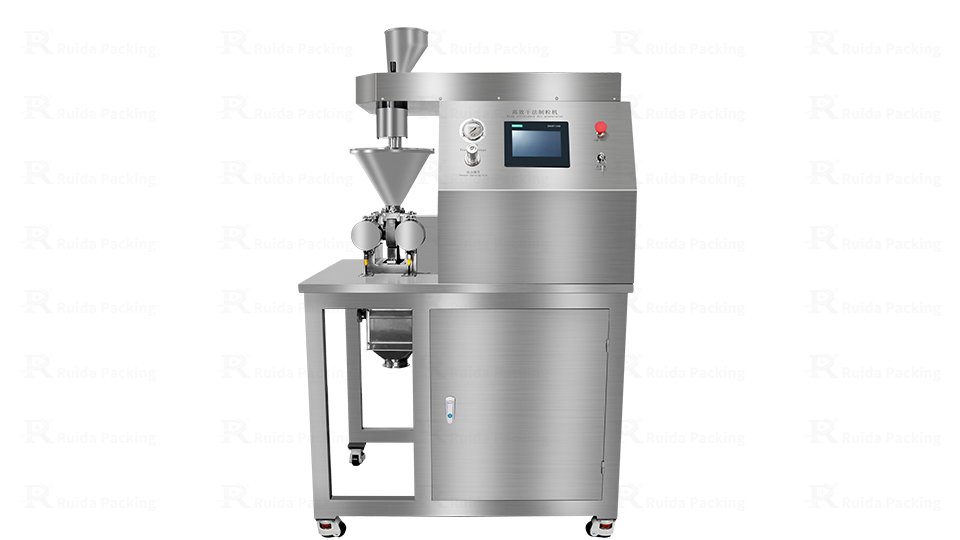
- Pemadat rol
- Granulator pengayakan dan penggilingan
- Pengaduk
- Sistem pengumpulan debu
Untuk granulasi basah, produsen biasanya memerlukan peralatan granulasi basah berikut:
- Granulator basah
- Granulator geser tinggi
- Pengering granulasi fluid bed
- Pengering atau sistem pengeringan fluid bed terintegrasi
- granulator
- pencampur
Ruida packing: Pemasok Granulator Tepercaya Anda
Granulator dapat secara langsung mengubah karakteristik material, oleh karena itu penting untuk memilih yang dapat dipercaya.
Ruida Packing telah berdiri lebih dari 10 tahun dan telah menjalin kerja sama yang erat dengan Fortune 500 perusahaan farmasi seperti Robinson, UCB, dan Farmasi AS. Dengan mesin yang memenuhi standar internasional termasuk CE, cGMP, dan ISO, kami menyediakan dukungan peralatan dan layanan kepada produsen.
Layanan kami meliputi:
- Pengiriman global dalam 7 hari -hari
- Persediaan mesin yang cukup
- Dukungan commissioning jarak jauh
- Layanan commissioning di tempat
- Konsultasi purna jual gratis seumur hidup
- Dukungan teknis untuk peralatan granulasi kering
Berkomitmen untuk mengembangkan mesin kami sambil meningkatkan layanan kami, selamat datang untuk konsultasi apa pun sehubungan dengan mesin.
7. Kesimpulan
Granulasi kering vs granulasi basah selalu menjadi perhatian utama bagi produsen farmasi dan nutra. Mungkin Anda masih bertanya-tanya teknik granulasi dan peralatan granulasi apa yang akan menjadi tren di masa depan, selamat datang berdiskusi dengan kami dan bagikan pemikiran Anda.
8. Tanya Jawab Umum
Q1: Apakah Granulasi Kering Lebih Baik Dari Granulasi Basah?
Tidak selalu. Granulasi kering lebih baik bila API sensitif terhadap kelembaban atau panas, sedangkan granulasi basah lebih baik bila bubuk membutuhkan ikatan yang lebih kuat. Di pabrik sungguhan, metode yang “lebih baik” adalah metode yang memberikan kualitas stabil dengan lebih sedikit kesulitan produksi.
Q2: Kapan Granulasi Kering Harus Digunakan?
Granulasi kering sebaiknya digunakan bila bahan tidak dapat mentoleransi air, pelarut, atau suhu pengeringan yang tinggi. Hal ini juga berguna ketika produsen menginginkan proses granulasi yang lebih singkat dengan penggunaan energi yang lebih rendah. Untuk banyak nutraceutical yang sensitif terhadap kelembapan, granulasi kering adalah jalan yang lebih aman.
Q3: Bisakah Obat Peka Kelembapan Menggunakan Granulasi Basah?
Mereka bisa, namun hal ini berisiko dan memerlukan pengendalian yang sangat hati-hati. Obat yang sensitif terhadap kelembapan dapat rusak, rumpun, atau kehilangan stabilitas selama pencampuran basah granulasi dan pengeringan. Dalam kebanyakan kasus, granulasi kering dipertimbangkan terlebih dahulu.
Q4: Proses Mana yang Lebih Murah?
Granulasi kering biasanya lebih murah dalam pengoperasiannya karena menghilangkan preparasi bahan pengikat dan pengeringan granulasi. Granulasi basah mungkin lebih mahal karena energi, pembersihan, pengeringan, dan waktu pemrosesan yang lebih lama. Namun, jika granulasi basah mencegah kegagalan batch, ini mungkin masih merupakan investasi yang lebih cerdas.
Q5: Apakah Granulasi Kering Meningkatkan Kekerasan Tablet?
Granulasi kering dapat meningkatkan kekerasan tablet dengan meningkatkan kepadatan bubuk dan kompresibilitas. Namun, hasilnya tergantung pada formulasi, tekanan pemadatan roller, dan pengaturan penggilingan. Jika bedak tidak mengikat dengan baik, granulasi basah dapat menghasilkan tablet yang lebih kuat.
Referensi
[1] KITA. Makanan & Administrasi Obat: Validasi Proses: Prinsip dan Praktek Umum
https://www.fda.gov/media/71021/download
[2] Farmakope Amerika Serikat: Kapitel Umum <905> Keseragaman Unit Dosis
[3] Sains Langsung: Proses dan Teknologi Granulasi Farmasi