...

>

Dry Granulation vs Wet Granulation: Which Granulation Method Is Better

Dry Granulation vs Wet Granulation: Which Granulation Method Is Better

目次

During the production of tablets and capsules, powders behave much like children with distinct personalities; depending on their specific characteristics, they may flow, adhere, 隔離する, or clump together. This poses significant challenges for manufacturers of pharmaceuticals and health supplements.

Granulation is the standard granulation method used to tame these unruly powders. By converting powders into granules, which are then fed into 錠剤圧縮機, manufacturers can create a material that offers both excellent powder flowability and enhanced compressibility. それで, which is better: wet or dry granulation? This article explores the pros and cons of both techniques, helping manufacturers select the most suitable granulation method for producing tablets, カプセル, and other oral solid dosage forms.

重要なポイント

  • What pharmaceutical granulation means in pharmaceutical manufacturing.
  • How dry granulation and wet granulation work.
  • A comprehensive contrast between dry granulation vs wet granulation.
  • The pros and cons of dry and wet type granulation techniques.
  • How to choose the right powder granulation process and granulaton equipment for your production.
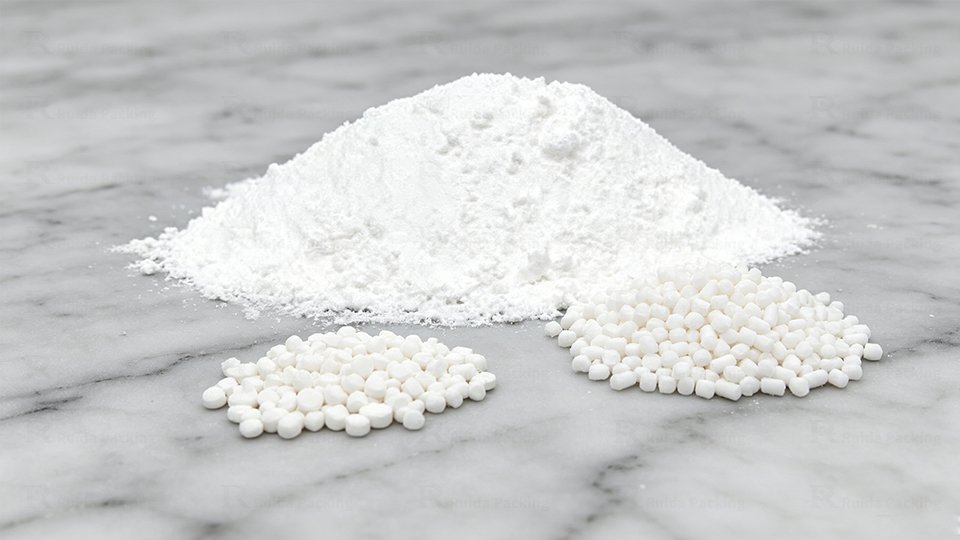
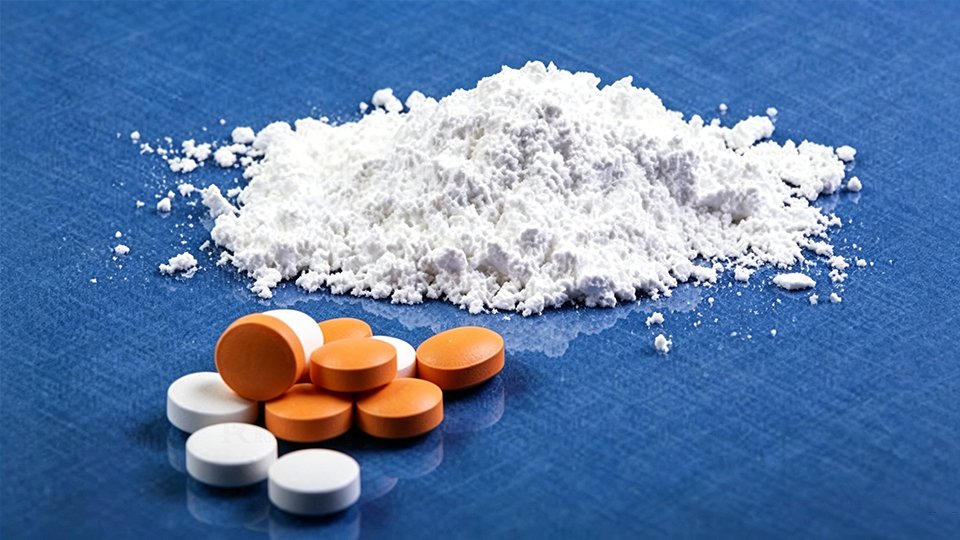
powder and granules

1. What Is Granulation In Pharmaceutical Manufacturing?

Before comparing dry granulation and wet granulation, let’s step into a real production room. Imagine a factory producing vitamin tablets, herbal supplement capsules, or prescription oral solid dosage products. You put the materials into the hopper, and the problems begin: some powder flows too fast, some bridges at the outlet, and some fails to form a solid tablet. Whether a solid is crushed to a powder physical or chemical change in its state, handling raw powders directly is always a nightmare!

That’s why we need powder granulation. What is the granulation process exactly? It’s a technique during pharmaceutical processing that converts powders into granules to improve flowability and processability..

But in reality, in many factories, the question is not simply what is the granulation process. The real question is: which granulation of powders gives the best balance between quality, 料金, スピード, and formulation safety?

That brings us to the classic comparison: dry granulation vs wet granulation in modern tablet manufacturing and capsule manufacturing.

2. What Is Dry Granulation?

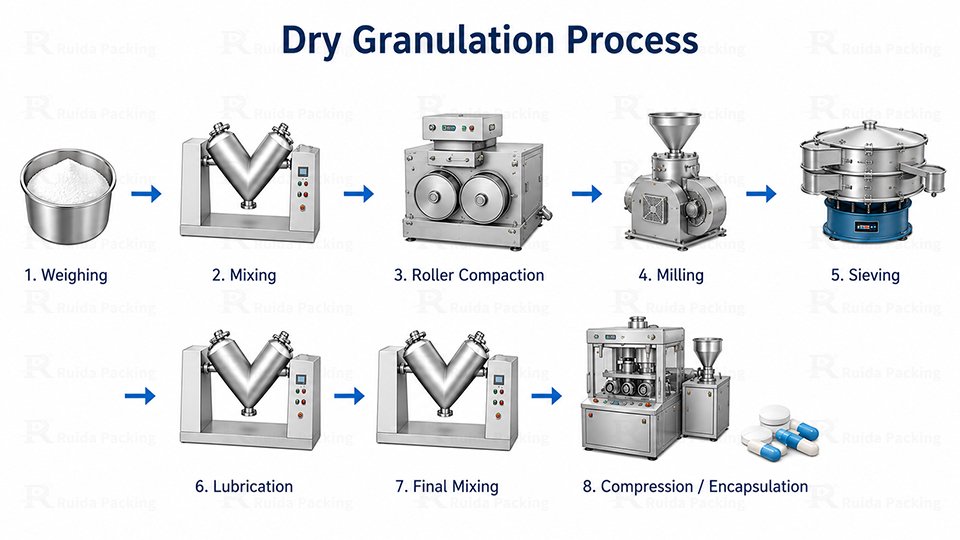
Dry granulation is a granulation method that forms granules without adding liquid binder or using a granulation drying step. Instead of moisture, it uses mechanical force. Powder is pressed into larger masses firstlyand then grounded into granules.

If wet granulation is like making dough with water, dry granulation is more like pressing snow into a firm block and breaking it into usable pieces. The powder is squeezed, and reshaped, but not wetted.

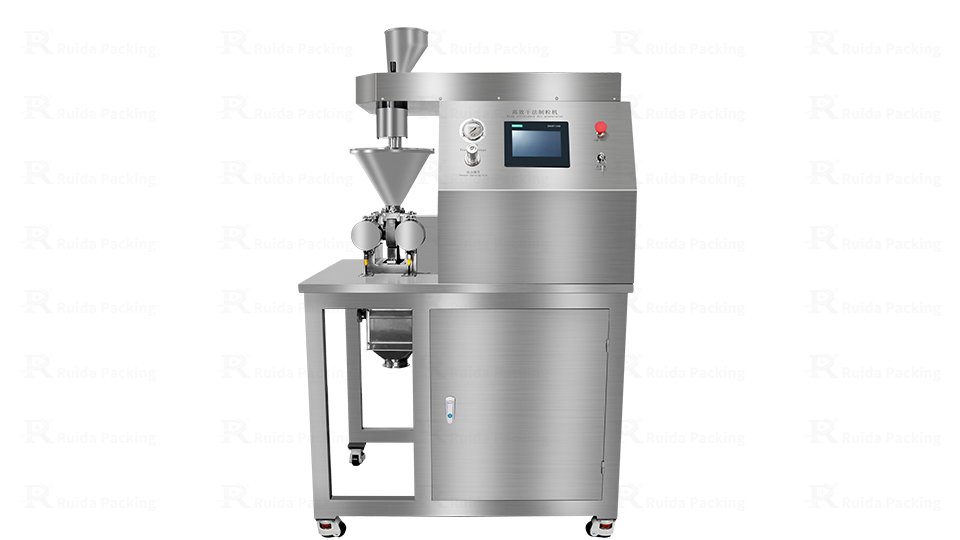
The most common modern dry granulation method is roller compaction dry granulation. このプロセスで, powder passes between two compressing rollers under pressure. The rollers compress the powder into ribbons. These ribbons are then grounded into granules.

A typical dry granulation process includes:

  • Powder feeding
  • Compressing via roller compaction
  • Ribbon formation
  • Grounding
  • Final blending
dry granulation method

3. What Is Wet Granulation?

Wet granulation is a granulation method that uses a liquid binder to help powder particles stick together. Compared with dry granulation, it is more like baking bread: dry ingredients are mixed, liquid is added, the mass forms structure, and controlled drying gives the final material its strength.

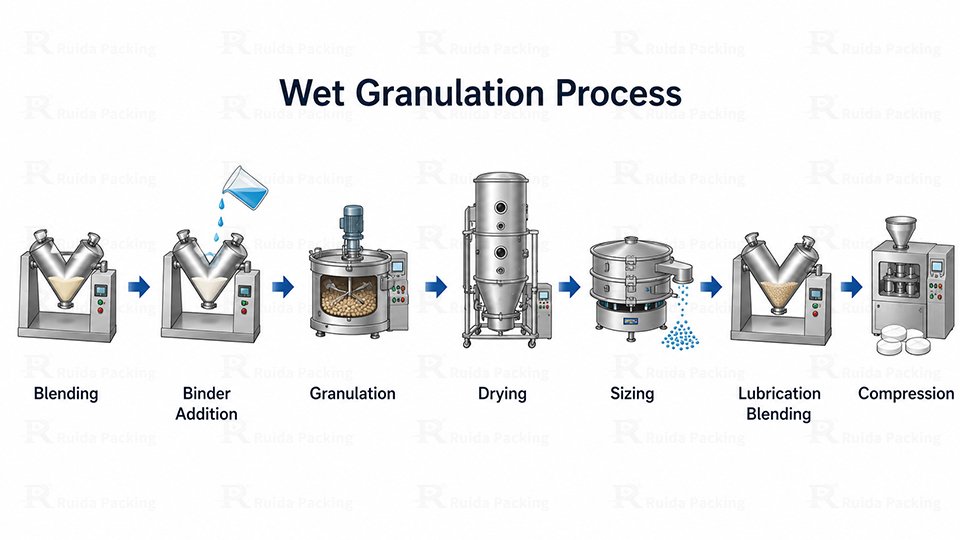
In a typical wet granulation process, powders are mixed first. Then a binder solution is sprayed or added into the powder blend. As mixing continues, particles collide and bond together to form wet granules. その後, these granules are dried and mixed together before compression or filling.

A typical wet granulation method of tablet manufacturing includes:

  • Dry powder mixing
  • Binder solution to mix with the powder
  • Wet mass formation via wet mixing granulation
  • Granulation drying
  • Grounding
  • Lubrication and final blending
wet granulation method

4. Dry Granulation Vs Wet Granulation: Side-By-Side Comparison

If we only take the process into consideration, both granulation techniques are ok, but for manufacturersthey usually care more about practical questions: Will it influence the product effect? Will is cost a lot? こうした懸念に対処するために, let’s compare these two granualtion process through what manufacturers care most.

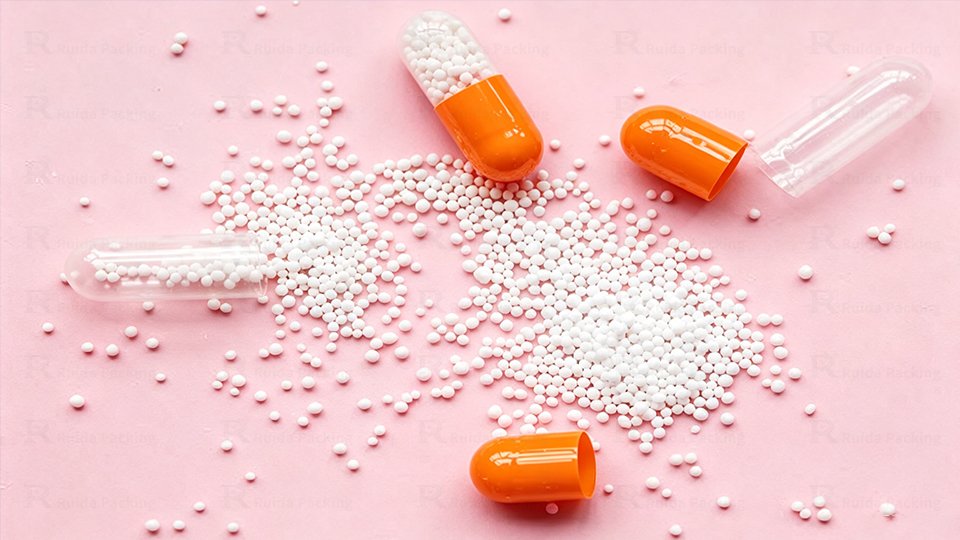
capsules filled with granules or pellets

テーブル 1- Comparison between dry granulation and wet granulation

Comparison Dimension乾式造粒湿式造粒
API SensitivitySuitable for Moisture sensitive API and heat sensitive APINot suitable
Process ComplexityShorter granulation processLonger wet granulation process
Granule QualityImproves powder flowability, but may produce more fine powdersBetter content uniformity, and improves powder compressibility.
Cost And Efficiencyより低いより高い

Pros And Cons Of Dry Granulation

The biggest advantage of dry granulation is that it protects sensitive ingredients at utmost degree. For ingredients like vitamins or probiotic, once moisture enters the blend, stability may declineand shelf life may suffer.

Pros of dry granulation include:

No liquid binder requiredThis makes dry granulation method ideal for moisture sensitive API and heat sensitive API.

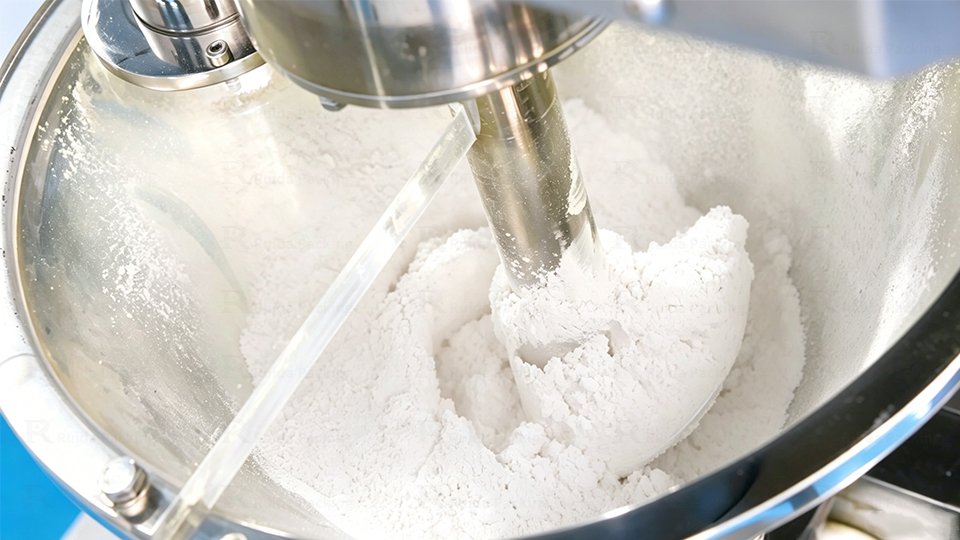
mixing process of dry granulation

No granulation dryingEliminating granulation drying reduces time, energy consumption, and thermal stress.

Lower operating costFewer steps often mean less labor, less cleaning, and less utility demand.

Our engineer Victor may summarize it this way: “Dry granulation is attractive because it removes one of the most variable steps, the drying stage. t makes the process more controllable and easier.” So that’s why it’s the preferred choice for many manufacturers.

Cons of dry granulation include:

Not suitable for all powdersSome powders do not compact well without a binder.

Possible fine 粉 issuePoor roller pressure or milling settings can create excess fine particles.

Tablet hardness may varyIf granule strength is weak, downstream tablet manufacturing or capsule manufacturing may suffer.

例えば, a manufacturer producing a moisture-sensitive herbal extract tablet may benefit from dry granulation. But if the same product has extremely poor powder compressibility, dry granulation alone may not provide enough bonding strength. その場合, formulation adjustment or wet granulation may be considered.

Pros And Cons Of Wet Granulation

Compared with dry granulation, wet granulation is more forgiving for difficult powder blends. When powders are hard nuts to handle, wet granulation can turn them into robust granules with better flow and compression behavior.

tablets and powder

Pros of wet granulation include:

Strong granule formationBinder helps particles stick together more reliably through wet mixing granulation.

Better content uniformityWet massing can reduce segregation, especially for low-dose APIs.

Improved powder compressibilityGranules often compress into harder, more stable tablets.

The European Medicines Agency and FDA both emphasize control of critical process parameters in pharmaceutical manufacturing. As our chief engineer Victor may say, “Wet granulation gives you powerful control, but it asks for disciplined control in return.” That is a fair description: the method is strong, but it demands attention.

Cons of wet granulation include:

より高い 料金It requires much more energy and increases pharmaceutical processing cost.

Moisture and heat riskNot suitable for materials that are sensitive to moisture or high temperatures.

More cleaning and validation: Many components of the 湿式造粒機 are in contact with materials so they need to be cleaned carefully.

Difficult to controlLiquid quantity, 混合時間, drying endpoint, and granule size all affect final quality.

5. Choosing Between Dry Granulation Vs Wet Granulation: どちらが良いですか?

メーカー向け, “better” means better for your product, your factory, and your commercial goal. Here is a practical decision guide.

Choose dry granulation when:

  • If your ingredients are sensitive to moisture or temparature
  • If your priority is lower energy cost and shorter processing time
  • If your ingredients are easy to be compressed into tablets.

Choose 濡れた granulation when:

  • If your powder has poor flowability and is hard to shape
  • If you need stronger granules and better 錠剤の硬度
  • If your formulation tolerates water, binder, そして熱

The reason is simple. Dry granulation protects sensitive materials and streamlines production. Wet granulation builds stronger particle bonds and rescues difficult powders. When comparing dry granulation and wet granulation, dry granulation is often the leaner choice, while wet granulation is often the more powerful formulation-correction tool.

要するに, choosing dry granulation or wet granulation is not about which sounds more advanced. It is about which process makes your powder behave, your machine run smoothly, and your quality team sleep better at night.

6. Which Granulation Equipment Do You Need?

Granulation Equipment Intro

良い, let’s take a quick look at the granulation equipment before we decide on which is the better ones.

For dry granulation, manufacturers typically require the following equipment:

乾式造粒機
  • Roller compactor
  • Sieving and milling granulator
  • ミキサー
  • Dust collection system

For wet granulation, manufacturers typically require the following wet granulation equipment:

  • 湿式造粒機
  • High-shear granulator
  • Fluid bed granulation dryer
  • Dryer or integrated fluid bed drying system
  • Granulator
  • ブレンダー

ルイダパッキング: Your Trusted Granulator Supplier

A granulator could directly change the characteristics of the materials, hence it’s necessary to select a trustworthy one.

Ruida Packing has been established for more than 10 years and has maintained close cooperation with Fortune 500 pharmaceutical companies such as Robinson, UCB, と米国の製薬会社. With machines complying with international standards including CE, cGMP, and ISO, we provide both equipment and service support to manufacturers.

Our services include:

  • Global shipment within 7 日々
  • Sufficient machine inventory
  • Remote commissioning support
  • On-site commissioning service
  • Lifetime free after-sales consultation
  • Technical support for dry granulation equipment

Committed to developing our machines while improving our service, welcome for any consultation in relation to the machines.

7. 結論は

Dry granulation vs wet granulation is a permanantly major concern for any pharma and nutra producers. Maybe you’re still wondering which granulation technique and granulation equipment will be a trend in the future, welcome discuss with us and share your thoughts.

8. よくある質問

Q1: Is Dry Granulation Better Than Wet Granulation?

常にではありません. Dry granulation is better when the API is sensitive to moisture or heat, while wet granulation is better when the powder needs stronger bonding. In real factories, the “better” method is the one that gives stable quality with fewer production headaches.

第2四半期: When Should Dry Granulation Be Used?

Dry granulation should be used when materials cannot tolerate water, solvent, or high drying temperature. It is also useful when manufacturers want a shorter granulation process with lower energy use. For many moisture-sensitive nutraceuticals, dry granulation is the safer road.

Q3: Can Moisture-Sensitive Drugs Use Wet Granulation?

They can, but it is risky and requires very careful control. Moisture-sensitive drugs may degrade, clump, or lose stability during wet mixing granulation and drying. ほとんどの場合、, dry granulation is considered first.

Q4: Which Process Costs Less?

Dry granulation usually costs less in operation because it removes binder preparation and granulation drying. Wet granulation may cost more due to energy, クリーニング, 乾燥, and longer processing time. しかし, if wet granulation prevents batch failure, it may still be the smarter investment.

Q5: Does Dry Granulation Improve Tablet Hardness?

Dry granulation can improve tablet hardness by increasing powder density and compressibility. しかし, the result depends on formulation, roller compaction pressure, and milling settings. If the powder does not bind well, wet granulation may produce stronger tablets.

参考文献

[1] 私たち. 食べ物 & Drug Administration: プロセスの検証: 一般原則と実践

https://www.fda.gov/media/71021/download

[2] United States Pharmacopeia: General Chapter <905> Uniformity of Dosage Units

https://www.usp.org

[3] ScienceDirect: Pharmaceutical Granulation Processes And Technologies

共有:

メッセージを送信

関連記事

ご要望をお聞かせください

    見積もり依頼

      *当社はお客様の機密性を尊重し、すべての情報は保護されます。