Maison

>

Presse à comprimés automatique

Machine de presse de tablette automatique
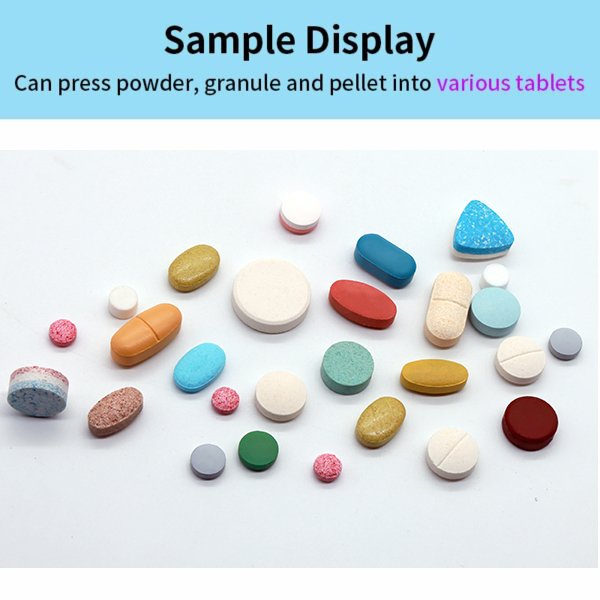
various-tablets
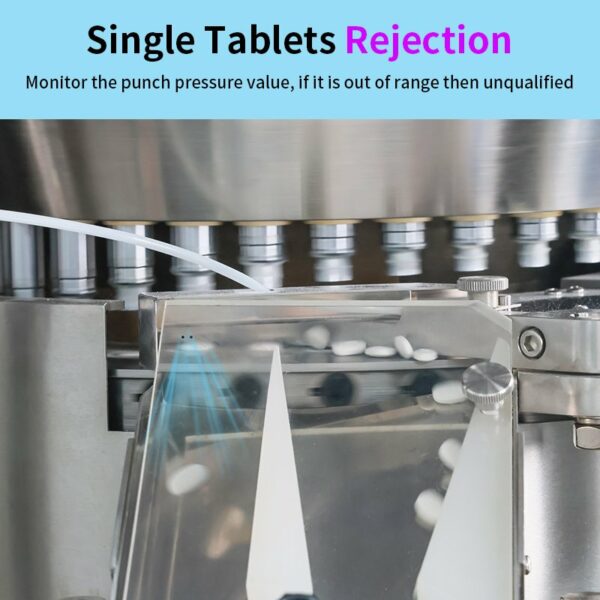
rejet de comprimés individuels
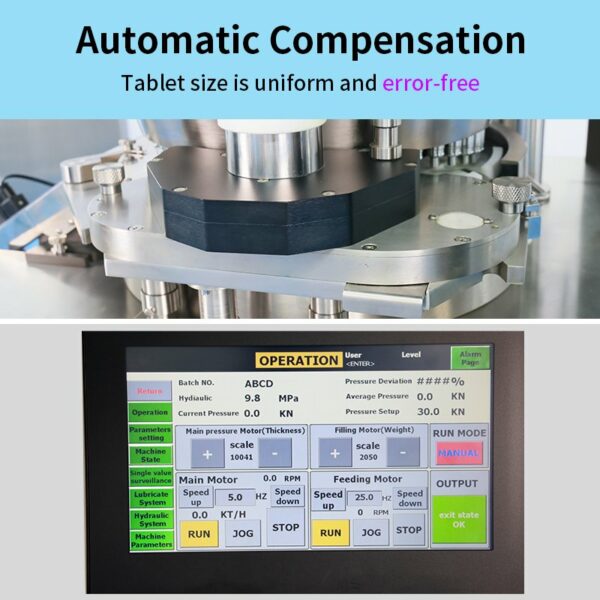
compensation automatique
exposition
Machine de presse de tablette automatique
various-tablets
rejet de comprimés individuels
compensation automatique
exposition

Presse à comprimés automatique

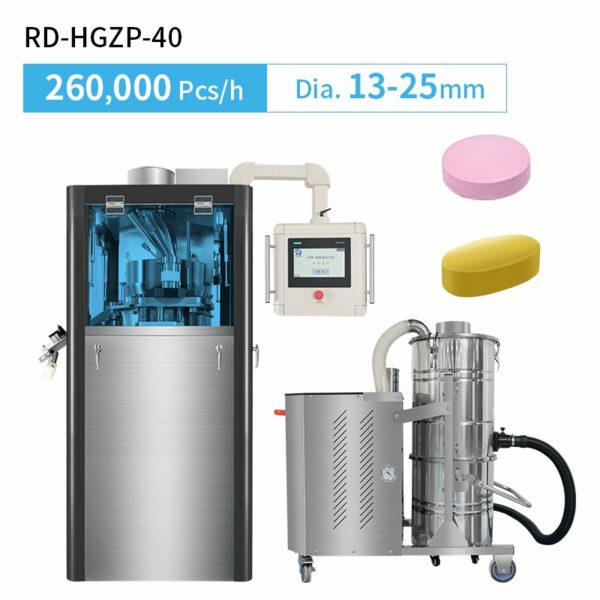
Presse à comprimés automatique Utilisé pour comprimer des poudres dans des comprimés pour les médicaments, vitamines, et suppléments.

Industrie pharmaceutique: Ils sont principalement la production à grande vitesse est essentielle pour répondre aux demandes à grande échelle, Surtout pour les médicaments courants comme les analgésiques, antibiotiques, et antipyrétiques.

Nutraceuticals: Des presses à grande vitesse sont utilisées pour fabriquer des compléments alimentaires, comme les multivitamines et les suppléments à base de plantes, Assurer une dose cohérente et des taux de production élevés.

Industrie alimentaire: Ils sont employés pour produire des comprimés comprimés d'additifs alimentaires comme des édulcorants ou des amplificateurs de saveurs, Souvent utilisé dans les aliments transformés et les boissons.

Produits de nettoyage: Comprimés comprimés pour les agents de nettoyage, comme le lave-vaisselle ou les comprimés de détergent à lessive, sont également fabriqués à l'aide de ces machines.

Spécification:

Jusqu'à 260 000 pièces/h

Diamètre max. du comprimé 25 mm

Pression principale 100kn, précharge 21kn

Comment fonctionne la table de tablette à grande vitesse?

Les tablettes à grande vitesse sont utilisées dans une variété d'applications dans différentes industries, comme l'industrie pharmaceutique, produits nutraceutiques, industrie alimentaire…

Caractéristiques principales

Capacité de production maximale 260 000 pièces/h
Diamètre max. de la tablette 25 mm
Poudre 7,5 kW
Tension 220v/380v 50Hz (personnalisé)
Dimension 820 × 1 100 × 1 750 mm

Avantage de presse de tablette rotative

Qualité constante des tablettes: Les presses à grande vitesse sont équipées de systèmes de contrôle précis, Assurer un poids de comprimé uniforme, taille, et dureté. Cette cohérence améliore la qualité des produits et réduit les taux de rejet.

Fonctionnalités avancées: De nombreuses presses à tablette à grande vitesse sont livrées avec des fonctionnalités telles que la lubrification automatique, rejet des déchets, et surveillance de la pression, qui réduisent l'intervention manuelle et améliorent l'efficacité opérationnelle.

Automatisation et journalisation des données: Les machines modernes incluent souvent des systèmes automatisés pour une surveillance en temps réel et une journalisation des données, qui améliorent le contrôle des processus et la conformité réglementaire.

Principaux partis

The Necessity of Automatic Lubrication in Tablet Press Machines

Dans la fabrication pharmaceutique, consistency isn’t just a goal—it’s a requirement. Tablet quality, equipment longevity, and regulatory compliance all hinge on one often-overlooked process: lubrification. Either too much or too little lubricant can lead to significant issues, from products defects to machine failures. Automatic tablet press machine is engineered with a sophisticated dual lubrication system designed to eliminate these risks.

The High Cost of Imperfect Lubrication

When lubricant is applied excessively, it leaves residual oil on the tooling surfaces. During compression—under high pressure and temperature—this surplus lubricant can transfer onto the tablets, creating black spots. These imperfections are more than cosmetic; they indicate potential contamination. Tablets with such defects fail to meet FDA standards, risking batch rejection and compromising patient safety.

Insufficient lubrication, on the other hand, increases friction between the punch and die. This accelerates wear, reduces tooling life, and heightens operational noise. If your tablet press exceeds 75 dBA, it not only creates an unpleasant working environment but also falls out of compliance with cGMP guidelines, which require equipment to operate within specified noise limits to prevent contamination and ensure process control.

Intelligent Lubrication Advantages

Our Automatic Tablet Press Machine features a two-part lubrication system that ensures precision, reliability, and ease of use.

1. Automatic Lubrication

The first part of the system delivers liquid lubricant directly to the punches and dies through fully automated dosing. During setup, operators can define exactly how much lubricant is released and at what interval. Par exemple:

You can initially set the system to release 2 drops of oil every 200 rotations.

If tablets show black spots, you can adjust the interval to 250 rotations per 2 drops.

If abnormal noise occurs, you might fine-tune it to 230 rotations.


This flexible programmability allows you to find the optimal lubrication balance for your specific formulation and operating conditions. It eliminates guesswork, reduces manual intervention, and ensures every batch runs smoothly without defects or excessive wear.

2. Solid Grease Lubrication

The second part involves a simple yet effective manual grease application for the machine’s bearings. Just presses per day during operation are enough to keep the core components running smoothly, prevent abrasion, and extend the service life of the entire press. This step takes seconds but offers long-term protection against mechanical failure.

Why Automation Matters

An automated lubrication system does more than just protect your tooling and products—it also supports your quality assurance system. With precise control and repeatability, you can document each lubrication cycle, providing traceability for FDA and cGMP audits. Moreover, reducing manual lubrication minimizes human error and enhances operational safety.

Conclusion

Lubrication management is critical in tablet production. Too much or too little can lead to quality deviations, non-compliance, and costly downtime. With ruidapacking’s Automatic Tablet Press Machine and its intelligent dual-lubrication system, you achieve the perfect balance between product integrity and equipment protection.

A Complete Guide to Tablet Press Machine Pressure

For many pharmaceutical engineers, tablet production comes with recurring frustrations: tablets that break right after ejection, or batches that fail to meet hardness and friability standards during testing. While formulation plays a role, these issues often trace back to one critical factor—the performance and accuracy of the tablet press machine pressure.

Understanding how pressure works—and how it’s managed—can mean the difference between compliance and costly reprocessing.

The Role of Main Pressure

At the heart of tablet formation is the main compression force. The process involves filling powder or granules into a die, where upper and lower punches apply extreme pressure via the main compression wheel to form a compacted tablet. If this force is insufficient, the resulting tablets may be too soft, fragile, or prone to chipping and breaking.

In most cases, a force of around 80 kN is adequate to produce tablets that meet FDA requirements for structural integrity. Cependant, a widespread industry issue is that many manufacturers overstate their machine’s force capabilities. Since it’s difficult to accurately measure the actual force applied during operation, companies often end up with underperforming presses. This leads to low yield, poor hardness, high friability, and ultimately—the need to reinvest in a new machine.

That’s why choosing a tablet press with honestly rated and verifiable force output is essential.

The Critical Function of Pre-pressure

In high-speed production, the compaction event happens in a fraction of a second. When excessive force is applied too suddenly, it can cause already-formed tablets to shatter or develop internal flaws. This is where pre-pressure becomes invaluable.

Pre-pressure involves applying a lower initial force to the powder bed before the main pressure. This gentle preliminary pressure removes entrapped air, reduces particle segregation, and prepares the granulation for final compaction. The benefits are clear:

Reduced capping and laminating

Improved tablet hardness and surface smoothness

Lower friability and fewer fines

Enhanced overall pressure stability

For pharmaceutical companies running at high production speeds, a pre-pressure system isn’t optional—it’s necessary. It enables the machine to maintain quality without sacrificing output.

How to Choose the Right Tablet Press

When evaluating a tablet press, consider these force-related features:

1. Truthful Force Reporting

Select a machine from a supplier that provides transparent and testable force metrics. Avoid overstated specifications.

2. Adjustable Pre-pressure

Look for easily adjustable pre-pressure settings that allow fine-tuning based on material behavior.

3. Consistency at High Speed

Ensure the machine can maintain accurate and repeatable force levels even at maximum rotation speeds.

4. Compliance Ready

The system should support full documentation of force parameters for FDA and cGMP audits.

Conclusion

Pressure is a cornerstone of tablet manufacturing successful. Getting it right affects everything from tablet hardness and appearance to regulatory acceptance and operational efficiency. With accurate main pressure and intelligent pre-pressure features, you can avoid common pitfalls such as broken tablets, poor friability, and non-compliance.

Demander un devis

    *Nous respectons votre confidentialité et toutes les informations sont protégées.