In the highly regulated worlds of pharmaceuticals, مواد مغذی, and premium cosmetics, the packaging process is the final frontier of quality control. While much attention is paid to the accuracy of the fill or the speed of the labeler, the capping process often serves as the “silent” guardian of product integrity. A faulty seal leads to contamination or leaks, while a marred cap suggests a lack of quality to the end consumer.
When designing a production line, manufacturers often face a choice between a standard Linear Capping Machine and a specialized Star-wheel Capping Machine.
1. Understanding the Standard Linear Capping Machine
The linear capping machine, often referred to as an “in-line” capper, is the workhorse of the general packaging industry. It is designed for high-speed versatility and simplicity.
اصل کار
In a linear system, bottles move continuously along a straight conveyor belt. Caps are delivered via a chute or a sorter and are “stripped” onto the bottle as it passes underneath. Once the cap is loosely seated, the bottle travels between a series of rotating spindles or tightening belts. These spindles spin against the cap, applying torque to tighten it to the required specification. Throughout this process, side gripper belts hold the bottle body to prevent it from spinning.
Primary Advantages
Speed: Linear cappers are exceptionally fast, making them ideal for high-volume beverage or chemical lines.
انعطاف پذیری: Because they rely on adjustable belts and spindles, they can often accommodate various bottle heights and diameters with minimal part changes.
Continuous Motion: The lack of “start-stop” movement allows for a steady flow of product.
2. Deep Dive: The Star-wheel Capping Machine
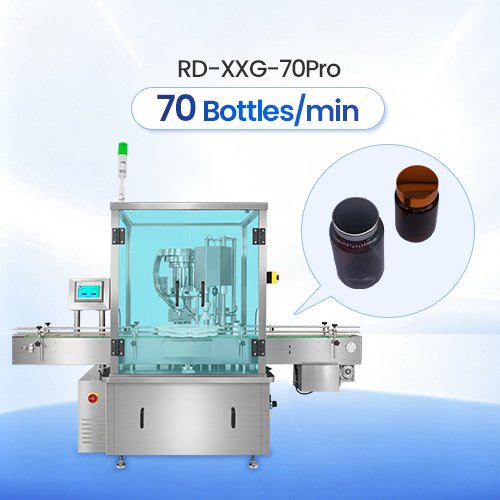
The Star-wheel Capping Machine represents a shift from “volume-first” به “precision-first” engineering. It is an indexing system that prioritizes the delicate handling of components.
اصل کار
The Star-wheel Capping Machine operates on a circular, indexing motion. Here is how the process unfolds:
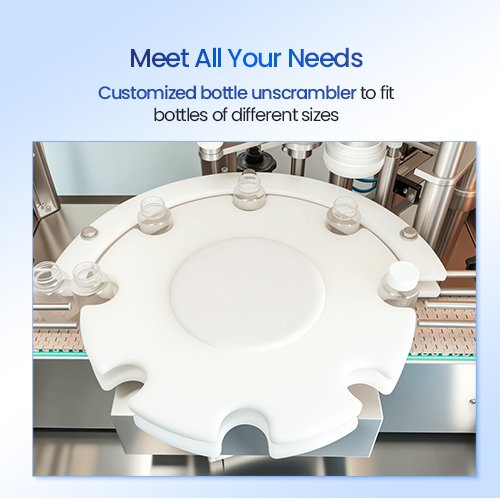
2.1. Feeding and Detection: Bottles enter the machine via a conveyor and are moved into a custom-machined star-wheel (indexing plate). Simultaneously, caps are sorted and sent down a delivery chute.
2.2. Smart Control: Rotary capping machine, feature photoelectric sensors on the cap track. If the track is full, the feeder pauses; if it’s empty, it restarts. This prevents mechanical jams and reduces unnecessary wear.
2.3. این “Pick-and-Place” Mechanism: Unlike linear cappers that “strip” caps, the star-wheel system uses a mechanical arm to grab the cap and place it precisely onto the bottle mouth. This ensures the threads are perfectly aligned before torque is applied.
2.4. Star-wheel Positioning: The star-wheel cradles the bottle securely in a pocket. This provides 360-degree stability, which is essential for lightweight or oddly shaped bottles that might tip over in a linear system.
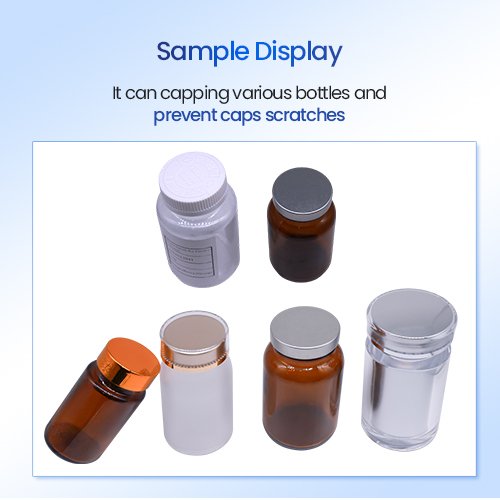
2.5. Scratch-Free Tightening: The capping heads are often lined with specialized materials or use controlled pneumatic/servo torque. Because the bottle is stationary during the actual tightening phase, there is no friction between the cap surface and the machinery, ensuring a scratch-free finis*.
Primary Advantages
Aesthetic Protection: Perfect for high-gloss, metallic, or smooth plastic caps where even a micro-scratch is a defect.
Precision Threading: The pick-and-place method virtually eliminates cross-threading.
Stability: Ideal for unstable or small bottles that require precise positioning.
3. تفاوت های کلیدی: At a Glance
| ویژگی | Standard Linear Capping | Star-wheel Capping |
| Motion Type | Continuous Linear | Intermittent Indexing |
| Cap Placement | Stripping (Gravity/Motion) | Pick-and-Place (Mechanical Arm) |
| Bottle Stability | Gripper Belts | Customized Star-wheel Pockets |
| Cap Protection | کم (Potential for scuffing) | عالی (Scratch-free technology) |
| دقت | متوسط | بسیار بالا |
| Changeover | Faster (Tool-less adjustments) | Slower (Requires star-wheel swap) |
| انطباق | استاندارد | عالی (Fully cGMP compliant) |
4. سناریوهای کاربردی: Where Each Shines
When to Choose Linear Capping
Linear machines are best suited for industries where the container and cap are utilitarian.
Household Chemicals: Laundry detergent, glass cleaners, and motor oil.
Mass-Market Beverage: Water bottles or juices where the cap is a standard plastic screw-top.
High-Volume Food: Condiments or large jars where throughput is the primary KPI.
When to Choose Star-wheel Capping
The star-wheel system is the gold standard for high-value sectors where the “unboxing experience” and product safety are paramount.
Pharmaceuticals & Nutraceuticals: Sealing capsule and tablet bottles. The star-wheel’s ability to integrate into cGMP-compliant lines makes it the preferred choice for medical-grade environments.
Premium Cosmetics: Luxury skincare lotions, perfumes, and serums. These products often use metallic or coated caps that must remain flawless to justify a premium price point.
Specialized Labs: Small-batch reagents or diagnostic kits where every seal must be hermetic and verified.
5. Integration into Complete Production Lines
One of the greatest strengths of the Star-wheel Capping Machine is its modularity. In a factory, it rarely stands alone.
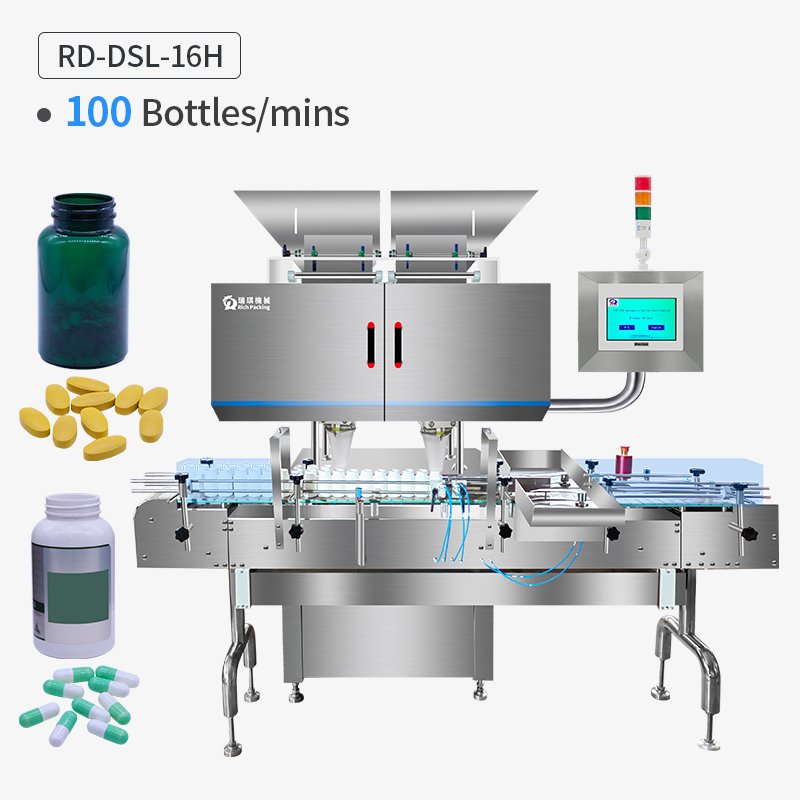
Tablet/Capsule Counting Lines: The star-wheel capper is a critical component of a counting line. It receives bottles directly from the multi-head counter and prepares them for the induction sealer and labeler.
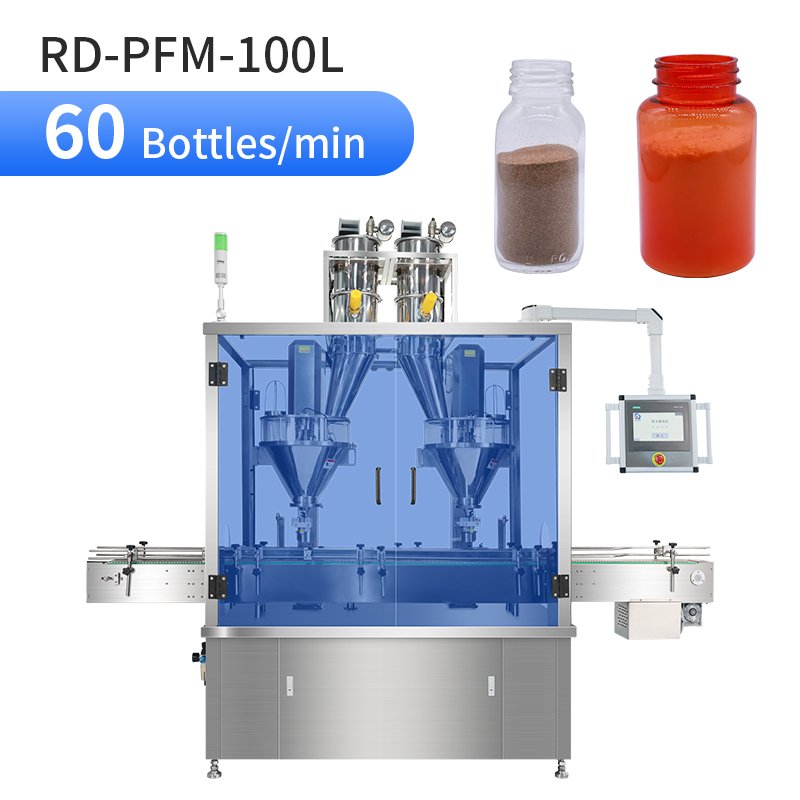
Powder Filling Lines: For fine powders (like protein or pharmaceutical ingredients), the star-wheel provides the necessary vibration-free stability to prevent “dusting” during the capping process.
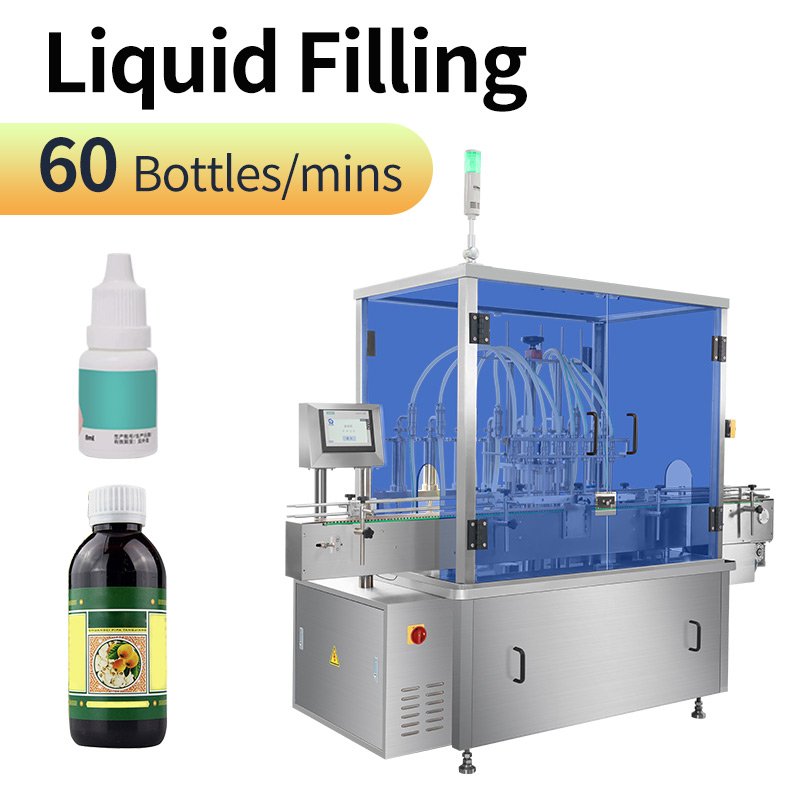
Liquid Filling Lines: In high-precision liquid filling (syrups or essential oils), the intermittent motion allows the liquid to settle before the cap is placed, preventing splashes on the threads.
6. Selection Guide: How to Choose the Right Machine
Before requesting a quote, ask yourself the following four questions:
6.1. What is the Cap Material and Finish?
If you are using smooth, high-gloss, or printed caps, the linear spindles may leave “burn marks” or scratches. In this case, the Star-wheel Capping Machine is a mechanical necessity to preserve the aesthetic integrity of your brand.
6.2. What is the Bottle Geometry?
Standard cylindrical bottles work well in both systems. هر چند, if your bottle is tapered, بیضی شکل, or very small (eye dropper style), the custom-machined star-wheel provides a level of grip and positioning that linear belts cannot match.
6.3. What are your Regulatory Requirements?
If your facility must adhere to cGMP (Current Good Manufacturing Practice) standards, look for a machine built with SUS304 or SUS316 stainless steel and a design that minimizes “dead corners” where dust can accumulate. Star-wheel machines are traditionally easier to validate for pharmaceutical use due to their precise, repeatable mechanical movements.
6.4. What is your Production Speed vs. Changeover Frequency?
If you run one product 24/7 at 150 bottles per minute, a high-speed linear capper is likely your best bet. هر چند, if you run multiple products a day and require high precision at speeds of 30–60 bottles per minute, the Star-wheel’s accuracy and the ability to swap star-wheels for different bottle sizes make it a more reliable long-term investment.
نتیجهگیری
The choice between a linear and a star-wheel capping machine isn’t just about price; it’s about the nature of your product.
For Ruida Packing customers, the Star-wheel Capping Machine offers a bridge between high-tech automation and artisanal care. By protecting the cap finish, ensuring cGMP compliance, and allowing for seamless integration into counting or filling lines, it provides a “future-proof” solution for companies moving into high-end pharmaceutical and cosmetic markets.
When your brand reputation is literally “under the cap,” choosing the precision of a star-wheel system is a commitment to quality that your customers will see and feel every time they open your product.