In the highly regulated worlds of pharmaceuticals, nutraceutici, and premium cosmetics, the packaging process is the final frontier of quality control. While much attention is paid to the accuracy of the fill or the speed of the labeler, the capping process often serves as the “silent” guardian of product integrity. A faulty seal leads to contamination or leaks, while a marred cap suggests a lack of quality to the end consumer.
When designing a production line, manufacturers often face a choice between a standard Linear Capping Machine and a specialized Star-wheel Capping Machine.
1. Understanding the Standard Linear Capping Machine
The linear capping machine, often referred to as an “in-line” tappatore, is the workhorse of the general packaging industry. It is designed for high-speed versatility and simplicity.
Principio di funzionamento
In a linear system, bottles move continuously along a straight conveyor belt. Caps are delivered via a chute or a sorter and are “stripped” onto the bottle as it passes underneath. Once the cap is loosely seated, the bottle travels between a series of rotating spindles or tightening belts. These spindles spin against the cap, applying torque to tighten it to the required specification. Durante questo processo, side gripper belts hold the bottle body to prevent it from spinning.
Primary Advantages
Velocità: Linear cappers are exceptionally fast, making them ideal for high-volume beverage or chemical lines.
Flessibilità: Because they rely on adjustable belts and spindles, they can often accommodate various bottle heights and diameters with minimal part changes.
Continuous Motion: The lack of “start-stop” movement allows for a steady flow of product.
2. Deep Dive: The Star-wheel Capping Machine
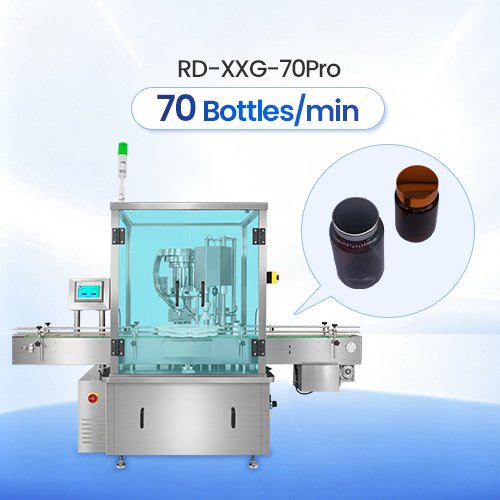
The Star-wheel Capping Machine represents a shift from “volume-first” A “precision-first” engineering. It is an indexing system that prioritizes the delicate handling of components.
Principio di funzionamento
The Star-wheel Capping Machine operates on a circular, indexing motion. Here is how the process unfolds:
2.1. Feeding and Detection: Bottles enter the machine via a conveyor and are moved into a custom-machined star-wheel (indexing plate). Contemporaneamente, caps are sorted and sent down a delivery chute.
2.2. Smart Control: Rotary capping machine, feature photoelectric sensors on the cap track. If the track is full, the feeder pauses; if it’s empty, it restarts. This prevents mechanical jams and reduces unnecessary wear.
2.3. IL “Pick-and-Place” Mechanism: Unlike linear cappers that “striscia” berretti, the star-wheel system uses a mechanical arm to grab the cap and place it precisely onto the bottle mouth. This ensures the threads are perfectly aligned before torque is applied.
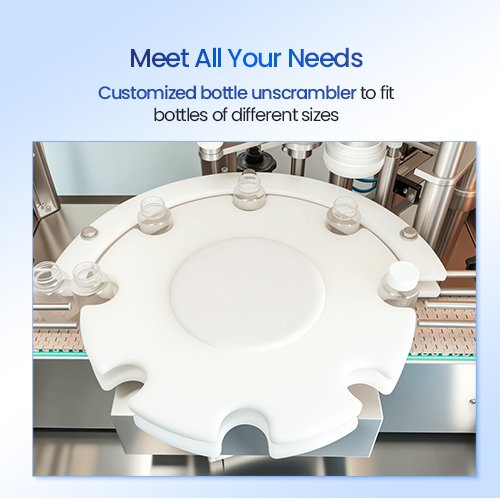
2.4. Star-wheel Positioning: The star-wheel cradles the bottle securely in a pocket. This provides 360-degree stability, which is essential for lightweight or oddly shaped bottles that might tip over in a linear system.
2.5. Scratch-Free Tightening: The capping heads are often lined with specialized materials or use controlled pneumatic/servo torque. Because the bottle is stationary during the actual tightening phase, there is no friction between the cap surface and the machinery, ensuring a scratch-free finis*.
Primary Advantages
Aesthetic Protection: Perfect for high-gloss, metallico, or smooth plastic caps where even a micro-scratch is a defect.
Precision Threading: The pick-and-place method virtually eliminates cross-threading.
Stabilità: Ideal for unstable or small bottles that require precise positioning.
3. Differenze chiave: At a Glance
| Caratteristica |
Standard Linear Capping |
Star-wheel Capping |
| Motion Type |
Continuous Linear |
Intermittent Indexing |
| Cap Placement |
Stripping (Gravity/Motion) |
Pick-and-Place (Mechanical Arm) |
| Bottle Stability |
Gripper Belts |
Customized Star-wheel Pockets |
| Cap Protection |
Basso (Potential for scuffing) |
Alto (Scratch-free technology) |
| Precisione |
Moderare |
Molto alto |
| Cambio |
Faster (Tool-less adjustments) |
Slower (Requires star-wheel swap) |
| Conformità |
Standard |
Alto (Completamente conforme a cGMP) |
4. Scenari applicativi: Dove ognuno brilla
When to Choose Linear Capping
Linear machines are best suited for industries where the container and cap are utilitarian.
Household Chemicals: Laundry detergent, glass cleaners, and motor oil.
Mass-Market Beverage: Water bottles or juices where the cap is a standard plastic screw-top.
High-Volume Food: Condiments or large jars where throughput is the primary KPI.
When to Choose Star-wheel Capping
The star-wheel system is the gold standard for high-value sectors where the “unboxing experience” and product safety are paramount.
Prodotti farmaceutici & Nutraceutici: Sealing capsule and tablet bottles. The star-wheel’s ability to integrate into cGMP-compliant lines makes it the preferred choice for medical-grade environments.
Cosmetici di prima qualità: Luxury skincare lotions, perfumes, and serums. These products often use metallic or coated caps that must remain flawless to justify a premium price point.
Specialized Labs: Small-batch reagents or diagnostic kits where every seal must be hermetic and verified.
5. Integration into Complete Production Lines
One of the greatest strengths of the Star-wheel Capping Machine is its modularity. In a factory, it rarely stands alone.
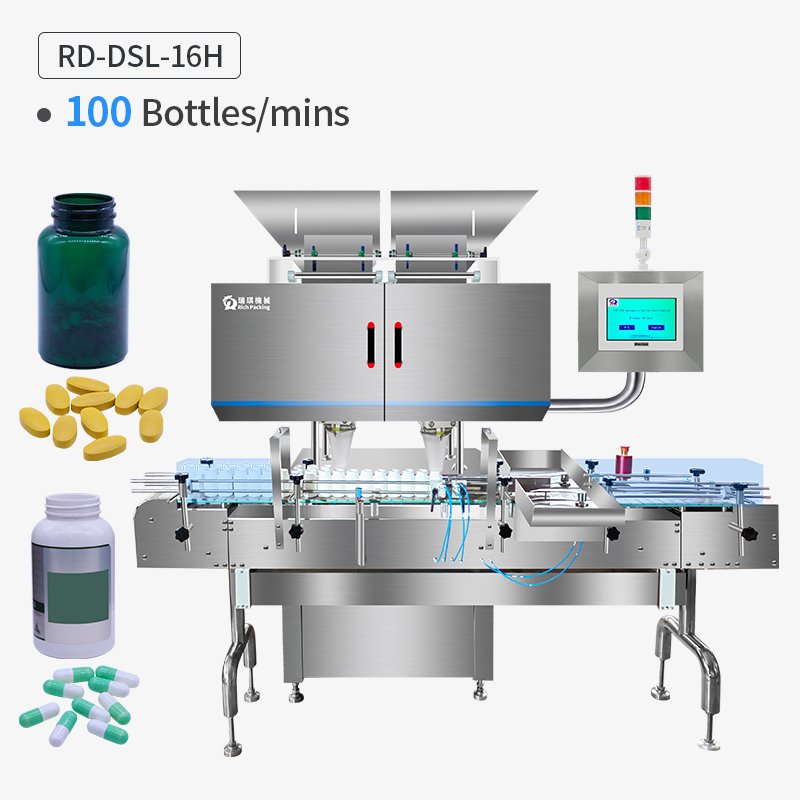
Tablet/Capsule Counting Lines: The star-wheel capper is a critical component of a counting line. It receives bottles directly from the multi-head counter and prepares them for the induction sealer and labeler.
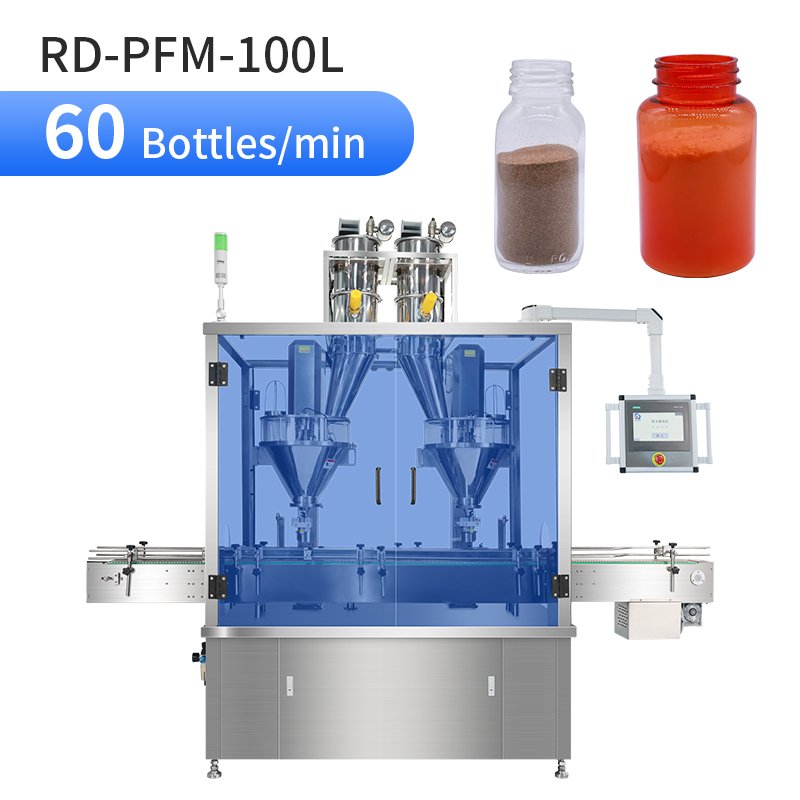
Powder Filling Lines: For fine powders (come proteine o ingredienti farmaceutici), la ruota a stella fornisce la stabilità necessaria senza vibrazioni per prevenire “spolverare” durante il processo di tappatura.
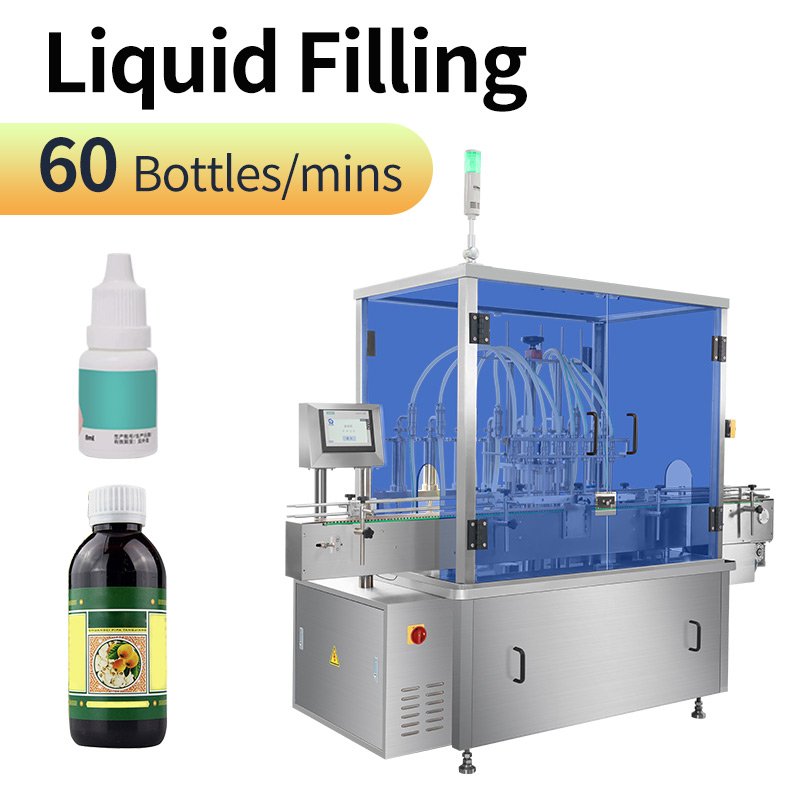
Linee di riempimento di liquidi: Nel riempimento di liquidi ad alta precisione (sciroppi o oli essenziali), il movimento intermittente permette al liquido di depositarsi prima che venga posizionato il tappo, evitando schizzi sui fili.
6. Guida alla selezione: Come scegliere la macchina giusta
Prima di richiedere un preventivo, poniti le seguenti quattro domande:
6.1. Qual è il materiale e la finitura del cappuccio?
Se stai usando liscio, molto lucido, o cappellini stampati, i mandrini lineari potrebbero allontanarsi “segni di bruciature” o graffi. In questo caso, la tappatrice a stella è una necessità meccanica per preservare l'integrità estetica del tuo marchio.
6.2. Qual è la geometria della bottiglia?
Le bottiglie cilindriche standard funzionano bene in entrambi i sistemi. Tuttavia, se la tua bottiglia è affusolata, ovale, o molto piccolo (stile contagocce), la ruota a stella lavorata su misura fornisce un livello di presa e posizionamento che le cinghie lineari non possono eguagliare.
6.3. Quali sono i vostri requisiti normativi?
Se la tua struttura deve aderire al cGMP (Attuali buone pratiche di produzione) standard, cerca una macchina costruita con acciaio inossidabile SUS304 o SUS316 e un design che riduca al minimo “angoli morti” dove la polvere può accumularsi. Le macchine a stella sono tradizionalmente più facili da convalidare per uso farmaceutico grazie alla loro precisione, movimenti meccanici ripetibili.
6.4. Qual è la tua velocità di produzione rispetto a. Frequenza di cambio?
Se esegui un prodotto 24/7 A 150 bottiglie al minuto, un tappatore lineare ad alta velocità è probabilmente la soluzione migliore. Tuttavia, se esegui più prodotti al giorno e richiedi un'elevata precisione a velocità di 30-60 bottiglie al minuto, la precisione della ruota a stella e la possibilità di scambiare le ruote a stella con bottiglie di diverse dimensioni lo rendono un investimento più affidabile a lungo termine.
Conclusione
La scelta tra una tappatrice lineare e una a stella non è solo una questione di prezzo; riguarda la natura del tuo prodotto.
Per i clienti Ruida Packing, la Tappatrice a Ruota Stellare offre un ponte tra automazione high-tech e cura artigianale. Proteggendo la finitura del cappuccio, garantire la conformità cGMP, e consentendo una perfetta integrazione nelle linee di conteggio o riempimento, fornisce un “a prova di futuro” soluzione per le aziende che entrano nei mercati farmaceutici e cosmetici di fascia alta.
Quando la reputazione del tuo marchio è letteralmente “sotto il tappo,” scegliere la precisione di un sistema a stella è un impegno per la qualità che i tuoi clienti vedranno e sentiranno ogni volta che apriranno il tuo prodotto.