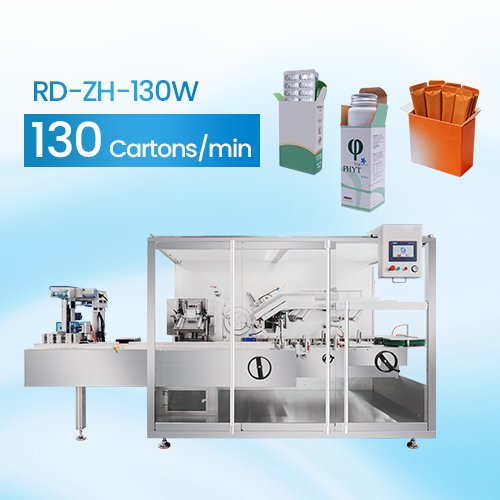
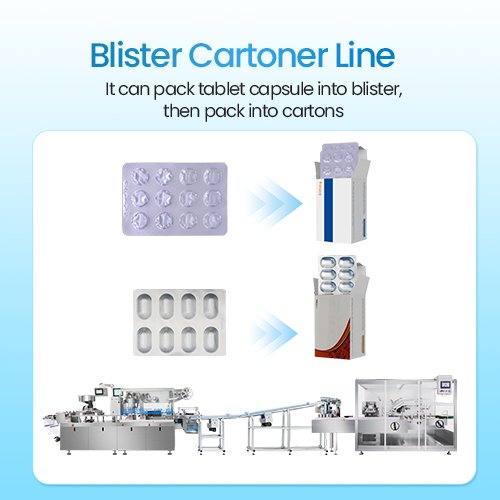
As an experienced procurement professional in the pharmaceutical industry, I fully understand that selecting a cartoning machine is far from a simple task. A wrong decision can lead to frequent downtime, excessive packaging material waste, and in severe cases, reduced overall production line efficiency or even product rejection.
Over the years, I have been involved in multiple projects covering solid dosage forms, thuốc tiêm, and oral liquids. Based on practical experience, here are the key factors that must be carefully evaluated when selecting a cartoning machine.
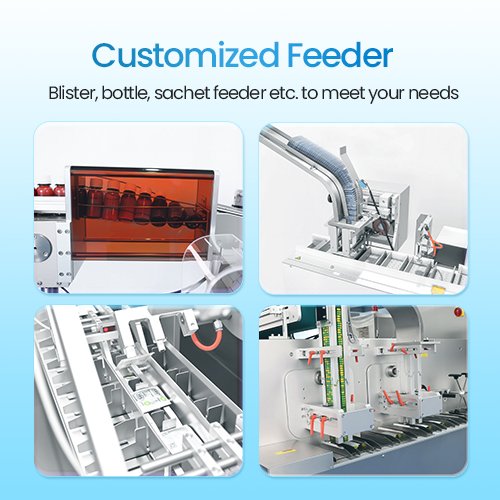
1. Matching Feeding Systems with Different Product Types
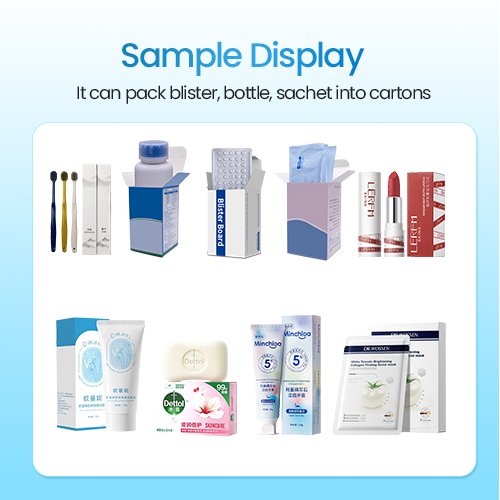
Pharmaceutical products come in various formats, chẳng hạn như gói vỉ, chai (round or square), gói, và ống. A well-designed cartoning machine must be equipped with appropriate feeding systems tailored to each product type.
Gói vỉ: Typically require servo-controlled vibration feeders that ensure gentle handling and precise placement to avoid damage.
Chai: Usually handled via rotary tables combined with guide mechanisms to ensure stable positioning and smooth transfer from upright to horizontal orientation.
Sachets and Tubes: Best handled with vacuum suction feeders to prevent sticking or overlapping.
Khi đánh giá một chiếc máy, it is critical to clarify whether switching between product types requires replacing the entire feeding system or simply changing modular feeding units. A modular design can significantly reduce future changeover costs.
2. Compatibility with Different Carton Sizes
Product portfolios often include multiple packaging formats—for example, blister packs with 10, 20, hoặc 30 máy tính bảng, as well as bottles of varying diameters. These differences result in a wide range of carton sizes.
An ideal cartoning machine should support a broad adjustment range, chẳng hạn như:
Chiều dài: 60–180 mm
Chiều rộng: 30–120 mm
Height: 15–80 mm
Equally important is the adjustment mechanism:
Entry-level machines require manual adjustments using tools, which is time-consuming and prone to error.
Intelligent machines feature handwheels with scale indicators or even servo-driven automatic adjustment systems, enabling format changeovers within minutes.
3. Ease of Changeover and Setup
Changeover involves more than just adjusting dimensions. It also includes fine-tuning operations such as carton folding, chèn tờ rơi, and optional hot-melt glue application.
Before purchasing, I strongly recommend requesting a live demonstration of a full changeover process, focusing on:
Carton forming tools: Are suction cups and guide rails quick to replace?
Pusher adjustment: Can the relative position between product, tờ rơi, and carton be fine-tuned easily?
Leaflet folding unit: Can it adapt quickly to different leaflet sizes (multi-fold A4 vs. smaller formats)?
Sensor repositioning: Do photoelectric sensors for detecting missing products or leaflets require manual reinstallation?
If a full changeover takes more than four hours and requires specialized tools, it should be considered a major operational drawback.
4. Material Quality: The Hidden Risk
Pharmaceutical manufacturers have strict requirements for machine materials. Key inspection points include:
Product-contact parts: Must be made of 316L stainless steel, with material certificates provided.
Transmission components: Gears, dây chuyền, and cams should undergo proper heat treatment to ensure sufficient surface hardness.
Electrical components: PLCs, HMI, and inverters should come from reputable brands such as Siemens or Mitsubishi. Lower-quality alternatives often have high failure rates, especially in humid environments, and can severely impact production efficiency.
5. Continuous Operation and Reliability
Pharmaceutical production often runs in two or three shifts, requiring machines to operate continuously for 16–20 hours.
Khi lựa chọn thiết bị, request data on MTBF (Mean Time Between Failures) and review real customer case studies. Nếu có thể, tiến hành đi hiện trường để quan sát máy móc đang hoạt động.
Trong quá trình vận hành, chú ý đến:
Độ ổn định tỷ lệ loại bỏ (bình thường bên dưới 0.5%)
Các vấn đề về chất lượng thùng carton như đóng nắp không đúng cách hoặc niêm phong không đầy đủ
Độ chính xác của việc gấp tờ rơi và nguy cơ bị kẹt
Ngoài ra, hệ thống bôi trơn là rất quan trọng. Hệ thống bôi trơn tập trung tự động đáng tin cậy hơn nhiều so với bôi trơn thủ công và giúp ngăn ngừa thời gian ngừng hoạt động không mong muốn.
6. Kiểm tra trước khi mua: Một bước quan trọng
Một trong những sai lầm phổ biến nhất trong mua sắm là bỏ qua việc kiểm tra trước khi mua..
Dựa trên kinh nghiệm của tôi, bạn nên gửi ít nhất ba loại sản phẩm khó khăn nhất—cùng với thùng giấy và tờ rơi tương ứng—đến nhà cung cấp và yêu cầu chạy thử ít nhất 2,000 thùng carton.
Các khía cạnh chính cần đánh giá trong quá trình thử nghiệm:
Từ chối thùng carton rỗng: Intentionally omit products or leaflets to verify 100% detection and rejection capability.
Handling of irregular products: Ví dụ, slightly bent blister packs should not cause jams during feeding.
Noise and vibration: Unusual noise may indicate design flaws in cams or bearings.
Energy consumption: Record actual power and compressed air usage for accurate cost estimation.
After successful testing, all validated parameters (pushing speed, air pressure, cài đặt nhiệt độ) should be documented as acceptance criteria for the Factory Acceptance Test (MẬP).
Phần kết luận
Choosing a cartoning machine is not about selecting the most expensive or fastest option—it is about finding the best fit for your specific product range, ensuring easy changeovers, and maintaining long-term operational reliability.
From feeding system compatibility and carton size flexibility to ease of adjustment, chất lượng vật liệu, continuous operation performance, and thorough pre-purchase testing—every step requires careful evaluation rather than assumption.
I hope the lessons learned from my experience can help you avoid common pitfalls and select a cartoning machine that truly delivers in real production environments.