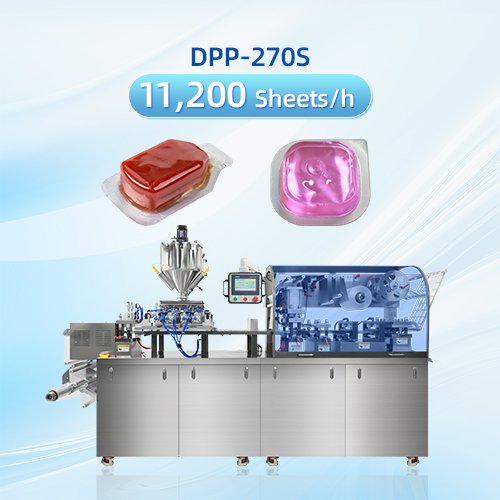

A máquina embaladora blister de ketchup automatiza a embaladora de produtos líquidos ou semissólidos. O processo começa com um filme de PVC/PET sendo desenrolado e aquecido, então formado em bolhas usando formação de pressão positiva . Um sistema de enchimento de precisão, normalmente uma bomba de êmbolo, dosa com precisão o molho de tomate em cada cavidade . Uma folha de alumínio de cobertura é então alimentada e selada a quente no blister, criando um selo hermético. A folha formada e preenchida se move para uma estação de corte onde as bolhas individuais são perfuradas. Um PLC integrado controla toda a sequência, garantindo velocidades de até 50 ciclos por minuto com qualidade de vedação consistente e padrões de higiene em conformidade com cGMP.
Até 11.200 bolhas/h
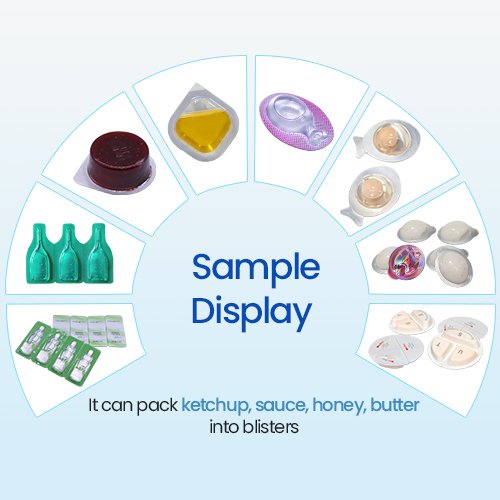
Pode embalar ketchup, molho, mel, manteiga e perfume em bolhas

| Capacidade de produção | 11.200 bolhas/h |
| Área e profundidade máximas de formação | 255*125*15mm A profundidade máxima é 30 mm |
| Fonte de energia | 380V / 220V / 50Hz (personalizado) |
| Potência total | 7,0 KW |
| Índice de ruído | <72 dBA |
Moldagem secundária: Moldagem secundária personalizável, até 30mm de profundidade, permitindo embalar mais materiais.
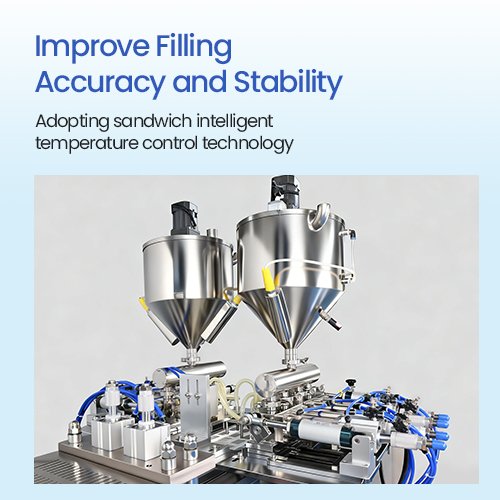
Tanque de aquecimento de camada tripla: Aquece a camada intermediária com água circulante, sem aquecer diretamente o material, maximizando a proteção das propriedades químicas do material.
Alimentador personalizado: Bombas cerâmicas, bombas de êmbolo, e bombas peristálticas podem ser selecionadas com base na fluidez do material e na precisão do enchimento, com precisão de enchimento > ±99,9%.

Embora máquinas de embalagem blister de comprimidos/cápsulas e as máquinas de embalagem em blister de ketchup pertencem à categoria mais ampla de equipamentos de embalagem em blister, eles são projetados para tipos de materiais fundamentalmente diferentes – sólidos versus líquidos ou semilíquidos. Esta distinção leva a diferenças significativas na estrutura da máquina, principais mecanismos operacionais, e requisitos de higiene.
A diferença mais fundamental reside nas propriedades físicas das matérias-primas.
A embalagem de comprimidos e cápsulas lida com unidades sólidas discretas que podem ser facilmente contadas, orientado, e transferido usando vibração mecânica e gravidade. Isso torna o sistema de alimentação relativamente simples e altamente repetível.
Em contraste, ketchup e produtos similares são fluidos viscosos que requerem força controlada para dosagem precisa. O processo de enchimento deve enfrentar desafios como resistência ao fluxo, adesão, e amarrando. Como resultado, o sistema depende de bombas de precisão e bicos cuidadosamente projetados para garantir um enchimento limpo e consistente.
Em aplicações farmacêuticas, a vedação se concentra em obter uma barreira hermética para proteger o produto de fatores ambientais, como umidade e oxigênio. Como os materiais são sólidos e secos, a interface de vedação normalmente está limpa, permitindo uma vedação térmica consistente.
Para embalagens de ketchup e molho, no entanto, a vedação é mais complexa. Qualquer produto residual na superfície de vedação pode comprometer a resistência da vedação, levando a vazamento ou redução da vida útil. Portanto, prevenir a contaminação na interface de vedação é fundamental, e tecnologias de vedação adicionais podem ser empregadas para garantir confiabilidade.
As embalagens blister farmacêuticas operam sob estruturas regulatórias rígidas, como GMP, mas a natureza relativamente seca do processo reduz a necessidade de limpeza frequente. A manutenção se concentra principalmente na prevenção da contaminação cruzada entre lotes e na garantia da integridade do equipamento.
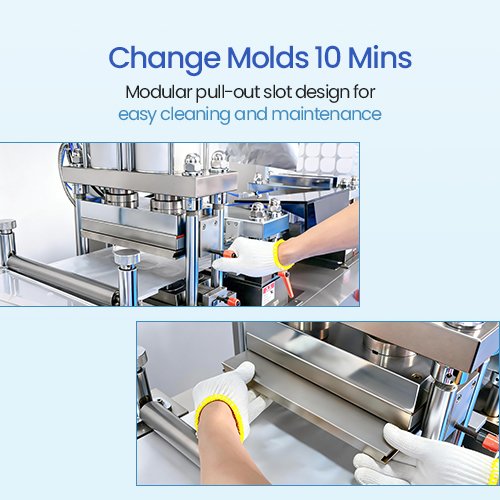
Embalagens de alimentos, especialmente para produtos viscosos e perecíveis como ketchup, exige padrões de limpeza significativamente mais elevados. O produto residual pode estragar e contaminar rapidamente os lotes subsequentes. Como resultado, As máquinas de embalagem blister de ketchup são normalmente equipadas com sistemas CIP e projetadas para desmontagem rápida e limpeza completa.
O design do blister está intimamente ligado às características do produto e aos requisitos funcionais.
Para comprimidos e cápsulas, o design é padronizado, com cavidades rasas que seguram unidades individuais com segurança. Precisão e consistência são fundamentais.
Para embalagem de ketchup, o design deve equilibrar os requisitos de preenchimento funcional com o apelo do consumidor. Aberturas maiores facilitam o enchimento preciso e reduzem resíduos, enquanto formas criativas melhoram a diferenciação do produto no mercado de varejo.
Embora as máquinas de embalagem blister de comprimidos/cápsulas e ketchup compartilhem um princípio de embalagem comum, suas abordagens de engenharia diferem significativamente devido à natureza dos materiais com que manuseiam.
Máquinas de embalagem blister farmacêutica priorizam a precisão, consistência, e conformidade regulatória para formas farmacêuticas sólidas.
As máquinas de embalagem blister de ketchup concentram-se no manuseio de fluidos, higiene, e controle de contaminação para produtos alimentícios viscosos.
Compreender essas diferenças é essencial ao selecionar a máquina de embalagem blister certa. Uma máquina bem combinada não só melhora a eficiência, mas também garante a qualidade do produto, segurança, e confiabilidade operacional de longo prazo.
Em aplicações de embalagens de blisters fluidos, como ketchup, molhos, e outros produtos semilíquidos – a seleção da bomba doseadora desempenha um papel crítico na determinação da precisão do enchimento, perda de produto, e custos gerais de manutenção.
Princípio de funcionamento: Uma bomba peristáltica opera girando rolos que alternadamente comprimem e liberam um tubo flexível. Esta ação cria um vácuo que puxa o fluido para dentro do tubo e o empurra para frente. Importante, o produto só entra em contato com a parede interna da tubulação e nunca toca o corpo da bomba.
Design Higiênico: O fluido passa apenas por um tubo descartável, eliminando o risco de contaminação cruzada. Ao trocar de produto, os operadores simplesmente substituem a tubulação – não há necessidade de limpar o corpo da bomba. Isso o torna ideal para aplicações que exigem trocas frequentes de produto, como diferentes sabores ou cores de molhos.
Baixo custo de manutenção: A estrutura é simples, sem válvulas ou selos mecânicos, resultando em uma baixa taxa de falhas e redução da complexidade de manutenção.
Força de cisalhamento baixa: O manuseio suave minimiza danos ao produto, tornando-o adequado para fluidos contendo partículas, como sementes ou polpa de tomate.
Precisão Limitada: À medida que a tubulação envelhece, sua elasticidade muda, levando a flutuações no volume de enchimento. A precisão típica varia de ±1% a ±2%, que é menos estável em comparação com bombas de pistão.
Capacidade de baixa pressão: A pressão de saída é relativamente baixa, tornando-o inadequado para produtos de alta viscosidade (por exemplo, pasta de tomate grossa) ou aplicações de injeção de alta velocidade.
Custos de consumíveis: A tubulação é uma peça de desgaste que requer substituição regular, o que pode aumentar os custos operacionais a longo prazo.
Princípio de funcionamento: Uma bomba de pistão usa o movimento alternativo de um pistão dentro de um cilindro. Válvulas unidirecionais controlam a entrada e descarga do fluido, permitindo enchimento volumétrico preciso.
Alta Precisão e Pressão: A precisão de enchimento pode atingir ±0,5%, e a bomba pode gerar alta pressão, tornando-o ideal para produtos de alta viscosidade, como ketchup ou manteiga de amendoim.
Forte durabilidade: O pistão e o cilindro metálicos são altamente resistentes ao desgaste, permitindo operação contínua em alta velocidade por longos períodos.
Limpeza difícil: O produto entra em contato com peças metálicas e componentes de vedação, que pode criar zonas mortas de higiene. A limpeza geralmente requer desmontagem ou dependência de CIP complexo (Limpeza no local) sistemas. Sem limpeza adequada, o resíduo pode degradar e contaminar lotes subsequentes.
Manutenção Complexa: As vedações são propensas a desgaste e vazamento. A manutenção requer desmontagem, levando a um tempo de inatividade mais longo.
Alta força de cisalhamento: A ação mecânica pode danificar produtos que contenham partículas grandes, afetando a textura e a qualidade.
Princípio de funcionamento: Uma bomba de cerâmica funciona de forma semelhante a uma bomba de pistão, mas seus componentes principais – como o pistão e o cilindro – são feitos de materiais cerâmicos de alto desempenho (por exemplo, zircônia).
Excepcional resistência ao desgaste e longevidade: Os materiais cerâmicos têm dureza extremamente alta e superfícies ultra-lisas, resultando em atrito muito baixo. Mesmo ao manusear materiais abrasivos (por exemplo, partículas de sal ou açúcar), o desgaste é mínimo. A vida útil é normalmente 5 a 10 vezes maior do que a das bombas de pistão metálico.
Sem contaminação e alta resistência à corrosão: A cerâmica é quimicamente estável e não reage com substâncias ácidas como o molho de tomate. Não há risco de contaminação por íons metálicos, tornando-os adequados para os mais altos padrões de segurança alimentar e farmacêutica.
Precisão estável ao longo do tempo: Devido ao desgaste mínimo, a precisão do enchimento permanece consistente por longos períodos, reduzindo a frequência de manutenção.
Alto custo inicial: Componentes cerâmicos são difíceis de fabricar, resultando em um investimento inicial significativamente maior em comparação com outros tipos de bombas.
Risco de Fragilidade:Embora extremamente difícil, cerâmica é quebradiça. O manuseio inadequado durante a instalação ou impacto externo pode causar lascas ou rachaduras, exigindo operação qualificada.
Requisitos rigorosos de limpeza: Embora as superfícies lisas sejam fáceis de limpar, material seco pode causar danos se a bomba for reiniciada sem limpeza adequada. A limpeza oportuna após o desligamento é essencial.
| Tipo de bomba | Cenário de aplicação | Precisão | Dificuldade de limpeza | Custo consumível | Compatibilidade do material |
| Bomba Peristáltica | Pequenos lotes, vários produtos, materiais particulados | ±1%–2% | Muito baixo (substituição do tubo) | Alto (tubulação frequente) | Viscosidade média a baixa |
| Bomba de pistão | Grande escala, de alta velocidade, produção de alta viscosidade | ≤ ±0,5% | Alto (desmontagem necessária) | Médio (substituição de vedação) | Alta viscosidade |
| Bomba Cerâmica | Alto valor, corrosivo, ou materiais abrasivos | ≤ ±0,3% | Médio (CIP possível) | Baixo (longa vida útil) | Alta viscosidade + partículas |
Para aplicações de qualidade alimentar, como embalagens de ketchup, a escolha ideal da bomba depende das prioridades de produção:
Trocas frequentes de produtos: Se a sua linha de produção lida com vários sabores ou formulações, uma bomba peristáltica é a solução preferida devido à sua troca rápida e livre de contaminação.
De alta velocidade, Produção de alta precisão: Se a sua prioridade é a produção em grande escala com rigorosa precisão de dosagem (desvio abaixo 0.5 g), bombas de cerâmica oferecem valor superior a longo prazo em comparação com bombas de pistão de metal tradicionais. Eles eliminam o risco de contaminação por desgaste metálico e reduzem significativamente o tempo de inatividade para manutenção.


*Respeitamos sua confidencialidade e todas as informações são protegidas.