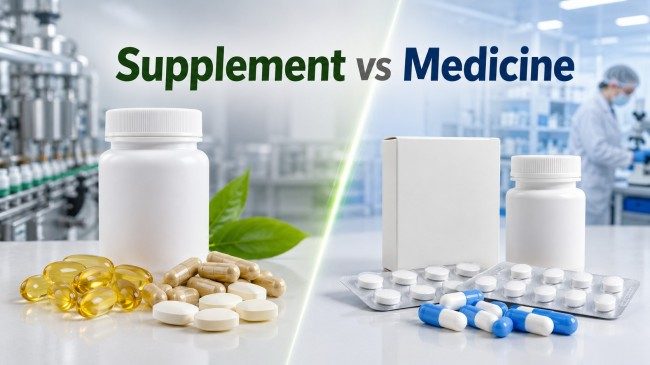
Voedingssupplementen en medicijnen komen vaak in dezelfde vormen voor. Loop door een apotheek of supplementenwinkel en je zult tabletten vinden, harde capsules, softgels, poeders, en vloeistoffen in beide categorieën. Hun uiterlijk alleen al vertelt je heel weinig over hoe het eindproduct wordt gereguleerd of vervaardigd.
De belangrijkste supplement versus medicijn Het verschil is waarvoor het product bedoeld is. Supplementen voegen voedingsingrediënten toe, zoals vitamines, mineralen, aminozuren, of plantaardige producten aan het dieet toevoegen. Ter preventie worden medicijnen gebruikt, traktatie, verlichten, of het beheersen van ziekten en medische aandoeningen.
Dat verschil reikt veel verder dan de formulering. Het heeft invloed op productclaims, etikettering, productiecontroles, testen, documentatie, en soms de verpakking die wordt gebruikt om het eindproduct op de markt te brengen.
1.Supplement versus medicijn: Wat zijn ze?
Wat is een voedingssupplement?
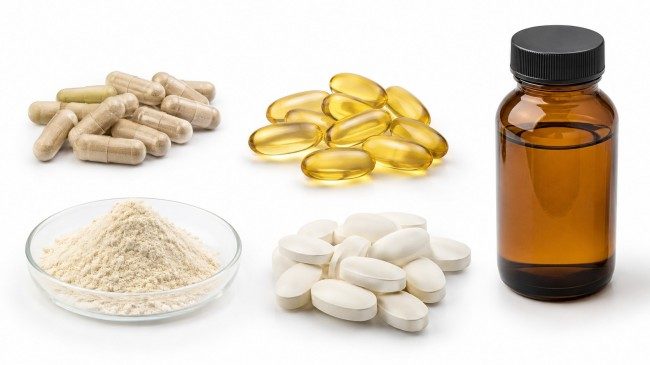
A voedingssupplement is ontworpen om specifieke voedingsstoffen of andere voedingsingrediënten toe te voegen aan het normale dieet van een persoon. In de Verenigde Staten, voedingsingrediënten kunnen vitamines bevatten, mineralen, aminozuren, kruiden en andere plantaardige ingrediënten, evenals bepaalde uittreksels, concentreert, metabolieten, en aanverwante stoffen. Deze voedingssupplementen zijn verkrijgbaar als tabletten, capsules, softgels, gummies, poeders, vloeistoffen, en andere veel voorkomende vormen.
Een multivitaminetablet, visolie softgel, botanische capsule, en eiwitpoeder kunnen daarom allemaal voedingssupplementen zijn, ook al zijn hun ingrediënten en productiemethoden heel verschillend.
De categorie wordt gedefinieerd door het eindproduct en de manier waarop het op de markt wordt gebracht, niet door de vraag of het als tablet of capsule wordt geleverd.
In de VS., De FDA reguleert voedingssupplementen, maar keurt deze over het algemeen niet goed voordat ze op de markt komen. Fabrikanten en distributeurs zijn ervoor verantwoordelijk dat hun producten aan de veiligheid voldoen, etikettering, en productievereisten die daarop van toepassing zijn. Voor bepaalde producten die een nieuw voedingsingrediënt bevatten, gelden aanvullende meldingseisen.
Wat is geneeskunde?
Geneeskunde verwijst hier naar producten die worden gebruikt om te voorkomen, traktatie, verlichten, of het beheersen van ziekten en medische aandoeningen.
Ze omvatten zowel receptplichtige als niet-receptplichtige producten. Hun pad naar de markt verschilt per product. Velen vereisen een door de FDA beoordeelde aanvraag, terwijl bepaalde vrij verkrijgbare producten op de markt kunnen worden gebracht onder een toepasselijke OTC-monografie in plaats van via een individuele pre-market-aanvraag.
Dit onderscheid is van belang omdat een vitaminecapsule en een medicijncapsule hetzelfde fysieke formaat kunnen hebben, terwijl er verschillende regels voor claims gelden, productie, kwaliteitscontrole, en etikettering.
Een snelle vergelijking maakt de belangrijkste verschillen duidelijker:
| Gebied | Dieetsupplement | Geneesmiddel |
| Belangrijkste gebruik | Vult de voeding aan met voedingsingrediënten | Voorkomt, traktaties, verlicht, of beheert ziekten en medische aandoeningen |
| Veel voorkomende vormen | Tabletten, capsules, softgels, gummies, poeders, vloeistoffen | Tabletten, capsules, vloeistoffen, en andere doseringsvormen |
| ONS. premarket-route | Over het algemeen geen voorafgaande goedkeuring van de FDA; Voor sommige nieuwe voedingsingrediënten is voorafgaande kennisgeving vereist | Route is afhankelijk van het product; toepassingen of een toepasselijke OTC-monografie kunnen worden gebruikt |
| Claims | Gezondheid, voedingswaarde, en structuur-/functieclaims zijn onderworpen aan specifieke regels | Claims moeten passen bij het toegestane gebruik en de etikettering van het geneesmiddel |
| Label | Supplementfeiten en andere vereiste supplementinformatie | Productspecifieke etikettering van medicijnen |
| Productieraamwerk in de VS. | 21 CFR-onderdeel 111 | 21 CFR-onderdelen 210 En 211 |
| Verpakking | Geselecteerd rond stabiliteit, gebruik, etikettering, en eventuele productspecifieke eisen | Geselecteerd rond stabiliteit, gebruik, etikettering, en productspecifieke veiligheidseisen |
Het belangrijkste punt is dat de fysieke doseringsvorm kan overlappen, terwijl de vereisten rond het eindproduct dat niet doen.
2.Hoe te gebruiken, Claims, en etikettering verschillen?
Het duidelijkste verschil blijkt uit wat een bedrijf kan zeggen dat het product doet.
Productdoel Wijzigt de claims
Voedingssupplementen kunnen in de Verenigde Staten verschillende soorten etiketclaims maken. FDA identificeert gezondheidsclaims, claims over voedingswaarde, en structuur-/functieclaims als hoofdcategorieën. Voor elk gelden verschillende eisen.
Bijvoorbeeld, een structuur-/functieclaim kan verklaren hoe een voedingsstof een normale lichaamsstructuur of -functie helpt ondersteunen. Waar aan de vereiste voorwaarden wordt voldaan, een supplement kan zeggen dat een voedingsstof een normale lichaamsfunctie ‘ondersteunt’.
Wat het niet kan, is zichzelf presenteren als een product dat verwent, verhindert, of geneest een specifieke ziekte terwijl het nog steeds op de markt wordt gebracht als voedingssupplement. FDA stelt dat een product vertegenwoordigd is voor behandeling, preventie, of genezing van een specifieke ziekte valt buiten de categorie voedingssupplementen.
De etikettering van geneesmiddelen volgt een andere route omdat het geclaimde gebruik gebonden is aan de omstandigheden waaronder het product legaal op de markt kan worden gebracht.
Dit is de reden waarom twee producten met vergelijkbare ingrediënten niet automatisch tot dezelfde categorie behoren. Hoe het eindproduct is geformuleerd, gepresenteerd, en marketingzaken.
Wat zijn supplementfeiten?
Van Aanvullende feiten panel is een van de gemakkelijkste manieren om een voedingssupplement te herkennen dat in de Verenigde Staten wordt verkocht.
Met beperkte uitzonderingen, De FDA vereist dat het Supplement Facts-paneel de portiegrootte vermeldt, aantal porties per container, voedingsingrediënten, en de hoeveelheid van elk voedingsingrediënt in één portie. Waar nodig wordt informatie over de dagelijkse waarde vermeld.
Ingrediënten die niet in Supplement Facts worden vermeld, worden normaal gesproken afzonderlijk vermeld als Andere ingrediënten. Dit kunnen stoffen zijn zoals gelatine, zetmeel, stabilisatoren, conserveermiddelen, smaken, en andere formuleringsingrediënten.
Voor fabrikanten, De ontwikkeling van etiketten begint daarom ruim voordat een fles een etiketteermachine bereikt. De formule, portiegrootte, ingrediëntendeclaratie, beweringen, en het verpakkingsformaat hebben allemaal invloed op de informatie die op het uiteindelijke etiket of de uiteindelijke doos moet passen.
De etikettering van geneesmiddelen bevat verschillende informatie, afhankelijk van het type product en het marketingtraject ervan. Het praktische verschil is niet alleen de naam van het labelpaneel: het label moet aansluiten bij de eisen die aan dat specifieke eindproduct worden gesteld.
3.Hoe verschilt de productie??
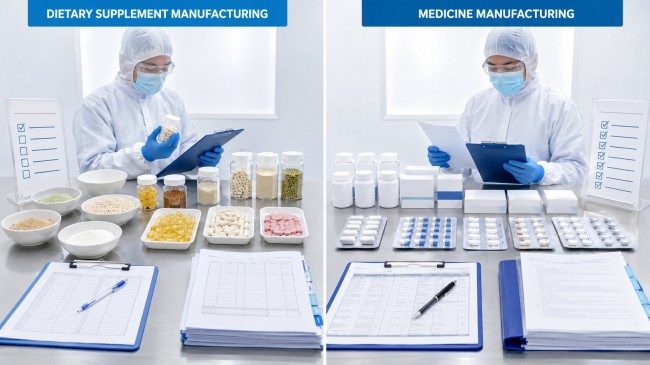
Voedingssupplementen en medicijnen kunnen vertrouwde productieprocessen delen. Poeder mengen, korrel, capsule vulling, tabletcompressie, coating, inspectie, en verpakkingen verschijnen in beide sectoren.
In het productiekader rond deze activiteiten wordt het verschil belangrijker.
Productie van voedingssupplementen
Voedingssupplementen geproduceerd voor de VS. markt zijn onderworpen aan de CGMP-vereisten in 21 CFR-onderdeel 111, die zowel betrekking hebben op de productie als op de verpakking, etikettering, en holdingactiviteiten.
De eisen hebben betrekking op zaken als personeel, faciliteiten, apparatuur, kwaliteitscontrole, specificaties, productieregistraties beheersen, batchproductieregistraties, laboratorium operaties, verpakking, etikettering, en archivering. Productieapparatuur moet passen bij het proces waarvoor deze wordt gebruikt en moet gedurende het gehele gebruik in de juiste werkende en schone staat worden gehouden.
Dit betekent productie van voedingssupplementen is niet simpelweg een kwestie van ingrediënten mengen en in capsules of tabletten doen. Fabrikanten hebben specificaties en controles nodig die ervoor zorgen dat het eindproduct de verwachte identiteit heeft, zuiverheid, kracht, samenstelling, en kwaliteit.
Farmaceutische productie
Afgewerkte farmaceutische producten in de VS. opereren onder het CGMP-framework in 21 CFR-onderdelen 210 En 211.
Deel 211 stelt eisen aan het hele farmaceutische productiesysteem, vanuit faciliteiten, apparatuur, en materiaalcontrole voor productieprocessen, laboratorium testen, verpakking, etikettering, stabiliteitsprogramma's, en productiegegevens.
De bruikbare vergelijking is niet dat het ene systeem “goed” is en het andere “beter”.,Of dat de ene wel gereguleerd is, terwijl de andere dat niet is. They are separate manufacturing frameworks written for different product categories.
That difference affects how manufacturers establish specifications, document production, control materials, handle deviations, release finished batches, and maintain records.
What Does This Mean for Production Equipment?
The difference between supplement and medicine manufacturing does not necessarily require completely different machine categories.
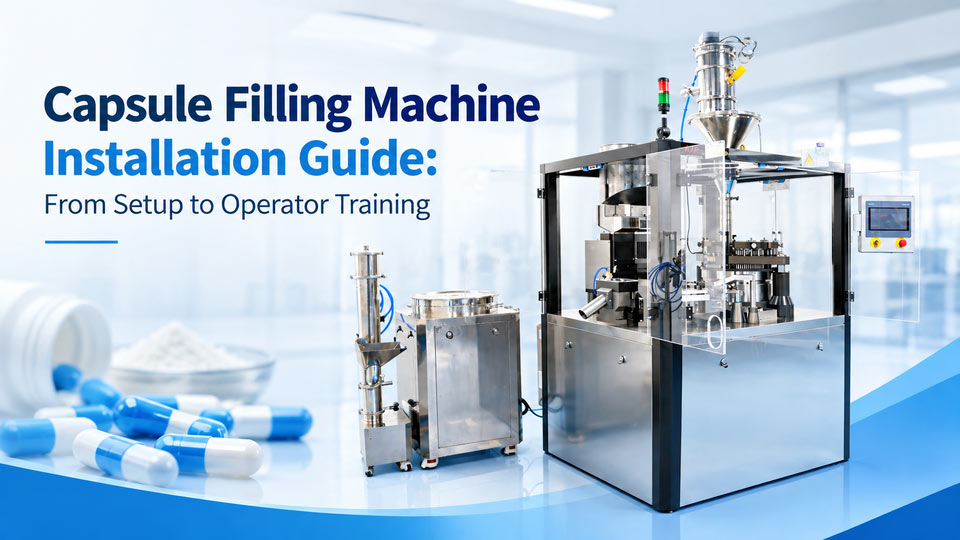
A rotary tablet compression machine is still used to compress prepared material into tablets. Een automatische capsule vulmachine still meters a formulation into capsule shells. Whether the finished product is a supplement or medicine changes the requirements around the process rather than the basic mechanical purpose of the machine.
The formulation remains central to machine configuration.
A free-flowing vitamin blend behaves differently from a sticky botanical powder. Capsule fill weight, poeder stroom, compression characteristics, dust generation, vereiste uitvoer, and cleaning needs all influence the equipment setup regardless of the product category.
Equipment design can support controlled production through suitable product-contact surfaces, accessible cleaning areas, enclosed processing, process monitoring, and repeatable controls. Those features are part of a larger manufacturing system; they do not make the entire production process compliant by themselves.
This is the point where equipment selection and manufacturing requirements meet without becoming the same question.
4.How Does Packaging Differ?
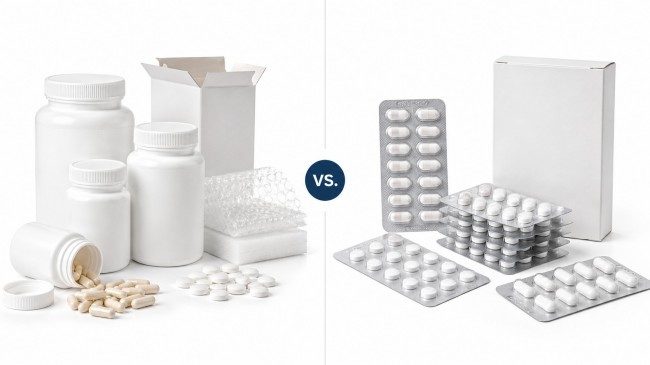
There is no universal rule that supplements belong in bottles while medicines belong in blister packs.
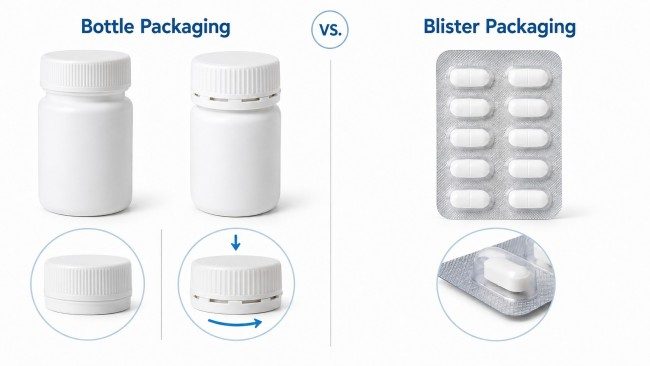
Beide categorieën kunnen flessen gebruiken, blaren, zakjes, zakjes, en dozen. De juiste verpakking begint bij de kenmerken van het eindproduct.
Productbescherming komt op de eerste plaats
Vocht, zuurstof, licht, temperatuur, en fysieke schade kan de productstabiliteit beïnvloeden. Verpakkingsmaterialen en sluitingssystemen moeten daarom het beschermingsniveau bieden dat voor de formulering is vastgesteld.
Een vochtgevoelige capsule heeft mogelijk een container met een hoge barrière en een droogmiddel nodig. Een andere tabletformulering kan stabiel blijven in een eenvoudiger flessysteem. Blisterverpakkingen kunnen individuele eenheden scheiden en een andere barrièrestructuur bieden, afhankelijk van de gekozen vorm- en dekselmaterialen.
Deze beslissingen zijn gebaseerd op het daadwerkelijke product en niet op het woord supplement van geneesmiddel afgedrukt op de verpakking.
Voor flessen, A bottellijn voor het tellen van tabletcapsules kan vaste producten tellen en afvullen voordat ze worden afgedekt en geëtiketteerd. Wanneer dit door het product wordt vereist, de lijn kan ook het inbrengen van droogmiddel omvatten, afdichting, en kartonneren.
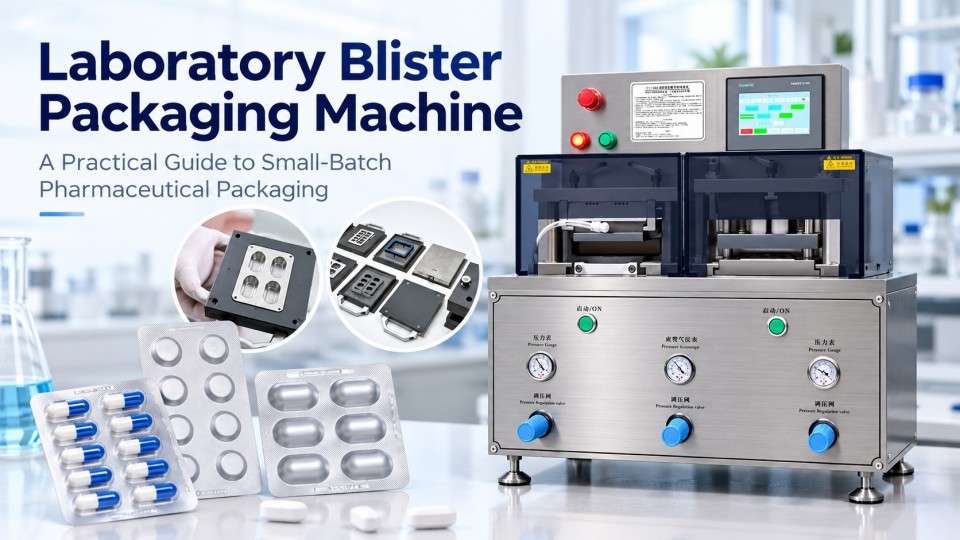
Voor eenheidsdosisformaten, A blisterverpakkingsmachine vormt zakken, laadt de tabletten of capsules, en verzegelt het pakket. De geselecteerde blisterstructuur moet overeenkomen met de bescherming die de formulering nodig heeft.
Dezelfde verpakkingstechnologieën kunnen dus op beide markten verschijnen.
Veiligheidseisen kunnen productspecifiek zijn
Waar verpakkingen duidelijker beginnen te verschillen, zijn productspecifieke veiligheids- en wettelijke vereisten.
Bijvoorbeeld, ONS. De regelgeving omvat onder meer verzegelde verpakkingsvereisten voor bepaalde vrij verkrijgbare geneesmiddelen. Deel 211 bevat ook speciale controles voor farmaceutische verpakkings- en etiketteringsactiviteiten.
Kinderveilige verpakkingen kunnen niet worden gereduceerd tot de simpele regel dat ‘medicijnen het nodig hebben en supplementen niet’.
Voor sommige voedingssupplementen gelden ook eisen voor een kindveilige verpakking. IJzerhoudende supplementen zijn een duidelijk voorbeeld. Een Amerikaanse. Terugroepactie van de Consumer Product Safety Commission aangekondigd in april 2026 Het betrof verschillende ijzerhoudende voedingssupplementen die waren verpakt zonder de voor die producten vereiste kinderveilige bescherming.
Dat voorbeeld laat zien waarom pakketspecificaties gebaseerd moeten zijn op de productinhoud en de doelmarkt in plaats van op brede aannames over de categorie.
Labelruimte, sabotage-functies, soort sluiting, barrière bescherming, veel informatie, en secundaire verpakkingen kunnen allemaal van invloed zijn op de uiteindelijke verpakkingslijn.
5.Wat betekenen deze verschillen voor fabrikanten?
Voor een fabrikant die slechts één gevestigd product produceert, het onderscheid kan eenvoudig lijken. It becomes more practical when the same facility handles multiple formulations or plans to expand from supplements into pharmaceutical products.
Four areas deserve attention.
Eerst, confirm the product category and market requirements before designing the process. A tablet or capsule format alone does not provide enough information to establish the required controls.
Seconde, build production around the formulation. Poeder stroom, ingredient characteristics, doseringsvorm, batchgrootte, vereiste uitvoer, and in-process controls determine how blending, compressie, capsule vulling, or other manufacturing steps are configured.
Derde, plan cleaning and changeover around the actual products being handled. Residue, allergens, potent ingredients, kleurstoffen, oliën, and sticky powders create different cleaning challenges. The cleaning approach should match the materials and contamination risks involved.
Vierde, finalize the package before configuring the complete packaging line. Bottle size, aantal per container, sluiting, droogmiddel, blaar structuur, label, en karton bepalen welke verpakkingshandelingen nodig zijn.
In apparatuurprojecten, Ruida Packing begint meestal met de doseringsvorm, materiële kenmerken, uitgangsdoel, schoonmaakbehoeften, en definitief pakket voordat u een machineconfiguratie aanbeveelt. Dit vermijdt dat elke supplementtablet of medicijncapsule wordt behandeld alsof deze dezelfde productievereisten heeft.
Het resultaat is een nuttiger vraag dan: ‘Is dit een supplementenmachine of een medicijnmachine??De betere vraag is of de apparatuur en het proces geschikt zijn voor het product dat wordt vervaardigd.
Conclusie
Van supplement versus medicijn Het verschil begint met het doel van het eindproduct. Dat doel vormt vervolgens de claims, etiketten, productiecontroles, en marktvereisten rond de productie.
Soortgelijke tabletten en capsules kunnen door soortgelijke soorten apparatuur gaan, en beide categorieën kunnen flessen of blisterverpakkingen gebruiken. Waar het om gaat is of het productieproces en de verpakking zijn ontworpen rond de daadwerkelijke formulering, bedoeld gebruik, en eisen van de markt waar het product verkocht zal worden.
Veelgestelde vragen over supplementen versus medicijnen
-
Worden voedingssupplementen gereguleerd door de FDA??
Ja. FDA reguleert voedingssupplementproducten en ingrediënten, inspecteert productiefaciliteiten, bepaalde meldingen controleert, houdt de markt in de gaten, en kan handhavingsmaatregelen nemen wanneer producten federale vereisten schenden. Voedingssupplementen vallen simpelweg onder een ander regelgevingskader dan medicijnen.
-
Hebben voedingssupplementen goedkeuring van de FDA nodig voordat ze worden verkocht??
Algemeen, Nee. De FDA keurt voedingssupplementen niet goed voordat ze op de markt worden gebracht, op dezelfde manier waarop ze veel medicijnen beoordeelt. Voor bepaalde producten die een nieuw voedingsingrediënt bevatten, is een voorafgaande kennisgeving met ondersteunende veiligheidsinformatie vereist.
-
Kan hetzelfde ingrediënt voorkomen in een supplement en een medicijn??
Het ingrediënt alleen geeft geen antwoord op de classificatievraag. Het beoogde gebruik van het eindproduct, formulering, beweringen, etikettering, en de status van regelgeving zijn allemaal van belang. Er mag niet van worden uitgegaan dat een ingrediënt dat in de ene context wordt gebruikt dezelfde regulerende rol speelt in een andere context.
-
Kunnen supplementen en medicijnen hetzelfde type productieapparatuur gebruiken??
Vaak, Ja. Voor tablets uit beide categorieën kan tabletcompressie nodig zijn, terwijl voor harde capsules capsulevulling nodig kan zijn. De geschiktheid van de apparatuur hangt nog steeds af van de formulering, doseringsvorm, schoonmaak eisen, uitgang, procescontroles, en andere productiebehoeften.
-
Moeten alle voedingssupplementen een kindveilige verpakking hebben??
Nee. De eisen inzake kinderbeveiliging zijn afhankelijk van het product en de markt. Sommige supplementen hebben dit wel nodig; ijzerbevattende voedingssupplementen zijn één van de belangrijkste Amerikaanse voedingssupplementen. voorbeeld.
Referenties
1. ONS. Food and Drug Administration - Vragen en antwoorden over voedingssupplementen
2. ONS. Food and Drug Administration – Labelclaims voor voedsel & Voedingssupplementen
3. Elektronische code van federale regelgeving — 21 CFR-onderdeel 111
4. ONS. Commissie voor consumentenproductveiligheid – april 2026 Terugroepactie ijzersupplement