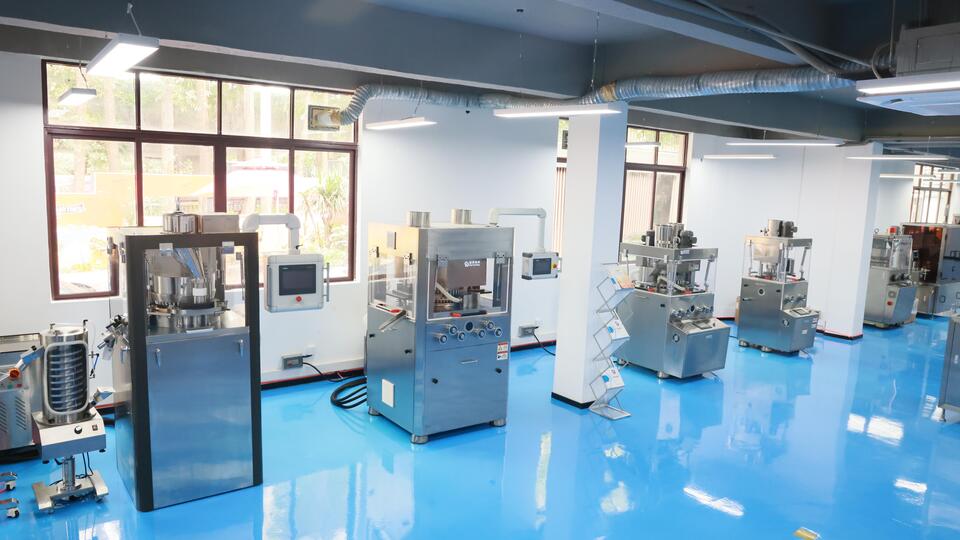
Ruida パッキングロータリー錠剤プレス機
導入
Many people associate a ロータリー打錠機 with high-volume pharmaceutical manufacturing. 実際に, しかし, small batch production has become increasingly common as pharmaceutical companies develop new formulations, manufacture clinical trial materials, produce validation batches, and introduce niche products with limited market demand. These production stages require equipment that delivers consistent tablet quality while remaining flexible enough to accommodate frequent product changeovers.
A well-designed tablet press machine can meet these requirements without sacrificing process stability. Features such as rapid tooling replacement, adjustable compression parameters, efficient cleaning, and scalable output allow a rotary tablet press to support both current production needs and future expansion. Rather than serving only large commercial plants, rotary systems have become a practical choice for manufacturers seeking reliable performance in pharmaceutical tablet production with relatively small batch sizes.
This article explains how a rotary tablet press works, the characteristics that make it suitable for small batch production, the key factors affecting productivity and GMP manufacturing, and what to consider when selecting equipment for long-term pharmaceutical manufacturing.
1. Tablet Press Machine in Pharmaceutical Production
Although tablet press machines are available in different configurations, the rotary tablet press has become the standard choice for most pharmaceutical manufacturers. Its continuous operating principle, stable compression process, and scalable capacity allow the same equipment platform to support formulation development, パイロット制作, validation batches, and commercial manufacturing.
What Is a Tablet Press Machine
A tablet press machine forms tablets by compressing powders, 顆粒, or pellet blends under controlled mechanical pressure applied through upper and lower punches.Depending on product requirements, tablets can be manufactured in round, 楕円形, capsule-shaped, ring-shaped, or customized forms with different diameters, thicknesses, and embossing patterns. In today’s pharmaceutical tablet production, the rotary tablet press is widely adopted because it combines continuous operation with consistent tablet quality across a broad range of formulations.
How Rotary Tablet Compression Works
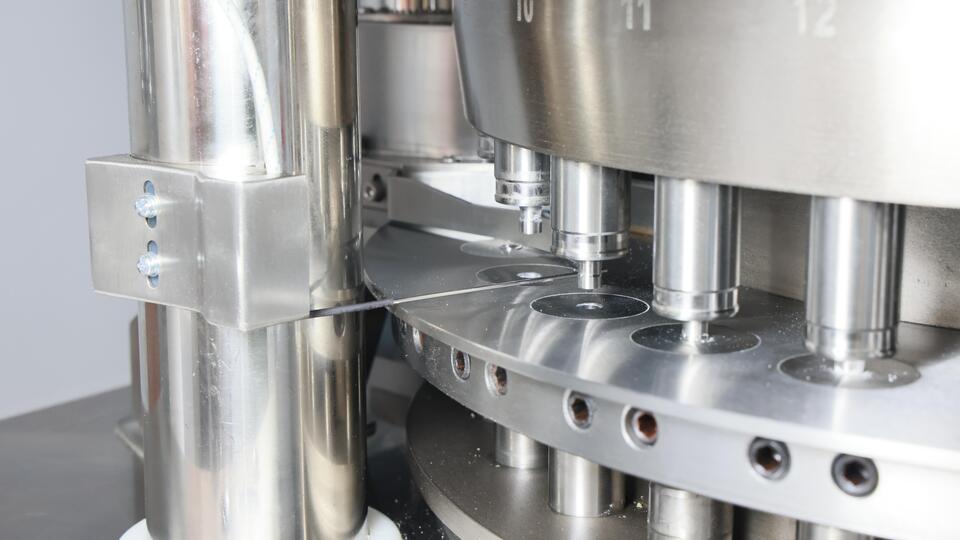
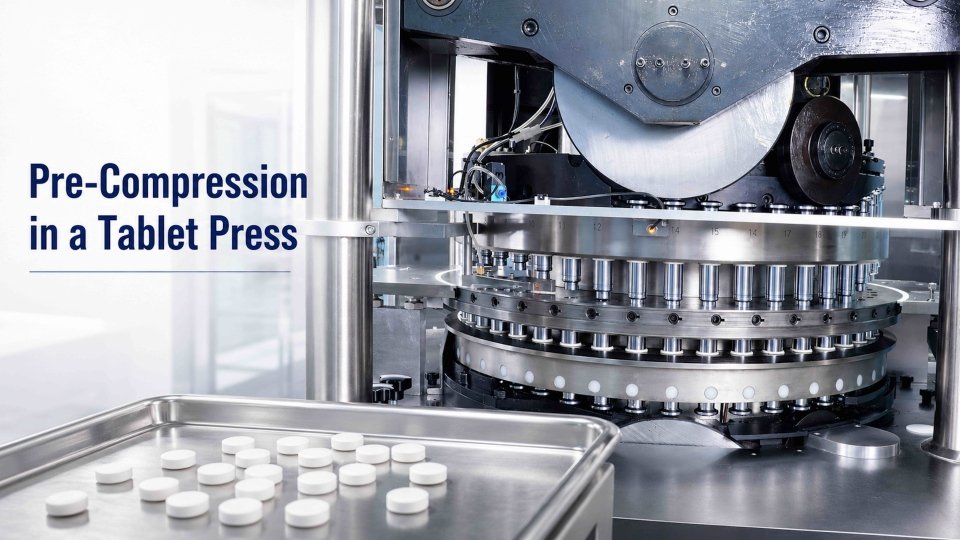
In a rotary tablet press, compression occurs as the turret rotates through successive stations for filling, 投薬, 予圧縮, メイン圧縮, and ejection of tablets.Multiple punch and die stations move with the rotating turret, allowing every station to complete a different stage of the compression cycle at the same time.
圧縮力, 砲塔速度, 塗りつぶしの深さ, and feeder settings can all be adjusted independently. This flexibility enables the same tablet press machine to manufacture tablets with different diameters, thicknesses, hardness requirements, and formulations without changing the overall operating principle. During product changeovers, パンチ, 死ぬ, and feeding components can be replaced according to production requirements before the next batch begins.
2. Rotary Tablet Press for Small Batch Pharmaceutical Production
Although small batch production involves fewer tablets than large commercial manufacturing, equipment requirements are often more demanding. Manufacturers must balance product quality, 生産の柔軟性, cleaning efficiency, and future expansion while maintaining consistent tablet performance across different formulations. A well-designed tablet press machine should support these requirements without adding unnecessary complexity to daily operation.
Production Requirements for Small Batch Production
Unlike continuous high-volume manufacturing, small batch production frequently involves formulation development, validation batches, パイロット制作, and products with relatively low market demand. Production schedules change more often, and manufacturers may process several different products on the same equipment within a short period. Each changeover requires tooling replacement, cleaning verification, パラメータ調整, and production restart before the next batch begins.
Under these operating conditions, a tablet press machine should allow rapid product changeovers while maintaining consistent tablet weight, 硬度, 厚さ, そして外観. Equipment should also support straightforward cleaning procedures, repeatable process settings, and scalable production capacity. These capabilities help manufacturers reduce non-production time, simplify process validation, and maintain stable quality throughout pharmaceutical tablet production.
3. Assessment of Rotary Tablet Press Performance in Small Batch Production Environments
Unlike high-volume manufacturing, small batch production places greater emphasis on flexibility than maximum output. Pharmaceutical manufacturers often process multiple formulations in short production cycles, requiring frequent product changeovers, repeated cleaning, and rapid adjustment of production parameters. 同時に, expensive raw materials and strict quality requirements leave little room for inconsistent tablet weight or unnecessary material loss.
For these reasons, selecting a rotary tablet press involves much more than comparing production capacity. Manufacturers should evaluate how effectively the machine handles different powder characteristics, supports rapid tooling changes, simplifies cleaning between batches, and improves raw material utilization. These practical considerations have a direct impact on production efficiency, operating costs, and long-term manufacturing flexibility.
Stable Feeding for Different Powder Characteristics
One of the biggest challenges in small batch production is that raw material properties often change from one formulation to another. Some powders flow freely into the die cavities, while others are cohesive, 粘着性のある, or contain fine particles that tend to bridge or feed unevenly. If the feeding system cannot adapt to these differences, inconsistent die filling may occur, resulting in tablet weight variation, additional operator intervention, and wasted production time.
このため, the feeding system is one of the first areas to evaluate when selecting a rotary tablet press for flexible pharmaceutical manufacturing. Machines intended for multi-product production generally incorporate features designed to maintain stable powder delivery across a wider range of formulations, 含む:
- Three-layer force feeder for materials with different flowability and viscosity
- Adjustable feeder speed to match various formulation characteristics
- Quick fill-depth adjustment via PLC control system or handwheel, allowing operators to conveniently fine-tune tablet weight when switching between formulations
- Stable feeding performance that helps maintain consistent tablet weight throughout the production run

オルタナティブ: フォースフィーダー
Compared with gravity-fed systems, a force feeder actively transfers powder into the die cavities, reducing the influence of material flow characteristics on filling consistency. This becomes particularly valuable when processing sticky formulations, poor-flowing powders, or products containing APIs with different particle sizes and bulk densities. Instead of requiring repeated manual intervention during production, operators can quickly adjust process parameters through the PLC interface to maintain stable tablet quality after formulation changes.
今日, these feeding concepts have become increasingly common in pharmaceutical rotary tablet press designs. Equipment from manufacturers including Ruida Packing, スライス, Korsch, and IMA adopts similar engineering principles to improve feeding stability and support reliable production across a wide variety of pharmaceutical formulations.
Fast Tooling Change for Multiple Tablet Designs
In small batch production, product diversity is often high, while batch size remains relatively small. Manufacturers frequently switch between different tablet diameters, 形, thicknesses, and even embossed designs within the same production schedule. 結果として, tooling changeover becomes a critical factor affecting overall production efficiency.
A production-oriented tablet press should support fast and repeatable tooling changes without requiring complex mechanical recalibration. Key design considerations typically include:
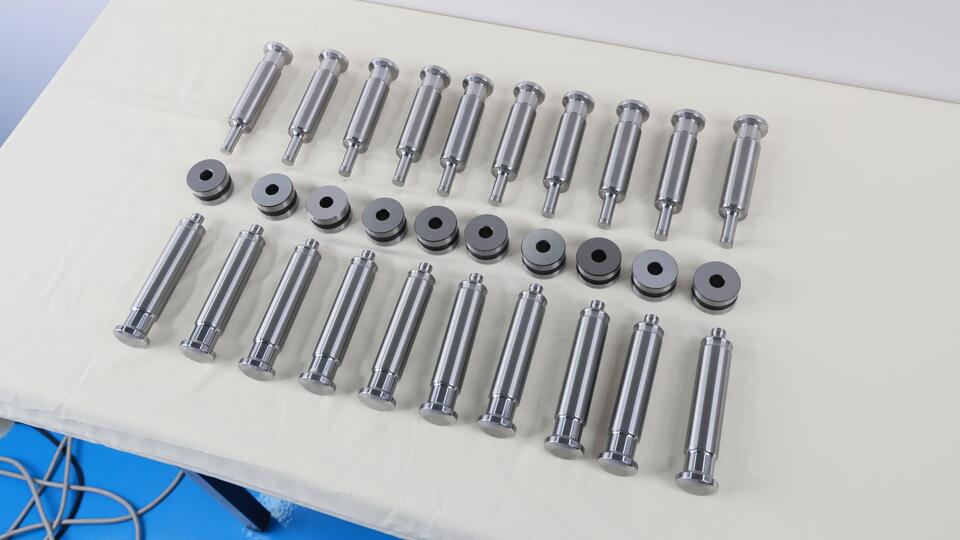
- Standardized punch and die system (欧州連合 / TSM compliant)
- Quick installation and alignment of tooling sets
- Reduced adjustment steps after mold replacement
- Stable parameter retention for repeated batch production
These design elements are directly linked to reducing changeover time and improving operational efficiency in small batch production environments. Standardized punch and die systems minimize the need for repeated mechanical adjustments, which helps shorten tooling changeover procedures between different tablet batches. Quick installation and precise alignment of tooling sets further reduce setup time and lower the risk of operator-dependent variations during production shifts.
By reducing the number of adjustment steps required after mold replacement, the machine can return to stable production conditions more quickly. This is particularly important in small batch production, where frequent product switching makes changeover time a major factor affecting overall equipment utilization.
加えて, stable parameter retention in the control system allows previously validated settings to be reused directly, reducing the need for full recalibration after each tooling change and further improving production continuity.
| Tooling Requirement | Machine Design Feature | Production Impact |
| Different tablet sizes | Standardized punch & die system | Enables multi-product production |
| Frequent design change | Quick-change tooling structure | Reduces downtime between batches |
| Embossed logo variation | High-precision die alignment | Ensures consistent tablet appearance |
| Batch-to-batch repeatability | Parameter retention in PLC system | Faster setup for repeat orders |

Punch and die tooling for rotary tablet press
Easy Cleaning Between Production Batches
In small batch pharmaceutical production, cleaning is often more time-consuming than actual tablet compression. Since multiple products are manufactured within short production cycles, the tablet press must be cleaned thoroughly between batches to avoid cross-contamination and meet GMP manufacturing requirements.
The main challenge is not only cleaning time, but also how easily the machine can be disassembled and accessed. Areas such as the feeder system, die table, scraper zone, and product-contact surfaces tend to accumulate residual powder, especially when processing sticky or fine formulations. If these areas are difficult to reach, cleaning efficiency drops significantly and production downtime increases.
A machine suitable for frequent cleaning cycles should focus on structural accessibility rather than complex automation. Key design features include:
- Tool-less disassembly of feeder and product-contact parts
- Quick removal of the force feeder system
- Smooth surface finishing to reduce powder adhesion
- Minimized dead corners in die and turret areas
- Open structure design for easier visual inspection
These structural features are directly related to reducing cleaning time and improving cleaning consistency in small batch production environments. Tool-less disassembly of product-contact parts allows operators to remove key components such as the feeder and scraper system without using specialized tools, which significantly reduces downtime between batches.
Quick removal of the force feeder and simplified access to the die table area help minimize the accumulation of residual powder in hard-to-reach zones. 同時に, smooth surface finishing reduces powder adhesion, making it easier to remove fine particles during routine cleaning procedures.
By minimizing dead corners in the turret and product-contact zones, the machine reduces the risk of cross-contamination and simplifies cleaning validation under GMP manufacturing requirements. 実際に, this means cleaning becomes a repeatable mechanical process rather than a time-consuming manual procedure involving partial disassembly or extensive scraping.
| Cleaning Challenge | Machine Design Feature | Production Benefit |
| Powder residue in feeder zone | Quick-release feeder system | Reduced cleaning time |
| Material buildup in die table | Smooth surface finishing | Easier residue removal |
| Hard-to-reach internal areas | Open structural design | Faster GMP inspection |
| Cross-contamination risk | Minimized dead corners | Improved compliance |
| Frequent batch changeover | Tool-less disassembly | Reduced downtime |
Improving Material Utilization in Rotary Tablet Press Operations
In small batch pharmaceutical production, material utilization has a more direct impact on production efficiency and batch consistency compared with large-scale manufacturing processes. Although the absolute quantity of powder loss may appear limited, the relative impact on total output becomes significantly higher due to the reduced batch size. This is particularly important when handling high-value raw materials such as active pharmaceutical ingredients (API), where even minor losses during tablet compression processes can affect overall production outcomes.
In modern tablet manufacturing systems, material waste is typically associated with multiple stages of the rotary tablet press operation, including feeding, die filling, and compression transfer processes.
Within a pharmaceutical tablet press machine, powder loss can occur in several key areas of the tablet production line, 含む:
- Inconsistent die filling caused by unstable powder feeding system performance
- Powder spillage during transfer between force feeder and die cavities
- Residual material retention in the compression zone of rotary tablet press equipment
- Leakage at the interface between turret system and tablet compression tooling area
- Powder accumulation in internal gaps of the pharmaceutical compression machine structure that is not reintroduced into the production cycle
These issues are more pronounced in small-scale tablet production environments, especially when dealing with powders that have different flowability characteristics, particle size distributions, or cohesiveness levels.
To improve material utilization efficiency in a rotary tablet press system, the equipment should be designed to ensure stable powder handling, controlled material flow, and reduced internal loss throughout the compression process. Key engineering considerations include:
- A precise powder feeding system that ensures consistent die cavity filling and stable tablet weight variation control
- Tight mechanical clearance between turret and feeding system to reduce powder leakage and material spillage
- Stable force feeder system design that improves powder distribution uniformity in pharmaceutical tablet compression
- Powder guidance structure that helps redirect excess material back into the tablet feeding zone and dosing system
- High machining accuracy in key components of the tablet press machine structure to reduce unintended powder retention and improve material flow efficiency
These design features reduce material loss by controlling powder behavior during feeding, 移行, and compression in a rotary tablet press system.
A precise feeding system ensures consistent die filling, reducing overfilling and underfilling, which lowers powder spillage and rejected tablets. Tight mechanical clearance between the turret and feeder limits the space for powder escape, helping keep material within the controlled flow path.
A stable force feeder maintains uniform powder distribution, preventing uneven filling that leads to unnecessary waste. A powder guidance structure redirects excess material back into the feeding zone, allowing it to re-enter the compression cycle instead of being lost.
High machining accuracy reduces internal gaps where powder could accumulate, ensuring more material stays in the production loop. In small batch production, these mechanisms are especially important because even small losses represent a higher proportion of total material.
4. 結論
In small batch pharmaceutical production, a rotary tablet press must be evaluated based on its ability to maintain stable performance under frequent product changeovers and varying powder properties. Compared with large-scale manufacturing, small batches are more sensitive to material loss because each batch contains limited raw materials, often including high-value APIs.
During tablet compression, powder waste can result from unstable feeding, inconsistent die filling, mechanical clearance, and material retention inside the machine. These issues can reduce effective output and affect batch consistency.
To address these challenges, a suitable tablet press should provide stable force feeding, precise mechanical structure, controlled powder transfer, and reduced internal retention areas. Improved cleaning accessibility and efficient tooling changeover also help maintain stable operation across different batches.
全体, selecting a tablet press machine for small batch production requires focusing on material control, operational stability, and adaptability to different formulations.
よくある質問
1. Why is powder loss more important in small batch tablet production?
Because batch sizes are smaller, even minor powder loss represents a higher proportion of the total material. This becomes especially critical when using high-value raw materials such as APIs.
2. What are the main causes of material loss in a rotary tablet press?
Material loss is mainly caused by unstable feeding, inconsistent die filling, powder leakage between components, and material retention inside machine gaps during compression and transfer.
3. How does the feeding system affect tablet quality?
A stable feeding system ensures consistent powder delivery into each die cavity, which helps maintain uniform tablet weight and reduces variation caused by uneven filling.
4. Why is mechanical structure important in reducing powder waste?
Mechanical design affects how powder moves through the machine. Tight clearances, controlled transfer paths, and reduced internal gaps help prevent powder leakage and unnecessary accumulation.
5. How does force feeder design improve production stability?
A force feeder improves powder flow consistency and helps distribute material evenly into the die cavities, reducing the risk of overfilling or underfilling.
参考文献
- 私たち. 食品医薬品局 (FDA). Code of Federal Regulations Title 21, 一部 211 – Current Good Manufacturing Practice for Finished Pharmaceuticals.
https://www.ecfr.gov/current/title-21/chapter-I/subchapter-C/part-211 - 世界保健機関 (誰が). WHO Good Manufacturing Practices (GMP).
https://www.who.int/teams/regulation-prequalification/regulation-and-safety/pharmaceuticals/good-manufacturing-practices - 米国薬局方 (米国薬局). General Chapters and Pharmaceutical Manufacturing Standards.
https://www.usp.org - ISPE (国際製薬工学学会). Good Practice Guides for Pharmaceutical Manufacturing.
https://ispe.org