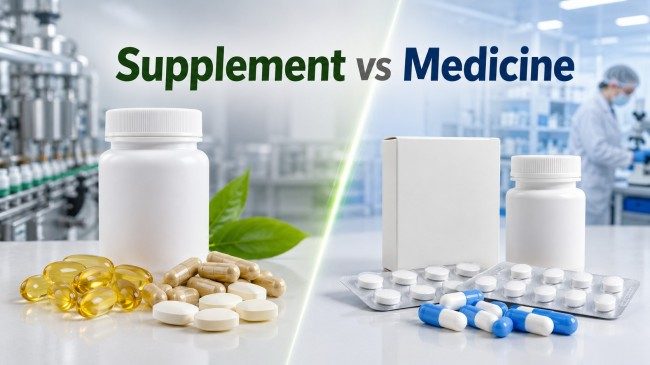
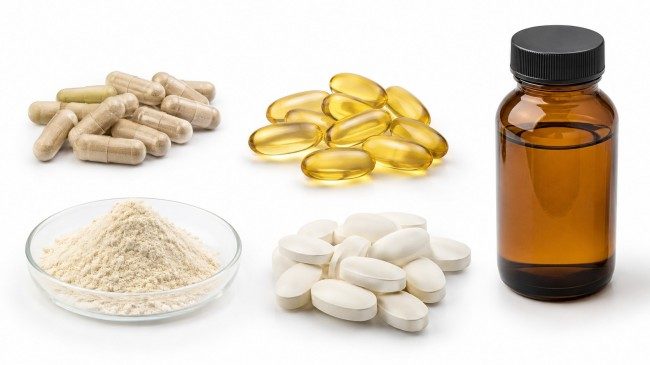
Dietary supplements and medicines often come in the same forms. Walk through a pharmacy or supplement store and you will find tablets, capsule rigide, softgel, polveri, and liquids in both categories. Their appearance alone tells you very little about how the finished product is regulated or manufactured.
Il principale supplement vs medicine difference is what the product is intended to do. Supplements add dietary ingredients such as vitamins, minerali, amino acids, or botanicals to the diet. Medicines are used to prevent, treat, relieve, or manage diseases and medical conditions.
That difference reaches far beyond the formulation. It affects product claims, etichettatura, manufacturing controls, test, documentazione, and sometimes the packaging used to bring the finished product to market.
1.Supplemento contro medicina: What Are They?
What Is a Dietary Supplement?
UN integratore alimentare is designed to add specific nutrients or other dietary ingredients to a person’s regular diet. In the United States, dietary ingredients can include vitamins, minerali, amino acids, herbs and other botanicals, as well as certain extracts, concentrates, metabolites, and related substances. These dietary supplements are available as tablets, capsule, softgel, Gummies, polveri, liquidi, and other common forms.
A multivitamin tablet, fish oil softgel, botanical capsule, and protein powder can therefore all be dietary supplements even though their ingredients and production methods are very different.
The category is defined by the finished product and how it is marketed, not by whether it comes as a tablet or capsule.
Negli Stati Uniti, La FDA regola gli integratori alimentari ma generalmente non li approva prima che vengano immessi sul mercato. Produttori e distributori sono responsabili di assicurarsi che i loro prodotti soddisfino i requisiti di sicurezza, etichettatura, e i requisiti di produzione ad essi applicabili. Ulteriori obblighi di notifica si applicano a determinati prodotti contenenti un nuovo ingrediente dietetico.
Cos'è la medicina?
La medicina si riferisce qui ai prodotti utilizzati per prevenire, treat, relieve, or manage diseases and medical conditions.
Includono sia prodotti soggetti a prescrizione che prodotti senza prescrizione. Il loro percorso verso il mercato varia in base al prodotto. Molti richiedono una domanda rivista dalla FDA, mentre alcuni prodotti senza prescrizione possono essere commercializzati nell'ambito di una monografia OTC applicabile piuttosto che attraverso un'applicazione individuale pre-immissione sul mercato.
Questa distinzione è importante perché una capsula vitaminica e una capsula medicinale possono avere lo stesso formato fisico pur seguendo regole diverse per le indicazioni, produzione, controllo di qualità, ed etichettatura.
Un rapido confronto rende più chiare le principali differenze:
| Zona | Integratore alimentare | Medicinale |
| Utilizzo principale | Integra la dieta con ingredienti dietetici | Previene, tratta, allevia, o gestisce malattie e condizioni mediche |
| Forme comuni | Compresse, capsule, softgel, Gummies, polveri, liquidi | Compresse, capsule, liquidi, e altre forme di dosaggio |
| NOI. percorso pre-mercato | Generalmente nessuna preapprovazione da parte della FDA; alcuni nuovi ingredienti dietetici richiedono una notifica anticipata | Il percorso dipende dal prodotto; È possibile utilizzare applicazioni o una monografia OTC applicabile |
| Affermazioni | Salute, contenuto di nutrienti, e le rivendicazioni di struttura/funzione sono soggette a regole specifiche | Le indicazioni devono corrispondere all'uso consentito e all'etichettatura del medicinale |
| Etichetta | Informazioni sui supplementi e altre informazioni sui supplementi richieste | Etichettatura dei medicinali specifica per prodotto |
| Manufacturing framework in the U.S. | 21 CFR parte 111 | 21 CFR Parts 210 E 211 |
| Confezione | Selected around stability, use, etichettatura, and any product-specific requirements | Selected around stability, use, etichettatura, and product-specific safety requirements |
The key point is that the physical dosage form can overlap while the requirements surrounding the finished product do not.
2.How Do Use, Affermazioni, and Labeling Differ?
The clearest difference appears in what a company can say the product does.
Product Purpose Changes the Claims
Dietary supplements can make several types of label claims in the United States. FDA identifies health claims, nutrient content claims, and structure/function claims as major categories. Different requirements apply to each.
Per esempio, a structure/function claim can explain how a nutrient helps support a normal body structure or function. Where the required conditions are met, un integratore può dire che un nutriente “supporta” una normale funzione corporea.
Ciò che non può fare è presentarsi come un prodotto che tratta, impedisce, o cura una malattia specifica pur continuando a essere commercializzato come integratore alimentare. La FDA afferma che un prodotto è rappresentato per il trattamento, prevenzione, o la cura di una malattia specifica non rientra nella categoria degli integratori alimentari.
L’etichettatura dei medicinali segue un percorso diverso perché l’uso dichiarato è legato alle condizioni alle quali il prodotto può essere legalmente commercializzato.
Questo è il motivo per cui due prodotti contenenti ingredienti simili non appartengono automaticamente alla stessa categoria. Come viene formulato il prodotto finito, presentato, e questioni di mercato.
Che cosa sono i fatti sugli integratori?
IL Fatti supplementari panel è uno dei modi più semplici per riconoscere un integratore alimentare venduto negli Stati Uniti.
Con limitate eccezioni, La FDA richiede che il pannello Informazioni sugli integratori elenchi le dimensioni della porzione, numero di porzioni per contenitore, ingredienti dietetici, e la quantità di ciascun ingrediente dietetico fornito in una porzione. Le informazioni sul valore giornaliero sono incluse dove richiesto.
Gli ingredienti che non sono dichiarati nei Dati nutrizionali sono normalmente elencati separatamente come Altri ingredienti. Questi possono includere sostanze come la gelatina, amido, stabilizzatori, conservanti, sapori, e altri ingredienti della formulazione.
Per i produttori, lo sviluppo dell'etichetta inizia quindi molto prima che una bottiglia raggiunga l'etichettatrice. La formula, dimensione della porzione, dichiarazione degli ingredienti, affermazioni, e il formato della confezione influiscono tutti sulle informazioni che devono figurare sull'etichetta o sul cartone finale.
L'etichettatura dei medicinali contiene informazioni diverse a seconda della tipologia del prodotto e del suo percorso di commercializzazione. La differenza pratica non è semplicemente il nome del pannello di etichettatura: l'etichetta deve corrispondere ai requisiti stabiliti per quello specifico prodotto finito.
3.In che cosa differisce la produzione?
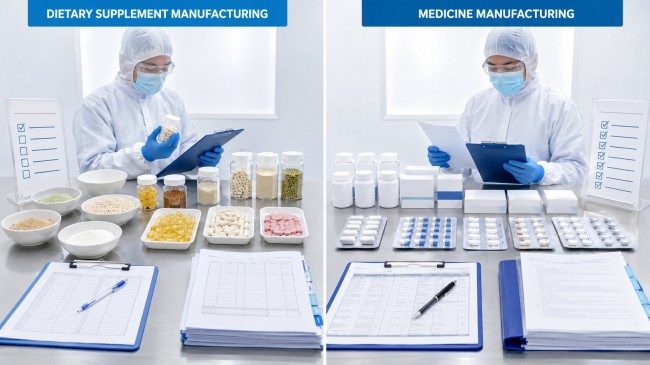
Gli integratori alimentari e i medicinali possono condividere operazioni di produzione familiari. Miscelazione delle polveri, granulazione, riempimento della capsula, compressione della compressa, rivestimento, ispezione, e il packaging sono presenti in entrambi i settori.
La struttura produttiva attorno a tali operazioni è il luogo in cui la differenza diventa più importante.
Produzione di integratori alimentari
Integratori alimentari prodotti per gli Stati Uniti. mercato sono soggetti ai requisiti CGMP in 21 CFR parte 111, che riguardano la produzione e l'imballaggio, etichettatura, e operazioni di detenzione.
I requisiti riguardano aree come il personale, strutture, attrezzatura, controllo di qualità, specifiche, registri di produzione principali, registri di produzione in lotti, operazioni di laboratorio, confezione, etichettatura, e tenuta dei registri. Le attrezzature di produzione devono corrispondere al processo per il quale vengono utilizzate ed essere mantenute in condizioni operative e pulite adeguate durante tutto il funzionamento.
Questo significa produzione di integratori alimentari non è semplicemente una questione di frullare gli ingredienti e metterli in capsule o compresse. I produttori necessitano di specifiche e controlli che contribuiscano a garantire che il prodotto finito abbia l’identità prevista, purezza, forza, composizione, e qualità.
Produzione farmaceutica
Prodotti farmaceutici finiti negli Stati Uniti. operare nell'ambito del quadro CGMP in 21 CFR Parts 210 E 211.
Parte 211 stabilisce i requisiti per tutto il sistema di produzione farmaceutica, dalle strutture, attrezzatura, e controllo dei materiali nei processi di produzione, test di laboratorio, confezione, etichettatura, programmi di stabilità, e registri di produzione.
Il paragone utile non è che un sistema sia “buono” e l’altro “migliore”.,” o che uno è regolamentato mentre l’altro no. Si tratta di framework di produzione separati scritti per diverse categorie di prodotti.
Questa differenza influisce sul modo in cui i produttori stabiliscono le specifiche, produzione di documenti, materiali di controllo, gestire le deviazioni, rilasciare i lotti finiti, e conservare i registri.
Cosa significa questo per le apparecchiature di produzione?
La differenza tra la produzione di integratori e quella di medicinali non richiede necessariamente categorie di macchine completamente diverse.
UN macchina per la compressione rotativa delle compresse è ancora utilizzato per comprimere il materiale preparato in compresse. UN riempitrice automatica di capsule misura ancora una formulazione negli involucri delle capsule. Il fatto che il prodotto finito sia un integratore o un medicinale cambia i requisiti del processo piuttosto che lo scopo meccanico di base della macchina.
The formulation remains central to machine configuration.
A free-flowing vitamin blend behaves differently from a sticky botanical powder. Capsule fill weight, flusso di polvere, compression characteristics, dust generation, uscita richiesta, and cleaning needs all influence the equipment setup regardless of the product category.
Equipment design can support controlled production through suitable product-contact surfaces, accessible cleaning areas, enclosed processing, process monitoring, and repeatable controls. Those features are part of a larger manufacturing system; they do not make the entire production process compliant by themselves.
This is the point where equipment selection and manufacturing requirements meet without becoming the same question.
4.How Does Packaging Differ?
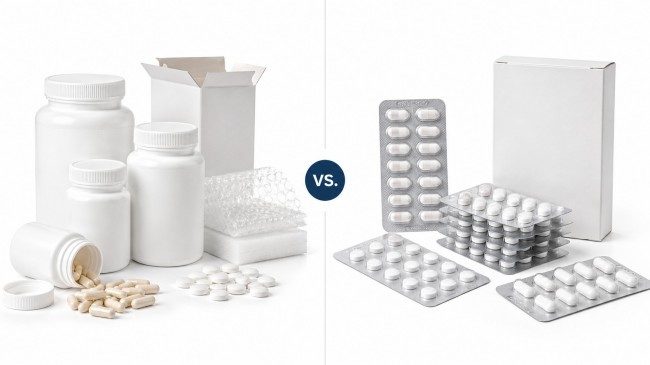
There is no universal rule that supplements belong in bottles while medicines belong in blister packs.
Entrambe le categorie possono utilizzare bottiglie, vesciche, bustine, buste, e cartoni. Il giusto packaging inizia dalle caratteristiche del prodotto finito.
La protezione del prodotto viene prima di tutto
Umidità, ossigeno, leggero, temperatura, e i danni fisici possono compromettere la stabilità del prodotto. I materiali di imballaggio e i sistemi di chiusura devono quindi fornire il livello di protezione stabilito per la formulazione.
Una capsula sensibile all'umidità potrebbe necessitare di un contenitore ad alta barriera e di un essiccante. Un'altra formulazione di compresse può rimanere stabile in un sistema di flaconi più semplice. L'imballaggio in blister può separare le singole unità e fornire una struttura barriera diversa a seconda dei materiali di formatura e di copertura selezionati.
Queste decisioni si basano sul prodotto reale piuttosto che sulla parola supplemento O medicinale stampato sulla confezione.
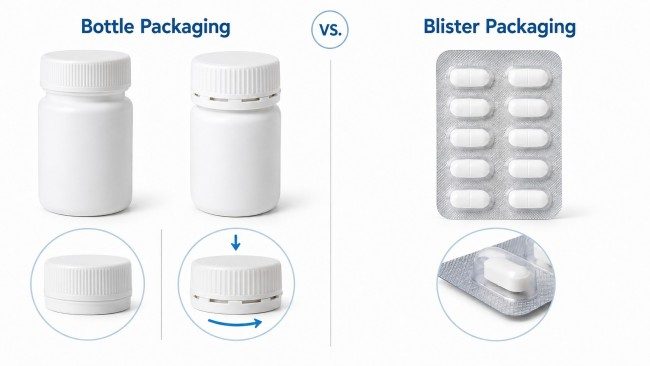
Per bottiglie, UN linea di imbottigliamento per il conteggio delle capsule delle compresse può contare e riempire prodotti solidi prima di tapparli ed etichettarli. Quando richiesto dal prodotto, la linea può prevedere anche l'inserimento dell'essiccante, sigillatura, e astucciamento.
Per formati a dose unitaria, UN macchina confezionatrice blister forma delle tasche, carica le compresse o le capsule, e sigilla il pacco. La struttura del blister selezionata deve corrispondere alla protezione richiesta dalla formulazione.
Le stesse tecnologie di imballaggio possono quindi apparire in entrambi i mercati.
I requisiti di sicurezza possono essere specifici del prodotto
Il punto in cui l’imballaggio inizia a differire in modo più chiaro è nei requisiti normativi e di sicurezza specifici del prodotto.
Per esempio, NOI. le normative includono requisiti di imballaggio a prova di manomissione per alcuni medicinali senza prescrizione medica. Parte 211 contiene anche controlli dedicati per le operazioni di confezionamento ed etichettatura farmaceutica.
Gli imballaggi a prova di bambino non possono ridursi alla semplice regola secondo cui “i medicinali ne hanno bisogno e gli integratori no”.
Alcuni integratori alimentari sono soggetti anche a requisiti di imballaggio a prova di bambino. Gli integratori contenenti ferro ne sono un chiaro esempio. Un americano. Il richiamo della Consumer Product Safety Commission è stato annunciato ad aprile 2026 riguardava diversi integratori alimentari contenenti ferro confezionati senza la protezione a prova di bambino richiesta per tali prodotti.
Questo esempio mostra perché le specifiche della confezione dovrebbero basarsi sul contenuto del prodotto e sul mercato di riferimento invece che su ipotesi generali sulla categoria.
Spazio per l'etichettatura, caratteristiche di manomissione, tipo di chiusura, protezione della barriera, molte informazioni, e l'imballaggio secondario possono tutti influenzare la linea di confezionamento finale.
5.Cosa significano queste differenze per i produttori?
Per un produttore che produce un solo prodotto affermato, la distinzione può apparire semplice. Diventa più pratico quando la stessa struttura gestisce più formulazioni o prevede di espandersi dagli integratori ai prodotti farmaceutici.
Quattro aree meritano attenzione.
Primo, confermare la categoria del prodotto e i requisiti del mercato prima di progettare il processo. Il formato di compresse o capsule da solo non fornisce informazioni sufficienti per stabilire i controlli richiesti.
Secondo, costruire la produzione attorno alla formulazione. Flusso di polvere, caratteristiche degli ingredienti, forma di dosaggio, dimensione del lotto, uscita richiesta, e i controlli in-process determinano la modalità di miscelazione, compressione, riempimento della capsula, o sono configurate altre fasi di produzione.
Terzo, pianificare la pulizia e il cambio di prodotto in base ai prodotti effettivamente manipolati. Residui, allergeni, ingredienti potenti, coloranti, oli, e le polveri appiccicose creano diverse sfide di pulizia. L'approccio di pulizia dovrebbe corrispondere ai materiali e ai rischi di contaminazione coinvolti.
Quarto, finalizzare il pacchetto prima di configurare la linea di confezionamento completa. Dimensioni della bottiglia, conteggio per contenitore, chiusura, essiccante, struttura a bolle, etichetta, e il cartone determinano quali operazioni di imballaggio sono necessarie.
Nei progetti di attrezzature, Ruida Packing inizia tipicamente con la forma di dosaggio, caratteristiche del materiale, obiettivo di uscita, esigenze di pulizia, e il pacchetto finale prima di consigliare la configurazione della macchina. Ciò evita di trattare ogni compressa di integratore o capsula di medicinale come se avesse gli stessi requisiti di produzione.
Il risultato è una domanda più utile di “È una macchina per integratori o una macchina per medicinali??" La domanda migliore è se l'attrezzatura e il processo sono adatti al prodotto che si sta fabbricando.
Conclusione
IL supplement vs medicine la differenza inizia con lo scopo del prodotto finito. Tale scopo quindi modella le affermazioni, etichette, manufacturing controls, e le esigenze del mercato che circondano la produzione.
Compresse e capsule simili possono passare attraverso tipi di apparecchiature simili, ed entrambe le categorie possono utilizzare flaconi o blister. Ciò che conta è se il processo di produzione e la confezione sono progettati in base alla formulazione effettiva, destinazione d'uso, e i requisiti del mercato in cui il prodotto verrà venduto.
Domande frequenti sugli integratori rispetto alla medicina
-
Gli integratori alimentari sono regolamentati dalla FDA?
SÌ. La FDA regola i prodotti e gli ingredienti degli integratori alimentari, ispeziona gli impianti di produzione, esamina determinate notifiche, monitora il mercato, e può intraprendere azioni coercitive quando i prodotti violano i requisiti federali. Gli integratori alimentari operano semplicemente in un quadro normativo diverso rispetto ai medicinali.
-
Gli integratori alimentari richiedono l'approvazione della FDA prima di essere venduti?
Generalmente, NO. La FDA non approva gli integratori alimentari prima della commercializzazione nello stesso modo in cui esamina molti medicinali. Alcuni prodotti contenenti un nuovo ingrediente dietetico richiedono una notifica anticipata con informazioni di sicurezza a supporto.
-
Lo stesso ingrediente può comparire in un integratore e in un medicinale??
L'ingrediente da solo non risponde alla domanda di classificazione. Destinazione d'uso del prodotto finito, formulazione, affermazioni, etichettatura, e lo status normativo sono tutti fattori importanti. Non si dovrebbe presumere che un ingrediente utilizzato in un contesto abbia lo stesso ruolo normativo in un altro.
-
Gli integratori e i medicinali possono utilizzare lo stesso tipo di attrezzatura di produzione??
Spesso, SÌ. I tablet di entrambe le categorie possono richiedere la compressione dei tablet, mentre le capsule rigide possono richiedere il riempimento della capsula. L'idoneità dell'attrezzatura dipende ancora dalla formulazione, forma di dosaggio, requisiti di pulizia, produzione, controlli di processo, e altre esigenze produttive.
-
Tutti gli integratori alimentari richiedono un imballaggio a prova di bambino?
NO. I requisiti a prova di bambino dipendono dal prodotto e dal mercato. Alcuni integratori lo richiedono; gli integratori alimentari contenenti ferro sono uno degli Stati Uniti. esempio.
Riferimenti
1. NOI. Food and Drug Administration: domande e risposte sugli integratori alimentari
3. Codice elettronico dei regolamenti federali — 21 CFR parte 111