Nella produzione farmaceutica e nutraceutica, qualità della compressa influisce direttamente sulla sicurezza del prodotto, efficienza produttiva, e la reputazione del marchio. Anche piccoli problemi durante pressa per compresse la produzione può portare alla rottura della compressa, attaccarsi, tappatura, o variazione di peso.
Povero compressione della compressa non solo aumenta lo spreco di materie prime, ma crea anche tempi di fermo macchina e controlli di qualità falliti.
Nella produzione farmaceutica, qualità della compressa è strettamente correlato alla conformità normativa. Una scarsa consistenza del tablet può portare a reclami da parte dei clienti, richiami di prodotti, o ispezioni GMP fallite. Per questo motivo, molti produttori stanno investendo macchina per la pressatura delle compresse apparecchiature con tecnologia di monitoraggio automatizzato e controllo della pressione.
Oggi, i produttori stanno prestando maggiore attenzione alla stabilità macchina per la pressatura delle compresse sistemi, monitoraggio intelligente, e controllo della formulazione. I fornitori di apparecchiature stanno aiutando le aziende farmaceutiche a ridurre gli errori di compressione e a mantenere prestazioni di produzione più affidabili attraverso la tecnologia di produzione automatizzata.
Questo articolo spiega il 5 fattori chiave che influenzano qualità della compressa durante produzione di comprimitrici e condivide metodi pratici per ridurre i difetti comuni dei tablet.
Problemi di scarsa qualità delle compresse nella produzione di comprimitrici
Povero qualità della compressa possono influenzare ogni fase della produzione farmaceutica, dalla compressione all'imballaggio e al trasporto. Le compresse deboli potrebbero rompersi durante la spedizione o non superare i test di dissoluzione.
Nella produzione di compresse farmaceutiche, i produttori devono controllare attentamente la variazione del dosaggio in modo che il contenuto dell'ingrediente attivo rimanga entro limiti di produzione accettabili per tutto il lotto [1].
In ambienti di produzione ad alta velocità, anche un piccolo problema di compressione può colpire rapidamente migliaia di tablet in un breve periodo di tempo. Se gli operatori non rilevano il problema in anticipo, i produttori potrebbero perdere grandi quantità di materie prime e tempi di produzione.
Alcuni difetti della compressa possono anche influenzare i processi di confezionamento a valle. Per esempio, le compresse incrinate o tappate possono rompersi durante il riempimento del flacone o il confezionamento in blister, aumento dei tassi di rifiuto durante l’ispezione finale.
L'impatto della scarsa qualità dei tablet sui produttori
La scarsa qualità del tablet spesso causa:
- Tassi di rifiuto più elevati
- Fermi della produzione
- Aumento dello spreco di materiale
- Difficoltà di imballaggio
- Ispezioni fallite
- Instabile durezza della compressa
Nella produzione farmaceutica su larga scala, questi problemi possono ridurre significativamente l’efficienza della fabbrica.
Fattore 1: Forza di compressione
Durante pressa per compresse produzione, le impostazioni di compressione influenzano fortemente la struttura finale e le proprietà fisiche del tablet, compresa la durezza, spessore, e compattezza complessiva.
Se la pressione è troppo bassa, le compresse possono diventare morbide e fragili. Se la pressione è troppo alta, le compresse potrebbero rompersi o laminarsi.
In molte linee di produzione farmaceutiche, la compressione delle compresse viene completata in più fasi anziché in un unico processo di pressatura. La precompressione rimuove l'aria intrappolata all'interno dei granuli prima che avvenga la compressione finale. Questo processo aiuta a migliorare la densità delle compresse e riduce il rischio di incappucciamento o laminazione durante la produzione ad alta velocità.
Diversi prodotti tablet richiedono anche impostazioni di compressione diverse. Per esempio, compresse effervescenti di solito richiedono una pressione di compressione inferiore rispetto alle compresse farmaceutiche standard poiché una pressione eccessiva può influire sulle prestazioni di dissoluzione.
In che modo la pressione di compressione influisce sulla durezza della compressa
La pressione di compressione influisce direttamente sulla durezza della compressa, spessore, e resistenza strutturale durante pressa per compresse produzione.
Se la pressione di compressione è troppo bassa, le compresse possono diventare morbide e fragili. Le compresse deboli possono rompersi durante il rivestimento, confezione, o trasporto. La bassa pressione può anche causare scheggiature dei bordi e peso instabile della compressa.
Una pressione eccessiva può creare diversi problemi di produzione. Le compresse potrebbero diventare troppo dure, dissolversi più lentamente, o sviluppare cricche da stress interne dopo la compressione. In alcuni casi, una forza eccessiva può anche causare incappucciamento o laminazione perché l'aria intrappolata non può fuoriuscire correttamente dai granuli.
Formulazioni diverse richiedono intervalli di compressione diversi. Compresse effervescenti, compresse a base di erbe, e le compresse farmaceutiche spesso rispondono in modo diverso alla forza di compressione perché la densità della polvere e i livelli di umidità non sono gli stessi.
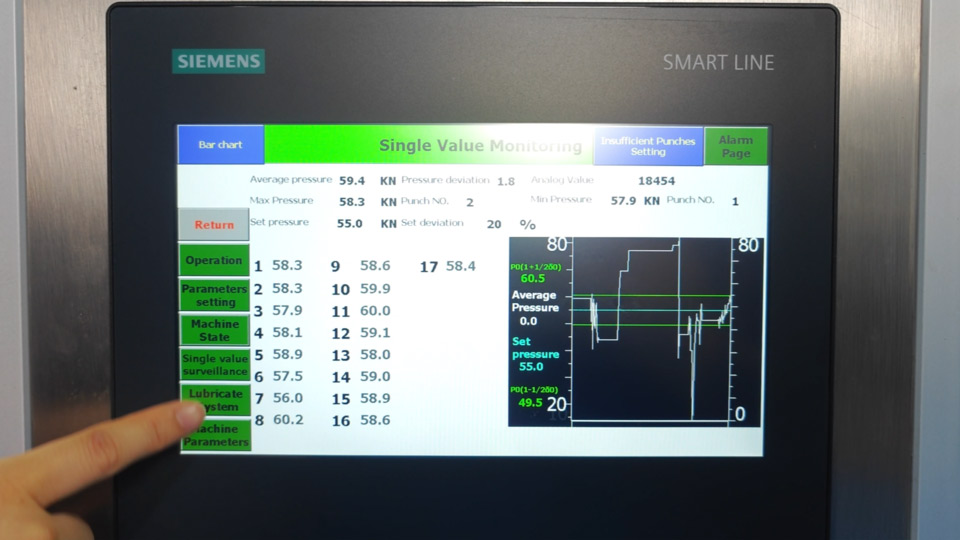
Per mantenere stabile qualità della compressa, gli operatori solitamente monitorano la forza di compressione durante tutto il ciclo produttivo. Molte linee di produzione farmaceutica utilizzano sensori di pressione, Sistemi di controllo PLC, e pannelli operativi touchscreen per monitorare le variazioni di pressione durante il funzionamento.
Quando compaiono fluttuazioni di pressione, gli operatori possono regolare rapidamente la profondità di riempimento, velocità della torretta, o impostazioni dell'alimentatore per ridurre i difetti della compressa e mantenere prestazioni di compressione più affidabili.
Le impostazioni di compressione vengono generalmente regolate in base a:
- Dimensioni della tavoletta
- Densità della polvere
- Proprietà dei materiali
- Velocità di produzione
Fattore 2: Formulazione dei materiali e flusso delle polveri
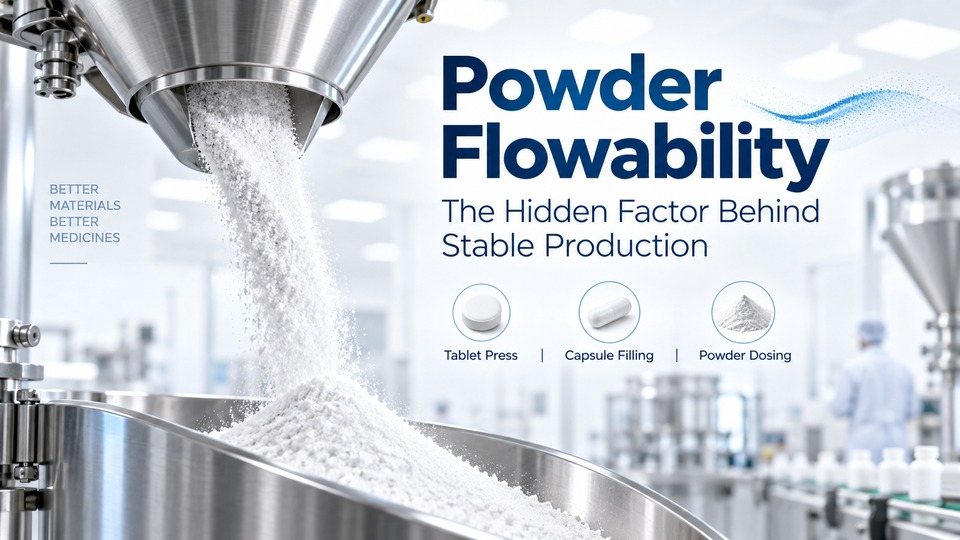
La formulazione del materiale è un altro fattore importante produzione di comprimitrici. Scorrevolezza della polvere, contenuto di umidità, e la compatibilità con gli eccipienti influenzano tutti la qualità della compressa finale.
Anche di alta qualità comprimitrice rotativa non possono mantenere una produzione stabile se il flusso di materiale è scarso.
La distribuzione delle dimensioni delle particelle influisce anche sulla scorrevolezza della polvere e sulla consistenza della compressione. Se le dimensioni dei granuli sono troppo irregolari, durante l'alimentazione può verificarsi la segregazione della polvere. Ciò può portare a una profondità di riempimento instabile e a una variazione del peso della compressa.
Perché il flusso della polvere e l'umidità sono importanti
Il movimento coerente del materiale all'interno del sistema di alimentazione aiuta a mantenere un riempimento uniforme dello stampo durante tutto il ciclo di produzione.
Il buon flusso del materiale migliora:
- Consistenza del peso della compressa
- Precisione del dosaggio
- Stabilità della compressione
- Efficienza produttiva
Anche il contenuto di umidità influisce qualità della compressa. L'umidità eccessiva potrebbe causare attaccamenti, mentre una bassa umidità può portare a screpolature.
I produttori di solito migliorano le prestazioni dei materiali attraverso:
- Granulazione corretta
- Controllo dell'umidità
- Ottimizzazione della dimensione delle particelle
- Additivi di flusso
La granulazione a umido è ampiamente utilizzata in ambito farmaceutico pressa per compresse produzione perché migliora il flusso della polvere e le prestazioni di adesione delle compresse. La granulazione a secco è un altro metodo comune per materiali sensibili all'umidità che non possono tollerare condizioni di lavorazione a umido.
Entrambi i metodi di granulazione mirano a migliorare la stabilità della compressione e a ridurre i difetti di produzione durante la produzione di compresse ad alta velocità.
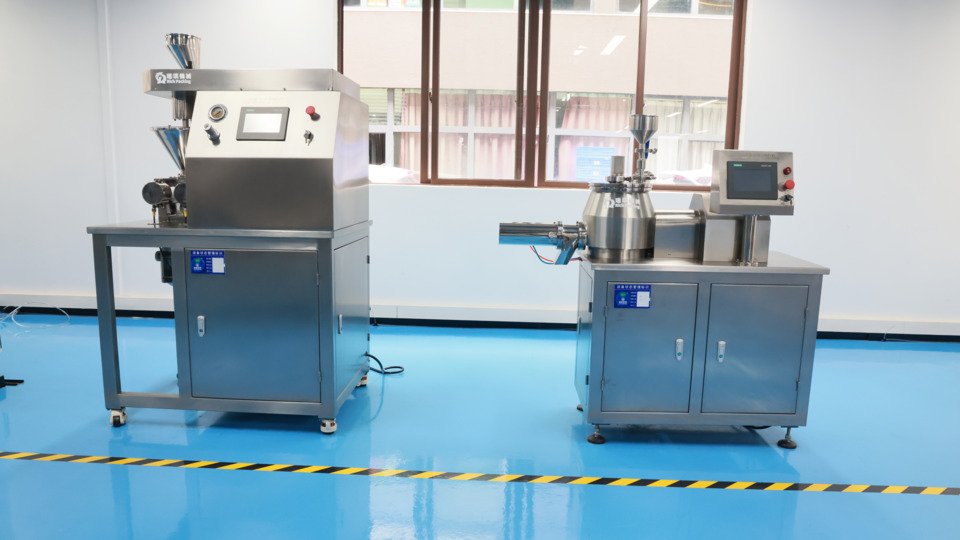
In che modo la compatibilità della formulazione influisce sulla qualità delle compresse
Gli eccipienti sono ingredienti inattivi aggiunti per migliorare compressione della compressa prestazione.
Diversi tipi di eccipienti sono comunemente utilizzati nella produzione di compresse:
- I leganti aiutano a tenere insieme le particelle della compressa
- I disintegranti migliorano dissoluzione della compressa
- I lubrificanti riducono l'attrito durante la compressione
- I glidanti migliorano la scorrevolezza della polvere
La corretta selezione degli eccipienti può migliorare significativamente qualità della compressa e ridurre i problemi di produzione.
Spesso causa una scarsa compatibilità della formulazione:
- Durezza irregolare
- Difetti superficiali
- Variazione di peso
- Instabilità di compressione
I produttori dovrebbero testare la compatibilità dei materiali prima di procedere su larga scala pressa per compresse inizia la produzione.
Fattore 3: Qualità di punzoni e matrici
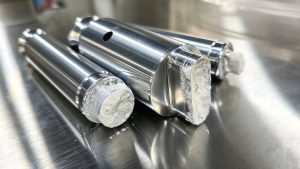
Punzoni e matrici sono componenti critici degli utensili all'interno di a macchina per la pressatura delle compresse.
La loro condizione influisce direttamente sulla forma della compressa, spessore, e consistenza.
In che modo gli strumenti influiscono sulla coerenza del tablet
Gli strumenti di alta qualità aiutano a produrre tablet con:
- Spessore uniforme
- Superfici lisce
- Dimensioni stabili
- Aspetto migliore
Un'attrezzatura scadente aumenta il rischio di difetti durante l'alta velocità compressione della compressa.
Segni di utensili usurati per la pressa per compresse
I produttori dovrebbero ispezionare regolarmente gli utensili:
- Graffi superficiali
- Segni attaccati
- Spessore irregolare
- Danni ai bordi della tavoletta
La sostituzione anticipata degli utensili usurati può ridurre gli sprechi e migliorare la stabilità della produzione.
Fattore 4: Velocità di stampa della compressa
La velocità di produzione influisce sia sulla produzione che qualità della compressa.
Molte fabbriche aumentano la velocità della macchina per migliorare la produttività. Tuttavia, una velocità eccessiva spesso riduce la stabilità della compressione.
All'aumentare della velocità di produzione, aumenta anche la forza centrifuga all'interno della torretta. Ciò potrebbe influire sulla stabilità dell'alimentazione della polvere e sulla consistenza del riempimento della compressa. Una velocità eccessiva può anche generare ulteriore calore e vibrazioni della macchina durante i cicli di produzione lunghi.
Per questo motivo, In ambienti di produzione farmaceutica ad alta velocità, gli operatori spesso si affidano a funzioni di monitoraggio automatizzato per rilevare tempestivamente i problemi di compressione.
Sfide di produzione ad alta velocità
Ad alta velocità comprimitrice rotativa la produzione può creare:
- Variazione di peso
- Riempimento incompleto
- Vibrazioni della macchina
- Accumulo di calore
Questi problemi diventano più seri quando il flusso della polvere è instabile.
Bilanciare velocità e qualità del tablet
L'aumento della produttività della macchina non dovrebbe compromettere la consistenza della tavoletta, soprattutto negli ambienti di produzione farmaceutica che richiedono un rigoroso controllo di qualità.
Farmaceutico attrezzature per comprimitrici comunemente usa:
- Sistemi di controllo PLC
- Monitoraggio della pressione in tempo reale
- Sistemi di regolazione automatica
- Sistemi di rigetto intelligenti
Ad alta velocità comprimitrice rotativa la produzione richiede prestazioni meccaniche stabili e un controllo accurato della compressione. I moderni produttori farmaceutici utilizzano spesso sistemi di controllo intelligenti con monitoraggio della pressione in tempo reale, regolazione automatica dell'alimentazione, e rifiuto automatico per mantenere la consistenza delle compresse durante la produzione continua.
Un migliore monitoraggio della pressione e un migliore controllo dell'alimentatore possono ridurre le fluttuazioni del peso delle compresse durante i lunghi cicli di produzione [2].
Fattore 5: Stabilità della macchina comprimitrice
La stabilità della macchina è uno dei fondamenti dell'affidabilità produzione di comprimitrici.
Anche le piccole vibrazioni della macchina possono influenzare la precisione della compressione e la consistenza della compressa.
La vibrazione della macchina è una delle cause nascoste della qualità instabile dei tablet. Vibrazioni eccessive possono portare a una forza di compressione irregolare, deviazione della torretta, e una più rapida usura degli utensili durante i lunghi cicli produttivi.
Ad alta velocità pressa per compresse produzione, il mantenimento di prestazioni meccaniche stabili è particolarmente importante per migliorare la consistenza delle compresse e ridurre i tempi di fermo macchina.
Perché la precisione della macchina è importante
Influenze sulla precisione della macchina:
- Forza di compressione
- Profondità di riempimento
- Peso della compressa
- Consistenza della produzione
Alta precisione macchina per la pressatura delle compresse I sistemi sono particolarmente importanti nella produzione farmaceutica perché la precisione del dosaggio deve rimanere stabile durante tutta la produzione [3].
Molte linee di produzione farmaceutica ora utilizzano pannelli di controllo PLC e interfacce touchscreen in modo che gli operatori possano osservare i dati di compressione durante la produzione. Questi sistemi aiutano gli operatori a regolare la pressione, profondità di riempimento, e la velocità della torretta in modo più accurato.
I sistemi di scarto automatico possono anche rimuovere le compresse difettose durante la produzione, riducendo il rischio di lotti di qualità mista.
Caratteristiche di una macchina comprimitrice di alta qualità
Una qualità elevata macchina per la pressatura delle compresse solitamente include:
- Struttura della torretta stabile
- Controllo preciso della pressione
- Lubrificazione automatica
- Design conforme a GMP
- Sistemi di monitoraggio intelligenti
Più recente attrezzature per comprimitrici spesso include il monitoraggio automatizzato della pressione e funzioni di controllo più semplici da parte dell'operatore. Funzionalità come il rilevamento della pressione in tempo reale, regolazione automatica del peso, e i sistemi di rifiuto online aiutano i produttori a mantenere una qualità stabile delle compresse durante la produzione continua.
Molte macchine avanzate supportano anche la sostituzione rapida degli utensili e interfacce di controllo automatizzate, che riducono i tempi di regolazione manuale e migliorano l’efficienza produttiva complessiva negli ambienti di produzione GMP [3].
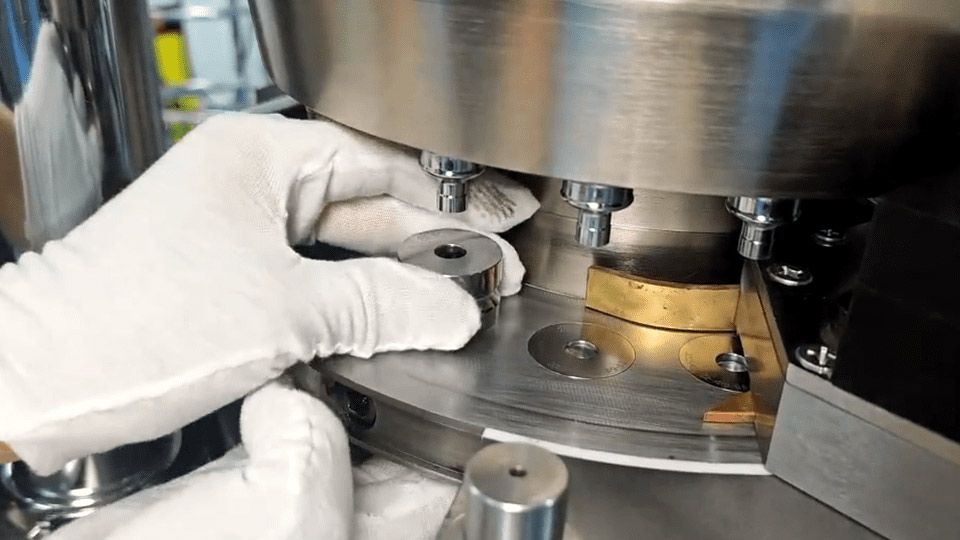
Problemi e soluzioni comuni della pressa per compresse
I difetti delle compresse sono comuni durante produzione di comprimitrici, soprattutto negli ambienti di produzione ad alta velocità. In molti casi, i problemi delle compresse sono causati da una combinazione di problemi di formulazione, impostazioni di compressione, condizione degli utensili, comportamento del flusso di polvere, e vibrazioni della macchina.
Alcuni difetti possono anche influenzare i processi di confezionamento a valle. Per esempio, le compresse incrinate possono rompersi durante il riempimento del flacone, mentre le compresse con tappo possono non superare l'ispezione durante il confezionamento in blister.
La tabella seguente riassume diversi difetti comuni delle compresse e le loro possibili cause durante compressione della compressa produzione.
| Problema del tablet | Aspetto della produzione | Cause comuni |
| Arazzo | La sezione superiore o inferiore della compressa si separa dopo la compressione | Alta velocità della torretta, precompressione insufficiente, pressione principale eccessiva, bassa umidità, legante insufficiente, dimensione delle particelle non uniforme, lubrificante eccessivo, utensileria usurata, velocità di espulsione elevata |
| Laminazione | Gli strati interni della compressa sono divisi | Ad alta velocità, precompressione insufficiente, pressione eccessiva, aria intrappolata, bassa umidità, legante insufficiente, lubrificante eccessivo, dimensione dei granuli non uniforme, rapido rilascio della pressione |
| Attaccando | La polvere aderisce ai punzoni o alle matrici | Alta umidità, alta temperatura, alto contenuto di zucchero, lubrificante insufficiente, superficie ruvida del punzone, incisione profonda, pressione eccessiva, elevata umidità |
| Variazione del peso | Il peso della compressa diventa incoerente | Scarso flusso di polvere, livello materiale instabile, problemi di alimentazione, ad alta velocità, dimensione delle particelle non uniforme, polvere fine eccessiva, umidità irregolare, fluttuazione della posizione del punzone, usura degli utensili, vibrazioni della macchina |
| Crepe superficiali | Sulle superfici o sui bordi della compressa compaiono fratture visibili | Bassa umidità, forza di compressione eccessiva, granulometria di grandi dimensioni, legante insufficiente, lubrificante eccessivo, velocità di espulsione elevata, utensileria usurata, design inadeguato della forma della tavoletta, alta temperatura |
I team di produzione solitamente esaminano la forza di compressione, flusso di materiale, livello di umidità, velocità della torretta, e le condizioni degli strumenti insieme durante la risoluzione dei problemi dei difetti del tablet.
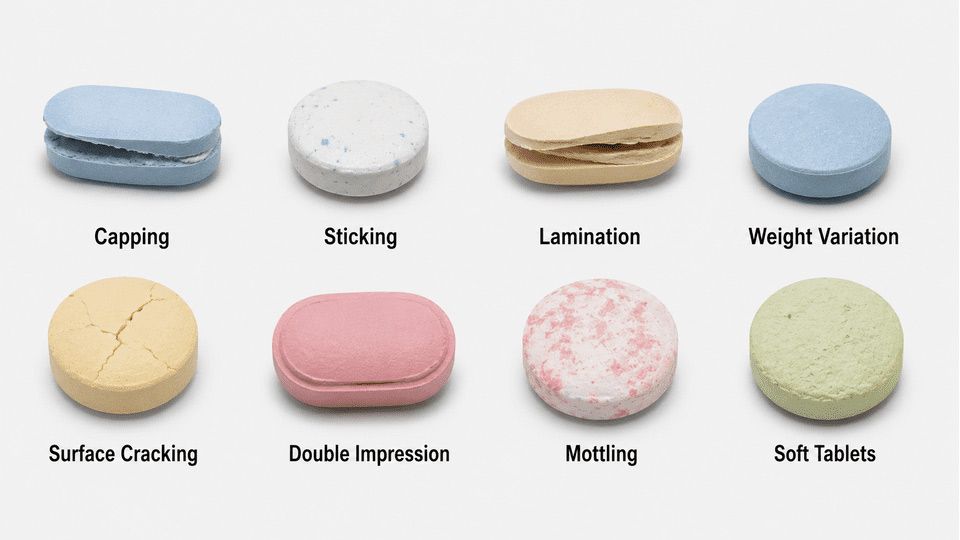
Arazzo
La tappatura avviene quando la sezione superiore o inferiore della compressa si separa dopo la compressione.
Questo problema è comunemente correlato a:
- Velocità torretta eccessiva
- Precompressione insufficiente
- Forza di compressione principale eccessiva
- Bassa umidità dei granuli
- Scarsa distribuzione del legante
- Dimensione delle particelle non uniforme
Quando l'aria intrappolata all'interno dei granuli non può fuoriuscire correttamente durante la compressione, la superficie della compressa potrebbe separarsi durante l'espulsione.
Gli operatori spesso riducono la tappatura regolando la pressione di precompressione, rallentando la velocità della torretta, migliorare la qualità della granulazione, e controllare più attentamente il contenuto di umidità.
Laminazione
La laminazione si riferisce alla separazione orizzontale all'interno della struttura della compressa dopo la compressione.
Diverse condizioni di produzione possono aumentare il rischio di laminazione:
- Eccesso di aria intrappolata all'interno dei granuli
- Velocità di decompressione elevata
- Forza di compressione eccessiva
- Scarsa distribuzione delle dimensioni delle particelle
- Legante insufficiente
- Basso contenuto di umidità
Ad alta velocità comprimitrice rotativa produzione, un rilascio di pressione troppo rapido può anche causare la separazione interna della compressa.
Migliorare la densità dei granuli e regolare il tempo di permanenza nella compressione può aiutare a ridurre i problemi di laminazione durante la produzione continua.
Attaccando
L'adesione si verifica quando il materiale in polvere rimane attaccato alle superfici del punzone o della matrice durante la compressione.
Questo problema è particolarmente comune quando si producono compresse con elevato contenuto di zucchero o formulazioni ad alto contenuto di umidità.
Le cause comuni includono:
- Alto contenuto di umidità
- Alta temperatura di produzione
- Lubrificazione insufficiente
- Superfici ruvide del punzone
- Incisione profonda
- Forza di compressione eccessiva
- Elevata umidità all'interno dell'ambiente di produzione
I team di produzione spesso riducono i problemi di adesione attraverso il controllo dell'umidità, lucidatura del punzone, regolazione della lubrificazione, e la pulizia regolare degli utensili.
I rivestimenti antiadesione sono comunemente utilizzati anche nella produzione di compresse farmaceutiche per ridurre l'adesione durante i lunghi cicli di produzione.
Variazione del peso
La variazione di peso solitamente si verifica quando l'alimentazione della polvere diventa instabile durante la produzione.
Questo problema potrebbe essere causato da:
- Scarsa scorrevolezza della polvere
- Dimensione delle particelle non uniforme
- Polvere fine eccessiva
- Blocco dell'alimentatore
- Livello del materiale instabile
- Vibrazioni della macchina
- Utensili usurati
- Funzionamento ad alta velocità
Quando la polvere non riesce a entrare in modo uniforme nelle cavità dello stampo, il peso della compressa può variare durante la compressione continua.
Gli operatori spesso migliorano il controllo del peso ottimizzando la qualità della granulazione, stabilizzazione della velocità dell'alimentatore, e riducendo le vibrazioni eccessive all'interno del macchina per la pressatura delle compresse.
Crepe superficiali
Le screpolature superficiali si riferiscono a fratture visibili che compaiono sui bordi o sulle superfici della compressa dopo la compressione.
Questo problema è comunemente associato a:
- Basso contenuto di umidità
- Forza di compressione eccessiva
- Granulometria grande
- Legante insufficiente
- Lubrificante eccessivo
- Espulsione rapida della compressa
- Punzoni o matrici usurati
- Design scadente della forma del tablet
- Alta temperatura di produzione
In alcuni casi, le compresse possono apparire normali immediatamente dopo la compressione ma sviluppare crepe successivamente durante il raffreddamento o il trasporto.
Ridurre la pressione di compressione, migliorare la distribuzione del legante, ottimizzando la dimensione dei granuli, e il controllo della temperatura di produzione può aiutare a ridurre al minimo le fessurazioni superficiali durante la produzione delle compresse.
Come migliorare la qualità delle compresse nella moderna produzione di comprimitrici
Migliorare qualità della compressa richiede sia l’ottimizzazione della macchina che il controllo del processo.
I produttori dovrebbero monitorare regolarmente le condizioni di produzione e regolare i parametri di compressione.
Anche la formazione degli operatori gioca un ruolo importante nel mantenimento della stabilità pressa per compresse produzione. Gli operatori esperti possono identificare suoni anomali della macchina, variazioni di pressione, o problemi di alimentazione prima che compaiano difetti gravi.
Il monitoraggio dei dati di produzione è un altro metodo importante per migliorare il controllo di qualità. Molti produttori farmaceutici ora registrano i dati di compressione in tempo reale per la tracciabilità dei lotti e l'ottimizzazione dei processi.
Manutenzione regolare della macchina
La manutenzione ordinaria aiuta a prevenire:
- Usura degli utensili
- Instabilità della pressione
- Problemi di lubrificazione
- Tempi di inattività imprevisti
Fornitori di attrezzature farmaceutiche come Fette Compacting, Korsch AG, E Imballaggio Ruida fornire anche supporto tecnico, guida agli utensili, e servizi di manutenzione per linee di produzione di tablet.
Utilizzo dell'attrezzatura automatizzata per la comprimitura
Funzioni comuni in automatizzato attrezzature per comprimitrici includere:
- Monitoraggio in tempo reale
- Controllo intelligente della pressione
- Sistemi di scarto automatico
- Tracciamento dei dati di produzione
Con un migliore controllo della pressione e regolazione del riempimento, gli operatori possono ridurre gli sprechi di materiale e mantenere una produzione di compresse più uniforme.
Alcuni macchine per la pressatura delle compresse utilizzare anche pannelli operativi touchscreen, monitoraggio automatico della pressione, e funzioni di scarto online per ridurre gli sprechi di materiale durante la produzione continua.
Conclusione
Diversi fattori importanti influenzano qualità della compressa durante produzione di comprimitrici. Forza di compressione, formulazione del materiale, condizione degli utensili, velocità di produzione, e la stabilità della macchina influiscono tutti sulle prestazioni finali della compressa.
I produttori che monitorano attentamente questi fattori possono ridurre i difetti, migliorare l'efficienza, e mantenere una qualità di produzione stabile.
Mentre la produzione farmaceutica continua a muoversi verso l’automazione e la produzione intelligente, stabile macchina per la pressatura delle compresse diventeranno ancora più importanti per il controllo della qualità e l’efficienza produttiva.
I produttori di apparecchiature utilizzano ora controlli servoazionati, monitoraggio digitale della pressione, e funzioni di rifiuto automatico nelle linee di produzione di compresse farmaceutiche per ridurre la variazione del prodotto durante i lunghi cicli di produzione.
Automatizzato attrezzature per comprimitrici aiuta inoltre i team di produzione a ridurre i tempi di inattività e a mantenere prestazioni di compressione più affidabili. I fornitori di apparecchiature continuano a supportare i produttori farmaceutici e nutraceutici con stabilità, soluzioni di comprimitrici ad alta efficienza.
Domande frequenti
Qual è il contenuto di umidità ideale per la produzione di compresse?
Il contenuto di umidità deve essere regolato in base alle proprietà del materiale e ai requisiti di compressione delle diverse formulazioni delle compresse. L'umidità bilanciata migliora l'adesione riducendo i problemi di adesione.
In che modo una comprimitrice rotativa può migliorare la consistenza delle compresse??
UN comprimitrice rotativa migliora la consistenza attraverso sistemi di alimentazione stabili, compressione continua, e controllo automatico della pressione.
Con quale frequenza è necessario sostituire gli strumenti della comprimitrice?
Gli utensili per la comprimitrice devono essere ispezionati regolarmente in base all'intensità della produzione e all'abrasività del materiale. Il rilevamento tempestivo dell'usura del punzone o della matrice può aiutare a prevenire difetti delle compresse e tempi di fermo macchina imprevisti.
Riferimenti
[1] NOI. Amministrazione degli alimenti e dei farmaci (FDA) — Risorse per la qualità farmaceutica
https://www.fda.gov/drugs/development-approval-process-drugs/pharmaceutical-quality-resources
[2] NOI. Amministrazione degli alimenti e dei farmaci (FDA) — Attuali buone pratiche di produzione (CGMP)
https://www.fda.gov/drugs/pharmaceutical-quality-resources/facts-about-current-good-manufacturing-practice-cgmp
[3] Organizzazione mondiale della sanità (CHI) — Buone pratiche di fabbricazione dei prodotti farmaceutici
https://www.who.int/publications/m/item/trs986-annex2