

Cacat Lubang Jarum Adalah Masalah Umum pada Paket Blister Alu-Alu
Perkenalan
Paket Blister Alu-Alu banyak digunakan untuk tablet dan kapsul dalam produksi farmasi. Strukturnya menggunakan lapisan aluminium foil untuk melindungi produk dari kelembapan, oksigen, dan paparan cahaya. Kinerja penghalang ini menghasilkan Kemasan melepuh Alu-Alu cocok untuk obat-obatan yang memerlukan perlindungan stabil selama penyimpanan dan transportasi.
Pernahkah Anda memperhatikan titik hitam kecil atau bintik hitam pada permukaan aluminium foil selama pemeriksaan produksi? Di industri pengemasan, cacat ini dikenal sebagai cacat lubang jarum.
Untuk produsen, lubang kecil pada lapisan penghalang aluminium ini dapat meningkatkan tekanan inspeksi QA, menciptakan risiko penolakan batch, dan memerlukan pemecahan masalah tambahan selama produksi. Untuk konsumen, pelindung penghalang yang rusak dapat membuat obat terkena kelembapan, oksigen, atau ringan, yang dapat mempengaruhi stabilitas produk dan umur simpan.
Artikel ini menjelaskan apa itu cacat lubang jarum foil Alu-Alu, bagaimana mereka terbentuk selama produksi, bagaimana sistem deteksi lubang jarum mengidentifikasinya, dan bagaimana produsen farmasi dapat mencegah dan mengatasi masalah ini.
Poin Penting
- Cacat lubang jarum adalah kerusakan kecil pada lapisan penghalang aluminium pada kemasan melepuh Alu-Alu. Bahan-bahan tersebut dapat melemahkan kemampuan kemasan untuk menghalangi kelembapan, oksigen, dan cahaya eksternal.
- Lubang kecil pada aluminium foil dapat berasal dari cacat bahan baku, masalah pembuatan foil, stres pembentuk dingin, keausan perkakas, dan kontrol tegangan yang tidak tepat.
- Kualitas kemasan Blister Alu-Alu tergantung pada pemeriksaan bahan, membentuk penyesuaian parameter, dan perawatan rutin mesin pengemas blister.
- Sistem deteksi lubang jarum menggunakan transmisi optik atau sinyal listrik untuk mengidentifikasi area foil yang rusak sebelum kemasan yang rusak memasuki pasar.
- Mengontrol cacat kemasan melepuh mendukung persyaratan produksi GMP dan membantu produsen mengurangi risiko kualitas selama operasi pengemasan farmasi.
1.Apa Itu Cacat Lubang Jarum pada Alu-Alu Blister Foil
Pengertian dan Struktur Lapisan Penghalang Aluminium
Cacat lubang jarum pada foil Blister Alu-Alu mengacu pada lubang mikroskopis yang menembus lapisan aluminium di dalam kemasan Blister Alu-Alu. Lubang jarum berbeda dengan noda di permukaan atau bekas debu.. Ini adalah cacat struktural di dalam lapisan aluminium foil.
Struktur kemasan lepuh Alu-Alu yang khas mengandung tiga lapisan utama. Lapisan PA luar memberikan perlindungan mekanis, lapisan aluminium foil tengah menciptakan penghalang utama, dan lapisan PVC bagian dalam menyediakan permukaan penyegelan untuk produk farmasi.
Struktur normal berfungsi sebagai sistem penghalang yang lengkap:
lapisan PA
↓
Lapisan aluminium foil
↓
Lapisan penyegelan PVC
↓
Tablet atau kapsul
Saat lubang kecil aluminium foil muncul, lapisan aluminium memiliki titik penetrasi yang kecil. kelembaban, oksigen, atau cahaya dapat melewati area rusak ini dan mencapai produk di dalam kemasan.
Besarnya cacat ini bisa sangat kecil. Selama inspeksi produksi normal, operator mungkin tidak melihatnya secara langsung. Namun, cacat lubang jarum ini dapat menjadi perhatian selama pemeriksaan kualitas kemasan farmasi karena mempengaruhi integritas lapisan penghalang.
Berbagai Jenis Cacat Lubang Jarum
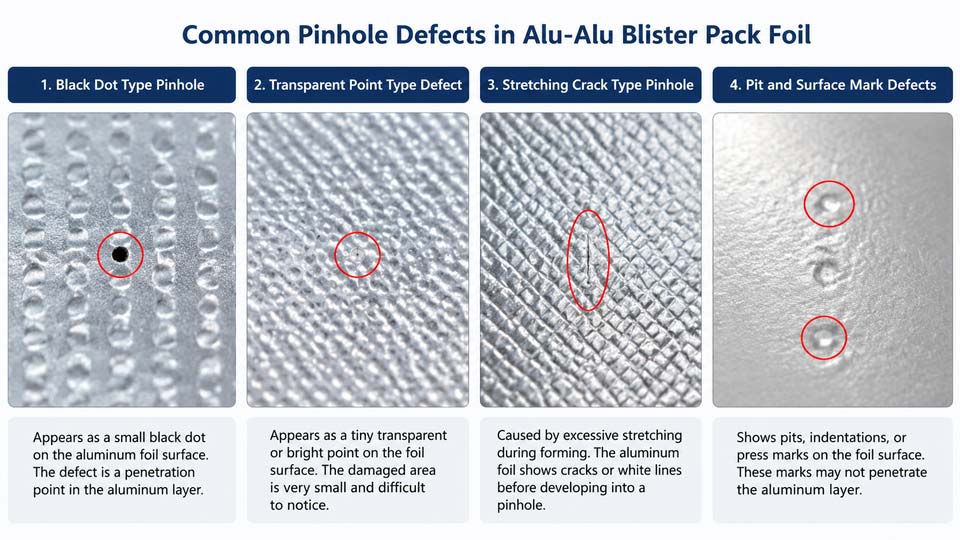
Cacat Lubang Jarum yang Umum pada Foil Paket Blister Alu-Alu
Lubang kecil aluminium foil dapat muncul dalam berbagai bentuk tergantung pada sumber kerusakan dan kondisi pembentukannya.
1. Lubang Jarum Tipe Titik Hitam
Jenis titik hitam adalah tampilan cacat lubang jarum yang paling umum pada permukaan aluminium foil. Tampaknya sebagai titik gelap kecil pada kertas timah, yang mungkin terlihat mirip dengan debu atau noda permukaan.
Berbeda dengan kontaminasi pada umumnya, tanda ini berasal dari kerusakan di dalam lapisan aluminium. Posisi cacat mungkin memiliki area penetrasi kecil dimana penghalang aluminium tidak lagi kontinu.
2. Cacat Tipe Titik Transparan
Beberapa cacat lubang jarum foil Alu-Alu muncul sebagai titik transparan kecil pada permukaan foil. Titik-titik ini sulit diperhatikan karena area kerusakannya sangat kecil.
Cacat tersebut mungkin terlihat seperti titik kecil yang jelas atau area kecil yang terang dalam kondisi penglihatan yang sesuai.
3. Lubang Jarum Tipe Retak Peregangan
Beberapa cacat lubang jarum foil Alu-Alu timbul akibat peregangan berlebihan selama proses pembentukan. Aluminium foil mungkin menunjukkan retakan tipis atau garis putih sebelum kerusakan menjadi titik penetrasi.
4. Cacat Lubang dan Tanda Permukaan
Beberapa pabrik menggunakan istilah “lubang pasir” untuk menggambarkan lubang kecil atau tanda tidak rata pada permukaan aluminium foil. Namun, tanda-tanda ini tidak selalu merupakan cacat lubang jarum yang sebenarnya.
Perbedaan utamanya adalah apakah lapisan aluminium telah ditembus. Lubang jarum yang nyata menciptakan kerusakan pada lapisan penghalang, sedangkan lubang di permukaan atau tanda tekan hanya dapat mempengaruhi penampilan.
| Jenis Cacat | Lapisan Aluminium Menembus | Penampilan Khas |
| lubang jarum | ✅ Ya | Titik hitam atau titik terang |
| Tanda lubang | ❌ Tidak selalu | Depresi permukaan kecil |
| Tekan tanda | ❌ Biasanya tidak | Lekukan permukaan |
2.Mengapa Cacat Lubang Jarum Penting dalam Kemasan Farmasi
Kemasan blister Alu-Alu mengandalkan lapisan aluminium untuk melindungi tablet dan kapsul dari kelembapan, oksigen, dan paparan cahaya. Ketika cacat lubang jarum muncul, lapisan penghalang aluminium mungkin kehilangan kemampuan perlindungan aslinya di area yang rusak.
Untuk produsen farmasi, lubang kecil aluminium foil dapat menimbulkan risiko kualitas selama produksi. Paket yang rusak mungkin memerlukan pemeriksaan tambahan, evaluasi kumpulan, atau pemecahan masalah sebelum rilis. Tindakan ini meningkatkan beban kerja QA dan dapat memengaruhi jadwal produksi.
Untuk konsumen, perlindungan penghalang yang rusak dapat mengurangi stabilitas obat yang dikemas. kelembaban, oksigen, atau cahaya yang masuk melalui area cacat dapat mempengaruhi kualitas produk selama penyimpanan.
Karena itu, mengendalikan cacat lubang jarum merupakan bagian penting dalam menjaga persyaratan produksi GMP dan memastikan kualitas kemasan akhir Alu-Alu yang melepuh.
3.Mengapa Lubang Jarum Aluminium Foil Terjadi Selama Produksi
Memahami mengapa lubang kecil aluminium foil terjadi selama produksi memerlukan pemeriksaan proses pembuatan kemasan melepuh Alu-Alu secara lengkap. Cacat ini dapat terjadi sebelum bahan mencapai mesin pengemas atau selama tahap pemrosesan selanjutnya.
Penyebab utama cacat lubang jarum pada kemasan Blister Alu-Alu adalah pembuatan aluminium foil, laminasi, pembentukan dingin, dan penanganan luar. Tahapan yang berbeda menciptakan kondisi tegangan yang berbeda pada lapisan aluminium.
1. Tahap Pembuatan Aluminium Foil
Tahap pembuatan aluminium foil merupakan salah satu sumber utama lubang kecil aluminium foil. Selama produksi aluminium foil, bahan tersebut mengalami beberapa langkah penggulungan sebelum digunakan dalam kemasan melepuh Alu-Alu. Proses-proses ini mengontrol ketebalan foil dan kekuatan mekanik.
Salah satu penyebabnya berasal dari kotoran di dalam material aluminium. Partikel logam, partikel oksida, atau inklusi non-logam mungkin tertinggal di dalam struktur aluminium selama produksi material.
Selama bergulir, pengotor ini menciptakan daerah lemah lokal. Struktur aluminium di sekitarnya tidak dapat memberikan kekuatan yang sama pada posisi ini. Setelah berulang kali digulung, daerah lemah ini mungkin menjadi bagian yang sangat tipis.
Faktor penting lainnya adalah ketebalan foil yang tidak merata. Selama proses penggulungan, tekanan yang tidak stabil atau kondisi peralatan dapat menyebabkan variasi ketebalan pada permukaan foil.
Area dengan ketebalan yang lebih kecil memiliki kekuatan tarik yang lebih rendah dan kemampuan deformasi yang lebih rendah. Selama pembentukan kemasan melepuh Alu-Alu, bagian tipis ini mengalami tekanan yang lebih tinggi dibandingkan area normal.
Hal ini menjelaskan salah satu penyebab umum lubang kecil pada bahan kemasan Alu-Alu. Cacat dimulai dari struktur material yang tidak rata dan berkembang selama pemrosesan selanjutnya.
2. Masalah Proses Laminasi
Paket Blister Alu-Alu tidak terbuat dari aluminium foil saja. Bahan tersebut biasanya mengandung lapisan luar PA, lapisan penghalang aluminium foil, dan lapisan penyegelan PVC.
Lapisan individu digabungkan melalui proses laminasi untuk membentuk struktur komposit akhir. Kualitas rekatan mempengaruhi kondisi daya dukung lapisan aluminium sebelum memasuki proses pengemasan Blister Alu-Alu.
Jika lapisan perekat tidak rata, beberapa area mungkin memiliki ikatan antar lapisan yang tidak memadai. Jika tekanan roller laminasi tidak normal, gelembung udara kecil atau ruang kosong dapat terbentuk di antara lapisan.
Di lokasi-lokasi ini, aluminium foil tidak mendapat dukungan yang cukup dari material di sekitarnya. Lapisan aluminium menjadi tersuspensi sebagian di antara lapisan gabungan.
Selama pembentukan paket melepuh Alu-Alu nanti, area yang tidak didukung ini mengalami tegangan regangan yang lebih tinggi. Aluminium foil pada posisi ini lebih mudah berubah bentuk dan retak.
Ini adalah penyebab umum cacat lubang jarum pada kemasan melepuh Alu-Alu. Masalahnya bukan dimulai dari mesin pembentuk itu sendiri, melainkan dari area lemah yang tercipta selama laminasi material.
3. Tahap Pembentukan Paket Blister Alu-Alu
Banyak produsen menyelidiki bagaimana lubang kecil aluminium foil terbentuk selama pembentukan dingin karena proses pembentukan tersebut secara langsung menerapkan gaya mekanis pada lapisan aluminium.
Berbeda dengan kemasan Blister PVC, kemasan blister pembentuk dingin tidak memanaskan foil sebelum dibentuk. Aluminium foil berubah bentuk melalui tekanan dan deformasi plastis.
Selama proses pembentukan, foil membentang di sekitar bentuk rongga. Deformasi yang diperlukan tergantung pada kedalaman rongga, ketebalan foil, dan desain rongga.
Untuk produksi kemasan blister farmasi Alu-Alu, deformasi aluminium foil biasanya sekitar 20% –40%, tergantung pada struktur lepuh dan kedalaman pembentukan. Rongga yang lebih dalam membutuhkan peregangan material yang lebih besar.
Ketika deformasi melebihi kemampuan pembentukan foil, lapisan aluminium menjadi lebih tipis di area bertekanan tinggi. Retakan kecil mungkin muncul dan secara bertahap berkembang menjadi cacat lubang jarum.
Pembentukan tekanan juga mempengaruhi distribusi tegangan. Tekanan yang berlebihan dapat memusatkan gaya pada area tertentu pada aluminium foil dan meningkatkan kemungkinan kerusakan lokal.
Kondisi perkakas adalah faktor lainnya. Goresan, gerinda, atau partikel asing pada komponen pembentuk dapat menimbulkan titik kontak yang tajam. Selama pengoperasian terus menerus Mesin pengemas Blister Alu-Alu, titik-titik ini dapat merusak lapisan aluminium.
4. Tahap Penyimpanan dan Transportasi
Meskipun sebagian besar lubang kecil aluminium foil terkait dengan material dan proses produksi, penanganan luar juga dapat menyebabkan kerusakan setelah kemasan melepuh Alu-Alu selesai dibuat.
Selama penyimpanan atau transportasi, benda tajam, tekanan berlebihan, atau penanganan yang tidak tepat dapat menimbulkan tekanan lokal pada permukaan aluminium.
4.Bagaimana Sistem Deteksi Lubang Jarum Mengidentifikasi Cacat Aluminium Foil
Ketika cacat lubang jarum muncul dalam produksi kemasan blister Alu-Alu, produsen sering kali memilih untuk memasang sistem deteksi lubang jarum untuk mengidentifikasi area foil yang rusak tanpa mengubah struktur jalur pengemasan asli.
Banyak pemasok mesin pengemasan farmasi menyediakan solusi pemeriksaan aluminium foil untuk aplikasi pengemasan melepuh. Perusahaan seperti Pengepakan Ruida, Sistem Uhlmann Pac, Teknologi Sintegon, Dan Farmasi IMA adalah pemasok yang diakui di bidang peralatan pengemasan farmasi dan memberikan solusi berbeda untuk pengendalian kualitas produksi.
Sistem deteksi lubang jarum yang berbeda menggunakan prinsip kerja yang berbeda untuk mengidentifikasi area rusak pada lapisan aluminium. Dua metode umum adalah deteksi listrik dan inspeksi transmisi cahaya. Kedua metode ini berfokus pada pendeteksian perbedaan antara aluminium foil utuh dan area yang struktur aluminiumnya rusak.
1. Metode Deteksi Transmisi Cahaya
Metode transmisi cahaya mengidentifikasi cacat lubang jarum dengan mengamati apakah cahaya dapat melewati area lapisan aluminium yang rusak.
Prinsip pendeteksiannya didasarkan pada kontras antara foil utuh dan foil rusak. Lapisan aluminium foil normal menghalangi cahaya. Lapisan aluminium lengkap menghalangi cahaya, sementara titik penetrasi memungkinkan transmisi cahaya.
Ukuran dan posisi cacat dapat mempengaruhi sinyal yang terlihat. Cacat yang lebih kecil memerlukan kondisi pemeriksaan yang lebih sensitif untuk diidentifikasi.
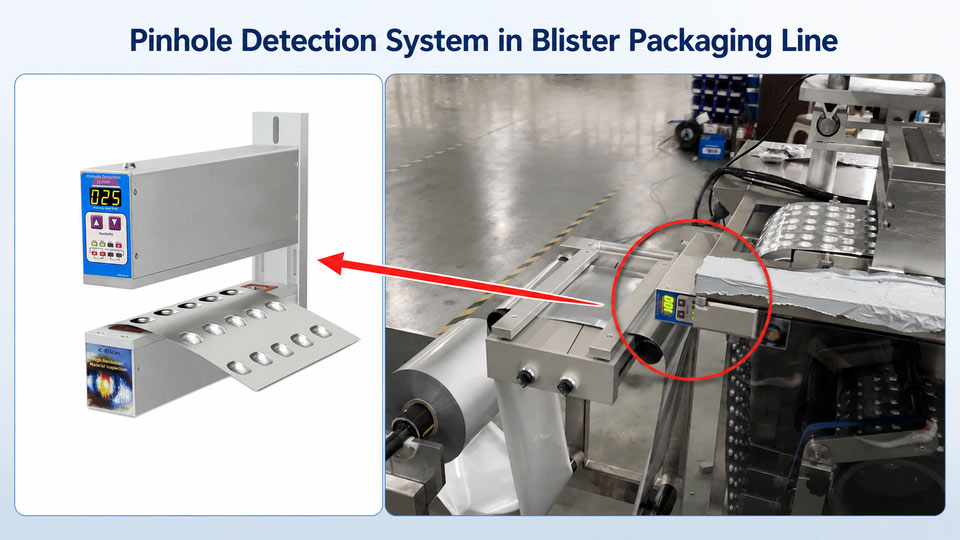
Sistem Deteksi Lubang Jarum di Jalur Pengemasan Blister
Lihat Detektor Lubang Jarum Pengemasan Ruida Berjalan
2. Metode Deteksi Lubang Jarum Listrik
Metode deteksi kelistrikan mengidentifikasi lubang kecil aluminium foil dengan memeriksa kontinuitas kelistrikan lapisan aluminium.
Lapisan aluminium foil normal memiliki konduktivitas logam yang kontinu. Ketika foil berisi lubang jarum, area yang rusak menyebabkan kerusakan pada struktur logam.
Selama pemeriksaan, sistem menerapkan sinyal listrik ke seluruh permukaan foil. Jika sinyal berubah pada posisi tertentu, peralatan mengenali kemungkinan area cacat.
Perbandingan Antara Dua Metode Deteksi Lubang Jarum
| Metode Deteksi | Prinsip Kerja | Fitur Deteksi Utama |
| Deteksi Listrik | Mendeteksi perubahan konduktivitas aluminium | Mengidentifikasi putusnya kontinuitas logam |
| Deteksi Transmisi Cahaya | Mendeteksi cahaya melewati area yang rusak | Mengidentifikasi titik transparan atau perubahan optik |
Untuk produsen yang menggunakan mesin pengemas Blister Alu-Alu, memilih metode pemeriksaan yang sesuai tergantung pada kebutuhan produksi, struktur material, dan prosedur kendali mutu.
Kesimpulan
Kualitas kemasan blister Alu-Alu tergantung pada integritas lapisan aluminium foil. Meskipun cacat lubang jarum sangat kecil dan sulit diketahui selama pemeriksaan rutin, hal ini dapat menimbulkan risiko kualitas yang serius pada kemasan farmasi.
Lubang kecil aluminium foil dapat berkembang pada berbagai tahap produksi, termasuk pembuatan foil, laminasi, pembentukan dingin, dan proses penanganannya. Kotoran material, ketebalan foil tidak rata, kondisi laminasi yang tidak stabil, stres pembentukan yang berlebihan, dan masalah perkakas semuanya dapat berkontribusi pada pembentukan cacat lubang jarum foil Alu-Alu.
Untuk produsen farmasi, memahami penyebab cacat lubang jarum membantu tim produksi mengidentifikasi potensi risiko selama proses pengemasan. Meninjau kondisi material, parameter mesin, dan operasi pembentukan memberikan arah yang lebih jelas untuk pengendalian kualitas.
Ketika produsen perlu mengidentifikasi area foil yang rusak, sistem deteksi lubang jarum menyediakan metode pemeriksaan yang dapat diintegrasikan ke dalam lini pengemasan yang ada. Deteksi listrik dan inspeksi transmisi cahaya menggunakan prinsip berbeda untuk mengidentifikasi area abnormal pada lapisan aluminium.
Pemasok mesin pengemasan seperti Ruida Packing dan produsen internasional lainnya menyediakan solusi peralatan yang berbeda berdasarkan kebutuhan produksi.
Pertanyaan Umum
1. Apa yang dimaksud dengan cacat lubang jarum pada kemasan blister Alu-Alu?
Cacat lubang jarum adalah lubang mikroskopis yang menembus lapisan aluminium di dalam kemasan melepuh Alu-Alu. Berbeda dengan noda permukaan atau bekas debu, lubang jarum nyata merusak struktur kontinu lapisan aluminium foil.
Cacat ini mungkin tampak sebagai titik hitam, poin transparan, atau retakan kecil tergantung bagaimana kerusakannya terbentuk.
2. Apakah lubang pasir dan cacat lubang jarum itu sama?
Tidak selalu. Beberapa pabrik menggunakan istilah “lubang pasir” untuk menggambarkan lubang atau tanda kecil pada permukaan aluminium foil.
Cacat lubang jarum yang sebenarnya berarti lapisan aluminium telah ditembus. Lubang atau lekukan di permukaan hanya dapat mempengaruhi penampilan tanpa membuat lubang yang lengkap.
3. Apakah memasang sistem deteksi lubang jarum memerlukan perubahan jalur pengemasan yang ada?
Banyak sistem deteksi lubang jarum dirancang untuk diintegrasikan dengan proses pengemasan farmasi yang ada.
Produsen dapat memilih peralatan inspeksi yang sesuai berdasarkan struktur kemasan Blister Alu-Alu mereka, persyaratan produksi, dan prosedur kendali mutu.
4. Apa perbedaan antara deteksi listrik dan inspeksi transmisi cahaya?
Deteksi listrik memeriksa apakah lapisan aluminium mempertahankan konduktivitas listrik secara terus menerus. Area yang rusak dapat menyebabkan perubahan sinyal listrik.
Inspeksi transmisi cahaya mengidentifikasi cacat dengan memeriksa apakah cahaya melewati aluminium foil. Lapisan aluminium lengkap menghalangi cahaya, sementara titik penetrasi memungkinkan transmisi cahaya.
Referensi
1. KITA. Administrasi Makanan dan Obat -obatan (FDA) – Praktik Manufaktur yang Baik Saat Ini (CGMP)
https://www.fda.gov/drugs/pharmaceutical-quality-resources/drugs/current-good-manufacturing-practice-cgmp-regulations
2. Badan Obat Eropa (EMA) – Praktek Manufaktur yang Baik (GMP)
https://www.ema.europa.eu/en/human-regulatory/overview/pharmaceutical-quality/good-manufacturing-practice
3. Farmakope Amerika Serikat (USP) – Persyaratan Pengemasan dan Penyimpanan
https://www.usp.org
4. ISO 15378 – Bahan Pengemas Utama Produk Obat
https://www.iso.org/standard/70795.html