Les capsules sont un composant fondamental et très polyvalent des formes posologiques orales solides dans les secteurs pharmaceutique et nutraceutique.. Ils peuvent masquer efficacement le goût ou l’odeur désagréable des principes actifs pharmaceutiques (Apis) et favorisent l'observance des patients - une des raisons pour lesquelles les capsules restent une norme mondiale.
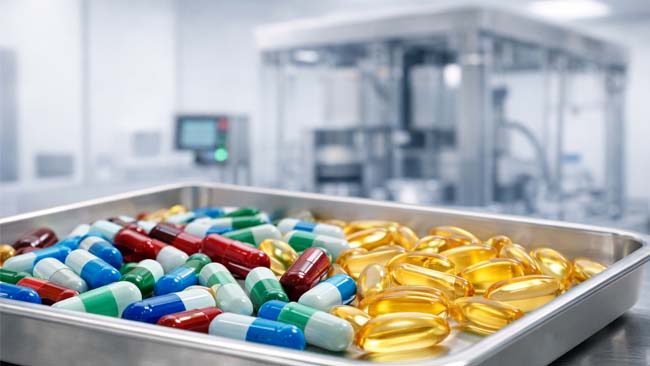
Mais la sélection des capsules n’est pas un choix cosmétique. La technologie d'encapsulation que vous choisissez peut influencer la stabilité du produit, biodisponibilité (l'étendue et le taux d'absorption), efficacité thérapeutique, et, tout aussi important, la faisabilité et l'efficacité du processus de fabrication. Cette analyse technique décompose le moderne Types de capsules par structure, matériau de la coque, et conception de versions fonctionnelles, relie ensuite ces choix aux capacités opérationnelles requises de la technologie des machines de remplissage de capsules. Pour les lecteurs recherchant spécifiquement Types de capsules en pharmacie, la même logique d'ingénierie s'applique: le « bon » type de capsule est celui dont les objectifs de performance peuvent être fabriqués de manière reproductible à grande échelle.
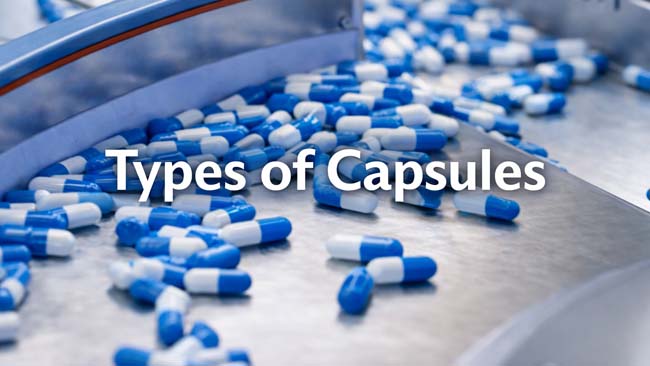
Types de gélules: Structure, Remplir, et machines d'encapsulation
La plupart des décisions commencent par la structure, parce que la structure détermine ce que l'équipement de remplissage et de scellage doit faire. En termes industriels, les capsules se répartissent en deux familles structurelles principales: gélules (systèmes en deux parties) et gélules molles (monolithique, joints hermétiques).
Gélules dures
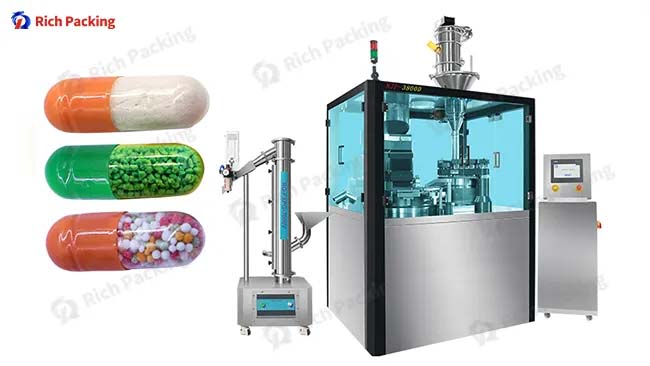
Les gélules sont constituées de deux capsules séparables, coques cylindriques rigides - le capuchon et le corps - conçues pour s'emboîter après remplissage. Historiquement, les gélules sont le principal contenant pour les, formes posologiques orales solides, y compris les poudres, granulés, pellets (systèmes multiparticulaires), et micro-comprimés. La technologie moderne a élargi l'espace d'application: certaines coques en deux parties peuvent également être utilisées pour capsules dures remplies de liquide lorsque le remplissage est non aqueux et que la fermeture est validée.
L’avantage industriel des gélules est la polyvalence, mais cette polyvalence dépend de la façon dont la machine de remplissage de capsules gère la séparation, dosage, et fermeture avec une précision reproductible. La production à haut débit nécessite un contrôle strict de la manipulation des coques, flux de poudre, intégrité des pellets, et la force de fermeture, sinon les défauts apparaissent sous forme de variabilité du poids, coquilles déformées, ou mauvais verrouillage.
Cycle de la machine de remplissage de gélules (gélules)
Une remplisseuse de gélules à haut débit exécute généralement cette séquence:
- Orientation des capsules & alimentation (minimiser les éclats et les déformations)
- Séparation (tenant fermement le capuchon et le corps)
- Dosage (stations poudre/granulés/liquide adaptées au comportement du matériau)
- Clôture & verrouillage (force contrôlée pour une intégrité de verrouillage constante)
- Décharge (transfert à l'inspection et à l'emballage)
Gélules molles
Gélules molles (capsules de gélatine molle, ou « gels liquides ») sont à unité unique, sans couture, coques élastiques - souvent ovales ou sphériques - et hermétiquement fermées. Les gélules conviennent parfaitement aux liquides, à base d'huile, émulsion, ou remplissages semi-solides. L'une des raisons techniques pour lesquelles les gélules sont fréquemment sélectionnées est leur potentiel à améliorer la biodisponibilité des API peu solubles en présentant les actifs dans un état pré-solubilisé ou dispersé.; une étude clinique sur la mélatonine a rapporté une biodisponibilité améliorée dans les gélules molles par rapport aux formulations en poudre, même à dose réduite. (PubMed)
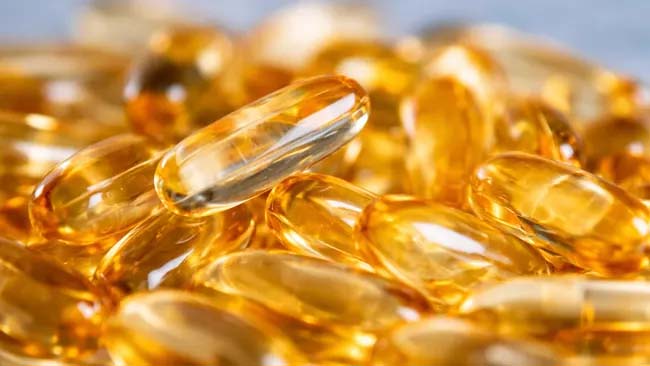
La fabrication de softgels est fondamentalement différente du remplissage de capsules dures. Au lieu de séparer et fermer deux parties rigides, les machines d'encapsulation de softgel forment la coque, mesurer le remplissage, et sceller en un seul processus continu. La composition de la coque comprend généralement de la gélatine, eau, et agents plastifiants (comme la glycérine ou le sorbitol) pour ajuster l'élasticité et la dureté, paramètres qui affectent directement l'intégrité des coutures, risque de fuite, et comportement au séchage.
Tableau 1 — Structure de la capsule par rapport à la capacité de la machine qu'elle exige
| Famille de capsules | Remplissages typiques | Exigence en matière d'équipement de base | Là où la précision compte le plus |
| Gélules dures | poudres, granulés, pellets, micro-comprimés; sélectionner des liquides non aqueux | Machine de remplissage de capsules industrielle avec séparation fiable + stations de dosage + fermeture | répétabilité du dosage; intégrité de la fermeture; manipulation de pellets |
| Gélules molles | huiles, émulsions, suspensions, semi-solides | Machine d'encapsulation de gélules molles (formation + remplissage + scellage) | viscosité/température de remplissage; intégrité des coutures; contrôle du séchage |
Matériaux de coque: Gélatine vs HPMC et la fenêtre de stabilité
Au sein du Types de capsules paysage, le matériau de la coque détermine la compatibilité chimique, comportement à l'humidité, et l'alignement du marché. En pratique, il définit également l'étroitesse de votre fenêtre de stockage et de manipulation pour que les coques restent usinables..
Capsules de gélatine traditionnelles
Les capsules de gélatine sont la norme industrielle établie de longue date. Les coquilles de gélatine sont d'origine animale (à base de collagène) et sont généralement traités à l'aide d'acide (Type A) ou alcali (Tapez B) méthodes. Ils ont également une plage d'humidité fonctionnelle: quand l'humidité est trop faible, les coques peuvent devenir cassantes et se fissurer sous l'effet de contraintes mécaniques; quand l'humidité est trop élevée, les coquilles peuvent ramollir et se déformer.
Une fenêtre de contrôle largement citée pour les capsules de gélatine dure est 15–25°C et 35–65% d’humidité relative (RH), ce qui aide à maintenir l'humidité de la capsule dans la plage de travail et réduit le risque de fragilité.
Pour les API sensibles à l'humidité, le point clé n’est pas que la gélatine soit « mauvaise »," mais que les coques de gélatine nécessitent une discipline environnementale et d'emballage plus stricte pour maintenir la stabilité de la coque et du remplissage tout au long de la chaîne d'approvisionnement..
HPMC (végétarien) gélules
Hydroxypropylméthylcellulose (HPMC) les capsules sont dérivées de la cellulose et largement utilisées par les végétariens, végétalien, kascher, ou positionnement halal. Techniquement, Les capsules HPMC ont souvent une teneur en humidité plus faible et peuvent montrer une plus grande résilience à l'humidité que la gélatine dans certaines applications..
Il est courant de voir des HPMC gérer des attentes qui tolèrent une plage de RHPMC plus large que la gélatine. (souvent cité jusqu'à environ 70% RHPMCdans des hypothèses de stockage typiques), c'est l'une des raisons pour lesquelles le HPMC est fréquemment envisagé pour les remplissages sensibles à l'humidité ou hygroscopiques..
Cela dit, aucune coque ne peut remplacer un bon emballage barrière lorsque la formulation est fortement hygroscopique ou sensible à l'oxygène ; le choix de la coque et la conception de l'emballage doivent être traités comme un seul système..
Tableau 2 — Gélatine vs HPMC gélules: différences techniques pratiques
| Paramètre | Gélules de gélatine | HPMC (végétarien) gélules |
| Origine | collagène animal; Type A / Traitement de type B | dérivé de la cellulose (fibres végétales) |
| Comportement à l'humidité | cassant à faible humidité relative; doux à HR élevée | une humidité plus faible; une plus grande résilience à l’humidité dans certaines utilisations |
| Fenêtre de stockage fréquemment citée | 15–25°C; 35–65% HR | 15–30°C; jusqu'à ~ 70 % d'humidité relative |
| Projets les plus adaptés | remplissages standards sous environnement contrôlé | remplissages sensibles à l'humidité; positionnement diététique |
| Vérification des clés | intégrité mécanique + correspondance de barrière d'emballage | profil de dissolution + compatibilité coque-remplissage |
Conceptions fonctionnelles: Entérique, Soutenu, et libération contrôlée
Une catégorie sophistiquée de Types de capsules traite la capsule non seulement comme un récipient, mais en tant que composant technique contrôlant le profil de libération du médicament dans le tractus gastro-intestinal.
Libération différée (à enrobage entérique) gélules
Les formulations à libération retardée sont conçues pour empêcher une libération immédiate dans l'estomac. La méthode la plus courante est enrobage entérique: une barrière polymère appliquée à la capsule ou à son contenu qui reste intacte dans l'environnement très acide de l'estomac et se dissout dans l'environnement moins acide (ou alcalin) environnement de l'intestin grêle. Cette conception est utilisée pour protéger les API sensibles aux acides de la dégradation et pour atténuer l'irritation gastrique due à certaines substances médicamenteuses..
En pratique, la performance entérique est définie par deux choses: résistance aux acides et désintégration/dissolution fiable après la transition de pH. Cette exigence ramène la discussion au contrôle de la fabrication : l'uniformité du revêtement., compatibilité coque-revêtement, et le conditionnement de l'humidité affectent tous si le profil « retardé » est cohérent d'un lot à l'autre..
Gélules à libération prolongée et contrôlée
Les capsules à libération prolongée et contrôlée sont conçues pour libérer les ingrédients actifs sur une période prolongée.. Une approche de conception courante consiste à remplir des granulés enrobés (unités multiparticulaires) dans une enveloppe de capsule; Les tailles de pellets dans le 0.5–1,5mm gamme (environ 500 à 1 500 microns).
Le principal avantage de cette approche multiparticulaire est la stabilité et la flexibilité du profil.. Différentes populations de pellets peuvent être mélangées pour façonner la courbe de libération finale, tandis que la capsule sert de récipient de dose pratique. Du point de vue de l'équipement, ces produits placent la barre de la précision. Le machine à capsules entièrement automatique doit être équipé de stations de granulés conçues pour être douces et hautement répétables. Une dispersion uniforme des pellets et un dosage cohérent sont essentiels car de petits écarts peuvent modifier le profil de libération prévu..
Pilotes de précision: Taille des capsules, Densité apparente, et capacité de l'équipement
La précision du dosage industriel dépend de l’adaptation des propriétés de la formulation en vrac aux taille des capsules et aux capacités mécaniques de l'équipement de remplissage. Les tailles standard de gélules sont codées numériquement à partir de 000 (le plus grand) jusqu'à 5 (le plus petit). Le poids de remplissage pratique n'est pas défini uniquement par le volume; cela dépend de la densité apparente et de la distribution granulométrique. Les poids de remplissage en poudre varient considérablement selon les tailles et les densités, et peut atteindre la gamme des grammes pour les capsules plus grosses en fonction de la densité apparente de la formulation.
Parce que la densité et le comportement du débit déterminent la variabilité du dosage, formulation et équipement sont indissociables. Une haute qualité Machine de remplissage de capsules devrait être capable de:
- couvrir les tailles de capsules requises avec stable, changement répétable
- soutenir les principes de dosage adaptés à la formulation (poudre, pastille, ou liquide)
- maintenir la cohérence des fermetures au débit industriel
- intégrer les interfaces d’inspection et d’emballage en aval
Les attributs physiques recoupent également l'utilisation et la sécurité des patients. Les directives de la FDA soulignent que les différences dans les caractéristiques physiques (y compris la taille et la forme) peut affecter l'observance et l'acceptabilité des patients ou pourrait contribuer à des erreurs de médication, renforçant ainsi la raison pour laquelle les dimensions et l'apparence des capsules ne sont pas « une simple image de marque ».
Considérations relatives aux CGMP et au contrôle des processus
Quand les programmes capsules peinent à grande échelle, la cause profonde est souvent la perte de contrôle sur l’humidité, contrainte mécanique, ou le comportement de remplissage, pas seulement le type de capsule. Deux principes comptent toujours:
- Contrôle environnemental: maintenir la température et l'humidité relative dans une fenêtre convenue pour le matériau de coque sélectionné afin de préserver l'usinabilité.
- Alignement du système: assurer la coque, remplir, poste de dosage, et la barrière d'emballage primaire sont conçues pour fonctionner ensemble, en particulier pour les API hygroscopiques ou les huiles sensibles à l'oxygène..
Dans un contexte CGMP, l'objectif est une répétabilité fondée sur des données probantes: performances de dosage stables, intégrité de la fermeture, et vérification du profil de version (où la version modifiée est utilisée). C’est aussi pourquoi les preuves d’équipement sont importantes. Par exemple, chez Ruidapacking, les machines à capsules sortantes sont généralement vérifiées avec un fonctionnement continu de 24 heures plus une fenêtre de vérification de charge élevée de 8 heures avant expédition : un moyen pratique de montrer la stabilité des performances plutôt que de s'appuyer sur de courtes démonstrations.
Conclusion
La manière la plus utile de comprendre le Types de capsules est comme un système d'ingénierie: la structure définit la route d'encapsulation, le matériau de la coque détermine le comportement de stabilité et l'alignement sur le marché, et des conceptions fonctionnelles (entérique, soutenu, à libération contrôlée) régissent les performances du tractus gastro-intestinal. Dans toutes les catégories, les résultats thérapeutiques dépendent de la répétabilité industrielle ; la technologie des capsules est donc finalement liée à un équipement de précision. Si votre stratégie produit nécessite plusieurs formats de capsules (poudre + pellets + liquides, ou version modifiée parallèlement à la version immédiate), assurez-vous que la capacité de votre machine à capsules entièrement automatique est planifiée à l'avance, car il détermine ce qui est réaliste à l'échelle.
FAQ
1) Quels sont les principaux types structurels de capsules?
Les gélules sont principalement classées en gélules (systèmes en deux parties) et gélules molles (unitaire, coques hermétiquement fermées).
2) Quelles sont les gélules généralement utilisées pour encapsuler?
Les gélules sont traditionnellement utilisées pour les poudres, granulés, pellets, et micro-comprimés, et certaines technologies autorisent les liquides non aqueux dans des coques en deux parties validées.
3) À quoi conviennent les gélules molles ??
Les gélules conviennent mieux aux huiles, émulsions, suspensions, et remplissages semi-solides où un joint hermétique et une protection contre l'oxydation ou la volatilité sont importants.
4) Pourquoi les gélules peuvent-elles améliorer la biodisponibilité de certains API?
Les softgels peuvent présenter un API sous une forme solubilisée ou dispersée, ce qui peut améliorer l’absorption des composés peu solubles. Il existe des preuves d'une biodisponibilité améliorée de la mélatonine dans les gélules molles.
5) Quelle est la principale différence entre les capsules de gélatine et HPMC gélules?
Les coquilles de gélatine sont d'origine animale et sensibles aux variations d'humidité; Les coques HPMC sont dérivées de la cellulose, souvent plus faible en humidité, et peut montrer une plus grande résilience à l'humidité dans certaines applications.
6) Qu'est-ce qu'un enrobage entérique?
Un enrobage entérique (un type de pelliculage) est une barrière polymère qui résiste à l'acide gastrique et se dissout dans l'intestin, permettant une libération différée.
7) Pourquoi les granulés sont-ils importants dans les capsules à libération contrôlée?
Les pellets portent des revêtements à libération modifiée; leur intégrité et l'uniformité de leur dosage sont essentielles pour maintenir le profil de libération prévu.
8) Comment la taille des capsules affecte-t-elle la fabrication?
Les tailles de capsules vont de 000 à 5, et le poids de remplissage pratique dépend fortement de la densité apparente et de la distribution granulométrique, ce qui affecte la répétabilité du dosage.
Références
FDA: Taille, Forme, et autres attributs physiques des comprimés et capsules génériques (Octobre 2022). (Administration américaine des denrées alimentaires et des médicaments)
PubMed: Les gélules molles améliorent la biodisponibilité de la mélatonine chez l’homme (2014). (PubMed)