Η επιλογή της σωστής μηχανής πλήρωσης κάψουλας είναι μια κρίσιμη απόφαση για τη βελτιστοποίηση της αποδοτικότητας της παραγωγής, εξασφαλίζοντας ακριβή δοσολογία, και τη διατήρηση της κανονιστικής συμμόρφωσης στα φαρμακευτικά προϊόντα, θρεπτικός, και την παραγωγή συμπληρωμάτων. Το σωστό μηχάνημα μπορεί να σας βοηθήσει να κλιμακώσετε την παραγωγή, μείωση του κόστους, και να βελτιώσει τη συνοχή του προϊόντος, ενώ μια κακή επιλογή μπορεί να οδηγήσει σε χαμηλή λειτουργική απόδοση, αυξημένος χρόνος διακοπής λειτουργίας, και προϊόντα κακής ποιότητας.
Σε αυτόν τον απόλυτο οδηγό αγοραστή, θα παρέχουμε μια λεπτομερή επισκόπηση των διαφόρων τύπων μηχανών πλήρωσης καψουλών, βασικά χαρακτηριστικά τους, και προδιαγραφές. Αυτός ο οδηγός θα σας εξοπλίσει με τις γνώσεις που χρειάζεστε για να επιλέξετε με σιγουριά την καλύτερη μηχανή ενθυλάκωσης κάψουλας για τις ανάγκες της επιχείρησής σας, με βάση παράγοντες όπως η ταχύτητα, ακρίβεια, ευστροφία, και συμμόρφωση.
Τι είναι μια μηχανή πλήρωσης κάψουλας?
ΕΝΑ μηχανή πλήρωσης καψουλών αυτοματοποιεί τη διαδικασία πλήρωσης κενών σκληρών καψουλών με ποικιλία υλικών, συμπεριλαμβανομένων των σκονών, κόκκους, υγρά, ή πέλλετ. Αυτά τα μηχανήματα εξαλείφουν τη χειρωνακτική εργασία που απαιτείται για το γέμισμα των καψουλών, βελτιώνοντας δραματικά την ταχύτητα, συνοχή, και ακρίβεια στην παραγωγή.
Εκτός από τη βελτίωση της αποδοτικότητας της παραγωγής, Οι μηχανές δοσομέτρησης καψουλών διασφαλίζουν ότι οι κατασκευαστές πληρούν τις αυστηρές Ορθές Πρακτικές Κατασκευής (cGMP) και FDA κανονισμοί, διασφαλίζοντας τη συνέπεια και την ποιότητα κάθε παρτίδας που παράγεται. Είτε παράγετε φαρμακευτικά φάρμακα, συμπληρώματα διατροφής, ή διατροφικά, αυτές οι μηχανές είναι απαραίτητες για την παραγωγή μεγάλου όγκου.
Η εκτεταμένη χρήση του εξοπλισμού πλήρωσης καψουλών είναι χαρακτηριστικό των βιομηχανιών που χαρακτηρίζονται από αυστηρά πρότυπα υγιεινής και ακρίβειας. Η ικανότητα αυτού του μηχανήματος να αυτοματοποιεί τη διαδικασία πλήρωσης τα έχει κάνει ουσιαστικό μέρος της σύγχρονης κατασκευής, μείωση του ανθρώπινου λάθους και ενίσχυση της συνέπειας του προϊόντος.
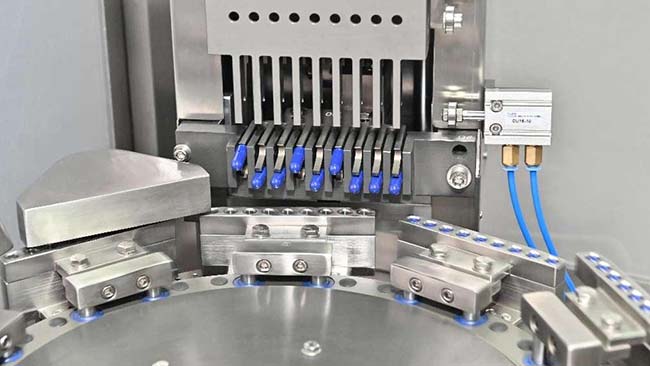
Τύποι μηχανών πλήρωσης καψουλών
Η επιλογή μιας κατάλληλης μηχανής κάψουλας ξεκινά με μια σαφή κατανόηση των βασικών προσφορών της αγοράς. Αυτά γενικά εμπίπτουν σε τρεις κατηγορίες: εγχειρίδιο, ημιαυτόματος, και πλήρως αυτόματα μοντέλα. Η βέλτιστη επιλογή για τη λειτουργία σας καθορίζεται τελικά από παράγοντες όπως η κλίμακα παραγωγής, επιθυμητή απόδοση, και δημοσιονομικοί περιορισμοί.
Η ακόλουθη ανάλυση περιγράφει λεπτομερώς τις εφαρμογές και τα βασικά πλεονεκτήματα κάθε τύπου μηχανήματος.
Χειροκίνητα Γεμιστικά Κάψουλας
Τα χειροκίνητα πληρωτικά καψουλών είναι χειροκίνητα μηχανήματα που δεν απαιτούν ηλεκτρική ενέργεια. Η διαδικασία χειροκίνητης πλήρωσης περιλαμβάνει δύο βασικά βήματα. Πρώτα, ο χειριστής τοποθετεί τις κενές κάψουλες σε καθορισμένους δίσκους. Τότε, χρησιμοποιώντας χειροκίνητα εργαλεία όπως παραβιάσεις και μοχλούς, ολοκληρώνουν το γέμισμα και το σφράγισμα των καψουλών.
◼Το καλύτερο για: Μικρές παρτίδες, παραγωγή εργαστηριακής κλίμακας, έρευνα και αξιοποίηση (R&ρε), κλινικές δοκιμές, και νεοφυείς επιχειρήσεις.
◼Παραγωγή: Κυμαίνεται από δεκάδες έως μερικές εκατοντάδες κάψουλες ανά ώρα—μια σχετικά χαμηλή απόδοση.
◼Φόντα:
- Χαμηλό κόστος και απλή λειτουργία
- Συμπαγής σχεδιασμός, κατάλληλο για μικρούς χώρους
- Εξαιρετικό για ευελιξία, ιδανικό για μικρές παρτίδες και πειραματικά σκευάσματα
Περιορισμοί:
- Αργή και έντασης εργασίας
- Δεν είναι κατάλληλο για παραγωγή μεγάλης κλίμακας
- Υψηλές πιθανότητες για ανθρώπινο λάθος και ασυνέπειες στο βάρος πλήρωσης
Τα χειροκίνητα πληρωτικά χρησιμοποιούνται συχνότερα από άτομα στο σπίτι. Για μικρής κλίμακας παραγωγή ή προσαρμοσμένες συνθέσεις, παρέχουν ευελιξία, αλλά συνοδεύονται από περιορισμούς στην ταχύτητα και τη συνέπεια.
Ημιαυτόματα γεμιστικά καψουλών
Αυτό το είδος μηχανής ενσωματώνει μηχανοκίνητα μέρη με χειροκίνητα βήματα χειρισμού. Ο χειριστής φορτώνει τις κενές κάψουλες σε μια χοάνη, και στη συνέχεια το μηχάνημα προσανατολίζεται αυτόματα, χωρίζει, γεμίζει, και κλειδώνει τις κάψουλες. Ωστόσο, ο χειριστής εξακολουθεί να απαιτείται να ανανεώσει τις κάψουλες και τη σκόνη κατά τη λειτουργία.
◼Το καλύτερο για: Παραγωγή μικρής έως μεσαίας κλίμακας όπου δεν απαιτείται πλήρης αυτοματοποίηση.
◼Παραγωγή: Η απόδοση μετριέται συνήθως σε δεκάδες χιλιάδες κάψουλες ανά ώρα, αν και ο ακριβής αριθμός διαφέρει ανάλογα με το μοντέλο μηχανής.
◼Φόντα:
- Αυξημένη απόδοση σε σύγκριση με τα χειροκίνητα μηχανήματα
- Περισσότερες αυτοματοποιημένες λειτουργίες όπως ο προσανατολισμός κάψουλας, γέμισμα και κλείδωμα
- Προμηθευτός, προσφέροντας μια καλή ισορροπία μεταξύ αυτοματισμού και χειροκίνητου ελέγχου
Περιορισμοί:
- Απαιτείται ακόμη η συμμετοχή του χειριστή για τη φόρτωση και την αναπλήρωση υλικών
- Υψηλότερες απαιτήσεις εργασίας σε σύγκριση με πλήρως αυτόματες μηχανές
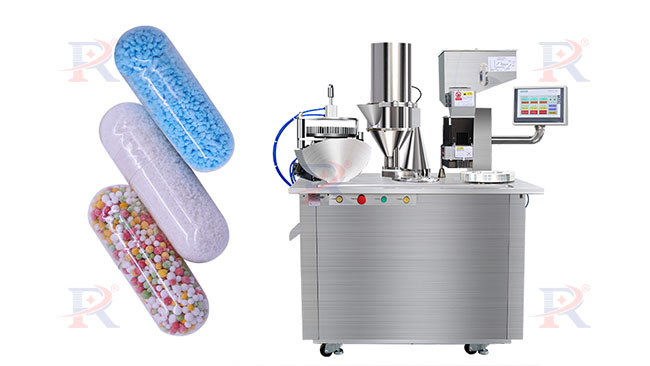
Ημιαυτόματες μηχανές πλήρωσης καψουλών είναι ιδανικά για εργαστήρια και μικρές έως μεσαίες επιχειρήσεις που έχουν περιορισμένες επενδύσεις κεφαλαίου αλλά χρειάζονται καλύτερη παραγωγικότητα από τα χειροκίνητα μηχανήματα. Αυτά τα μηχανήματα προσφέρουν μεγαλύτερη ευελιξία και είναι πιο εύχρηστα από τα πλήρως χειροκίνητα μοντέλα, καθιστώντας τα μια δημοφιλή επιλογή στη φαρμακευτική και τη διατροφική βιομηχανία.
Πλήρως αυτόματα Γεμιστικά Κάψουλας
Πλήρως αυτόματες μηχανές πλήρωσης καψουλών έχουν σχεδιαστεί για παραγωγή με ελάχιστη ανθρώπινη παρέμβαση. Αυτά τα μηχανήματα φορτώνουν αυτόματα κενές κάψουλες, διαχωρίστε τα σώματα και τα καπάκια της κάψουλας, μετρήστε ακριβείς δόσεις ενεργών συστατικών στα σώματα, ανασυνδυάστε τα καπάκια με τα σώματα, και βγάλτε τις έτοιμες κάψουλες.
◼Το καλύτερο για: Φαρμακευτική και διατροφική παραγωγή, όπου οι επιχειρησιακές απαιτήσεις επιβάλλουν τόσο παραγωγή μεγάλου όγκου όσο και υψηλό βαθμό αυτοματισμού.
◼Παραγωγή: Μπορεί να φτάσει αρκετές εκατοντάδες χιλιάδες κάψουλες ανά ώρα—μια χωρητικότητα που εξαρτάται σε μεγάλο βαθμό από τον αριθμό των σταθμών και το συγκεκριμένο μοντέλο μηχανής.
◼Φόντα:
- Υψηλή ταχύτητα— βελτιστοποιημένη για παραγωγή μεγάλης κλίμακας
- Ακριβής έλεγχος δοσολογίας, διασφάλιση της συνέπειας του προϊόντος
- Δραστική μείωση των δαπανών εργασίας και ελαχιστοποίηση των λαθών που αποδίδονται σε ανθρώπινους παράγοντες.
- Ιδανικό για συνεχείς γραμμές παραγωγής
◼Περιορισμοί:
- Υψηλότερο αρχικό κόστος επένδυσης
- Η σύνθετη εγκατάσταση και συντήρηση ενδέχεται να απαιτούν εξειδικευμένους τεχνικούς
- Απαιτεί σημαντικό χώρο δαπέδου και υψηλότερο λειτουργικό κόστος
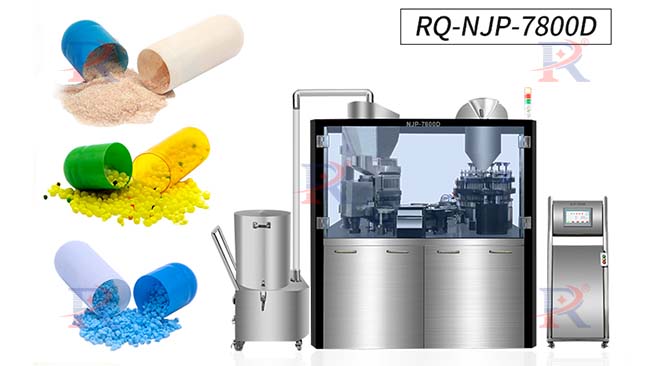
Οι κύριοι χρήστες-στόχοι για πλήρως αυτόματες μηχανές πλήρωσης σκληρών καψουλών είναι μεγάλης κλίμακας φαρμακευτικές εταιρίες και οργανισμοί συμβάσεων παραγωγής (ΚΟΑ) που απαιτούν τόσο υψηλή απόδοση όσο και συνέπεια προϊόντων. Αυτά τα μηχανήματα ενσωματώνονται άψογα με άλλα συστήματα παραγωγής, όπως μηχανή blister ή γραμμή πλήρωσης μπουκαλιών, και προσφέρουν παρακολούθηση και έλεγχο σε πραγματικό χρόνο για τη διατήρηση της βέλτιστης απόδοσης.
Εξειδικευμένη πλήρωση κάψουλας ρεκακίες
Εκτός από τα τυπικά πληρωτικά καψουλών, υπάρχουν εξειδικευμένα μηχανήματα σχεδιασμένα για το χειρισμό συγκεκριμένων τύπων υλικών πλήρωσης, όπως υγρά ή μαλακά τζελ.
Υγρό Γεμιστικά Κάψουλας: Αυτά τα μηχανήματα έχουν σχεδιαστεί ειδικά για την πλήρωση καψουλών με υγρά ή εναιωρήματα, όπως έλαια ή φαρμακευτικά υγρά σκευάσματα. Τα υγρά πληρωτικά απαιτούν συχνά αντλίες ακριβείας και ελέγχους θερμοκρασίας για τη διαχείριση του ιξώδους.
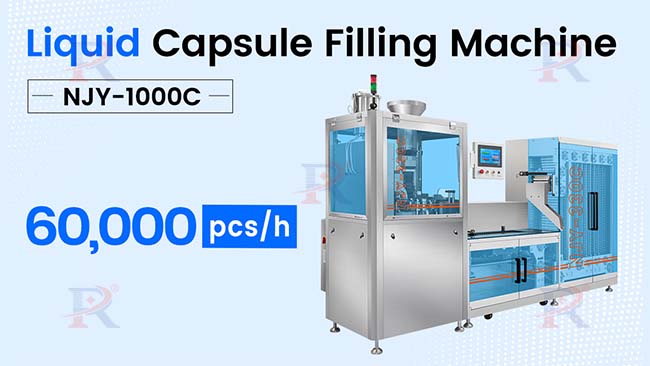
Μηχανήματα Ενθυλάκωσης Softgel: Αυτά τα μηχανήματα χρησιμοποιούνται για την πλήρωση μαλακών καψουλών με υγρές ή ημιστερεές ουσίες, χρησιμοποιείται συχνά σε συμπληρώματα βιταμινών ή θρεπτικών συστατικών. Οι ενθυλακωτές μαλακής γέλης λειτουργούν διαφορετικά από τα παραδοσιακά πληρωτικά καψουλών, αλλά εξυπηρετούν έναν σχετικό σκοπό στην ενθυλάκωση προϊόντων με πλήρωση υγρού.
Αυτά τα εξειδικευμένα μηχανήματα είναι ιδανικά για κατασκευαστές που παράγουν προϊόντα γεμάτα υγρά ή κάψουλες μαλακής γέλης. Υγρά πληρωτικά, για παράδειγμα, μπορεί να χειριστεί σκευάσματα υψηλού ιξώδους, ενώ οι κάψουλες μαλακής γέλης έχουν σχεδιαστεί ειδικά για να χειρίζονται κάψουλες.
Πριν βουτήξετε στα βασικά χαρακτηριστικά μιας μηχανής ενθυλάκωσης, Βοηθά στη σύγκριση τύπων μηχανών δίπλα-δίπλα. Ο παρακάτω πίνακας συνοψίζει την τυπική απόδοση, εύρη ακρίβειας, και προσδοκίες μετάβασης, ώστε να μπορείτε γρήγορα να περιορίσετε ποια κατηγορία ταιριάζει στην πραγματικότητα παραγωγής σας (όχι απλώς μια ταχύτητα μπροσούρας).
| Τύπος μηχανής | Τυπική έξοδος (κάψουλες/ώρα) | Πρακτικός έλεγχος βάρους πλήρωσης (τυπικός) | Ώρα αλλαγής (τυπικός) | χειριστές | Καλύτερη εφαρμογή (πιο συνηθισμένη χρήση) | Επίπεδο προϋπολογισμού |
| Χειροκίνητο γέμισμα καψουλών | 100–1.000 | Εξαρτάται από τον χειριστή; συχνά ±5–10% | 10– 30 λεπτά | 1 | R&ρε, δοκιμές, μικρο-παρτίδες, δοκιμαστικό μάρκετινγκ | Χαμηλός |
| Ημιαυτόματο σύστημα πλήρωσης καψουλών | 10,000–20.000 | Συχνά ±3–5% (εξαρτώμενο από υλικό) | 30– 90 λεπτά | 1-2 | Μικροί κατασκευαστές, αναπτυσσόμενες μάρκες συμπληρωμάτων, ευέλικτα SKU | Μέσον |
| Πλήρως αυτόματη μηχανή πλήρωσης καψουλών | 20,000–200.000+ | Συχνά ±1–3% (με σταθερή ροή σκόνης) | 60– 180 λεπτά | 1 | Pharma/CMO, συνεχής παραγωγή, αυστηρότερο QA & απόδειξη με έγγραφα | Ψηλά |
| Μηχανή ενθυλάκωσης υγρών (ειδικότητα) | 5,000–60.000 | Με γνώμονα τον όγκο; εξαρτάται από το ιξώδες & σταθερότητα αντλίας | 60– 180 λεπτά | 1 | Ελαιογραφίες, αναστολές, υγρά δραστικά σε σκληρές κάψουλες | Μεσαία–Υψηλή |
| Softgel Encapsulation Line (ειδικότητα) | Ειδική για τη γραμμή | Με γνώμονα τη διαδικασία; κέλυφος + έλεγχος πλήρωσης | Μακρύτερα & επικυρώθηκε | 2+ | Μαλακές γέλη για έλαια/βιταμίνες; αποκλειστικές σειρές προϊόντων | Ψηλά |
Βασικά χαρακτηριστικά που πρέπει να λάβετε υπόψη πριν αγοράσετε μια μηχανή πλήρωσης καψουλών
Όταν αγοράζετε μια μηχανή παρασκευής κάψουλας, υπάρχουν πολλά βασικά χαρακτηριστικά που καθορίζουν την απόδοσή του, ποιότητα, και καταλληλότητα για τις ανάγκες παραγωγής σας. Πρέπει να εξεταστούν αρκετοί κρίσιμοι παράγοντες πριν από την αγορά μιας μηχανής κάψουλας.
Κατασκευή & Αντοχή
Η κατασκευή και τα υλικά του μηχανήματος είναι κρίσιμα για την επίτευξη μακροπρόθεσμης, αξιόπιστη λειτουργία. Γεμιστικά καψουλών κατασκευασμένα από υψηλής ποιότητας ανοξείδωτο χάλυβα(κατά προτίμηση SUS304 ή SUS316) χρησιμοποιούνται συχνότερα επειδή είναι ανθεκτικά, ανθεκτικό στη διάβρωση, και καθαρίζεται εύκολα. Ένα συμπαγές πλαίσιο ελαχιστοποιεί τη φθορά με την πάροδο του χρόνου, και διασφαλίζει ότι το μηχάνημα μπορεί να λειτουργεί με συνέπεια, ακόμη και υπό συνθήκες υψηλής ταχύτητας.
Στο Ruidapαποδοκιμάζοντας, διασφαλίζουμε ότι οι μηχανές μας, όπως τα πληρωτικά καψουλών, χτίζονται με Συμβατό με το FDA από ανοξείδωτο χάλυβα, διασφαλίζοντας ότι πληρούν τα υψηλότερα πρότυπα ποιότητας και αντοχής.
Ικανότητα & Ταχύτητα
Ως βασική παράμετρος απόδοσης, Η χωρητικότητα του μηχανήματος μετριέται με τον μέγιστο αριθμό καψουλών που μπορεί να γεμίσει ανά ώρα. Η ταχύτητα πρέπει να ευθυγραμμίζεται με τον όγκο παραγωγής σας. Τα μηχανήματα κυμαίνονται από μονάδες μικρής κλίμακας που γεμίζουν εκατοντάδες κάψουλες ανά ώρα έως περιστροφικά συστήματα υψηλής ταχύτητας που μπορούν να επεξεργαστούν πάνω από 100,000 κάψουλες ανά ώρα.
Η χωρητικότητα είναι σημαντική: Συνιστάται να επιλέξετε ένα μηχάνημα που να καλύπτει και τις άμεσες ανάγκες παραγωγής σας και να έχει την ικανότητα να εξυπηρετεί τη μελλοντική ανάπτυξη.
Ακρίβεια & Ακρίβεια
Η ακρίβεια δοσολογίας είναι ένας από τους βασικούς δείκτες απόδοσης για κάθε εξοπλισμό πλήρωσης κάψουλας. Μηχανές που χρησιμοποιούν πληρωτικά κοχλία ακριβείας, καρφίτσες συμπίεσης, ή δίσκους δοσομέτρησης βεβαιωθείτε ότι η σωστή ποσότητα σκόνης ή υγρού διανέμεται σε κάθε κάψουλα.
Ευστροφία & Ευκαμψία
Είναι σημαντικό να επιλέξετε ένα μηχάνημα που προσφέρει ευελιξία στο χειρισμό διαφορετικών μεγέθη κάψουλας (από #000 να #5) και διαφορετικά υλικά πλήρωσης (σκόνες, κόκκους, υγρά). Αναζητήστε μηχανές που επιτρέπουν γρήγορες εναλλαγές για διαφορετικά μεγέθη κάψουλας, σκευάσματα, ή ακόμα και τύπους προϊόντων.
Ευκολία χρήσης & Έλεγχοι
Ένα καλοσχεδιασμένο, Η φιλική προς το χρήστη διεπαφή έχει ως αποτέλεσμα την απλή και αποτελεσματική λειτουργία του μηχανήματος. Τα σύγχρονα μηχανήματα είναι εξοπλισμένα με HMI οθόνης αφής(Διεπαφές ανθρώπου-μηχανής), που επιτρέπουν εύκολες ρυθμίσεις και παρακολούθηση σε πραγματικό χρόνο. Αυτά τα συστήματα θα πρέπει να επιτρέπουν στους χειριστές να προσαρμόζουν την ταχύτητα, γεμίστε το βάρος, και άλλες παραμέτρους με ευκολία.
Τρία βήματα για να επιλέξετε την κατάλληλη μηχανή πλήρωσης καψουλών για την παραγωγή σας
Βήμα 1: Αξιολογήστε τις παραγωγικές σας ανάγκες
Αξιολογώντας τις τρέχουσες και τις προβλεπόμενες απαιτήσεις διακίνησης, μαζί με τους συγκεκριμένους τύπους καψουλών προς επεξεργασία. Εάν δεν είστε σίγουροι, υπολογίστε πόσες κάψουλες χρειάζεται να παράγετε κάθε μέρα και τον αριθμό των παρτίδων που σκοπεύετε να τρέξετε. Επίσης, λάβετε υπόψη σας μελλοντική ανάπτυξη; ένα μηχάνημα με επιλογές επεκτασιμότητας θα σας γλιτώσει από το να χρειαστεί να αναβαθμίσετε πολύ σύντομα.
Βήμα 2: Αντιστοιχίστε τα χαρακτηριστικά του μηχανήματος στις ανάγκες σας
Βεβαιωθείτε ότι το ταχύτητα της μηχανής, ακρίβεια, και ευελιξία ταιριάζει με τις συγκεκριμένες ανάγκες σας. Εξετάστε τους τύπους προϊόντων που σκοπεύετε να συμπληρώσετε (σκόνες, υγρά, μαλακά τζελ) και τα μεγέθη κάψουλας που πρέπει να επεξεργαστείτε. Επιπλέον, ελέγξτε το απαιτήσεις συντήρησης και καθαρισμού της μηχανής.
Βήμα 3: Αξιολογήστε τη φήμη και την υποστήριξη του προμηθευτή
Η φήμη του προμηθευτή στην αγορά και η ποιότητα της υποστήριξης μετά την πώληση είναι κρίσιμα μη τεχνικά ζητήματα που δεν μπορούν να παραβλεφθούν για τη μακροπρόθεσμη επιτυχία του έργου. Ένας αξιόπιστος προμηθευτής θα πρέπει να παρέχει υπηρεσίες όπως π.χ εγκατάσταση, εκπαίδευση, και συντήρηση για να διασφαλίσετε ότι το μηχάνημα λειτουργεί βέλτιστα για χρόνια.
Συχνά προβλήματα του μηχανήματος πλήρωσης καψουλών και πώς να τα αποφύγετε
Πρόβλημα 1: Παραλλαγή βάρους πλήρωσης
Η διακύμανση του βάρους πλήρωσης μπορεί να συμβεί όταν το σύστημα δοσομέτρησης του μηχανήματος δεν είναι αρκετά ακριβές ή εάν η ροή της σκόνης δεν είναι συνεπής. Αναζητήστε μηχανήματα με ρυθμιζόμενα συστήματα δοσομέτρησης και ελέγχους κατά τη διαδικασία που μπορούν να ανιχνεύσουν και να διορθώσουν υπογεμίσεις ή υπεργεμίσεις.
Πρόβλημα 2: Μπλοκάρισμα κάψουλας
Μπλοκάρισμα κάψουλας συμβαίνει όταν οι κάψουλες δεν είναι σωστά προσανατολισμένες ή όταν ο μηχανισμός τροφοδοσίας του μηχανήματος δεν λειτουργεί σωστά. Η τακτική συντήρηση του μηχανήματος και η σωστή ρύθμιση μπορούν να αποτρέψουν αυτό το πρόβλημα.
Πρόβλημα 3: Σκόνη Θέματα Διαρροής
Οι κάψουλες που διαρρέουν συχνά προκαλούνται από ανεπαρκή σφράγιση. Βεβαιωθείτε ότι το μηχάνημα διαθέτει αξιόπιστο μηχανισμό κλειδώματος κάψουλας και περιλαμβάνει λειτουργίες που ανιχνεύουν διαρροές κατά τη διάρκεια του διαδικασία πλήρωσης σε σκόνη.
Σύναψη: Λήψη ενημερωμένης απόφασης αγοράς
Η επιλογή της σωστής μηχανής πλήρωσης κάψουλας εξαρτάται από την αξιολόγηση των αναγκών παραγωγής σας, δυνατότητες της μηχανής, και υποστήριξη προμηθευτών. Είτε χρειάζεστε ένα εγχειρίδιο, ημιαυτόματος, ή πλήρως αυτόματο μηχάνημα, Η επιλογή του σωστού μοντέλου θα διασφαλίσει ότι η γραμμή παραγωγής σας λειτουργεί αποτελεσματικά, με ακρίβεια, και με ελάχιστο χρόνο διακοπής λειτουργίας.
FAQ – Συχνές Ερωτήσεις για το Capsule Γεμιστικό
1. Πόσο ακριβείς είναι οι μηχανές κάψουλας στις διακυμάνσεις της δοσολογίας?
Οι μηχανές καψουλών υψηλής ποιότητας μπορούν να επιτύχουν ±1–3% διακύμανση στο βάρος πλήρωσης. Αυτό είναι συνήθως το βιομηχανικό πρότυπο για τα περισσότερα μηχανήματα. Συστήματα δοσομέτρησης ακριβείας όπως πληρωτικά τρυπανιού, καρφίτσες συμπίεσης, και δίσκους δοσομέτρησης χρησιμοποιούνται συχνά για τη διατήρηση αυστηρού ελέγχου βάρους.
2. Πως στο συντηρήστε και καθαρίστε μια κάψουλα κατασκευή μηχανή?
Η τήρηση των καθιερωμένων πρωτοκόλλων συντήρησης και καθαρισμού είναι ζωτικής σημασίας για τη διατήρηση της κορυφαίας απόδοσης του εξοπλισμού και την εξάλειψη των κινδύνων μόλυνσης. Ορισμένες πρακτικές περιλαμβάνουν:
◼Τακτικός καθαρισμός: Αποτελεί βασικό πρότυπο ποιότητας για τον καθαρισμό του μηχανήματος μετά από κάθε παρτίδα, εξαλείφοντας έτσι κάθε κίνδυνο διασταυρούμενης επαφής και διασφαλίζοντας την καθαρότητα του προϊόντος. Αυτό περιλαμβάνει την αποσυναρμολόγηση εξαρτημάτων όπως τα καλούπια και τα πρατήρια καυσίμων.
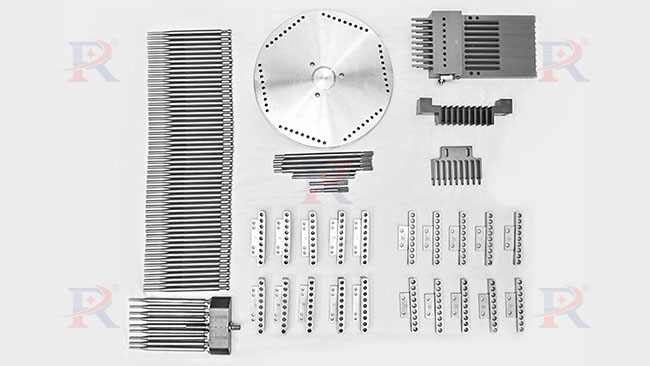
◼Λάδωμα: Κινούμενα μέρη, όπως ο κοχλίας και οι καρφίτσες συμπίεσης, θα πρέπει να λιπαίνονται τακτικά για να διασφαλίζεται η ομαλή λειτουργία.
◼Αντικατάσταση ανταλλακτικών φθοράς: Μέρη σαν σφραγίδες, παρεμβύσματα, και οι ακίδες σφράγισης θα πρέπει να επιθεωρούνται τακτικά και να αντικαθίστανται όταν είναι απαραίτητο για να αποφευχθούν προβλήματα απόδοσης.
◼Επικυρωμένος καθαρισμός: Για φαρμακευτικές εφαρμογές, επικυρωμένες μεθόδους καθαρισμού (CIP/SIP) πρέπει να εφαρμοστούν, ιδιαίτερα εάν το μηχάνημα χειρίζεται διαφορετικά σκευάσματα ή ισχυρές ενώσεις.
Ορισμένα μηχανήματα έχουν σχεδιαστεί για εύκολη αποσυναρμολόγηση και καθαρισμό, με χαρακτηριστικά όπως εξαρτήματα γρήγορης αποδέσμευσης ή εξαρτήματα που πλένονται για μείωση του χρόνου διακοπής λειτουργίας.
3. Ποιες είναι οι πιθανές συνέπειες της διασταυρούμενης μόλυνσης, και πως για να τα αποφύγετε?
Η διασταυρούμενη μόλυνση αποτελεί σημαντική ανησυχία κατά τη χρήση εξοπλισμού πλήρωσης καψουλών για διαφορετικά προϊόντα, ειδικά στην περίπτωση ισχυρών API ή αλλεργιογόνων. Δείτε πώς μπορείτε να μειώσετε τους κινδύνους:
◼Ειδικός Εξοπλισμός: Χρησιμοποιήστε ξεχωριστά μηχανήματα για διαφορετικά προϊόντα εάν η διασταυρούμενη μόλυνση είναι μια σημαντική ανησυχία.
◼ Πρωτόκολλα καθαρισμού: Implement strict cleaning and validation procedures. Αυτό περιλαμβάνει ξέπλυμα δοκιμή μπατονιών και οπτικές επιθεωρήσεις για να διασφαλιστεί ότι έχουν αφαιρεθεί όλα τα ίχνη προηγούμενων προϊόντων.
◼Συστήματα Συγκράτησης: Ορισμένες μηχανές κάψουλας διαθέτουν συστήματα συγκράτησης ή απομονωτές για την πρόληψη της διασταυρούμενης μόλυνσης. Αυτά τα συστήματα περιλαμβάνουν ντουλαπάκια γαντιών ή σφραγισμένους θαλάμους που προστατεύουν τους χειριστές και αποτρέπουν την ανάμειξη προϊόντων.
◼Εξόρυξη Σκόνης: Χρησιμοποιώντας συστήματα συλλογής σκόνης και συστήματα καθαρισμού αέρα μπορεί να βοηθήσει στην ελαχιστοποίηση των πιθανοτήτων διασταυρούμενης μόλυνσης λόγω αιωρούμενων σωματιδίων.
Ακολουθώντας τις οδηγίες cGMP και ενσωματώνοντας κατάλληλες δυνατότητες περιορισμού, ο κίνδυνος διασταυρούμενης μόλυνσης μπορεί να μειωθεί σημαντικά.