Bao bì tuân thủ thuốc ngày càng trở nên quan trọng hơn vì nhiều loại thuốc được sử dụng hàng ngày, không phải điều trị một lần. Liệu pháp lâu dài, chăm sóc người già, quản lý bệnh mãn tính, và phác đồ đa liều đều tạo ra cùng một vấn đề thực tế: bệnh nhân cần một cách đơn giản để biết nên dùng gì, khi nào nên dùng nó, và liệu một liều đã được dùng chưa.
Tổ chức Y tế Thế giới đã báo cáo rằng việc tuân thủ điều trị lâu dài đối với các bệnh mãn tính ở các nước phát triển trung bình khoảng 50%. Bao bì không thể giải quyết mọi rào cản y tế hoặc hành vi, nhưng nó có thể làm giảm sự nhầm lẫn hàng ngày về thời gian dùng thuốc, sự liên tiếp, nhận dạng sản phẩm, và máy tính bảng còn lại. Đối với các công ty dược phẩm, điều đó làm cho bao bì tuân thủ thuốc không chỉ là một xu hướng thiết kế. Nó trở thành một câu hỏi sản xuất: làm thế nào để biến lịch trình liều lượng thành một gói thuốc thành phẩm mà bệnh nhân có thể hiểu được và các nhà máy có thể sản xuất một cách nhất quán?
Đây là nơi các vỉ thuốc, bố cục lịch, đóng gói theo đơn vị liều lượng, thùng carton, tờ rơi, mã hóa, và họp kiểm tra. Một gói thân thiện với bệnh nhân phải được thiết kế trước tiên, sau đó được sản xuất trên ổn định dây chuyền đóng gói dược phẩm. Nếu dòng không thể lặp lại bố cục, vị trí mã, chèn tờ rơi, chất lượng niêm phong, và tiêu chuẩn kiểm tra, gói hàng có thể trông hữu ích khi làm mẫu nhưng lại thất bại trong quá trình sản xuất hàng ngày.
1. Bao bì tuân thủ thuốc có ý nghĩa gì đối với sản xuất dược phẩm
Bao bì tuân thủ thuốc là bao bì thuốc được thiết kế để giúp bệnh nhân tuân theo lịch dùng thuốc đã định. Nó tách liều, hiển thị thứ tự sử dụng, hiển thị ngày hoặc giờ, giảm sự nhầm lẫn, và giúp bệnh nhân hoặc người chăm sóc dễ dàng kiểm tra xem liều thuốc đã được sử dụng chưa.
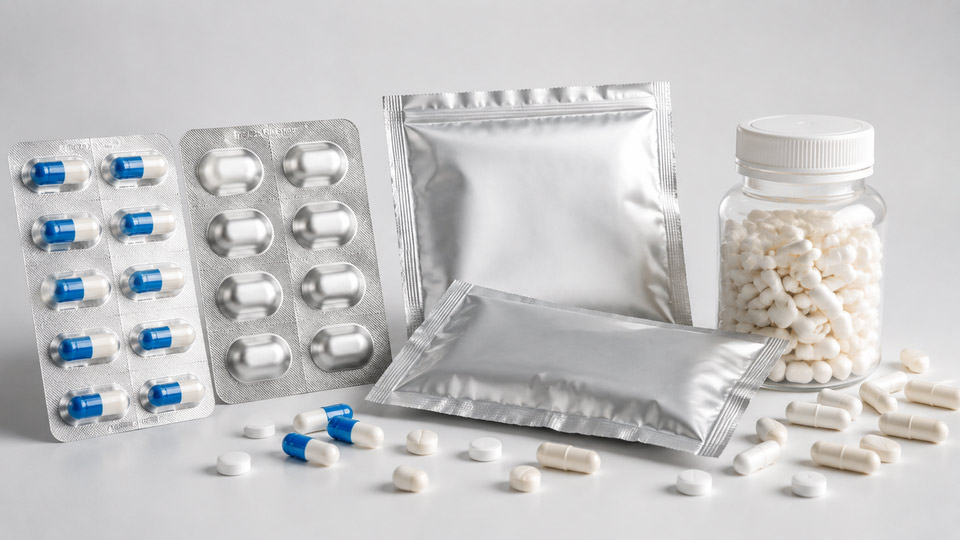
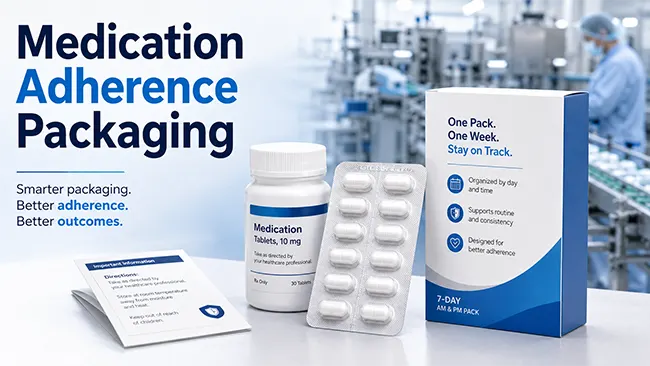
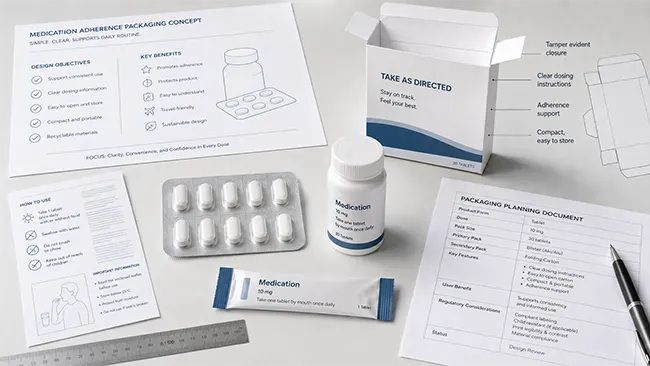
Trong dược phẩm, điều này thường có ý nghĩa nhiều hơn là đặt viên nén hoặc viên nang vào trong chai. Bầy đàn phải giao tiếp. Một vỉ lịch hiển thị ngày, ngày tháng, hoặc thứ tự liều lượng. Vỉ đơn vị chứa mỗi viên hoặc viên nang trong một khoang riêng biệt. Gói nhiều liều nhóm thuốc theo ngày và giờ. Thùng carton đựng thông tin sản phẩm, cảnh báo, chi tiết lô, và hướng dẫn. Tờ rơi giải thích cách sử dụng thuốc.
Các nhóm khác nhau mô tả loại bao bì này từ các góc độ khác nhau. Nhóm tiếp thị nói về sự tuân thủ của bệnh nhân vì gói hỗ trợ sử dụng hàng ngày. Nhóm dược sĩ nói về bao bì tuân thủ điều trị vì bao bì giúp tổ chức thói quen dùng thuốc. Đội ngũ sản xuất xem xét định dạng thực tế: bao bì vỉ lịch, đóng gói theo đơn vị liều lượng, gói liều, thùng carton, nhãn, và tờ rơi. Đối với bài viết này, trọng tâm là phía sản xuất: làm thế nào một lịch trình liều lượng trở thành một gói thực sự có thể được hình thành, điền, niêm phong, được mã hóa, đóng thùng, và đã kiểm tra.
Nghiên cứu cũng hỗ trợ việc đóng gói như một công cụ hỗ trợ tuân thủ. Một đánh giá có hệ thống và phân tích tổng hợp đã báo cáo rằng các biện pháp can thiệp đóng gói bằng hộp thuốc và vỉ thuốc đã được khuyến nghị rộng rãi để cải thiện việc tuân thủ dùng thuốc.. Bao bì lịch cũng đã được nghiên cứu vì các điểm đánh dấu ngày hoặc ngày giúp bệnh nhân nhớ thói quen dùng thuốc của họ..
Đối với nhà sản xuất dược phẩm, định nghĩa có thêm một điều kiện: gói phải có thể sản xuất được. Một thiết kế tốt là chưa đủ. Phải có khả năng hình thành, cho ăn, niêm phong, mã số, thùng carton, thanh tra, và thu thập các gói đã hoàn thành với chất lượng lặp lại.
2. Tại sao các công ty dược phẩm cần bao bì tuân thủ thuốc ngay bây giờ
Các công ty dược phẩm cần bao bì tuân thủ thuốc vì việc sử dụng thuốc ngày càng lấy bệnh nhân làm trung tâm. Nhiều người dùng không dùng một viên thuốc trong một liệu trình ngắn hạn. Họ đang kiểm soát huyết áp, bệnh tiểu đường, bệnh tim, vitamin, chất bổ sung, hoặc các sản phẩm dài hạn khác. Một số bệnh nhân dùng nhiều loại thuốc vào những thời điểm khác nhau trong ngày. Một số phụ thuộc vào người chăm sóc. Một số cần bao bì dễ đọc hơn, mở, và làm theo.
Chai bình thường hoặc vỉ tiêu chuẩn bảo vệ sản phẩm, nhưng nó không phải lúc nào cũng giải thích lịch trình. Bao bì tuân thủ thêm cấu trúc. Nó kết nối liều lượng vật chất với thời gian, ngày, hoặc bước xử lý. Cấu trúc đó làm giảm sự không chắc chắn.
Dành cho nhà máy, bao bì tuân thủ cũng mang lại kỷ luật nội bộ tốt hơn. Nó buộc nhóm phải xác định cách bố trí liều lượng, vị trí sản phẩm, thông tin in, kết hợp thùng carton, xử lý tờ rơi, và các điểm kiểm tra trước khi sản xuất hàng loạt. Những quyết định này làm giảm sự nhầm lẫn khi sản phẩm chuyển từ thiết kế sang đóng gói thực tế.
Nhu cầu cũng được định hình bởi thị trường. Dân số già đi, điều trị bệnh mãn tính, chăm sóc sức khỏe tại nhà, chương trình tuân thủ nhà thuốc, và các thương hiệu chăm sóc sức khỏe trực tiếp đến người tiêu dùng đều làm tăng sự quan tâm đến bao bì không chỉ chứa thuốc. Gói này trở thành một phần của trải nghiệm người dùng.
3. Định dạng đóng gói tuân thủ thuốc: mụn nước, Gói liều, thùng carton, và chai
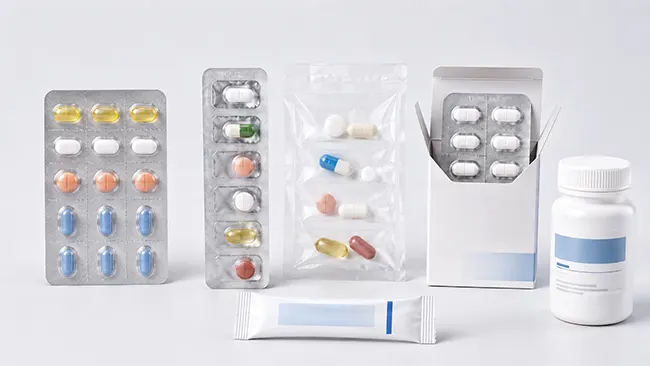
Bao bì tuân thủ thuốc có thể có nhiều hình thức. Sự lựa chọn đúng đắn phụ thuộc vào loại sản phẩm, lịch trình liều lượng, nhu cầu về thời hạn sử dụng, chi phí vật chất, kích thước gói, và dây chuyền đóng gói có sẵn.
| Định dạng | Nó hữu ích ở đâu | Liên kết sản xuất |
| Gói vỉ lịch | Viên nén hoặc viên nang hàng ngày được sắp xếp theo ngày hoặc thứ tự điều trị | Bố trí vỉ, căn chỉnh in, niêm phong, cắt, và kiểm tra |
| Gói vỉ đơn vị | Sản phẩm có một khoang bằng một liều | Cho ăn chính xác, kiểm soát khoang, và niêm phong an toàn |
| Gói đa liều | Một số loại thuốc được nhóm theo ngày hoặc thời gian | Kiểm soát và xác minh bố cục mạnh mẽ hơn |
| Gói vỉ đóng hộp | Các gói cần tờ rơi và thông tin bên ngoài sản phẩm | Đóng thùng, chèn tờ rơi, mã hóa, và kiểm tra |
| Gói gói hoặc gói dính | Bột, hạt, chất lỏng, hoặc thực phẩm bổ sung dùng một lần | Điền chính xác, niêm phong, và mã hóa rõ ràng |
| Gói chai có nhãn | Máy tính bảng có số lượng lớn hơn, viên nang, kẹo dẻo, hoặc chất bổ sung | Đếm, giới hạn, niêm phong, ghi nhãn, và mã hóa |
Dạng vỉ thường phù hợp nhất cho việc đóng gói liều rắn tập trung vào sự tuân thủ vì mỗi liều có thể nhìn thấy và tách biệt. Một vỉ lịch biến gói thành một danh sách kiểm tra trực quan đơn giản. Nếu khoang thứ Hai trống rỗng, bệnh nhân hoặc người chăm sóc có thể thấy rằng liều thuốc đó có thể đã được sử dụng.
Thùng carton cũng quan trọng. Thùng carton bên ngoài mang sức mạnh của sản phẩm, cảnh báo, hướng dẫn, mã vạch, số lô, ngày hết hạn, và thông tin thương hiệu. Khi thùng carton, mụn rộp, và tờ rơi làm việc cùng nhau, gói hoàn thiện trở nên dễ hiểu hơn.
4. Cách thiết kế bao bì tuân thủ thuốc trước khi sản xuất
Quá trình sản xuất bắt đầu với lịch trình liều lượng. Đội đóng gói cần biết một gói nên dùng trong bao nhiêu ngày. Gói 7 ngày khác với gói 14 ngày, 28-ngày, hoặc gói 30 ngày. Sản phẩm dùng một lần mỗi ngày khác với chế độ dùng buổi sáng và buổi tối. Một chất bổ sung đơn giản khác với một liệu trình điều trị trong đó thứ tự liều lượng là quan trọng.
Sau khi lịch trình được xác định, nhóm thiết kế bố cục vật lý. Đối với bao bì vỉ, điều này bao gồm số lượng khoang, khoảng cách khoang, kích thước thẻ vỉ, vật liệu làm nắp, ngày in, số liều, mũi tên, khối màu, và thùng carton phù hợp. Nếu gói bao gồm nhiều thẻ vỉ, thứ tự bên trong thùng carton cũng phải được xem xét.
Sau đó nhóm kiểm tra xem thiết kế có thể chạy trên thiết bị hay không. Có thể máy đóng gói vỉ tạo thành hình dạng khoang cần thiết? Máy nạp liệu có thể đặt viên nén hoặc viên nang mà không làm hỏng chúng không? Hệ thống mã hóa có thể in đúng nơi không? Có thể máy đóng hộp nạp vỉ và tờ rơi theo đúng hướng? Hệ thống kiểm tra bằng hình ảnh có thể phát hiện sản phẩm bị thiếu hoặc mã không đọc được không?
5. Bao bì tuân thủ thuốc được sản xuất trên dây chuyền đóng gói như thế nào
Gói tuân thủ thuốc dạng vỉ thường được sản xuất thông qua tuyến đường kết nối. Bước đầu tiên là tháo cuộn vật liệu và tạo vỉ. Máy tạo các khoang phù hợp với hình dạng sản phẩm và bố trí liều lượng. Bước tiếp theo là cho ăn, máy tính bảng ở đâu, viên nang, hoặc viên nang mềm được đặt vào đúng khoang.
Đối với gói lịch, vị trí quan trọng hơn bình thường. Bố cục sản phẩm phải khớp với ngày in, số liều, hoặc giai đoạn điều trị. Một sản phẩm bị thiếu đã là vấn đề về chất lượng trong bất kỳ vỉ nào. Trong bao bì tuân thủ, nó cũng có thể phá vỡ lịch trình.
Sau khi cho ăn, vỉ được bịt kín bằng vật liệu đậy nắp. Mã hóa hoặc in ấn sau đó thêm số lô, ngày hết hạn, ngày sản xuất, mã QR, hoặc các thông tin cần thiết khác. Cắt hoặc đục lỗ để tách vỉ thành hình dạng thẻ cuối cùng.
Nếu sản phẩm cần một thùng carton, vỉ chuyển sang đóng thùng. Máy đóng thùng sẽ nạp một hoặc nhiều thẻ vỉ, gấp và chèn tờ rơi, đóng thùng carton, và chuẩn bị sản phẩm để xử lý tiếp theo.
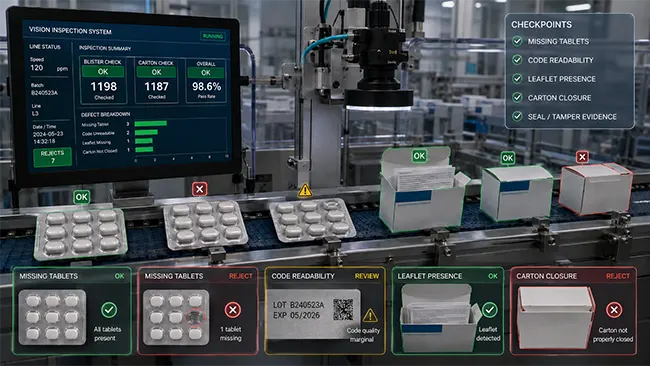
Kiểm tra là lớp kiểm soát cuối cùng. Hệ thống kiểm tra thị giác, Check Weigher, đầu đọc mã vạch, hoặc đơn vị từ chối xác nhận sự hiện diện của sản phẩm, khả năng đọc mã, đóng thùng carton, chèn tờ rơi, và định hướng gói, tùy thuộc vào thiết kế dòng. Mục đích là để đảm bảo mỗi gói thành phẩm vẫn phù hợp với liều lượng mà bệnh nhân sẽ tuân theo..
6. Dây chuyền đóng gói tuân thủ thuốc nào phải kiểm soát
Bao bì tuân thủ thuốc phụ thuộc vào tính nhất quán. Dây chuyền phải lặp lại bố cục và thông tin giống nhau trên mỗi gói hàng.
Điểm kiểm soát đầu tiên là vị trí sản phẩm. Viên nén hoặc viên nang phải vào đúng khoang, không bỏ sót, nhân đôi, hoặc dịch chuyển. Thứ hai là căn chỉnh in. Ngày, ngày tháng, số liều, và mã lô không được đặt ở nơi gây nhầm lẫn cho người dùng hoặc khó kiểm tra.
Thứ ba là chất lượng niêm phong. Một gói tuân thủ hữu ích vẫn cần được bảo vệ dược phẩm cơ bản. Thứ tư là kết hợp thùng carton. Vết phồng rộp bên phải, tờ rơi, và thùng carton phải đi cùng nhau thành một gói hoàn chỉnh. Thứ năm là kiểm tra và từ chối. Các gói sai hoặc không rõ ràng phải được loại bỏ trước khi thu gom lần cuối.
Những điều khiển này là nơi việc lựa chọn thiết bị trở nên quan trọng. Máy đóng gói vỉ ảnh hưởng đến việc hình thành khoang, cho ăn, niêm phong, và cắt. Máy đóng thùng ảnh hưởng đến việc nạp vỉ, chèn tờ rơi, và đóng thùng carton. Hệ thống mã hóa ảnh hưởng đến thông tin lô và hạn sử dụng có thể đọc được. Hệ thống kiểm tra bằng hình ảnh giúp xác nhận rằng gói hàng rời khỏi dây chuyền phù hợp với thiết kế dự định.
Với 29 nhiều năm kinh nghiệm gỡ lỗi và đào tạo ở nước ngoài, Ruida Packaging đã quen thuộc với khoảng cách giữa ý tưởng đóng gói và dây chuyền sản xuất đang hoạt động. Đối với các dự án đóng gói tuân thủ, trải nghiệm đó rất hữu ích khi xem xét hành vi của sản phẩm, bố trí gói, mục tiêu đầu ra, nhu cầu kiểm tra, và yêu cầu chuyển đổi trước khi lựa chọn thiết bị.
7. Cách các công ty dược phẩm lên kế hoạch cho lộ trình đóng gói tuân thủ thuốc
Một quy trình lập kế hoạch tốt bắt đầu từ sản phẩm, không phải danh mục máy. Trước hết công ty nên xác định dạng bào chế, độ nhạy sản phẩm, chu kỳ điều trị, tần số liều, thị trường mục tiêu, và nhóm bệnh nhân.
Kế tiếp, đội nên chọn thể thức. Vỉ lịch phù hợp với nhiều loại viên hoặc viên nang hàng ngày. Một gói dạng que phù hợp với một loại bột đơn liều. Một chai phù hợp với nhiều sản phẩm có số lượng cao, nhưng nhãn và thiết kế bao bì cần hỗ trợ việc sử dụng dễ dàng. Cần có thùng carton khi sản phẩm cần có tờ rơi, trưng bày bán lẻ, hoặc hướng dẫn bên ngoài mạnh mẽ hơn.
Sau đó nhóm nên lập sơ đồ dây chuyền đóng gói. Gói tuân thủ liều rắn có thể liên quan đến việc hình thành mụn nước, cho ăn, niêm phong, mã hóa, đóng thùng, chèn tờ rơi, điều tra, và sự từ chối. Một gói chai có thể liên quan đến việc đếm, kiểm tra cân, chèn chất hút ẩm, giới hạn, niêm phong cảm ứng, ghi nhãn, mã hóa, và đóng gói carton.
Cuối cùng, Đội ngũ chất lượng nên quyết định những điểm nào phải được kiểm tra trong quá trình sản xuất. Kế hoạch kiểm soát rõ ràng giúp dây chuyền dễ dàng xác thực hơn và dễ vận hành hơn. Mục tiêu không chỉ là tốc độ. Đó là đầu ra ổn định giúp duy trì mục đích thân thiện với bệnh nhân của gói.
8. Phần kết luận
Việc đóng gói tuân thủ thuốc rất quan trọng vì việc sử dụng thuốc không kết thúc khi sản phẩm rời khỏi nhà máy. Bệnh nhân vẫn cần hiểu rõ về liều lượng, thứ tự, thời gian, và nguồn cung còn lại. Bao bì không thể đảm bảo sự tuân thủ hoàn hảo, nhưng nó có thể giúp việc sử dụng đúng cách dễ dàng hơn.
Đối với các công ty dược phẩm, cơ hội là biến lịch trình liều lượng thành một gói rõ ràng, bảo vệ, có thể lặp lại, và thiết thực để sản xuất. Mụn lịch, gói đơn vị liều, thùng carton, nhãn, tờ rơi, và hệ thống kiểm tra đều góp phần vào kết quả đó.
Những dự án mạnh nhất kết nối thiết kế và sản xuất sớm. Khi bố trí vỉ, cấu trúc thùng carton, vị trí mã hóa, điểm kiểm tra, và lộ trình thiết bị được lên kế hoạch cùng nhau, Bao bì tuân thủ thuốc không chỉ là một ý tưởng thân thiện với bệnh nhân. Nó trở thành một gói dược phẩm hoàn thiện có thể được sản xuất ổn định ở quy mô lớn.
Câu hỏi thường gặp
Bao bì tuân thủ thuốc là gì?
Bao bì tuân thủ thuốc là bao bì được thiết kế để giúp bệnh nhân tuân theo lịch dùng thuốc đã định. Nó sử dụng vỉ lịch, gói đơn vị liều, thùng carton, nhãn, tờ rơi, và các tín hiệu liều lượng trực quan để làm cho thói quen dùng thuốc dễ hiểu hơn.
Bao bì tuân thủ thuốc có giống như bao bì tuân thủ của bệnh nhân không?
Chúng có liên quan chặt chẽ. Bao bì tuân thủ thuốc là thuật ngữ hiện đại hơn, trong khi bao bì tuân thủ bệnh nhân vẫn được sử dụng trong bao bì và tìm kiếm hiệu thuốc. Cả hai đều mô tả bao bì giúp người dùng uống thuốc đúng cách.
Hình thức đóng gói nào là tốt nhất cho việc tuân thủ thuốc?
Không có định dạng tốt nhất. Gói vỉ lịch hoạt động tốt cho máy tính bảng hoặc viên nang hàng ngày. Đóng gói theo đơn vị liều lượng hỗ trợ các liều riêng biệt. Túi hoặc gói dạng que phù hợp với bột và chất lỏng. Chai hoạt động khi được hỗ trợ bởi nhãn mác và hướng dẫn rõ ràng.
Gói tuân thủ thuốc được sản xuất như thế nào?
Chúng được tạo ra bằng cách biến lịch trình liều lượng thành sơ đồ đóng gói, lựa chọn vật liệu, hình thành hoặc làm đầy gói chính, thêm mã, tải thùng carton và tờ rơi, kiểm tra các điểm chính, và từ chối các gói hàng không phù hợp với thiết kế.
Những máy nào được sử dụng để đóng gói tuân thủ thuốc?
Máy phổ biến bao gồm máy đóng gói vỉ, máy đóng thùng, máy dán nhãn, hệ thống mã hóa, hệ thống gấp và chèn tờ rơi, hệ thống kiểm tra tầm nhìn, máy đếm viên và viên nang, máy đóng nắp, và máy hàn cảm ứng.
9. Tài liệu tham khảo cho chân trang bài viết
1. Tổ chức Y tế Thế giới. Tuân thủ các liệu pháp lâu dài: Bằng chứng cho hành động. https://www.paho.org/sites/default/files/WHO-Adherence-Long-Term-Therapies-Eng-2003.pdf
2. Conn VS và cộng sự. Can thiệp đóng gói để tăng sự tuân thủ thuốc: đánh giá hệ thống và phân tích tổng hợp. https://pmc.ncbi.nlm.nih.gov/articles/PMC4562676/