เครื่องปั่นแบบ V และเครื่องปั่นแบบริบบิ้นใช้สำหรับการผสมผง, แต่พวกมันเคลื่อนย้ายวัสดุด้วยวิธีที่ต่างกันมาก. ความแตกต่างนั้นส่งผลต่อความสม่ำเสมอของการผสมผสาน, การป้องกันอนุภาค, ความพยายามในการทำความสะอาด, ความยืดหยุ่นของแบทช์, และกระบวนการโดยรวมพอดี. โดยทั่วไปแล้ว, เครื่องปั่นแบบ V เหมาะกับผงที่ไหลอย่างอิสระและเม็ดที่เปราะบางได้ดีกว่า, ในขณะที่เครื่องปั่นแบบริบบิ้นมักเป็นตัวเลือกที่ดีกว่าสำหรับผงที่มีลักษณะเหนียว, ชุดใหญ่, และสูตรที่ต้องการการผสมที่ออกฤทธิ์มากขึ้น.
ทางเลือกมักจะขึ้นอยู่กับการไหลของวัสดุ, ความไวแรงเฉือน, การเติมของเหลว, และความถี่ในการเปลี่ยนแปลง. การเปรียบเทียบนี้มุ่งเน้นไปที่ว่าการออกแบบแต่ละแบบเข้ากันได้ดีกว่าตรงไหน และสิ่งที่ควรเป็นแนวทางในการเลือกขั้นสุดท้ายระหว่างเครื่องปั่นแบบ V และเครื่องปั่นแบบริบบิ้น.
V Blender กับ Ribbon Blender: ตอบด่วน
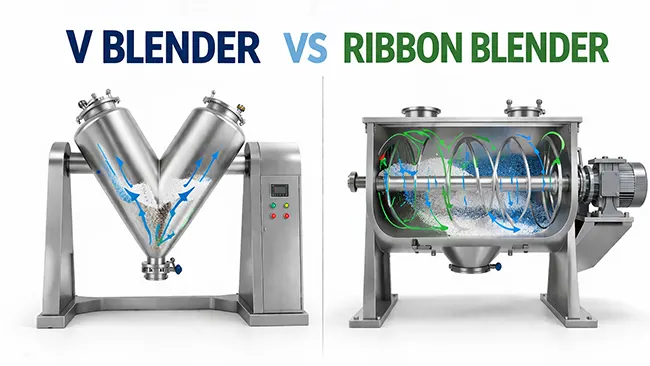
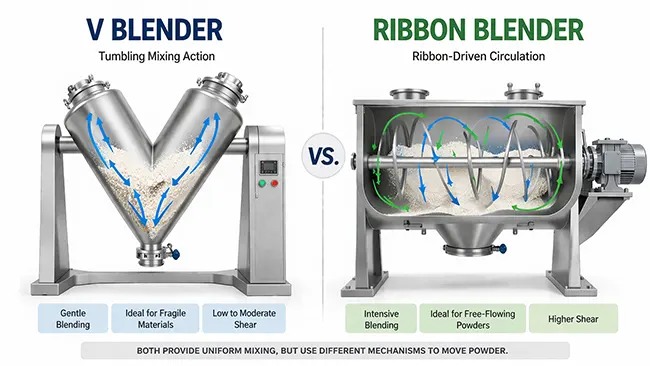
เครื่องปั่นแบบ V มักจะเหมาะสมกว่าเมื่อผลิตภัณฑ์แห้ง, ไหลอย่างอิสระ, และไวต่อการแตกหัก. การเคลื่อนไหวที่กลิ้งไปมาทำให้เกิดรูปแบบการปั่นที่นุ่มนวลและมีแรงเฉือนที่ค่อนข้างต่ำ, ซึ่งช่วยปกป้องอนุภาคที่ไม่ควรทำงานหนักเกินไป. นอกจากนี้ มักนิยมใช้เมื่อทำความสะอาดได้ง่ายขึ้นและต้องเปลี่ยนแบทช์บ่อยครั้ง.
เครื่องปั่นแบบริบบิ้นทำงานได้อย่างแข็งขันมากขึ้น. แทนที่จะพึ่งไม้ลอย, ใช้ริบบอนด้านในและด้านนอกเพื่อเคลื่อนย้ายวัสดุผ่านรางน้ำที่มีการหมุนเวียนภายในที่แข็งแกร่ง. ทำให้เหมาะกับแป้งที่มีลักษณะเหนียวมากขึ้น, ส่วนผสมที่หนาแน่นยิ่งขึ้น, ปริมาณการทำงานที่มากขึ้น, และกระบวนการที่อาจเกี่ยวข้องกับการเติมของเหลว. สำหรับการผสมผงอุตสาหกรรมในวงกว้าง, การออกแบบนี้มักถูกเลือกเมื่อการเคลื่อนไหวที่แข็งแกร่งยิ่งขึ้นมีความสำคัญมากกว่าการควบคุมอย่างนุ่มนวล.
เวอร์ชันสั้นตรงไปตรงมา. เลือกเครื่องปั่นรูปตัว V เมื่อทำการปั่นแบบแรงเฉือนต่ำ, การปกป้องผลิตภัณฑ์, และการทำความสะอาดที่ง่ายขึ้นคือสิ่งสำคัญอันดับแรก. เลือกเครื่องปั่นแบบริบบิ้นเมื่อกระบวนการต้องการการผสมที่เข้มข้นยิ่งขึ้น, การจัดการผงที่ยากได้ดีขึ้น, และเหมาะสมกว่าสำหรับแบทช์ขนาดใหญ่. การตัดสินใจขั้นสุดท้ายควรขึ้นอยู่กับการทดลองวัสดุ, ข้อกำหนดในการทำความสะอาด, และวิธีนำเครื่องผสมไปใช้จริงในการผลิต.
V Blender คืออะไร?
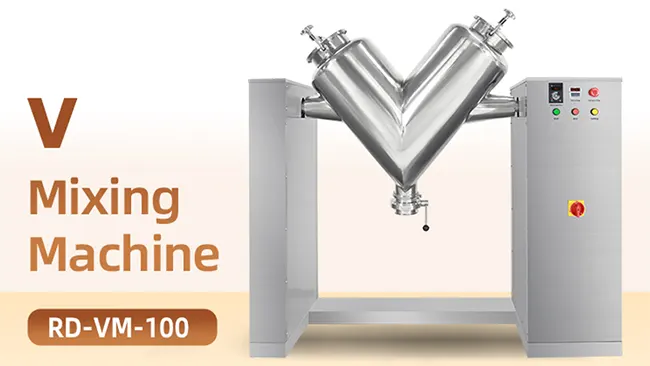
เครื่องปั่นแบบ V คือเครื่องผสมแบบปั่นที่สร้างขึ้นรอบๆ ภาชนะรูปตัว V ซึ่งจะหมุนและเคลื่อนย้ายผงตามแรงโน้มถ่วง. ขณะที่เรือหมุน, วัสดุแตกออก, น้ำตก, และกลับมารวมตัวกันซ้ำแล้วซ้ำเล่า. การเคลื่อนไหวนั้นทำให้เกิดรูปแบบการผสมที่ค่อนข้างอ่อนโยน, ซึ่งเป็นสาเหตุที่การออกแบบนี้มักจะเชื่อมโยงกับผงและเม็ดแห้งที่ไหลได้ดีพอสมควรแล้ว และไม่ต้องการแรงภายในที่แข็งแกร่งในการเคลื่อนตัวข้ามแบทช์.
ในทางปฏิบัติ, จุดแข็งหลักของก เครื่องปั่นวี ไม่ใช่การผสมที่รุนแรงแต่ควบคุมการผสมด้วยแรงเฉือนที่ต่ำกว่า. นั่นทำให้มันเข้ากันได้ดีกับแป้งที่ไหลอย่างอิสระ, เม็ดเปราะบาง, และสูตรที่การปกป้องอนุภาคมีความสำคัญ. นอกจากนี้ยังเหมาะกับกระบวนการที่ให้ความสำคัญกับการทำความสะอาดที่ง่ายขึ้นและการเปลี่ยนแบทช์บ่อยครั้งอีกด้วย, เนื่องจากพื้นที่สัมผัสผลิตภัณฑ์มักจะง่ายกว่าการออกแบบที่มีเครื่องกวนภายใน.
Ribbon Blender คืออะไร?
เครื่องปั่นแบบริบบิ้นประกอบด้วยรางแนวนอนและแกนกลางที่บรรทุกริบบอนเกลียวด้านในและด้านนอก. เมื่อเพลาหมุน, ริบบิ้นจะดันวัสดุไปในทิศทางตรงกันข้ามตามแนวแกนในขณะเดียวกันก็กวนวัสดุในแนวรัศมีผ่านเบดผง ซึ่งทำให้เกิดรูปแบบการผสมที่กระฉับกระเฉงมากกว่าการกลิ้งไปมา, ซึ่งเป็นเหตุผลว่าทำไมการออกแบบนี้จึงมักถูกเลือกสำหรับการผสมที่มีความหนาแน่นมากขึ้น, ผงเหนียวมากขึ้น, และหน้าที่การผสมผงอุตสาหกรรมที่กว้างขึ้น.
การเคลื่อนไหวภายในที่แข็งแกร่งขึ้นนี้ทำให้เครื่องปั่นแบบริบบิ้นมีช่วงการทำงานที่กว้างขึ้นในโรงงานหลายแห่ง. มักใช้เมื่อผลิตภัณฑ์ไม่สามารถเคลื่อนที่ได้ง่ายด้วยแรงโน้มถ่วงเพียงอย่างเดียว, เมื่อจำเป็นต้องเติมของเหลว, หรือเมื่อกระบวนการได้รับประโยชน์จากการเคลื่อนย้ายจำนวนมากภายในห้องเพาะเลี้ยงเร็วขึ้น. ข้อดีก็คือ การดำเนินการทางกลที่แข็งแกร่งกว่าสามารถสร้างผลิตภัณฑ์สัมผัสกับชิ้นส่วนภายในได้มากขึ้น และมักจะนำไปสู่ขั้นตอนการทำความสะอาดที่เกี่ยวข้องมากกว่าการตั้งค่าเครื่องปั่นแบบมาตรฐาน.
V Blender กับ Ribbon Blender: ความแตกต่างหลักที่สำคัญในการผลิต
การเปรียบเทียบที่มีประโยชน์ที่สุดไม่ใช่รูปร่างกับรูปร่าง, แต่พฤติกรรมของกระบวนการกับพฤติกรรมของกระบวนการ. เครื่องปั่นแบบ V ขึ้นอยู่กับการปั่นด้วยแรงโน้มถ่วง, ดังนั้นโดยทั่วไปจึงนิยมใช้การผสมแบบแห้งอย่างอ่อนโยนและลดความเค้นของอนุภาค. เครื่องปั่นแบบริบบิ้นขึ้นอยู่กับการเคลื่อนไหวภายในที่ขับเคลื่อนด้วย, โดยทั่วไปแล้วจะช่วยให้การไหลเวียนดีขึ้น, ความทนทานต่อวัสดุที่กว้างขึ้น, และการหมุนเวียนของแบทช์ที่มีประสิทธิภาพมากขึ้น.
| ปัจจัย | วี เบลนเดอร์ | เครื่องปั่นริบบิ้น |
| หลักการผสม | ไม้ลอยและแรงโน้มถ่วง | การเคลื่อนที่ตามแนวแกนและแนวรัศมีที่ขับเคลื่อนด้วยริบบอน |
| ระดับแรงเฉือน | ต่ำกว่า | สูงกว่า |
| พอดีกับวัสดุที่ดีที่สุด | ผงแห้งไหลฟรี, เม็ดเปราะบาง | ผงเหนียว, ส่วนผสมที่หนาแน่นยิ่งขึ้น, ผงผสมของเหลว |
| ความเสี่ยงต่อความเสียหายของอนุภาค | ต่ำกว่า | มักจะสูงกว่าด้วยวัสดุที่ละเอียดอ่อน |
| การเติมของเหลว | มีข้อจำกัดมากขึ้นในการตั้งค่ามาตรฐาน | เหมาะกว่า |
| ความซับซ้อนในการทำความสะอาด | มักจะง่ายกว่า | มักจะมีส่วนร่วมมากกว่า |
| ขนาดแบทช์พอดี | มักมีขนาดเล็กถึงปานกลาง | มักมีขนาดกลางถึงขนาดใหญ่ |
| ความยืดหยุ่นของกระบวนการ | แข็งแรงสำหรับการปั่นแบบแห้งอย่างอ่อนโยน | แข็งแกร่งสำหรับงานผสมที่กว้างขึ้น |
| เหตุผลทั่วไปในการเลือกมัน | การปกป้องผลิตภัณฑ์และการเปลี่ยนแปลงที่ง่ายขึ้น | การผสมที่แข็งแกร่งขึ้นและช่วงวัสดุที่กว้างขึ้น |
ชุดผ้าหมึกที่สร้างมาอย่างดีสามารถทำความสะอาดได้ง่ายกว่าระบบปั่นแห้งที่ออกแบบมาไม่ดี, และเครื่องปั่น V ที่มีตัวเลือกที่เหมาะสมสามารถรองรับงานที่มีความต้องการมากกว่าที่รุ่นพื้นฐานแนะนำ. ยังไงก็ตาม, รูปแบบกว้างๆ มีความสม่ำเสมอ: การออกแบบหนึ่งเอนไปทางการผสมแบบแห้งอย่างอ่อนโยน, ในขณะที่อีกอันโน้มตัวไปทางการผสมจำนวนมากที่แข็งแกร่งและยืดหยุ่นมากขึ้น.
วัสดุใดทำงานได้ดีกว่าในแต่ละการออกแบบ?
สำหรับผงที่ไหลอย่างอิสระและเม็ดที่เปราะบาง, เครื่องปั่นแบบ V มักจะสมเหตุสมผลมากกว่า. การเคลื่อนที่แบบไม้ลอยจะจำกัดความเค้นเชิงกล, ซึ่งสำคัญเมื่ออนุภาคแตกหักง่าย, เมื่อขนาดเม็ดต้องคงที่, หรือเมื่อเป้าหมายคือการกระจายตัวสม่ำเสมอมากกว่าการแยกตัวเป็นก้อนอย่างรุนแรง. นั่นคือสาเหตุที่ประเภทนี้มักเชื่อมโยงกับพรีมิกซ์แบบแห้ง, สารผสม, เม็ด, และวัสดุอื่นๆ ที่ตอบสนองต่อการแยกตัวและการรวมตัวกันใหม่ซ้ำๆ ได้ดีภายใต้แรงโน้มถ่วง.
สำหรับผงแป้งเหนียว, ส่วนผสมเหนียว, หรือสูตรที่ต้องเติมน้ำยา, เครื่องปั่นแบบริบบิ้นมักเป็นตัวเลือกที่ปลอดภัยกว่า. ริบบิ้นที่หมุนได้ช่วยให้แบทช์เคลื่อนไหวในรูปแบบที่กระฉับกระเฉงยิ่งขึ้น, ซึ่งช่วยลดโซนการไหลที่อ่อนแอและปรับปรุงการสัมผัสข้ามเตียง. ประสบการณ์ในอุตสาหกรรมเชื่อมโยงการออกแบบนี้กับของแข็งที่ยากกว่าซ้ำแล้วซ้ำอีก, ส่วนผสมจำนวนมากที่ต้านทานการเคลื่อนไหวที่นุ่มนวล, และการใช้งานที่กระบวนการต้องการแรงภายในมากกว่าถังปั่นตามปกติ.
ยังมีโซนกลางที่คำตอบไม่ค่อยชัดเจน. ผงบางชนิดไหลได้ดีแต่แยกตัวทีหลังเนื่องจากขนาดอนุภาค, ความหนาแน่น, หรือรูปร่างต่างกันมากเกินไป. ส่วนผสมอื่นๆ ดูเข้ากันในตอนแรก แต่ผสมให้เข้ากันดีพอเมื่อปรับระดับการเติมและลำดับการโหลดแล้ว. ในกรณีเหล่านั้น, การเลือกมิกเซอร์ไม่ควรอาศัยโบรชัวร์เพียงอย่างเดียว. แนวทางที่ดีกว่าคือการจำกัดตัวเลือกให้แคบลงตามพฤติกรรมการผสมผสาน, จากนั้นยืนยันตัวเลือกด้วยการทดลองใช้ผลิตภัณฑ์.
การทำความสะอาด, การเปลี่ยนแปลง, และการพิจารณา GMP
การทำความสะอาดมักจะตัดสินว่าเครื่องจักรที่ดีกว่ามีความชัดเจนมากกว่าความจุของป้ายชื่อ. FDA ระบุว่าอุปกรณ์ควรได้รับการออกแบบให้เหมาะสมกับการใช้งานตามวัตถุประสงค์ ตลอดจนการทำความสะอาดและบำรุงรักษา, และ ซีจีเอ็มพี กฎระเบียบกำหนดให้มีขั้นตอนที่เป็นลายลักษณ์อักษรสำหรับการทำความสะอาดและบำรุงรักษาอุปกรณ์. ในการผลิตยา, ซึ่งเปลี่ยนคำถามจากความเร็วการผสมเพียงอย่างเดียวไปสู่การควบคุมสารตกค้าง, การเข้าถึงการตรวจสอบ, บันทึกการทำความสะอาด, และรีสตาร์ทความน่าเชื่อถือระหว่างแบตช์.
นี่คือจุดที่เครื่องปั่นแบบ V มักจะมีข้อได้เปรียบ. โซนสัมผัสผลิตภัณฑ์มักจะง่ายกว่า, โดยมีองค์ประกอบภายในน้อยลงนั่งอยู่ภายในเตียงแป้ง. ทำให้การตรวจสอบด้วยภาพง่ายขึ้นและลดพื้นที่ที่อาจตกค้างหลังจากปล่อยออกมา. การออกแบบนี้ได้รับการอธิบายซ้ำแล้วซ้ำอีกว่าทำความสะอาดง่ายและสะดวกสบายมากขึ้นสำหรับการใช้งานโดยมีการเปลี่ยนแปลงบ่อยครั้ง.
เครื่องปั่นแบบริบบิ้นยังคงสามารถสร้างขึ้นเพื่อการเข้าถึงที่ดี, การชะล้าง, และควบคุมขั้นตอนการทำความสะอาด, แต่เป็นเพลา, ริบบิ้น, แมวน้ำ, และเรขาคณิตของรางน้ำมักจะสร้างพื้นที่ที่ต้องการความสนใจมากขึ้น. สำหรับเครื่องผสมยาที่ใช้ข้ามสูตรหลายสูตร, ความแตกต่างดังกล่าวอาจส่งผลต่อการกำหนดเวลาบรรทัดได้มากเท่ากับเวลาผสมผสาน. เครื่องจักรที่ผสมเร็วแต่ช้าทั้งกำหนดการในระหว่างการทำความสะอาดอาจไม่ใช่วิธีที่เหมาะสมในการผลิต.
ขนาดแบทช์, เวลาผสม, และการใช้พลังงาน
เครื่องปั่นแบบริบบิ้นมักจะนิยมสำหรับงานชุดใหญ่ เนื่องจากการผสมแบบขับเคลื่อนยังคงมีประสิทธิภาพในปริมาณการทำงานที่สูงขึ้น และด้วยวัสดุที่ทนทานมากขึ้น. มากมาย ซัพพลายเออร์เครื่องจักรยา ยังวางระบบริบบอนในช่วงขนาดปกติที่ใหญ่กว่าและนำเสนอให้เหมาะสมกว่าสำหรับการผลิตจำนวนมากในวงกว้าง, แม้ว่าตัวเลขเหล่านั้นควรถือเป็นแนวทางมากกว่ามาตรฐานสากล.
เครื่องปั่นแบบ V มักเกี่ยวข้องกับการผสมแบบแห้งขนาดเล็กถึงปานกลาง และลดความเครียดทางกลต่อผลิตภัณฑ์. ในหลายกรณี, นอกจากนี้ยังดึงความสนใจไปที่กำลังและความปั่นป่วนน้อยลงเนื่องจากการหมุนของถังทำหน้าที่ผสมหลักแทนที่จะอาศัยชุดริบบิ้นภายใน. ยังไงก็ตาม, การกล่าวอ้างแบบตายตัวเกี่ยวกับเวลาในการผสมอาจทำให้เข้าใจผิดได้. เติมระดับ, ความหนาแน่นรวม, การกระจายขนาดอนุภาค, และความซับซ้อนของสูตรล้วนเปลี่ยนแปลงผลลัพธ์. เวลาที่เผยแพร่มีประโยชน์เป็นช่วงคร่าว ๆ, แต่ไม่สามารถใช้ทดแทนการทดสอบส่วนผสมจริงได้.
เมื่อ V Blender เป็นตัวเลือกที่ดีกว่า
เครื่องปั่นแบบ V มักจะเป็นตัวเลือกที่ดีกว่าเมื่อผลิตภัณฑ์แห้ง, ไหลลื่นพอสมควร, และไวต่อการแตกหัก. นอกจากนี้ยังสมเหตุสมผลเมื่อกระบวนการให้ค่าแรงเฉือนต่ำที่มีค่าสูง, ทำความสะอาดได้ง่ายขึ้น, และเปลี่ยนระหว่างแบตช์ได้เร็วขึ้น. หากข้อกังวลหลักคือการปกป้องส่วนผสมแทนที่จะบังคับให้ผงขยับ, เส้นทางนี้มักจะสมควรได้รับความสำคัญ.
นอกจากนี้ยังอาจเหมาะสมกว่าเมื่อสายผลิตภัณฑ์จัดการกับวัสดุระดับพรีเมียม, เม็ด, หรือสูตรที่ความสมบูรณ์ของอนุภาคมีความสำคัญพอๆ กับความสม่ำเสมอ. ในกรณีเหล่านั้น, แนวทางที่อ่อนโยนกว่าอาจให้ผลลัพธ์โดยรวมที่ดีกว่า แม้ว่าวงจรจะไม่ใช่ตัวเลือกที่ก้าวร้าวที่สุดก็ตาม.
เมื่อ Ribbon Blender เป็นตัวเลือกที่ดีกว่า
เครื่องปั่นแบบริบบิ้นมักจะเป็นตัวเลือกที่ดีกว่าเมื่อวัสดุมีความเหนียวกัน, หนาแน่น, เหนียว, หรือยากต่อการหมุนเวียนผ่านแรงโน้มถ่วงเพียงอย่างเดียว. นอกจากนี้ยังน่าสนใจยิ่งขึ้นเมื่อการเติมของเหลวเป็นส่วนหนึ่งของกระบวนการ, เมื่อปริมาณการทำงานมีขนาดใหญ่ขึ้น, หรือเมื่อแบทช์ได้รับประโยชน์จากการเคลื่อนไหวภายในที่แข็งแกร่งขึ้นเพื่อลดก้อนเนื้ออ่อนและปรับปรุงการสัมผัสทั่วทั้งส่วนผสม. ข้ามแหล่งอุตสาหกรรม, การออกแบบนี้ถูกนำเสนออย่างต่อเนื่องว่าเป็นตัวเลือกวัตถุประสงค์ที่กว้างขึ้นสำหรับวัสดุที่มีความต้องการมากขึ้น.
นอกจากนี้ยังเหมาะกับการดำเนินงานที่ต้องการความยืดหยุ่นของกระบวนการที่กว้างขึ้นอีกด้วย. ระบบริบบิ้นบางระบบรองรับแจ็คเก็ตเพื่อให้ความร้อนหรือความเย็น, ซึ่งขยายบทบาทของพวกเขาให้มากกว่าการปั่นแบบแห้งโดยตรง. นั่นไม่ได้ทำให้พวกเขาดีขึ้นโดยอัตโนมัติ. หมายความว่ามักจะเหมาะกับพืชที่มีกลุ่มผลิตภัณฑ์กว้างขึ้น และเครื่องผสมคาดว่าจะรองรับงานการผสมได้มากกว่าหนึ่งประเภท.
รายการตรวจสอบการเลือกอย่างง่าย
ก่อนที่คุณจะล็อคการตัดสินใจของคุณ, ตั้งคำถามตรงไปตรงมาสองสามข้อกับตัวเอง แป้งไหลง่ายหรือต้านทานการเคลื่อนไหว? การแตกของอนุภาคเป็นเรื่องที่น่ากังวลหรือไม่? กระบวนการนี้จะต้องเติมของเหลวในภายหลังหรือไม่, แม้ว่าตอนนี้จะไม่ใช่ก็ตาม? สูตรจะเปลี่ยนบ่อยแค่ไหน? เอกสารการทำความสะอาดและข้อกำหนดการตรวจสอบมีความเข้มงวดเพียงใด? โรงงานทำงานจริงขนาดเท่าใดบ่อยที่สุด? ยิ่งคุณมีความชัดเจนมากขึ้นในประเด็นเหล่านั้น, ยิ่งเลือกอุปกรณ์ที่เหมาะกับกระบวนการของคุณก็ยิ่งง่ายกว่า แทนที่จะปรับรูปแบบกระบวนการใหม่ให้เข้ากับเครื่องจักร.
บทสรุป
ความแตกต่างระหว่างเครื่องปั่น V และเครื่องปั่นแบบริบบิ้นไม่ใช่เรื่องสวยงาม. เป็นการตัดสินใจตามกระบวนการ. มักจะเหมาะกับการแห้ง, วัสดุที่ไหลอย่างอิสระซึ่งต้องการการปั่นอย่างอ่อนโยนและการเปลี่ยนแปลงที่ง่ายขึ้น. อีกอันมักจะเหมาะกับผงที่ยากกว่า, ขนาดชุดใหญ่ขึ้น, และกระบวนการที่ต้องการการเคลื่อนไหวภายในที่แข็งแกร่งขึ้นหรือการเติมของเหลว. ตัวเลือกที่ดีกว่าคือตัวเลือกที่ตรงกับผลิตภัณฑ์, กิจวัตรการทำความสะอาด, และรูปแบบการผลิตที่โรงงานดำเนินการจริง.
เมื่อรอบคัดเลือกใกล้เข้ามาแล้ว, การทดสอบตามตัวอย่างมักจะคุ้มค่ามากกว่าการเปรียบเทียบโบรชัวร์รอบอื่น. การอภิปรายของซัพพลายเออร์จะมีประโยชน์มากที่สุดเมื่อเริ่มต้นด้วยพฤติกรรมของผง, เป้าหมายแบทช์, และทำความสะอาดความคาดหวังมากกว่าปริมาณถังเพียงอย่างเดียว. สำหรับทีมที่ยังมีทางเลือกจำกัดอยู่, การสอบถามสั้นๆ ที่สร้างขึ้นเกี่ยวกับประเด็นทั้งสามนี้มักจะนำไปสู่คำแนะนำที่ดีกว่า.
คำถามที่พบบ่อย
เครื่องปั่นแบบ V ดีกว่าสำหรับผงยาหรือไม่?
บ่อยครั้ง, ใช่, เมื่อแป้งแห้ง, ไหลฟรี, และไวต่อความเสียหายของอนุภาค. โดยทั่วไปการออกแบบนี้เชื่อมโยงกับการปั่นแบบแห้งอย่างอ่อนโยนและการทำความสะอาดที่ง่ายกว่า, ซึ่งสามารถทำให้น่าสนใจสำหรับการใช้ยาได้. คำตอบสุดท้ายยังคงขึ้นอยู่กับสูตรและมาตรฐานการทำความสะอาดที่ไซต์งานต้องปฏิบัติตาม.
เครื่องปั่นแบบริบบิ้นสามารถจัดการกับการเติมของเหลวได้?
ในหลายกรณี, ใช่. เครื่องปั่นแบบริบบิ้นได้รับการอธิบายเป็นประจำว่าเหมาะกับการผสมผงและของเหลวมากกว่าเครื่องปั่นแบบ V มาตรฐาน เนื่องจากการทำงานของริบบิ้นจะสร้างการไหลเวียนภายในที่แข็งแกร่งขึ้นผ่านชุดงาน.
อันไหนทำความสะอาดได้ง่ายกว่ากัน?
เครื่องปั่นแบบ V มักจะทำความสะอาดได้ง่ายกว่าเนื่องจากพื้นที่สัมผัสของผลิตภัณฑ์มักจะง่ายกว่าและมีชิ้นส่วนภายในภายในโซนผสมน้อยกว่า. ในการผลิตที่มีการควบคุม, ความสามารถในการทำความสะอาดที่แท้จริงยังคงขึ้นอยู่กับการเข้าถึง, จบคุณภาพ, แมวน้ำ, การออกแบบจำหน่าย, และวิธีการทำความสะอาดที่ใช้.
อันไหนดีกว่าสำหรับเม็ดที่เปราะบาง?
เครื่องปั่นแบบ V มักจะเหมาะสมกว่าเพราะการเคลื่อนที่แบบกลิ้งนั้นใช้แรงเฉือนน้อยกว่าและมีแนวโน้มที่จะรักษาโครงสร้างของอนุภาคได้ดีกว่าระบบริบบอนที่ทำงานมากกว่า.
เครื่องปั่นแบบริบบิ้นจะดีกว่าสำหรับการผลิตจำนวนมาก?
บ่อยครั้ง, ใช่. เครื่องปั่นแบบริบบิ้นมักเกี่ยวข้องกับช่วงชุดการผลิตที่มากขึ้นและการผสมจำนวนมากที่กว้างขึ้น, โดยเฉพาะอย่างยิ่งเมื่อการเคลื่อนย้ายผลิตภัณฑ์ที่มีกำลังมากขึ้นมีประโยชน์.
อะไรคือความแตกต่างที่สำคัญระหว่างเครื่องปั่น V และเครื่องปั่นแบบริบบิ้น?
ความแตกต่างที่สำคัญคือการผสมผสานการกระทำ. เครื่องปั่น A V ผสมด้วยการกลิ้งและแรงโน้มถ่วง, ในขณะที่เครื่องปั่นแบบริบบิ้นผสมผ่านการเคลื่อนที่ตามแนวแกนและแนวรัศมีที่ขับเคลื่อนด้วยริบบิ้นภายในรางแนวนอน. ความแตกต่างนั้นส่งผลต่อระดับแรงเฉือน, พอดีกับวัสดุ, วิธีการทำความสะอาด, และความยืดหยุ่นของกระบวนการ.
ผู้ซื้อควรเลือกระหว่างการผสมผงอย่างไร?
เริ่มต้นด้วยพฤติกรรมทางวัตถุ, ไม่ใช่โครงเครื่อง. ผงที่ไหลอย่างอิสระและเปราะบางมักจะชี้ไปที่เครื่องปั่นรูปตัว V. ผงเหนียว, ชุดใหญ่, และการเติมของเหลวมักจะชี้ไปที่เครื่องปั่นแบบริบบิ้น. หลังจากนั้น, ทบทวนความต้องการในการทำความสะอาด, ความถี่ในการเปลี่ยนแปลง, และการทดลองใช้ผลิตภัณฑ์ก่อนตัดสินใจขั้นสุดท้าย.
เอกสารอ้างอิง
- องค์การอาหารและยา, คำถามและคำตอบเกี่ยวกับข้อกำหนดหลักปฏิบัติที่ดีในการผลิตในปัจจุบัน: อุปกรณ์. (สำนักงานคณะกรรมการอาหารและยาแห่งสหรัฐอเมริกา)
- รหัสอิเล็กทรอนิกส์ของกฎระเบียบของรัฐบาลกลาง, 21 ส่วนซีเอฟอาร์ 211.67, การทำความสะอาดและบำรุงรักษาอุปกรณ์. (อีซีเอฟอาร์)