Dishwasher tablet manufacturing converts a detergent formulation into a stable, pre-measured solid dose. The process must control powder flow, การกรอก, การบีบอัด, layer bonding, การสัมผัสกับความชื้น, handling strength, and release during the wash cycle. A formula may clean well but still feed unevenly, ยึดติดกับเครื่องมือ, แตก, separate between layers, or dissolve too slowly.
This guide follows the product from its ingredients through compression, การทดสอบ, บรรจุภัณฑ์, and equipment trials. It focuses on compressed dishwasher tablets rather than homemade formulas or brand comparisons.
What Are Dishwasher Tablets Made Of?
Dishwasher tablets, also called dishwasher detergent tablets, are compressed doses made from detergent powders or granules. There is no universal recipe. Dishwasher tablet ingredients vary with the wash program, water conditions, product claims, tablet structure, and target market.
| Ingredient group | วัตถุประสงค์หลัก |
|---|---|
| Low-foaming surfactants | Wet surfaces and help remove oily soils without excessive foam. |
| Enzymes | Break down starch- and protein-based food residues. |
| Builders and complexing agents | Soften water and support the alkalinity needed for soil removal. |
| Bleaching and protection agents | Help remove colored deposits, protect surfaces, and control foam. |
| Tableting and disintegration aids | Support particle binding, die ejection, and water entry. |
These ingredients also affect manufacturing. ขนาดอนุภาค, รูปร่าง, คุณสมบัติพื้นผิว, interactions, and moisture influence blend flow, การกรอก, พันธะ, ความพรุน, ติด, and breakage. Compression settings cannot correct a blend that feeds or compacts poorly.[1][2]
The product specification should therefore define the target dose, ขนาด, number of layers, handling strength, dissolution conditions, and packaging method before equipment is selected. These requirements determine whether the blend can be directly compressed or needs additional preparation.
A compressed tablet is different from a detergent pod. Tablets are compacted in a die; pods use water-soluble film to enclose one or more detergent phases and require forming, การเติมเต็ม, and sealing equipment. This article covers compressed single-layer and multilayer tablets.[3]
How Are Dishwasher Tablets Manufactured?
When making dishwasher tablets at industrial scale, the exact route depends on the formulation. A typical process contains six connected stages:
| เวที | Main task | Critical control |
|---|---|---|
| Raw-material preparation | Store, measure, and prepare ingredients. | Identity, particle condition, ความชื้น, and compatibility. |
| Blending and conditioning | Produce a uniform, free-flowing blend. | Uniformity and segregation. |
| การเติม | Deliver repeatable material into each cavity. | ไหล, feeder stability, เติมความลึก, and layer weight. |
| การบีบอัด | Form and eject the tablet. | Air removal, พันธะ, ความพรุน, และการดีดออก. |
| Handling and testing | Transfer tablets and identify defects. | น้ำหนัก, ขนาด, การแตกหัก, and layer integrity. |
| บรรจุภัณฑ์ | Protect the finished dose. | Moisture barrier, impact protection, and seal quality. |
Raw-material preparation and blending
Storage conditions matter because moisture uptake or changes in particle condition can alter flow and compaction. Manufacturers may sieve material, break soft agglomerates, or condition particles before blending. Granulation is not mandatory for every formula: some blends are directly compressible, while others need preparation to improve feeding or compaction.[2][4]
A blend must be uniform and remain uniform during discharge and transfer. Differences in particle size or density can cause segregation before the material reaches the press. The mixing sequence, fill level, เวลา, and transfer path should therefore be established using the actual formulation.
การเติม, การบีบอัด, และการดีดออก
Each tablet starts with a repeatable quantity of material. การไหลไม่ดี, changing hopper level, feeder instability, การแบ่งแยก, or incorrect fill depth can cause weight and thickness variation even when compression force is stable. Multilayer products add separate filling steps, so each layer weight and the condition of the previous layer must be controlled.
ระหว่างการบีบอัด, the punches rearrange and compact the particles. การบีบอัดล่วงหน้า can help release trapped air; main compression develops the tablet structure; ejection and take-off then apply new mechanical stress. The correct setting is a processing window, not the machine’s maximum-force value. Too little bonding can produce weak tablets, while excessive densification can reduce pore space or create ejection and dissolution problems in some formulas. Speed also changes the available filling, air-release, and compression time.
Handling and packaging
Fresh tablets should be transferred with limited drop height and impact. A tablet that looks acceptable at the press outlet may crack during conveying, การบรรจุ, or transport, so samples should also be checked after relevant handling steps.
Dishwasher tablet packaging must protect the dose from moisture and physical damage for its intended shelf life. Barrier and seal requirements depend on the formula, storage environment, and pack format. Packaging cannot repair an unstable tablet, but inadequate protection can damage an acceptable one.
Single-Layer vs. Multilayer Dishwasher Tablets
A single-layer tablet combines compatible ingredients in one compact and requires one filling sequence. A multilayer tablet divides the dose into two or more regions. Layers may separate potentially reactive ingredients, reduce repeated compression of sensitive components, or support different disintegration or release behavior. These are possible design reasons, not automatic benefits for every formula.[4][5]
| Decision factor | Single-layer | หลายชั้น |
|---|---|---|
| ความเข้ากันได้ | Ingredients remain together. | Ingredients can be physically separated. |
| การให้อาหาร | One controlled stream. | Separate filling control for each layer. |
| Quality risks | น้ำหนัก, ความแข็งแกร่ง, ติด, และการละลาย. | Adds layer-weight and separation risks. |
| การเปลี่ยนแปลง | Fewer material paths. | More feeders and interfaces to clean. |
| การตรวจสอบ | One compact to evaluate. | Each layer and the final bond require evaluation. |
If one layer meets compatibility, ความมั่นคง, and release requirements, additional layers increase equipment, การเปลี่ยนแปลง, and validation work without necessarily adding value. Multilayer production is justified when the product needs physical separation or a defined staged function.
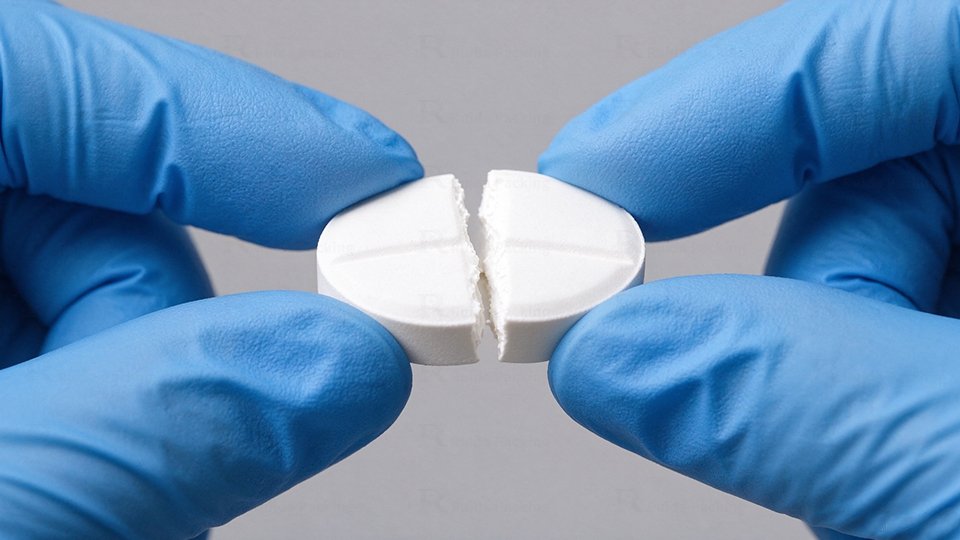
Appearance alone does not prove a robust multilayer process. The trial must demonstrate repeatable layer weights, a stable interface, adequate handling strength, and acceptable behavior after relevant handling and storage.
How Does Compression Affect Dishwasher Tablet Quality?
Compression connects powder behavior to finished-tablet performance through four events: การเติมเต็ม, air removal, particle bonding, และการดีดออก.
The feeder first establishes the mass and particle distribution in the die; pressure cannot correct uneven filling. The particles then rearrange as trapped air leaves the bed. Poor air release or unsuitable deformation can lead to cracks or separation after pressure is removed. Compression creates a structure with a particular density and porosity, while ejection friction can expose weak edges or cause sticking.
Increasing compression often increases particle contact and strength, but the response depends on particle size, deformation behavior, surfactant distribution, ความชื้น, and processing aids. Detergent-powder research shows that particle size and porosity affect tensile strength, while studies of specific detergent formulas show that surfactant location can change mechanical behavior and disintegration.[2][5]
Hardness alone is therefore not a complete acceptance criterion. The tablet needs enough strength for ejection, บรรจุภัณฑ์, and transport while still allowing water to enter under the intended wash conditions. The product owner must define and verify this balance using the complete formulation.
Multilayer tablets add an interface. Excessive compaction of the first layer, loose material at the interface, layer-weight variation, or differences in particle behavior can weaken the final bond. The process must control each layer as well as the final compression.
Common Dishwasher Tablet Production Problems
Troubleshooting should connect each defect to a possible mechanism and then test that mechanism. Changing pressure without finding the cause can hide one problem while creating another.
| ปัญหา | Possible mechanisms | What to verify first |
|---|---|---|
| Cracking or chipping | อากาศที่ถูกกักขัง, พันธะที่อ่อนแอ, ความชื้น, excessive speed, สภาพเครื่องมือ, ejection stress, or handling impact. | Locate where the defect first appears; compare compression, การดีดออก, and post-transfer samples. |
| ติดหรือหยิบ | Surface tackiness, ความชื้น, deposits, การหล่อลื่น, punch condition, or local temperature. | Inspect tooling and deposits; review material exposure, ทำความสะอาด, and formula changes. |
| Layer separation | Weak interface, excessive first-layer compaction, การปนเปื้อน, การเปลี่ยนแปลงน้ำหนัก, or mismatched materials. | Check the layers, interface, filling sequence, โปรไฟล์การบีบอัด, and post-handling samples. |
| Slow or incomplete dissolution | Dense structure, ขนาด, สูตร, การเคลือบ, layer design, storage change, or unsuitable test conditions. | Define water temperature, ความแข็ง, ปริมาณ, ที่ตั้ง, and cycle before comparing process variables. |
| Delayed storage defects | Moisture uptake, ingredient interaction, packaging failure, or gradual layer weakening. | Recheck appearance, ความแข็งแกร่ง, layers, and dissolution after defined storage intervals. |
The same visible defect may originate in the formulation, environment, กดแท็บเล็ต, เครื่องมือ, transfer system, บรรจุภัณฑ์, or test method. A useful investigation changes one controlled factor at a time and samples before and after the suspected stage.
How Are Dishwasher Tablets Tested for Quality?
Quality control should follow a written product specification. Universal hardness, ความชื้น, or dissolution limits are unsuitable because formulas, tablet sizes, programs, markets, and packaging systems differ.
| Quality check | วัตถุประสงค์ | พื้นฐานการยอมรับ |
|---|---|---|
| การตรวจสายตา | Detect cracks, ชิป, ติด, สี, or layer defects. | Defined defect categories and approved visual samples. |
| Mechanical strength | Assess survival through handling and transport. | Product-specific break-force or handling criteria. |
| Layer integrity | Confirm bonding after compression and handling. | Agreed inspection or simulation criteria. |
| Dissolution or disintegration | Measure release under controlled conditions. | Defined temperature, ความแข็ง, เวลา, ปริมาณ, and test arrangement. |
| Storage stability | Detect changes in strength, layers, active stability, or dissolution. | Documented temperature, ความชื้น, duration, and package. |
| Cleaning performance | Confirm the intended cleaning function. | Applicable target-market or customer protocol. |
Mechanical and dissolution tests answer different questions. A breaking-strength test applies force until failure; a dissolution test controls water and operating conditions and observes release. Patent examples include instrumented fracture and conductivity-based dissolution methods, but their thresholds apply to the products tested and are not universal standards.[6]
Cleaning performance also requires defined conditions. The EU Ecolabel framework, ตัวอย่างเช่น, references IKW or EN 50242/EN 60436-based methods that control factors such as temperature, water hardness, ปริมาณ, เครื่องจักร, and reference detergent. Manufacturers should use the method required by the target market and product claim rather than treating one regional framework as globally mandatory.[7]
Storage tests should use the final or a representative package. A patent example used 40°C and 70% relative humidity for one month, but this illustrates one study design rather than a standard condition for all dishwasher tablets.[8]
What Equipment Is Used to Manufacture Dishwasher Tablets?
A production system may include storage and dosing, sieving or conditioning, การผสม, โอนย้าย, การบีบอัดแท็บเล็ต, dust extraction, การตรวจสอบ, การลำเลียง, และบรรจุภัณฑ์. The required line depends on blend preparation, layer count, การตรวจสอบออนไลน์, และรูปแบบบรรจุภัณฑ์.
Material handling and mixing
Equipment selection should consider batch size, ความหนาแน่นรวม, particle-size differences, ฝุ่น, ความสามารถในการทำความสะอาด, and segregation during discharge. Uniformity inside the mixer is not enough if the blend separates while traveling to the tablet press.
The tablet press
Equipment selection must match the product rather than the highest catalog output. Buyers should provide the tablet drawing, ขนาด, น้ำหนักเป้าหมาย, layer structure, คุณสมบัติของวัสดุ, เอาท์พุทที่ต้องการ, ความต้องการเครื่องมือ, ข้อกำหนดในการทำความสะอาด, and upstream and downstream interfaces.
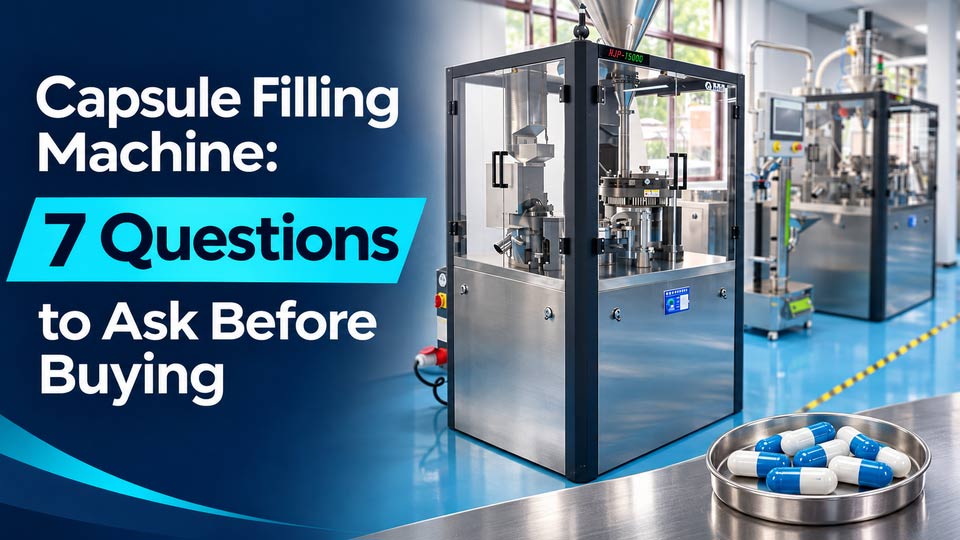
For large-format products, Ruida Packing recommends the ZP-15E-19E dishwasher tablet making machine series. It supports custom tooling and single-layer or multilayer production. Relevant features include an enclosed compression area, dust extraction, adjustable filling and pressure, and optional forced feeding. Final configuration depends on the formula and tablet design.
Model selection should be based on the actual tablet drawing and material trials rather than catalog limits alone. For rectangular or special-shaped dishwasher tablets, tooling feasibility must be evaluated from the full dimensions, รูปร่าง, ความหนา, and ejection behavior; a listed maximum round-tablet diameter cannot be treated as the allowable tablet length. Catalog maximum output is also not guaranteed for dishwasher tablets because larger fills, multilayer compression, longer compression requirements, and additional inspection can reduce the operating speed.
การตรวจสอบ, โอนย้าย, และบรรจุภัณฑ์
Conveyors and collection systems should limit impact and manage dust. Inspection requirements may cover weight, ขนาด, รูปร่าง, metal contamination, or layer defects. Packaging equipment should be tested with the actual tablet and proposed material because seal integrity, อุปสรรคความชื้น, and tablet movement all affect finished-product stability.
How Should Manufacturers Test a Dishwasher Tablet Press?
Ruida Packing accepts customer materials for compression trials. A useful trial should reproduce the intended material, แท็บเล็ต, and operating conditions closely enough to support a purchasing decision.
Define the product
Provide the target dose, tablet drawing, layer structure, เอาท์พุทที่ต้องการ, packaging method, quality criteria, and enough handling information to identify moisture, ฝุ่น, การกัดกร่อน, ไหล, การบดอัด, and cleaning concerns.
Use representative material
The sample should match the intended composition and particle condition. Each layer of a multilayer product needs representative material. The quantity must be sufficient to set up tooling and feeding, stabilize operation, and collect repeated samples; the exact amount should be agreed after the supplier reviews the project.
Agree on trial conditions
Define tooling, layer sequence, target speed, fill settings, compression range, duration, sampling points, and handling simulation before the run. Also separate measurements performed by the equipment supplier from product-performance tests performed by the product owner.
Evaluate the process and tablets
Record feeding stability, stable operating speed, ติด, ฝุ่น, การดีดออก, and layer behavior. Compare samples for weight, ขนาด, รูปร่าง, mechanical stability, and layer integrity. The product owner should evaluate dissolution and cleaning under intended use conditions.
Select the configuration
The final proposal should follow the evidence, not only catalog specifications. Tooling, เครื่องป้อน, layer configuration, dust extraction, contact materials, การควบคุม, เอาท์พุท, and downstream handling may change after testing. An unsuccessful trial may require revised settings, เครื่องมือ, สูตร, or another controlled run.
บทสรุป
Dishwasher tablet production begins with a formula that can flow, กะทัดรัด, survive handling, and release under defined wash conditions. Product design determines the manufacturing route, while controlled testing determines whether the process and tablet meet the specification.
Equipment selection should follow the same logic: define the product, set acceptance criteria, test representative material, and then confirm the tablet press configuration. For a Ruida Packing evaluation, provide the tablet drawing, น้ำหนักเป้าหมาย, layer structure, เอาท์พุท, material information, packaging method, and available sample material.
เอกสารอ้างอิง
- European Commission Joint Research Centre. Preliminary Report for Dishwasher Detergents, Annex II: Dishwasher Detergent Ingredients.
- Hart, ก. (2015). Effect of Particle Size on Detergent Powders Flowability and Tabletability. Journal of Chemical Engineering & Process Technology, 6:215.
- American Cleaning Institute. Laundry and Dishwasher Pods Explained: พวกเขาทำงานอย่างไร, Benefits and Safe Use.
- European Patent EP3383989B1. Coated Detergent Tablet.
- Chantraine, เอฟ. และคณะ. (2009). Drawbacks of Surfactant Presence on the Dissolution and Mechanical Properties of Detergent Tablets: How to Control Interfaces by Surfactant Localization. Journal of Surfactants and Detergents.
- European Patent EP1236794B2. Detergent Compositions in Tablet Form.
- คณะกรรมาธิการยุโรป. Framework for Performance Testing for Dishwasher Detergents.
- Japanese Patent JP5207161B2. Tablet Detergent Composition for Automatic Dishwashers.