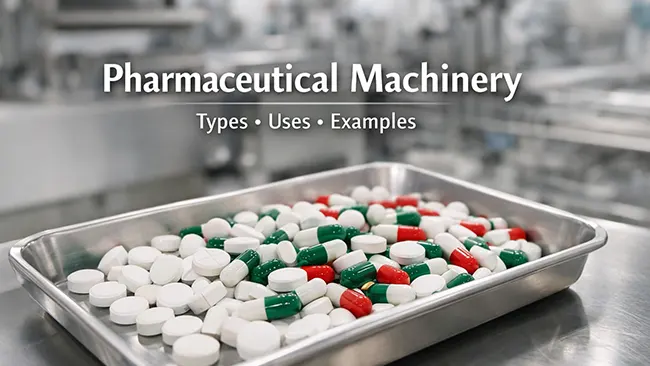
Pharmaceutical machinery is the equipment used to make, handle, package, and check medicines and supplements—whether they end up as tablets, cápsulas, pós, liquids, or gummies. If you’re new to the space, it can feel like a long list of machines with unfamiliar names. The easier way to understand it is by role: some machines shape or prepare the product, some package it for sale and distribution, and some verify quality and compliance along the way.
This guide keeps things buyer-friendly. Instead of deep production detail, it focuses on what pharmaceutical machinery includes, what each category is for, and how those categories map to the products you see on shelves.This overview is written from a machinery maker’s perspective, focusing on how buyers can recognize the right machine category—before diving into any detail.
Pharmaceutical Machinery: What It Includes (3 Core Groups)
Most pharmaceutical machinery falls into three practical groups. Once you can place a machine into one of these buckets, specs and supplier conversations get much easier.
| Group | What it’s for | Common machines you’ll see | Typical products |
| Processing (making/conditioning) | Turning raw materials into a stable, consistent form ready for dosing | mixers/blenders, granulators , dryers , Máquinas de imprensa para tablets, capsule filling machines, máquinas de revestimento de comprimidos | comprimidos, cápsulas, pós, some granules |
| Packaging (unit + secondary pack) | Protecting the dose, adding information, and getting it ready for shipping/sale | máquinas de embalagem blister, tablet capsule bottle filling/ tablet capsule counting lines | Blister pacotes, garrafas, caixas, multipacks |
| Inspeção & compliance readiness | Catching errors early and supporting regulated production | vision inspection, checkweighers, metal detection, rejection systems, data/traceability features | applies across all formats |
A quick way to use this: start with your product form (tablet/capsule/powder/liquid), then match it to the machinery group you’ll rely on most. Por exemplo, if you’re launching a tablet product, the “headline” machines buyers recognize are often the prensa para comprimidos (product-forming) and the blister or bottle line (embalagem). If you’re launching capsules, o máquina de enchimento de cápsulas becomes the center of the conversation, and packaging choices follow.
Even at a high level, these three groups also explain why quotes can look “incomplete” to beginners. UM pharmaceutical packaging machinery supplier might quote the main machinery first (say, a blister packer), while inspection modules, rotulagem, or cartoning are priced separately—because they belong to different roles in the line and can be mixed and matched based on your market, compliance expectations, and product range.
Common Pharmaceutical Processing Machines
“Processing” is the part of pharmaceutical machinery that prepares a product so it can be dosed consistently. Even if you never run a factory, knowing these machine names helps you understand quotes, line layouts, and why one supplier’s solution costs more than another.
Mixer / Blender
A mixer (or blender) is where powders or granules are combined to make the blend more uniform from batch to batch. Buyers care about this step because uniformity is what makes “one tablet/capsule = one intended dose” more realistic in the real world.
What to compare at a high level: batch size range, how gentle the mixing is for fragile ingredients, and how easy it is to clean between formulas.
Granulator and Dryer
You’ll often see granulation(wet granulation) and drying mentioned together in lists. The simple idea: some materials behave better as small, consistent granules than as fluffy powders, and drying helps control moisture so the product stores and runs more predictably.
What to compare: whether the machine fits your material behavior (dusty, sticky, moisture-sensitive), cleaning approach, and documentation support.
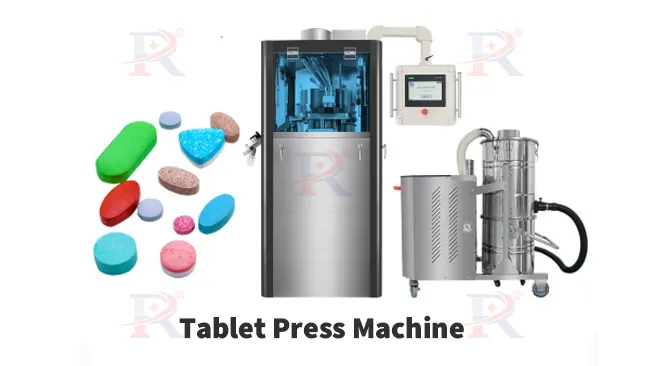
Rotary tablet press
UM rotary tablet press is the machine that forms tablets by compressing material into a defined shape and weight. For beginners, this is one of the most recognizable categories because it’s closely tied to capacity and tablet geometry options.
What to compare: the range of tablet sizes/shapes it can handle, how consistently it holds weight, how it manages dust, and how straightforward it is to validate settings for repeatable output.
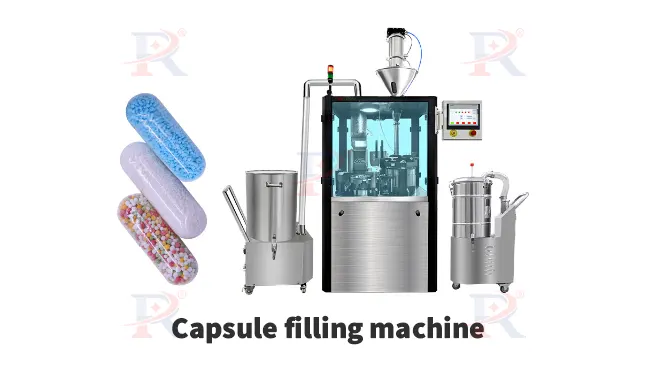
Máquina de enchimento de cápsulas
UM máquina de enchimento de cápsulas doses powder (or pellets/granules/liquid, depending on the application) into hard capsules. It’s common in both pharmaceuticals and supplements because it’s flexible in terms of different product types, hard capsule specifications, production volume and dosage specifications.
What to compare: dosing accuracy expectations, the capsule size range it supports, how it handles dusty or poor-flow powders, and how quickly it can switch between capsule sizes without headaches.
Tablet coating machine
UM máquina de revestimento de comprimidos applies a thin film layer to tablets for practical reasons like moisture protection, taste masking, smoother swallowing, or product identification. It’s not only about looks—coating is often used to improve stability and handling.
What to compare: coating uniformity, how well the machine holds a stable process window, and how easy it is to keep clean when switching colors or formulations.
Common Pharmaceutical Packaging Machines (primary + secondary)
Packaging is the part of pharmaceutical machinery that turns a finished dose into a sellable unit with protection and information. For most new buyers, this is where “what consumers see” meets compliance requirements like traceability and label correctness.
Máquina de embalagem blister
UM máquina de embalagem blister forms pockets, places products (often tablets or capsules), and seals them with a lidding material. Blisters are popular because they separate doses, help protect against moisture/oxygen (depending on materials), and make tamper evidence easy.
What to compare: the packaging formats it supports (different cavity styles and materials), seal consistency controls, and how reliably it rejects defects like missing product or poor seals.
Tablet counting and bottling machine
UM máquina de contagem de comprimidos (often part of a bottling line) counts and fills tablets or capsules into bottles, then passes them downstream to capping machine, máquina de vedação, and labeling machine. This format is common in supplements and many OTC products.
What to compare: counting accuracy across shape/size variation, how it handles dust, changeover effort between different product types, and how it verifies “right count in the bottle.”
Máquina de cartonagem
UM máquina de cartonagem takes primary packs (like blisters or bottles) and loads them into cartons, often along with inserts/leaflets, then closes and seals the carton. This is a common “secondary packaging” step for pharmacy-ready presentation.
What to compare: faixa de tamanho da caixa, how it handles inserts, and how stable it is at your target output without damaging cartons.
Inspection and in-line checks that protect quality
Pharmaceutical machinery often includes inspection as a built-in expectation rather than an optional add-on. The goal is simple: catch issues early, prevent mix-ups, and create evidence that the line did what it was supposed to do.
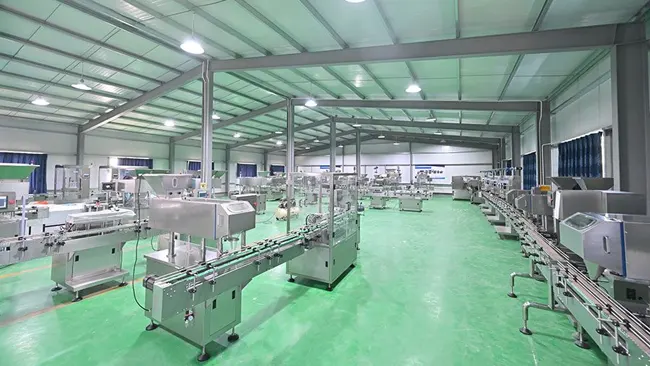
Common inspection building blocks include:
- Vision inspection for presence/absence checks (missing tablet, wrong label, unreadable code)
- Checkweighers for weight-based verification (especially useful when counting is involved)
- Metal detection for contamination control in certain packaging flows
- Reject systems to automatically remove failed units without stopping the whole line
For new buyers, the practical question to ask is: “Which failures can be caught automatically, and what proof can we keep for audits?” That framing keeps conversations grounded and helps you avoid paying for inspection features that don’t match your risk profile.
Compliance and documentation expectations
Pharmaceutical machinery is purchased into a regulated environment, even for many supplement brands that aim to operate with pharma-like discipline. In the U.S., FDA’s CGMP regulations set baseline expectations for methods, facilities, and controls used in manufacturing, processing, and packing drug products. (NÓS. Administração de Alimentos e Medicamentos). If you plan to purchase capsule filling machines and tablet press machine, you will need to obtain a DEA license.
What this means at a buyer level is less about memorizing regulations and more about making sure the machine and supplier can support:
- Clear specifications (what the machine is expected to do, and what “pass” looks like)
- Traceable build and parts documentation (Materiais, critical components, change records)
- Qualification support (often discussed as IQ/OQ/PQ in supplier conversations)
- Audit-friendly records (calibration, maintenance plans, and test evidence)
If you want a “safe” place to anchor your internal expectations, the regulatory text for drug CGMP in 21 CFR Part 211 is often referenced in quality discussions.
How to choose pharmaceutical machinery if you’re new
You don’t need to know every technical term to make a solid shortlist. These five questions usually separate “looks good on paper” from “fits our reality”:
- What dosage form are you selling? (comprimido, cápsula, pó, líquido)
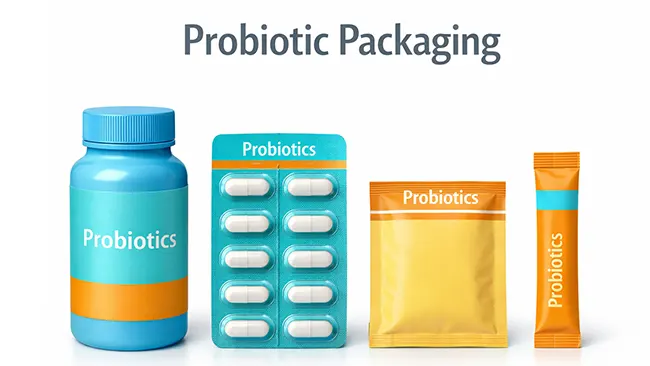
- What packaging format do you need? (bolha, garrafa, stick pack, carton)
- What’s your produto range and production volume now, and what might it be in 12 months?
- Which risks matter most? (wrong count, wrong label, moisture exposure, mix-ups)
- What proof do you need for customers and audits? (test records, inspection logs, qualification support)
From there, build your shortlist by matching the “core machine” to your product (press vs capsule filler vs packaging line) and then adding only the modules that reduce real risk.
Typical “starter” bundles by product type
This is a fast way to map pharmaceutical machinery to what you’re launching, without getting lost in process details.

Comprimidos
Often centers around a tablet press + downstream packaging. Many brands later add coating if stability or product experience demands it.
Cápsulas
Usually centers around filling + inspeção + embalagem. Packaging choice (blister vs bottle) depends heavily on market expectations and shelf-life strategy.
Powders and granules
Commonly sold in bottles, saquetas, or stick packs. The “buyer headache” is usually consistency (flow, fill accuracy) and packaging integrity.
Líquidos
Packaging becomes the main story—container choice, integridade do fechamento, and label correctness carry a lot of the risk management burden.
Perguntas frequentes
What is pharmaceutical machinery?
The equipment used to make, handle, package, and check medicines or supplements—from preparing a consistent product form to sealing and labeling the final pack.
What’s the difference between pharmaceutical machinery and pharmaceutical equipment?
In practice, people use both terms interchangeably. “Machinery” often sounds more production-focused, while “equipment” can include broader tools and systems, but overlap is huge in real searches and supplier catalogs.
What machines are used to make tablets?
At a high level: blending/prep machines, a tablet press, and then packaging machinery such as blistering or bottling—plus inspection checks to prevent defects and mix-ups.
What machines are used for capsules?
A capsule filling machine is the center, supported by material handling/prep, inspeção, and packaging (commonly blister or bottle lines).
What is pharmaceutical packaging machinery?
It’s the set of machines that protect the dose and prepare it for sale and distribution—forming/sealing packs, counting/filling bottles, capping/sealing, rotulagem, and cartoning.
What documents should come with pharmaceutical machinery?
Buyers typically ask for documentation that supports installation, operation, and consistent performance (often discussed as qualification support), plus materials/parts information and test records.
How do I compare machine quotes if I’m not technical?
Compare by fit-to-product (dosage form + embalagem), flexibility, inspection coverage, documentation support, and service readiness—then only secondarily by headline speed.
Conclusão
Pharmaceutical machinery is easiest to understand by function: processing, embalagem, e inspection/compliance readiness. Once you map your product (comprimido, cápsula, pó, líquido) to the machinery group that matters most, you can shortlist suppliers faster and ask cleaner questions—without getting buried in specs. For most new buyers, the best next step is to pick your packaging format and identify the few risk points you want the line to catch automatically.