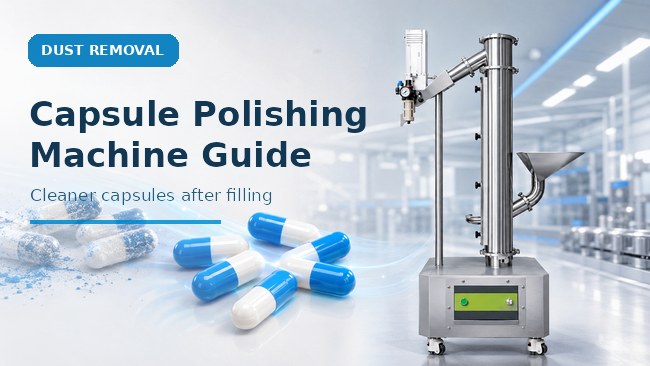
Uma máquina de polimento de cápsulas remove pó solto, poeira fina, e pequenas partículas de cápsulas cheias antes de entrarem na embalagem. As cápsulas nem sempre saem do máquina de enchimento de cápsulas perfeitamente limpo, especialmente quando a fórmula contém pó fino, ingredientes à base de ervas, ou materiais que aderem facilmente ao invólucro da cápsula.
Esta etapa de remoção de poeira protege mais do que a aparência da cápsula. Uma superfície de cápsula mais limpa pode ajudar a reduzir o acúmulo de pó no balcão de cápsulas, detector de metais, máquina de embalagem blister, linha de enchimento de garrafas, e outros equipamentos a jusante.
Para pequenos lotes manuais, o polimento da cápsula pode ser simples ou até desnecessário. Para produção comercial, no entanto, a remoção do pó da cápsula após o enchimento costuma ser uma etapa importante para uma embalagem estável, operação mais limpa, e melhor apresentação do produto.
1. Por que as cápsulas apresentam poeira ou resíduos de pó após o enchimento
As cápsulas geralmente apresentam resíduos de pó após o enchimento porque o processo de enchimento envolve contato direto entre o pó, corpos de cápsula, cápsulas, peças de dosagem, e canais de transferência. Mesmo quando a máquina de enchimento de cápsulas funciona corretamente, uma pequena quantidade de pó pode permanecer na parte externa do invólucro da cápsula.
Os motivos mais comuns incluem:
- Materiais de enchimento empoeirados ou finos. Pós finos, pós de ervas, e algumas misturas nutracêuticas podem flutuar facilmente e aderir ao invólucro da cápsula.
- Pó na borda da cápsula. Durante a dosagem, um pouco de pó pode ficar perto da abertura do corpo da cápsula antes que a tampa seja travada.
- Eletricidade estática. Os invólucros das cápsulas e as partículas de pó podem se atrair durante condições de produção secas.
- Fricção de transferência. As cápsulas podem acumular pó durante o enchimento, bloqueio, descarga, e canais de coleta.
- Extração de poeira fraca. Se o controle de poeira ao redor do posto de gasolina não for forte o suficiente, pó solto pode permanecer nas cápsulas acabadas.
Nem todos os resíduos de pó significam que o lote falhou. A poeira leve na superfície é um problema normal de produção em muitas linhas de enchimento de cápsulas. A verdadeira questão é se o resíduo afeta a aparência, estabilidade da embalagem, inspeção, ou carga de trabalho de limpeza.

2. Por que a remoção de poeira é importante antes da embalagem
A remoção de poeira é importante antes da embalagem porque os resíduos de pó podem passar da superfície da cápsula para o equipamento que manuseia, conta, detecta, ou embala as cápsulas. Isso pode criar problemas pequenos, mas repetidos, durante a produção.
Para compradores e gerentes de produção, o problema visível geralmente é a aparência da cápsula. Cápsulas com pó na parte externa podem parecer sujas, inconsistente, ou mal acabado, mesmo quando o produto envasado em si é aceitável.
Para operadores, o maior problema geralmente é a estabilidade da máquina. Pó solto pode se acumular ao redor dos sensores, trilhos guia, pistas de alimentação, contando canais, áreas de vedação, e rejeitar mecanismos. Ao longo do tempo, isso pode levar a:
- Contando instabilidade
- Problemas de alimentação de bolhas
- Contaminação da linha de garrafas
- Dificuldade de inspeção
- Limpeza mais frequente
- Maior risco de transferência de produto durante a troca
Um polidor de cápsulas ajuda a controlar esses riscos, removendo a poeira solta antes que as cápsulas passem para a próxima etapa de produção. Não substitui um bom controle de enchimento de cápsulas, mas torna o processo posterior mais limpo e fácil de gerenciar.
3. O que uma máquina de polir cápsulas faz em uma linha de enchimento de cápsulas
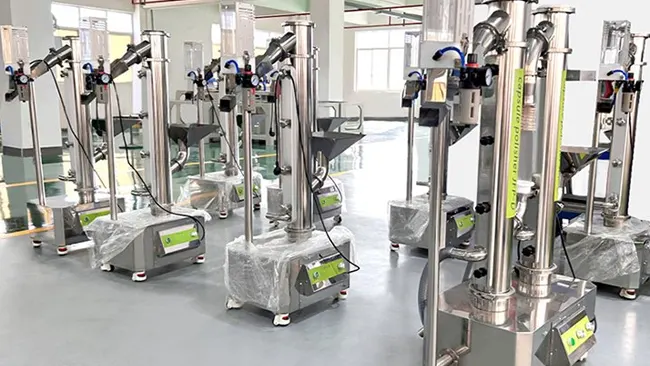
Uma máquina de polimento de cápsulas é geralmente colocada após a máquina de enchimento de cápsulas e antes da inspeção, contando, embalagem blister, ou embalagem de garrafa. Sua principal função é limpar a superfície externa das cápsulas cheias sem danificar o invólucro da cápsula..
Em uma linha típica de cápsulas, o processo pode ser assim:
máquina de enchimento de cápsulas -> polidora de cápsulas -> classificador de cápsulas ou detector de metais -> máquina de contagem de cápsulas ou máquina de embalagem blister
O polidor de cápsulas apoia a linha de diversas maneiras:
- Remove o pó da superfície das cápsulas cheias.
- Melhora a aparência da cápsula antes da embalagem.
- Ajuda a controlar o movimento de poeira na área de embalagem.
- Suporta transferência de cápsulas mais suave para máquinas posteriores.
- Pode ajudar a rejeitar vazio, luz, quebrado, ou cápsulas defeituosas quando combinadas com funções de classificação.
O ponto chave é que o polimento de cápsulas não é apenas uma etapa cosmética. Em muitas linhas de produção, é também uma etapa prática de controle de poeira entre o enchimento e a embalagem.
4. Como funciona um polidor de cápsulas
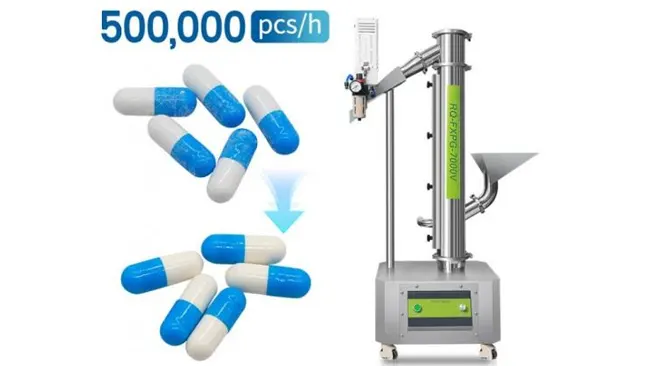
Um polidor de cápsulas funciona movendo cápsulas cheias através de uma câmara de polimento onde o contato mecânico suave e a remoção de poeira a vácuo limpam a superfície da cápsula. O design exato pode variar, mas a maioria das máquinas de polimento de cápsulas usa o mesmo princípio básico.
Primeiro, cápsulas cheias entram na máquina através de uma entrada ou calha de transferência. Em seguida, as cápsulas passam por uma câmara de polimento com uma escova rotativa, escova espiral, ou estrutura de polimento suave. À medida que as cápsulas giram e avançam, o pó solto é removido do invólucro da cápsula.
Ao mesmo tempo, um sistema de vácuo ou pressão negativa remove o pó da câmara. Isso evita que a poeira simplesmente se mova de uma parte da máquina para outra.
Finalmente, as cápsulas limpas saem da saída de descarga e continuam a inspeção, detecção de metais, contando, embalagem blister, ou embalagem de garrafa. Alguns polidores de cápsulas também incluem funções de classificação para ajudar a remover cápsulas vazias, cápsulas quebradas, ou cápsulas com defeitos óbvios.

5. Quando você precisa de uma máquina de polir cápsulas
Você precisa de uma máquina de polimento de cápsulas quando resíduos de pó criam problemas de aparência, instabilidade da embalagem, ou pressão de limpeza após o enchimento da cápsula. A necessidade depende da fórmula do produto, tamanho da cápsula, método de enchimento, velocidade de produção, e processo de embalagem.
| Situação de produção | Risco de poeira | É recomendado um polidor de cápsulas? | Razão |
| Cápsulas de pó fino | alto | Sim | O pó fino adere facilmente ao invólucro da cápsula e às peças de transferência. |
| Cápsulas de ervas ou plantas em pó | alto | Sim | Os pós das plantas podem estar empoeirados, fibroso, ou visualmente perceptível nas conchas. |
| Cápsulas probióticas ou nutracêuticas | Médio a elevado | Geralmente sim | Aparência limpa e contagem estável são importantes para embalagens de suplementos. |
| Cápsulas em pellets ou grânulos | Baixo a médio | Depende | Menos poeira é produzida, mas partículas superficiais ainda podem ocorrer. |
| Cápsulas duras cheias de líquido | Poeira baixa em pó | Caso a caso | O polimento pode ser menos importante, a menos que ocorra contaminação da casca. |
| Pequeno R&Lotes D | Baixo | Nem sempre | A limpeza manual ou o manuseio em pequena escala podem ser suficientes. |
| Linha de produção de alta velocidade | Médio a elevado | Sim | O acúmulo de poeira pode afetar equipamentos a jusante em longos períodos. |
| Cápsulas engarrafadas | Médio | Geralmente sim | A poeira pode afetar os canais de contagem e a apresentação das garrafas. |
| Cápsulas em blister | Médio a elevado | Sim | Cápsulas limpas ajudam na alimentação, limpeza da área de vedação, e inspeção visual. |
Uma regra prática é simples: se as cápsulas saírem da máquina de envase com poeira visível, ou se o equipamento posterior precisar de limpeza frequente devido ao acúmulo de pó, o polimento da cápsula deve ser considerado.
6. O que o polimento de cápsulas não consegue consertar
O polimento da cápsula pode remover a poeira solta da superfície, mas não pode resolver todos os problemas de enchimento de cápsulas. Esta distinção é importante porque alguns problemas de resíduos vêm do próprio processo de enchimento, não por falta de polimento.
Uma máquina de polimento de cápsulas pode ajudar com:
- Pó leve no invólucro da cápsula
- Poeira criada durante a descarga e transferência
- Pequenas partículas agarradas às cápsulas
- Aparência mais limpa da cápsula antes da embalagem
- Movimento mais suave da cápsula no equipamento a jusante
Uma máquina de polimento de cápsulas não pode resolver:
- Mau travamento da cápsula
- Enchimento excessivo
- Pó preso entre o corpo da cápsula e a tampa
- Cápsulas danificadas ou rachadas
- Condições erradas de armazenamento de cápsulas
- Fluxo de pó inadequado ou controle deficiente da formulação
Se as cápsulas vazarem pó porque não estão devidamente travadas, a máquina de enchimento de cápsulas deve ser verificada primeiro. O polimento pode remover a poeira visível, mas não corrigirá a causa raiz do vazamento.
7. Como escolher a máquina de polimento de cápsulas certa
A máquina de polimento de cápsulas certa deve corresponder à velocidade de enchimento da sua cápsula, faixa de tamanho da cápsula, características do pó, e método de embalagem a jusante. Uma pequena incompatibilidade pode não interromper a produção imediatamente, mas pode criar uma transferência instável, má coleta de poeira, ou limpeza frequente durante a operação diária.
Comece com capacidade de produção. O polidor de cápsulas deve lidar com a produção real da sua máquina de enchimento de cápsulas, não apenas a potência nominal mostrada em um catálogo. Se a velocidade de polimento for muito baixa, as cápsulas podem acumular-se no ponto de descarga. Se a velocidade for muito maior do que o necessário, a máquina pode ser superdimensionada para a linha.
Verifique a compatibilidade do tamanho da cápsula. A maioria dos polidores de cápsulas podem lidar com tamanhos comuns de cápsulas duras, mas a faixa de ajuste deve se adequar aos seus produtos reais, especialmente se você produz vários tamanhos de cápsulas na mesma linha.
A extração de poeira também é importante. Para fórmulas com pó fino, pó de ervas, ou ingredientes leves, o sistema de vácuo deve remover a poeira continuamente sem puxar as cápsulas de forma muito agressiva. Um bom controle de poeira ajuda a manter a superfície da cápsula limpa e reduz o acúmulo de pó ao redor da área da embalagem.
O design de limpeza não deve ser ignorado. Uma máquina de polimento de cápsulas está em contato direto com as cápsulas acabadas, então os operadores devem ser capazes de abrir, limpar, e reinstale as principais peças de contato facilmente. Superfícies de contato lisas, pincéis acessíveis, e peças simples de coleta de pó tornam a troca de produtos mais prática.
Você também pode considerar funções adicionais quando a linha de produção exigir maior controle de qualidade, como:
- Rejeição de cápsula vazia
- Classificação de cápsulas leves
- Remoção de cápsula quebrada
- Conexão do detector de metais
- Altura ajustável da máquina
- Integração com linhas automáticas de enchimento e embalagem de cápsulas
Um bom polidor de cápsulas deve tornar a linha mais limpa e estável sem adicionar complexidade desnecessária. A melhor escolha geralmente é a máquina que se adapta às suas condições reais de produção, não apenas aquele com a maior capacidade listada.
Conclusão
Uma máquina de polimento de cápsulas é útil quando resíduos de pó afetam a aparência da cápsula, estabilidade da embalagem, inspeção, ou trabalho de limpeza. Remove a poeira solta após o enchimento, suporta transferência mais suave, e ajuda a manter o processo posterior mais limpo. Para linhas de cápsulas que necessitam de equipamentos de enchimento e embalagem, Ruida Packing fornece soluções farmacêuticas e de máquinas de embalagem para fabricantes dessas indústrias.
A máquina deve ser selecionada de acordo com condições reais de produção, incluindo tipo de cápsula, nível de pó em pó, velocidade de enchimento, necessidades de limpeza, e método de embalagem a jusante. Quando o polimento de cápsulas é combinado corretamente com a máquina de enchimento de cápsulas e a linha de embalagem, torna-se uma etapa simples, mas valiosa para limpeza, mais estável produção de cápsulas.
Perguntas frequentes
O pó nas cápsulas é normal após o enchimento?
Sim. Uma pequena quantidade de pó na parte externa das cápsulas cheias pode ser normal, especialmente quando a fórmula contém materiais finos ou empoeirados. No entanto, resíduo pesado, vazamento repetido, ou pó preso na junta da cápsula pode indicar um problema de enchimento ou travamento.
Todas as cápsulas precisam de polimento após o enchimento?
Não. Nem todo produto de cápsula precisa de uma máquina de polimento de cápsulas. Pequenos lotes, fórmulas com baixo teor de poeira, ou amostras internas simples podem não precisar de polimento. As linhas de produção comercial geralmente se beneficiam mais porque a poeira pode afetar a aparência, contando, inspeção, e estabilidade da embalagem.
Uma máquina de polimento de cápsulas pode consertar o vazamento da cápsula?
Não. Uma máquina de polimento de cápsulas pode remover o pó solto da superfície da cápsula, mas não pode consertar o travamento deficiente, encher demais, conchas danificadas, ou fluxo de pó inadequado. Se as cápsulas continuarem vazando, o processo de enchimento deve ser verificado primeiro.
Um polidor de cápsula é usado antes ou depois da detecção de metais??
Um polidor de cápsula geralmente é usado antes da detecção de metal. Isso permite que as cápsulas sejam limpas antes de entrarem no equipamento de inspeção, o que ajuda a reduzir a poeira ao redor do detector de metais e melhora a estabilidade do processo posterior.
Um polidor de cápsulas pode lidar com diferentes tamanhos de cápsulas??
Muitos polidores de cápsulas podem lidar com vários tamanhos comuns de cápsulas duras, mas a faixa real depende do projeto da máquina e do método de ajuste. Os compradores devem confirmar a faixa de tamanho da cápsula antes de escolher a máquina.
Qual equipamento vem após o polimento da cápsula?
Após o polimento da cápsula, cápsulas podem ir para um classificador de cápsulas, detector de metais, máquina de contagem de cápsulas, máquina de embalagem blister, ou linha de embalagem de garrafas. O melhor arranjo depende do formato final da embalagem e dos requisitos de controle de qualidade.