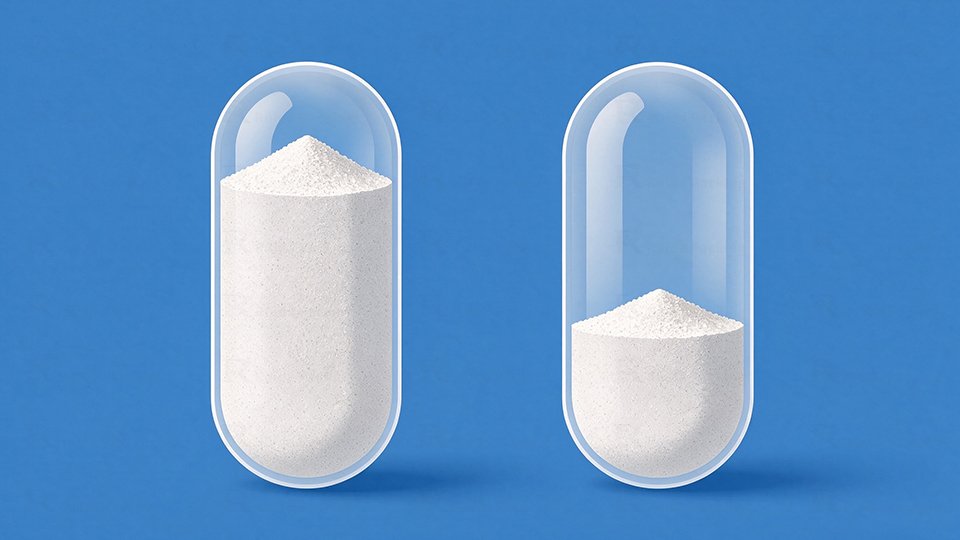
A powder that fills beautifully on Monday may refuse to behave on Tuesday, even when the target capsule weight stays exactly the same.
When manufacturers make the capsules, no matter changing the powder formula or machine commissioning will make the NJP capsule filling machine performance distinct. Particle behavior, powder feeding method, filling rod position, and dosing disc thickness all affect the result. So can one machine accommodate multiple powders? Often yes, but compatibility must be established based on readjustment. This guide will explain what changes when switching the products, why capsule weight varies and how to verify if the capsule machine is the best suited for your powder.
Poin Penting
- Why powders with different physical properties may behave differently in the same capsule filling machine.
- The role of dosing discs, tamping pins and powder feeding systems in achieving consistent fills.
- Common causes of weight variation and powder sticking.
- What sample trials, equipment documentation and FAT should prove before purchase.
1. Pendahuluan
Dalam praktiknya, using one machine for different powders involves more than swapping ingredients. Each formulation may call for changes to tooling, operating parameters and testing before production begins. A vitamin blend that flows easily through the dosing system, Misalnya, can behave quite differently from a fine botanical extract prone to clumping. Even the same target fill weight may require a different approach. Untuk a powder capsule filling machine, reliable performance depends on actual production trials. Akhirnya, powder formulation compatibility must be established through testing rather than taken at face value from a manufacturer’s specifications.
2. How Does an Automatic Capsule Filling Machine Fill Powder?
A typical hard-capsule cycle feeds empty shells, orients and separates their caps and bodies, doses the powder, rejects un-separated capsules, locks shells and discharges the finished product. A cleaning station will then blow residual powder from the segment holes. The powder capsule filling process may sound straightforward, yet accurate transfer into every capsule, cycle after cycle, is harder.
Dosing Disc and Tamping Pin System
In a tamping-pin system, powder first settles over the dosing disc, where a series of tamping pins gradually compresses it into powder columns for delivery into empty capsule bodies. The resulting dose depends on several factors, including dosing disc thickness, powder bed height and how far the pins goes. But a deeper pin setting does not necessarily mean greater compression force, as the powder’s properties also influence the outcome. Heda, Muteba and pharmaceutical scientist Larry Augsburger highlighted an important distinction: dosing-disc and dosator machines respond differently to formulation characteristics, making powder selection just as important as equipment settings.
Pengumpanan Pneumatik, Screw Feeding and Dosator Systems
A powder feeding system can deliver material through pneumatic or screw mechanisms, depending on how the powder behaves.
Pneumatic feeding can work well for powders that has excellent flowability. But moisture-sensitive or cohesive blends may stick to the pipe walls, while excessive speeds can generate static electricity, making powder easy to stick to the hopper walls.
For powders that do not flow easily under gravity, a screw feeder can help maintain a more consistent supply. But its performance depends on more than rotation speed. Different screw head designs, including variations in blade shape and clearance, can influence how powder moves toward the outlet. Manufacturers may therefore customize these components to suit the flow characteristics of different formulations. There are limitations, Namun. Sticky powders can accumulate around the screw and feeder walls, making cleaning more difficult, while excessive mechanical agitation may cause particle damage or disturb blend uniformity.
Choosing the right screw design requires testing with the actual powder rather than relying on a standard configuration.
Unlike dosing-disc systems, a dosator capsule filling machine uses a hollow tube to gather powder, and release it into the capsule body. The distinction matters because the two methods place different demands on the formulation. In a comparative study, Heda and colleagues reported that dosator machines generally require powders with greater compactibility. Untuk produsen, the choice should come down to more than equipment labels: what matters is how well the feeding and dosing mechanisms work with the powder being processed.
3. Which Powder Properties Affect Capsule Filling Performance?
Kemampuan mengalir bubuk: Good flow helps maintain a steady supply to the dosing zone. A cohesive powder, Namun, may form bridges inside the hopper, interrupting delivery and leaving some capsules underfilled. Think of flour clumping in a kitchen sieve while granulated sugar passes through more freely.
Powder bulk density and tapped density: These indicate how tightly particles pack before and after settling. Lebih ringan, loosely packed blend occupies more space than a denser one of the same weight. Sebagai akibat, formulations with identical target fill weights may require different dosing volumes or settings.
Powder compressibility: This influences how particles consolidate under pressure. If a blend does not hold together sufficiently, the powder plug may break apart during transfer. Excessive compaction, meanwhile, can make powder release more difficult.
Distribusi ukuran partikel: Fine particles may improve packing but can also increase cohesion and adhesion. Coarser particles often move more freely, although mixtures containing different particle sizes may separate during handling, affecting dose consistency.
Powder moisture content and static charge: Moisture can encourage clumping or adhesion, particularly in hygroscopic formulations. Static electricity may cause fine particles to cling to equipment surfaces, interfering with powder movement and cleaning.
These properties rarely act alone. In research discussed by T. Freeman and colleagues, 12 lactose-based formulations showed different capsule-weight variability depending on their composition. Blends containing 10 wt.% acetaminophen exhibited greater variability than those containing 40 wt.%. The findings illustrate why manufacturers need to assess the formulation as a whole rather than rely on a single powder measurement.
4. What Factors Affect Capsule Filling Results with Different Powders?
Unstable Fill Weight and Irregular Powder Feeding
Uneven capsule weights are not always caused by the dosing mechanism itself. Sometimes, the trouble begins before the powder reaches the dosing disc. Poorly flowing blends can form powder bridging inside the hopper, restricting the supply of material. As the powder bed height rises and falls, the dosing disc may receive inconsistent amounts of powder, leading to capsule fill weight variation.
Even when capsule weights remain within an acceptable range, particle segregation can leave ingredients unevenly distributed. In experiments involving four commonly used excipients and a poorly flowing drug formulation, Nair and colleagues observed that tamping-pin positions and powder bed height affected weight consistency, particularly with difficult materials. Karena itu, before increasing compression, manufacturers should first check whether powder is reaching the dosing system at a steady rate.
Unsuitable Filling Rod Position
Adjusting the tamping pin penetration depth changes how deeply each pin presses into the powder inside the dosing disc. If the pins barely penetrate, the resulting powder plug may be too fragile to survive transfer. Push them too far, Namun, and powder may spill from the dosing disc or cling to the dosing disc holes. More pressure does not necessarily produce a heavier capsule. One study found that increasing tamping force made powder plugs harder without significantly changing their weight.
Powder Sticking, Leakage and Changeover Problems
Humidity and static charge encourage powder sticking to machine parts. A bubuk lengket can also retain material inside the transfer path, creating powder leakage or cross-batch carryover when cleaning is inadequate. If the formulation changes, inspect seals, contact surfaces and local extraction. Some exceptionally tacky products may require reformulation, different feeding equipment or a slower, semi-automatic process; that decision should come from a sample trial, not a blanket claim.
5. How Should Manufacturers Adjust Settings for Different Powders?
Check Powder Conditions Before Changing Settings
Before making adjustments, take a closer look at the powder itself. Check the batch records for moisture content and bulk density, and look for lumps that may have formed during storage. Watch how the material moves through the hopper. An inconsistent supply, whether too little or too much, can disrupt filling before the powder reaches the dosing disc. If storage has changed the blend’s physical properties, altering machine settings alone is unlikely to restore stable production. Establish whether the problem lies with the material or the equipment first.
Match Disc Volume and Powder Bed to the Dose
The right dosing disc depends on more than capsule size. Target fill weight and the powder’s packing characteristics also determine the volume required. A disc that is too thin may leave insufficient room for the intended dose, requiring greater compaction. An excessively thick disc, by contrast, may produce loosely formed plugs if the powder is not compacted adequately. Once the powder bed height is stable, collect a representative sample of capsules and compare their average net fill weight and variation. A single acceptable result says little about how consistently the machine performs.
Adjust Tamping Pins in Controlled Steps
Small changes in pin position can alter the way powder plugs form inside the dosing disc. Before any tamping pin adjustment, record the existing settings at each station and check that the pins are securely locked. Adjust one parameter at a time, then examine plug formation, transfer and capsule fill weight uniformity. Technical adviser Stephen W. Lee has pointed out that different machine settings can produce similar average capsule weights. That makes variation just as important as the average. Where practical, repeat the trial after restoring the original settings, then apply the revised settings again to see whether the results remain consistent.
Balance Feeding, Speed and Cleaning
Match feed rate to consumption, inspect scraper or wiper alignment and try a lower operating speed if the material supply becomes uneven. Room humidity should follow the formulation’s approved processing conditions, while worn tamping pins and dosing disc bores need regular inspection. Effective capsule filling machine troubleshooting means examining material behavior, kondisi makan, operating practices and mechanical wear together, rather than relying on touchscreen adjustments alone.
6. What Should Buyers Check When Selecting Equipment for Multiple Formulations?
Before choosing a machine, buyers need to know how it performs with their own materials. A supplier’s trial should use the intended powders, ukuran kapsul 00 Dan 0, target fill weights and expected production speed. Good powder sample testing goes beyond showing capsules coming off the line. It should provide individual fill-weight results, variasi berat, powder plug condition, rejection rates and the settings used. A factory acceptance test(GEMUK) offers another chance to verify performance. Buyers should be able to identify the machine being tested, see dated footage of adjustments and review results from repeated runs. Technical approval should come before price becomes the deciding factor.
For manufacturers installing equipment in Europe, safety and documentation deserve equal attention. Buyers should examine the applicable CE conformity documents and confirm that protective guards, emergency stops and safety door interlocks work as intended. Cleanability matters just as much in regulated production. Product-contact parts made from suitable materials, such as 316L stainless steel, accessible powder collection areas and surfaces that are easy to clean can support GMP requirements. Where electronic records are part of the production process, the software also needs careful assessment against applicable 21 Bagian CFR 11 persyaratan. A modern touchscreen may make a machine easier to operate, but it says little about whether the system can meet those requirements.
7. Ruida Packing NJP Series Machines and Technical Services
With over-10-year experience, Ruida Packing supplies NJP capsule filling equipment for hard-capsule production in supplement and pharmaceutical plants. For specified models, its stated design features include an internal cam drive intended for stable extended running, an enclosed structure with door-interlock alarms, and air-assisted hollow locking pins paired with a cleaning station to clear residual powder from segment holes. Options include powder recovery and hygienic contact parts. Claims such as operating below 80 dB or suitability for 16-hour shifts should be checked against the exact machine configuration and test conditions.
As a capsule filling machine manufacturer, Ruida Packing can review capsule dimensions, material samples, required fill weight and output before suggesting a configuration. Support may include sample tests, customized tooling, FAT videos and records, instalasi, commissioning, pelatihan operator, pemecahan masalah jarak jauh, after-sales support and spare-parts assistance, subject to the agreed scope. These services help turn brochures into production plans for a powder capsule filling machine.
8. Kesimpulan
One capsule filling machine can handle several powders when their flow, compaction and dose requirements fit its validated working range. The right question is not “Will it fill everything?” but “Can we reproduce acceptable results for each formulation?” Compare powder properties, make controlled adjustments and demand representative trial data before selecting equipment.
9. FAQ
Q1: Can one capsule filling machine handle different powders?
Ya, sering, provided each formulation is compatible with the dosing system and is qualified using suitable tooling, cleaning and trial settings.
Q2: Can a capsule filler process sticky powder?
Sometimes. First assess moisture, adhesi, feeder behavior and cleaning; heavily cohesive products may need an alternative process.
Q3: What affects capsule filling accuracy?
Aliran bubuk, kepadatan massal, bed level, tamping setup, feeder stability, component wear and weighing methods all contribute.
Q4: Why does capsule fill weight vary?
Common causes include powder bridging, changing bulk density, variable feed level, weak plugs and worn dosing components.
Q5: Does stronger tamping always increase fill weight?
TIDAK. Greater tamping can strengthen a powder plug without increasing its mass, depending on the formulation and dosing conditions.
Q6: Should I use a thicker dosing disc for difficult powders?
Only if supported by capsule capacity and trial results. Disc thickness, bed level and pin depth should be optimized together.