Among various medicine pill types, have you ever noticed the tablet with scoring line on it?
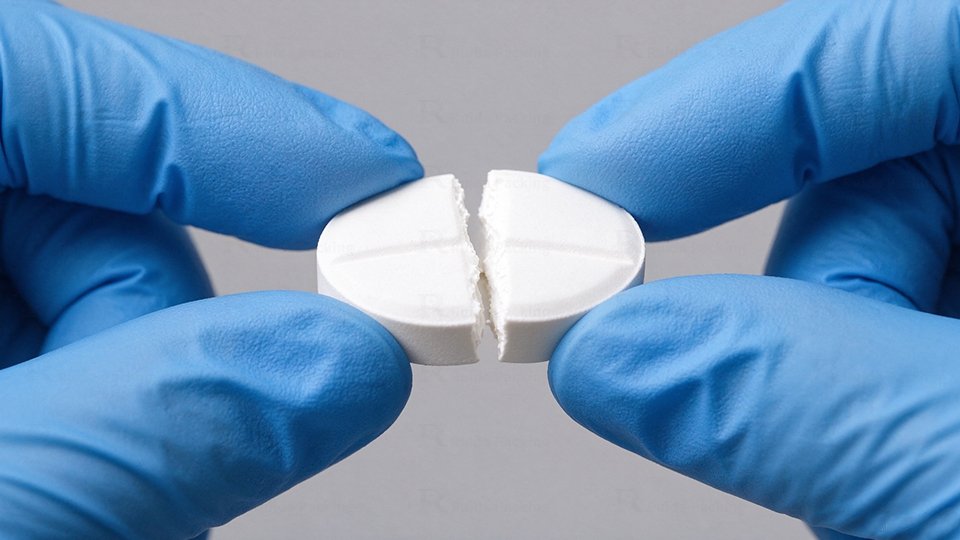
Sekilas, the line on the tablet seems to be there simply to make the tablet look more appealing. But in fact, the score line is meant to guide a tablet’s break. Here comes another issue, despite the scoring line, some score tablets may still be hard to split into two pieces out of formulation or manufacturing process. An uneven break can leave patients uncertain about whether each tablet portion delivers the intended dose. Untuk produsen farmasi dan nutraceutical, the problem may involve punches, pengaturan kompresi, dan kontrol kualitas. To understand why this happens, this guide takes a closer look at scored tablets, covering the purpose of score lines, how they are formed during production, what causes irregular splitting, and practical ways to address these issues.
Poin Penting
- The main purposes of tablet score lines and why they don’t always indicate equal-dose splitting
- How pill press punches, dies and compression processes create score lines during manufacturing.
- Common factors behind uneven tablet splitting and cracking
- Steps patients and manufacturers can take when tablets fail to split properly
- How Ruida Packing’s HGZP high speed tablet presses support controlled production workflows.
1. What Are Scored Tablets and Why Are They Used?
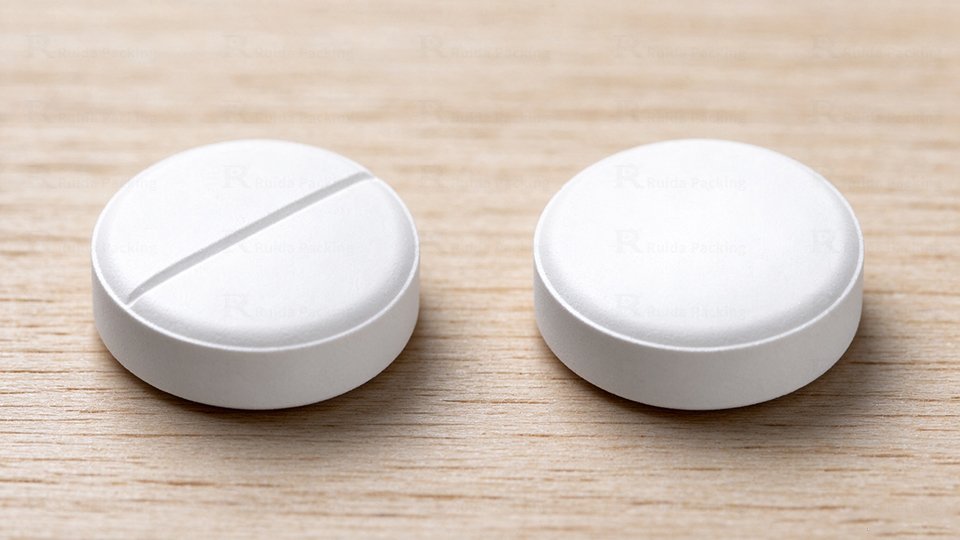
The scored tablet meaning is simple to understand. A scored tablet features one or more grooves deliberately formed on its surface. Namun, a tablet score line does not necessarily mean the tablet can be divided into two equal portions. Some scored pills are specifically developed and tested for dose adjustment, while others are designed to make large tablets easier to swallow. Since these grooves may serve different purposes, patients should always refer to the approved medication instructions before splitting a tablet.
2. Which Types of Tablets Use Score Lines?
Score lines are commonly found on prescription tablets intended for dose adjustment, some immediate-release medicines, and tablets that can be divided to make swallowing easier. You may also notice grooves on scored vitamin tablets and dietary supplements, but this does not automatically mean each portion contains an equal dose. In terms of design, a single scored tablet features one groove, while a cross scored tablet has two intersecting lines that may allow further division if properly validated.
When comparing scored vs unscored tablets, the real difference goes beyond their appearance. Functional scored tablets require supporting evidence that they can be divided as intended. Karena itu, patients should check the product labeling rather than assume that every visible groove indicates safe or accurate dose splitting.
3. How Are Score Lines Made on Tablets?
Tablet Punches and Dies
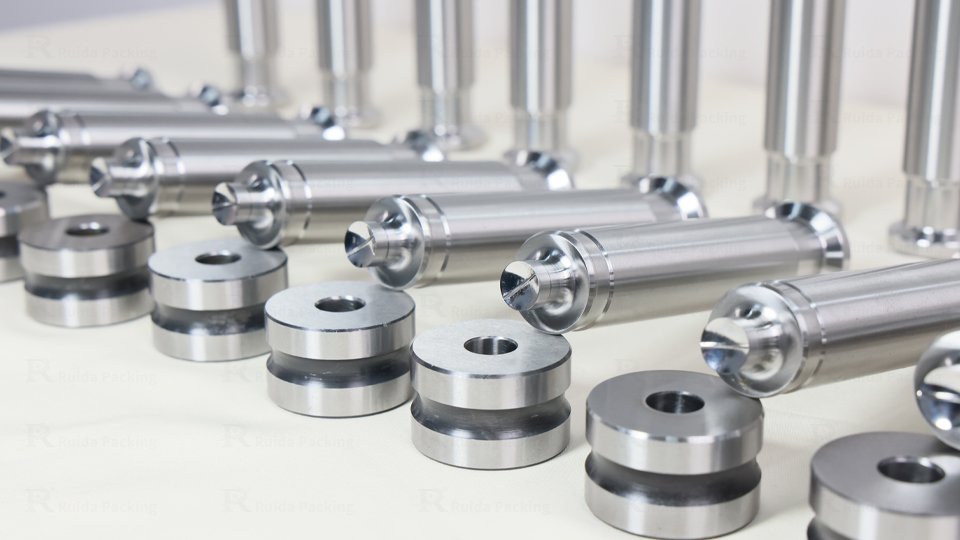
Score lines are generally created as tablets are compressed, rather than added after production. During this process, A tablet punch and die set determines the tablet’s final shape, while a raised feature on the punch surface forms the groove. The tablet scoring punch should be designed with the appropriate dimensions to achieve the required groove width and depth. If the tablet tooling design is unsuitable, the resulting score line may be inconsistent, potentially affecting how the tablet breaks.
Tablet Compression Process
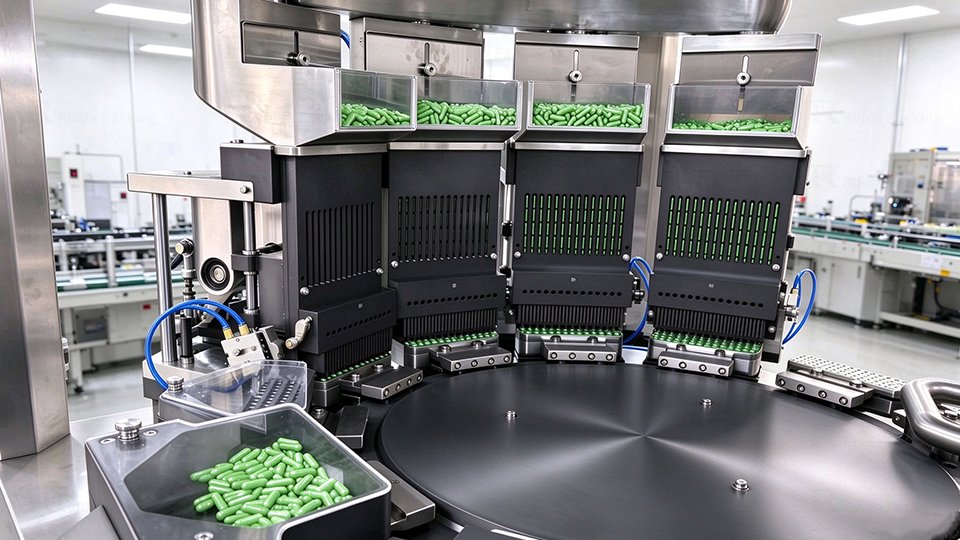
Dalam mesin tablet putar, powder is first fed into the die cavity before undergoing preliminary compression, if available, followed by the main compression stage. The finished tablet is then discharged from the die. Throughout this tablet scoring process, consistent tablet compression is essential for maintaining product quality. A mesin cetak tablet, also known as a tablet making machine, requires precise control of powder fill weight and tablet compression force to meet the specified production parameters.
Tooling and Consistency
Consistent score line formation depends on accurate tablet press tooling dimensions and properly controlled operating parameters. Namun, tablets produced by the same rotary tablet press machine may look identical while having differences in internal density. Karena itu, manufacturers should evaluate both the physical appearance of the grooves and how accurately the tablets divide into portions.
4. What Are the Benefits and Risks of Scored Tablets?
For medicines approved for division, functional scoring allows patients to adjust their doses according to prescribed instructions. Namun, some tablets have grooves simply to help people swallow them more easily, rather than to provide equal portions.
Tablet splitting also comes with potential problems, including powder loss, broken edges, uneven fragments, and damage to protective coatings. Even when a tablet breaks neatly, its two portions may not contain the same amount of active ingredient. Pharmacist and researcher Sally Helmy emphasized that safe splitting depends on the characteristics of both the medication and the individual patient. Karena itu, tablet splitting safety should be evaluated for each medicine instead of being judged by the presence of a score line alone.
5. Why Do Some Scored Tablets Split Unevenly?
Improper Score Depth and Design
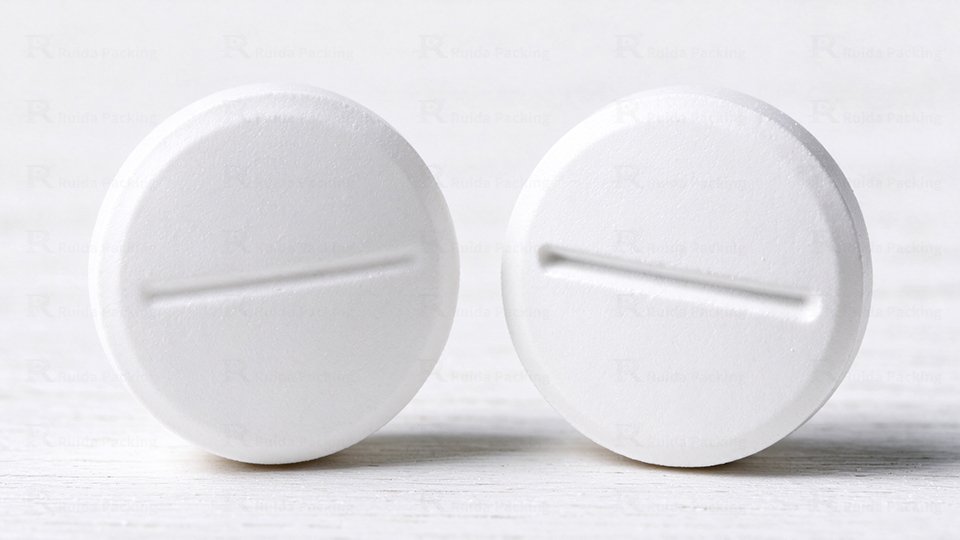
When a groove is too shallow, the tablet may break away from the intended line. Di sisi lain, excessive depth can reduce its structural strength and increase the risk of cracking. To achieve reliable splitting, manufacturers need to consider tablet score depth, ridge geometry, and tablet score line design together. Even with a clearly defined groove, the tablet may still fracture unevenly depending on its internal structure and mechanical properties.
Hardness and Compression Force
Kekerasan tablet and tablet breaking force are influenced by the formulation and the pressure applied during compression. If the particles are not sufficiently bonded, tablet fragmentation may occur during splitting. Sebaliknya, overly compacted tablets can be difficult to break into equal portions. Karena itu, manufacturers should evaluate the formulation alongside tablet compression force to avoid solving one problem while creating another.
Shape and Thickness
Tablet shape and thickness can influence how evenly a tablet breaks. Unlike thin, oval tablets, thicker round tablets distribute pressure differently during splitting, which may affect the size of each portion. Menurut a 2023 review covering 25 studies, the average weight variation was 0.72% for divided scored tablets, dibandingkan dengan 1.09% for unscored tablets. Although these findings suggest that score lines may improve splitting consistency, the results cannot be applied to every tablet formulation without further testing.
Formulation and Powder Properties
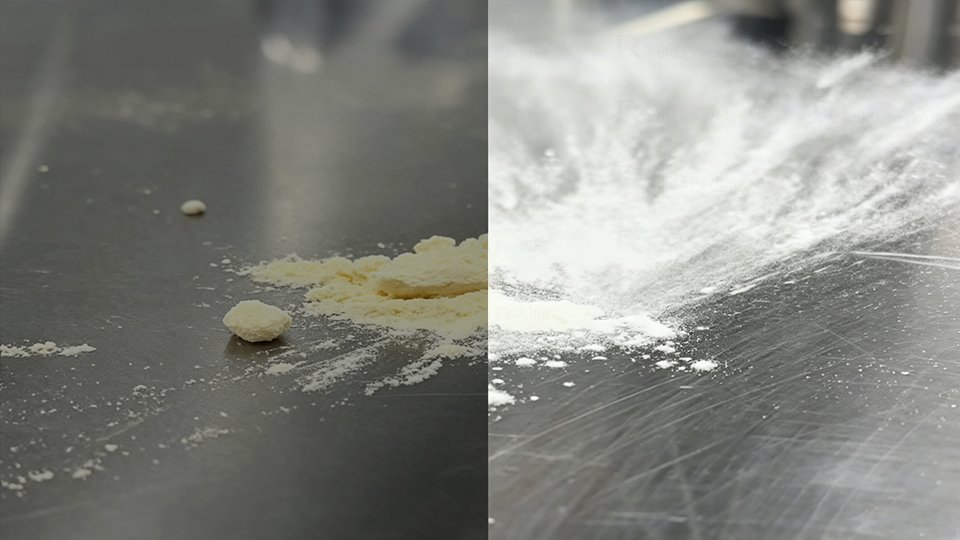
Uneven splitting is not always caused by the tablet press. Poor granulation, insufficient binders, or inconsistent moisture levels can produce tablets that break easily or lose powder when divided. Untuk produsen, tablet friability testing helps assess resistance to chipping and abrasion, while content uniformity testing checks whether individual tablets contain the intended amount of active ingredient. Both tests provide useful quality information, but additional split-portion testing is needed to confirm accurate dose division.
Worn or Improper Tooling
Pukulan usang, rusak mati, and improper machine adjustments can affect score line formation and lead to inconsistent tablet splitting. A study examining 16 medications found that 52 out of 320 split tablet portions (16.2%) fell outside the researchers’ weight criteria, ketika 48 portions (15.0%) did not meet their drug content criteria. Although these figures do not represent manufacturing defect rates, they highlight the importance of evaluating tablet splitting accuracy through actual testing rather than relying solely on the appearance of the score line.
6. What Should You Do If a Scored Tablet Splits Unevenly?
For Consumers: Check Before Taking a Fragment
If a tablet breaks into uneven pieces, crumbles, or leaves powder behind, the amount of medicine in each portion may be uncertain. Instead of guessing how much to take, follow these precautions to reduce potential dosing risks:

- Avoid Adjusting the Dose Yourself: Do not combine broken fragments or take extra pieces to make up for a suspected dose difference. Consult your pharmacist or doctor before taking the damaged tablet.
- Check the Medication Instructions: Confirm whether the specific medicine is suitable for splitting. Some tablets have score lines but are not intended to provide equal doses.
- Use a Suitable Tablet Splitter: If splitting is permitted, ask your pharmacist to recommend a tablet splitter and demonstrate the correct technique. This may help produce cleaner, more consistent portions.
- Consider Alternative Dosage Strengths: If tablets repeatedly break unevenly, ask your healthcare provider whether a lower-strength tablet or another suitable formulation is available.
- Avoid Splitting Tablets Too Far in Advance: The FDA recommends against dividing an entire supply at once unless the product instructions specifically allow it, as splitting may affect the medicine’s stability during storage.
For Manufacturers: Find the Cause Before Adjusting the Press
When scored tablets break unevenly, manufacturers should investigate the possible causes before making changes to production settings. The following steps can help identify the problem and improve splitting consistency.
- Review Batch Records: Check production logs, hasil pemeriksaan, and retained samples for unusual changes. If the tablets fail to meet quality specifications, hold the affected batch for further investigation.
- Inspect Tablet Tooling: Examine the punches and dies for worn scoring ridges, surface damage, or incorrect alignment. Replace damaged components and verify that the tooling matches the tablet design.
- Check Compression Parameters: Mengevaluasi variasi berat tablet, ketebalan, kekerasan tablet, and tablet compression force. Compare these measurements with established process limits to identify potential problems.

- Examine Formulation Properties: Review granule size, binder concentration, dan kadar air. Poor particle bonding or inconsistent powder properties may contribute to cracking and uneven splitting.
- Conduct Splitting Tests: After implementing approved adjustments, perform manual and mechanical tablet splitting tests. Check the resulting portions for weight differences, kerugian materi, and drug content uniformity where applicable.
Pharmaceutical development researcher Diana van Riet-Nales and her colleagues have highlighted the risk of inaccurate dosing associated with tablet splitting. Their research emphasizes the importance of evaluating the quality of divided portions rather than judging tablets solely by their external appearance.
7. How Can Manufacturers Improve Tablet Splitting Quality?
Optimize the Formulation and Tooling Together
Effective scored tablet manufacturing starts with identifying how the finished tablet is expected to be divided. During product development, manufacturers should test different powder compositions, binder concentrations, and punch configurations to evaluate their effects on splitting performance. Since each formulation responds differently to compression, a tablet punch design suitable for one product may not deliver the same results for another. Akhirnya, functional scoring requires more than a clearly visible groove. Manufacturers must verify tablet dose uniformity to ensure that the divided portions meet the intended dosage requirements.
Set a Proven Compression Feeder Window
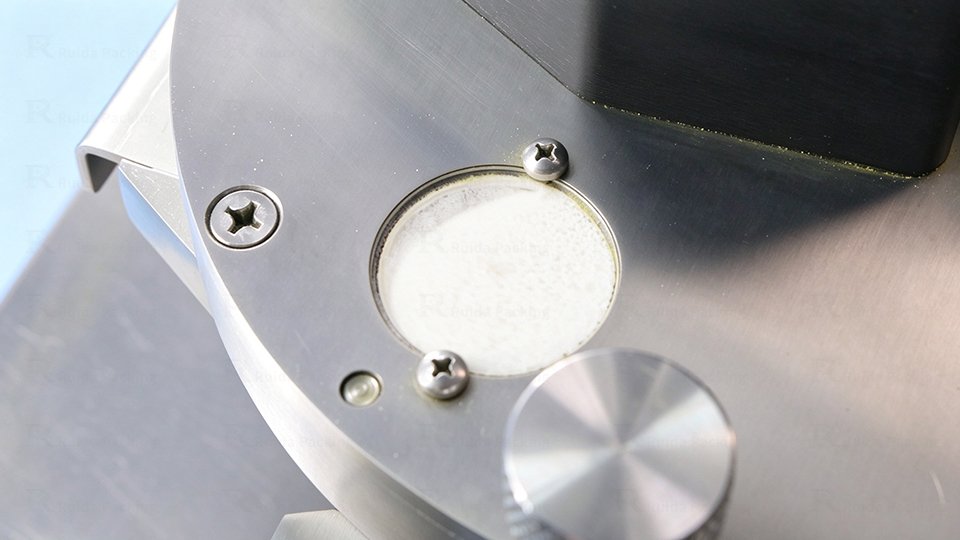
Consistent tablet quality starts with reliable powder feeding. In a tablet compression machine or pharmaceutical tablet press, the force feeder helps distribute powder into the die cavities during production. Operators can use the feeder inspection window to monitor feeding conditions and identify potential problems.
Selama operasi, pay attention to the following:
- Powder Supply: Check whether sufficient powder is available in the feeder to maintain continuous die filling.
- Aliran Bubuk: Look for clumps, material buildup, or bridging that may interrupt feeding.
- Feeding Consistency: Observe whether powder moves smoothly through the feeder. Compare the feeder speed with the rotary tablet press speed and monitor tablet weight to confirm consistent filling.
- Compression Settings: Monitor tablet thickness, kekerasan, and compression pressure within the established operating range.
By combining visual inspection with proper machine adjustments and quality checks, manufacturers can reduce filling variations and maintain more consistent tablet production.
Verify Split-Portion Quality
For a proposed functional score line, define how fragments will be evaluated by hand and by device. The FDA tablet scoring guidance discusses split-portion performance, including dose uniformity and relevant dissolution or disintegration tests. USP <705> addresses quality attributes of products labeled as functionally scored. Appropriate tablet quality control may include mass loss, pembubaran tablet, content uniformity and split tablet stability, tergantung pada produknya. Review author Dr Kanika Chaudhri and colleagues found that average “weight and drug content variation is minimal” across the studies they analyzed, while also calling for further work on patient outcomes. Validation must still be product-specific.
8. Ruida Packing ZP and HGZP Rotary Tablet Press Machines
Untuk produsen farmasi dan nutraceutical, reliable scored tablets begin with a repeatable process. Ruida Packing supplies ZP and HGZP rotary tablet press machines for different production capacities, tablet shapes and tooling requirements. Where specified for a given model, enclosed guarding, safety-door interlocks, overload protection and emergency stops support the machinery risk-control approach behind applicable CE requirements.

GMP-oriented options include dust extraction or a powder recovery system and accessible, quick-removal tooling to support routine cleaning and changeovers. Selected configurations can also provide three-level user permissions, jalur audit, electronic signatures and traceable production records; their use under 21 Bagian CFR 11 depends on the actual system configuration, validation and operating procedures. Buyers should confirm each feature in the quoted machine specification and during GEMUK. Ruida Packing also offers instalasi, commissioning, training and technical support. These safeguards support production control, but neither CE conformity nor a tablet machine alone verifies equal-dose splitting.
To score tablets with consistent quality, manufacturers must look beyond formulation and punch design. Understanding what a score tablet means in actual production also involves controlling compression conditions and minimizing process variations. A well-designed tablet press machine can help maintain this consistency across production batches. Ruida Packing’s ZP and HGZP series provide examples of how equipment design and process control can support pharmaceutical and nutraceutical tablet manufacturing.
9. Kesimpulan: A Good Score Line Must Prove Its Purpose
A score line may help patients divide tablets, but its effectiveness depends on more than the groove itself. To score tablets accurately, manufacturers need suitable formulations, well-maintained punches, and stable compression conditions. Understanding what a score tablet means in practice also requires attention to dose accuracy and patient safety. When scored tablets break unevenly, patients should consult a pharmacist, while manufacturers should identify the underlying production issues. Ruida Packing’s ZP and HGZP presses support consistent tablet manufacturing through controlled operation and appropriate tooling. Akhirnya, reliable tablet splitting depends on proper manufacturing practices and verified quality results.
10. FAQ
Why Do Some Pills Have a Line in the Middle?
A pill score line can indicate a planned break point. Check the label: it may support dose division or only easier swallowing.
What Is the Difference Between Scored and Unscored Tablets?
Scored tablets carry a groove; unscored tablets do not. Only appropriate product labeling and testing establish whether equal-dose splitting is supported.
Why Do Scored Tablets Sometimes Break Unevenly?
Possible causes include score geometry, kekerasan tablet, membentuk, granule properties and worn tooling. More than one factor may contribute.
Can Extended-Release or Enteric-Coated Tablets Be Split?
Usually not unless the specific product instructions explicitly allow it. Dividing certain modified release tablets or enteric coated tablets can change how they work.
How Are Score Lines Formed During Tablet Manufacturing?
A shaped punch ridge forms the groove as powder is compressed in a die; it is generally not cut into the finished tablet.
How Do Manufacturers Test the Quality of Scored Tablets?
They assess split portions against product-specific specifications, such as dose uniformity, physical loss and dissolution, as relevant to the intended use.
Referensi
- KITA. Administrasi Makanan dan Obat -obatan (FDA): Tablet Splitting.
- Farmakope Amerika Serikat (USP): <705> Quality Attributes of Tablets Labeled as Having a Functional Score.
- Helmy, S. A. (2015): Tablet Splitting: Is It Worthwhile? Journal of Managed Care & Specialty Pharmacy.
- Chaudhri, K., dkk. (2023): Does Splitting a Tablet Obtain an Accurate Dose? Journal of Pharmacy Practice and Research.