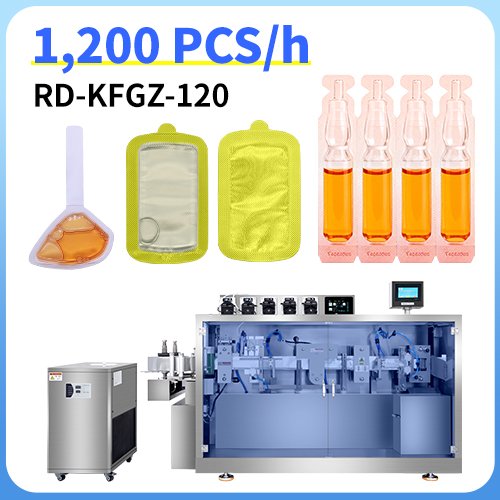
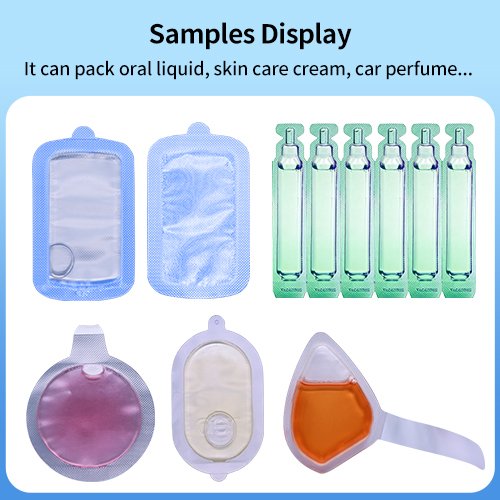
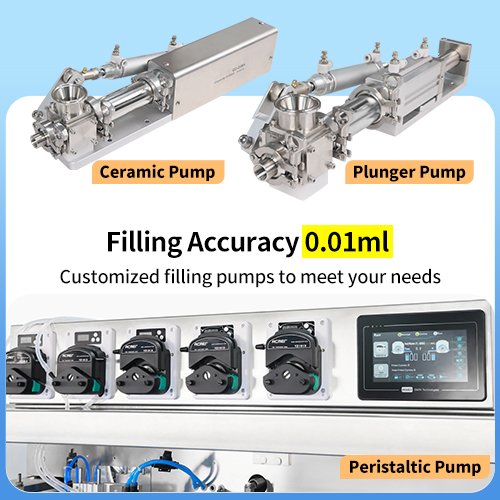
In modern pharmaceutical and nutraceutical manufacturing, liquid filling is no longer a simple mechanical process. It is a critical quality control point that directly affects product consistency, regulatory compliance, operational efficiency, and long-term production cost.
Among all components of a plastic ampoule filling and sealing machine, the filling pump plays a decisive role. Whether the product is an oral solution, injectable drug, eye drops, vaccine, cosmetic serum, or nutritional supplement, selecting the correct pump technology can significantly reduce risks while improving overall performance.
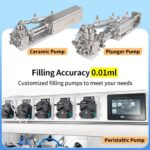
This article provides a comprehensive, practical comparison of three mainstream filling pump technologies widely used in regulated industries: Pompes péristaltiques, Piston Pumps, Ceramic Pumps.
Rather than focusing only on technical specifications, we will analyze each option from the perspective of accuracy, hygiene, entretien, total cost of ownership, and real-world application scenarios, helping decision-makers choose the most appropriate solution for their production needs.
Why Filling Pump Selection Matters More Than Ever
Regulatory authorities such as the FDA, EMA, and other global agencies place increasing emphasis on dose accuracy, cross-contamination prevention, and process repeatability. En même temps, manufacturers are under pressure to:
Reduce batch changeover time
Increase production efficiency
Control long-term operating costs
Maintain flexibility for multiple products
The filling pump is at the intersection of all these demands. A suboptimal choice may not cause immediate failure, but over time it can result in higher maintenance costs, inconsistent dosing, cleaning challenges, or even regulatory non-compliance.
Understanding the strengths and limitations of each pump type is therefore essential.
Pompes péristaltiques: Maximum Hygiene and Operational Flexibility
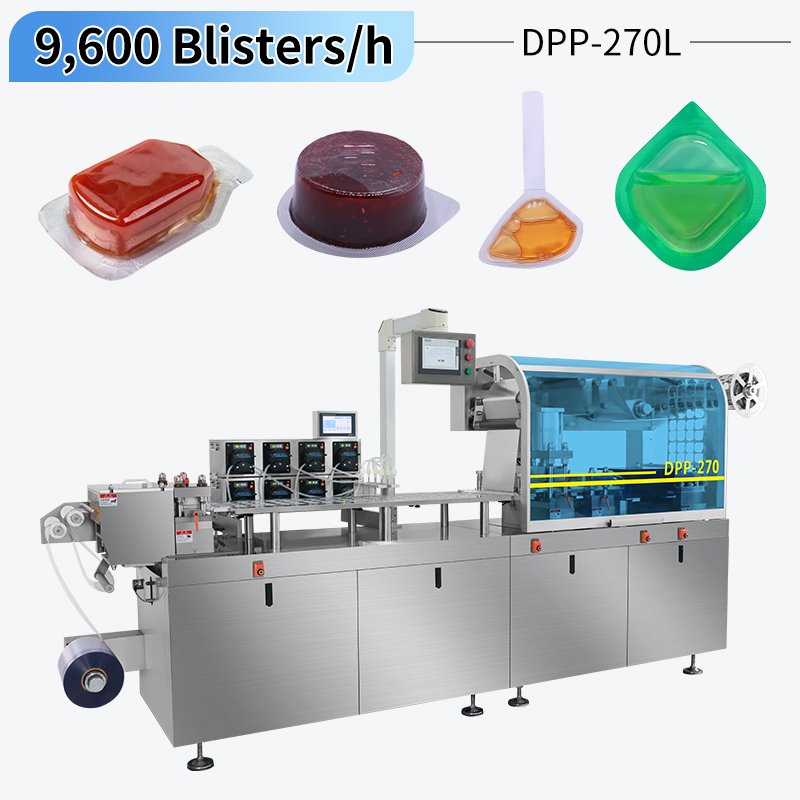
A peristaltic pump moves liquid by compressing and releasing a flexible tube using rotating rollers.
Surtout, the liquid only comes into contact with the inner wall of the disposable tube, never touching any mechanical components of the pump itself.
Filling Accuracy and Performance
Peristaltic pumps typically achieve a filling accuracy of approximately ±1–2%. Accuracy can be influenced by several factors, y compris:
Elastic fatigue of the tubing
Rotational speed stability
Liquid viscosity and temperature
While this level of precision is acceptable for many applications, it may not be sufficient for high-value or extremely dose-sensitive products.
Avantages
Outstanding contamination control: Since only the tube contacts the product, peristaltic pumps virtually eliminate the risk of cross-contamination. Changing products or batches often requires nothing more than replacing the tubing.
Excellent chemical compatibility: By selecting appropriate tubing materials, peristaltic pumps can handle corrosive, sensitive, or high-viscosity liquids with minimal risk.
Low initial investment: The pump structure is relatively simple, making peristaltic pumps the most cost-effective option at the equipment purchase stage.
Limitations to Consider
Higher long-term operating cost: Tubing is a consumable component and must be replaced regularly.
Moderate accuracy and consistency: Compared with piston or ceramic pumps, peristaltic pumps are less suitable for applications requiring extremely tight dosing tolerances.
Pulsation effects: The pumping action generates slight pulsation, which may affect uniformity in ultra-low volume filling.
Piston Pumps: High Accuracy for Demanding Production Environments
Piston pumps operate using a motor-driven piston that moves back and forth inside a precision-machined cylinder. During the suction stroke, liquid enters through an inlet valve. During the discharge stroke, the inlet valve closes, the outlet valve opens, and a fixed volume of liquid is dispensed.
Piston pumps are known for their excellent accuracy and repeatability, typically achieving ±0.5% or better. Performance is largely unaffected by variations in liquid viscosity or system pressure, making piston pumps highly reliable for demanding applications.
Avantages
Superior dosing precision: Piston pumps are often the preferred choice for expensive formulations, active pharmaceutical ingredients, and products where dosage consistency is critical.
Capability for high-pressure filling: They can reliably handle applications requiring higher filling pressures without compromising accuracy.
Stable, smooth flow options: Multi-head piston pump configurations can significantly reduce pulsation, delivering near-continuous flow.
Limitations to Consider
More complex cleaning and validation: Because liquid contacts pistons, scellés, and valves, cleaning procedures are more time-consuming and require careful validation to avoid residue and dead zones.
Sensitivity to particles: Liquids containing crystals or particulates may cause abrasion or valve blockage, reducing service life.
Ceramic Pumps: Premium Precision and Long-Term Stability
Ceramic pumps are a specialized form of rotary piston pump that use ceramic rotors and ceramic pump chambers. Through eccentric rotation, they create a continuous and smooth volumetric transfer of liquid. Advanced ceramic materials such as zirconia offer exceptional hardness and dimensional stability.
Ceramic pumps deliver ultra-high accuracy, often ±0.5% or better, comparable to or exceeding top-tier piston pumps. Due to the extremely low thermal expansion of ceramic materials, accuracy remains stable even during long production runs.
Avantages
Exceptional durability and accuracy retention: Ceramic components exhibit minimal wear, allowing the pump to maintain precision over a much longer service life than metal alternatives.
Outstanding cleanability and corrosion resistance: Mirror-smooth ceramic surfaces resist product adhesion, support CIP/SIP processes, and withstand aggressive chemicals.
Pulsation-free operation: The continuous flow characteristic ensures uniform filling, even for very small volumes.
Limitations to Consider
Highest initial investment: The manufacturing complexity of ceramic components makes these pumps the most expensive option upfront.
Material brittleness: Although extremely hard, ceramics are sensitive to impact and improper installation, requiring careful handling.
Comparative Overview of the Three Pump Technologies
| Fonctionnalité | Peristaltic Pump | Piston Pump | Ceramic Pump |
| Core Strength | No contamination, flexibility | Haute précision, pressure handling | Ultra-precision, durability |
| Précision | ±1–2% | ±0.5% or better | ±0.5% or better |
| Nettoyage | Extremely easy | Moderate complexity | Excellent (CIP/SIP capable) |
| Wear Parts | Tubing (consumable) | Seals, valves | Minimal |
| Initial Cost | Faible | Moyen-élevé | Haut |
| Long-Term Cost | Moyen-élevé | Moyen | Potentially low |
How to Choose the Right Filling Pump for Your Operation
There is no universally “best” filling pump—only the most appropriate solution for a specific product, process, and business model. Decision-makers should evaluate the following factors:
Required filling accuracy
Product value and sensitivity
Cleaning and validation requirements
Frequency of product changeover
Long-term operating and maintenance costs
Par exemple, a company producing multiple formulations in small batches may prioritize hygiene and flexibility, while a manufacturer of high-value injectables may focus on long-term precision and durability.
In Conclusion
Selecting a filling pump is a strategic decision that extends far beyond equipment price. It affects product quality, regulatory confidence, operational efficiency, and total cost of ownership throughout the equipment’s lifecycle.
By understanding the practical strengths and limitations of peristaltic, piston, and ceramic pumps, manufacturers can make informed decisions that align with both current production needs and long-term growth strategies.
For pharmaceutical and nutraceutical producers aiming to build robust, compliant, and future-ready filling lines, the right pump choice is not an expense—it is an investment in consistency, reliability, and trust.