


En la fabricación farmacéutica, La uniformidad del peso de las tabletas no es sólo una métrica: es un pilar no negociable del cumplimiento de las cGMP., seguridad del producto, y eficiencia operativa. La máquina prensadora de pastillas convencional a menudo tiene problemas con dosificaciones inconsistentes, generando costosos residuos, riesgos regulatorios, y fallas por lotes. En Ruidapacking, Hemos diseñado una máquina para fabricar tabletas de próxima generación que elimina la variabilidad a través de cuatro tecnologías revolucionarias., asegurando un error ≤±2% de uniformidad de peso y tasas de rechazo cercanas a cero.
La máquina prensadora de tabletas farmacéutica tradicional se basa en ajustes manuales del volante, un proceso lento., Proceso propenso a errores vulnerable a la fatiga y deriva del operador.. Nuestra solución:
Los servomotores impulsados por IA reemplazan los volantes mecánicos, ajuste continuo de la profundidad de relleno en tiempo real.
La retroalimentación de circuito cerrado compara el peso de cada tableta con los valores objetivo, haciendo microcorrecciones cada 0.5 artículos de segunda clase.
Resultado: Desviación de peso promedio sostenida ≤±2%, incluso con polvos higroscópicos o cohesivos.
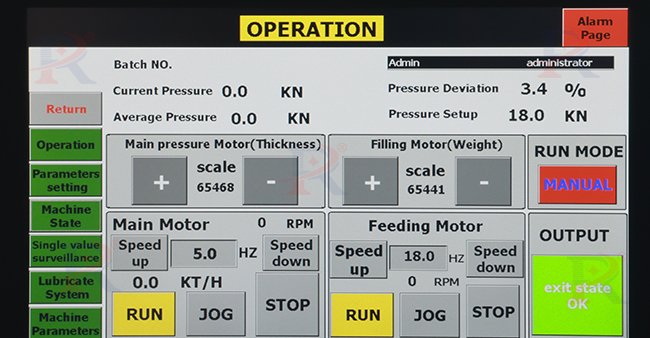
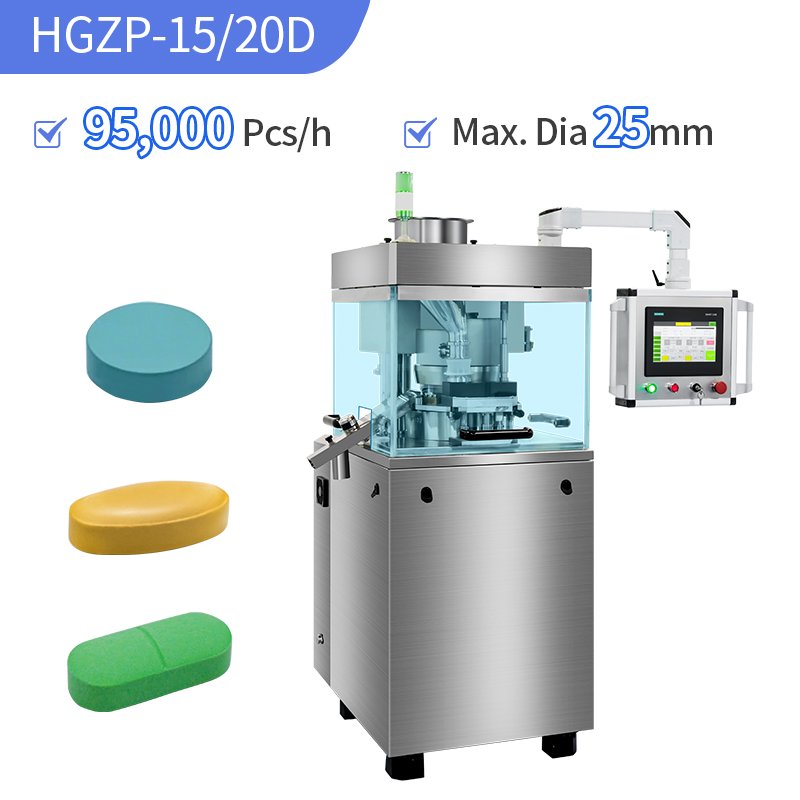
Esperar los resultados del laboratorio de control de calidad significa que miles de tabletas que no cumplen con las normas ingresan a flujos masivos. HGZP-15/20D previene esto de forma proactiva:
La tecnología de eyección de precisión elimina los valores atípicos con precisión quirúrgica, ya sea un rechazo continuo o de una sola tableta..
Impacto: Ninguna tableta fuera de especificación llega al empaque, Recortar los informes de desviación de cGMP en 99%.
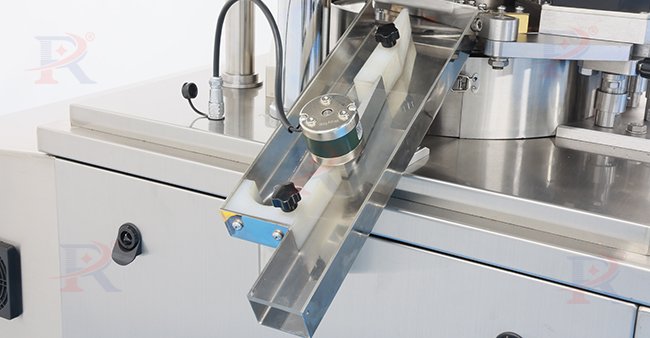
La segregación de polvo durante la alimentación provoca fluctuaciones de peso mortales. Esto lo combatimos con:
Agitadores asimétricos gemelos: Un agitador dosificador primario dosifica el polvo con precisión, mientras que un agitador homogeneizador secundario evita la estratificación de partículas..
Diseño anticavitación: Los agitadores patentados mantienen una densidad aparente uniforme a velocidades de ≥300 000 tabletas/hora.
Resultado: Se eliminó la deriva de peso debido a la sedimentación del material o al atrapamiento de aire..
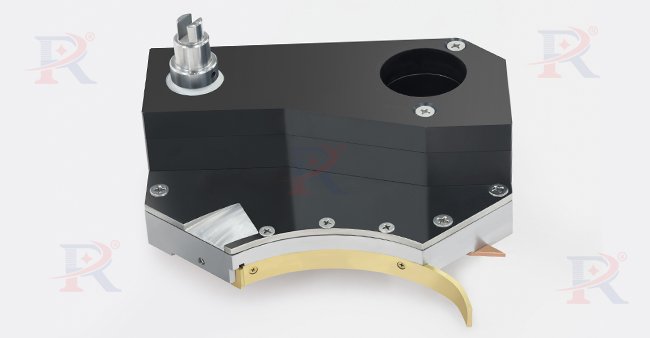
Variaciones ocultas en la longitud del punzón o consistencia del sabotaje por desgaste del troquel. Nuestra innovación:
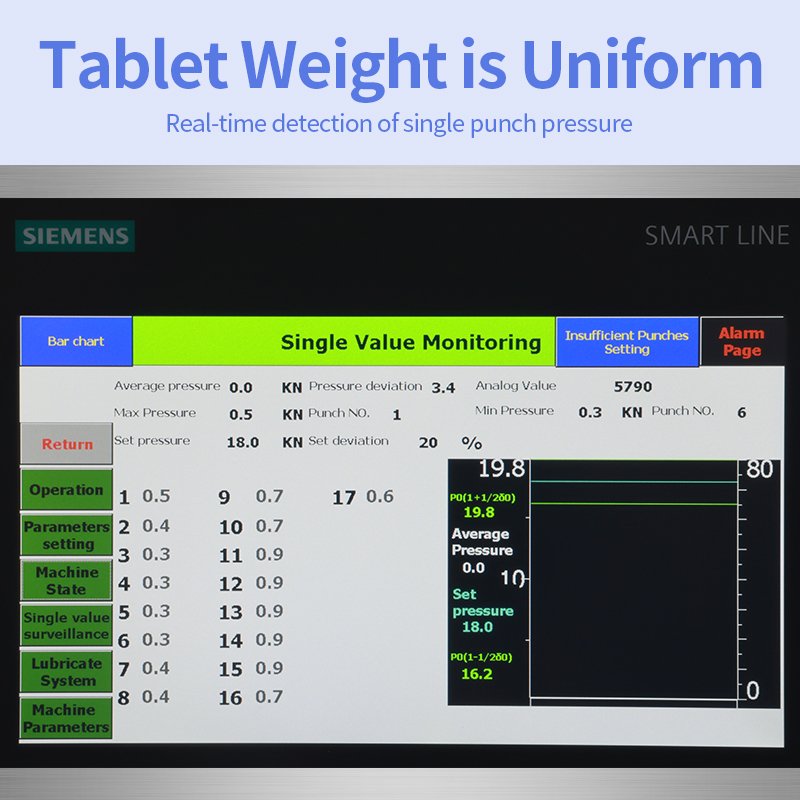
Sensores de presión en cada par de punzones: Monitorear la fuerza de compresión, perfil de eyección, y salud de las herramientas 200×/segundo.
Algoritmos de autoaprendizaje: Ajuste de forma predictiva la profundidad de llenado si las desviaciones de fuerza superan el ±5%, Compensar el desgaste de las herramientas o los cambios en la reología del polvo..
Ventaja: 40% mayor vida útil de las herramientas y 99.8% tasas de rendimiento de primer paso.
Mientras que las prensas de tabletas estándar generan una hemorragia de 3 millones de dólares al año en API desperdiciadas y retrabajos (para datos ISPE), nuestra tecnología ofrece:
Cero prejuicio humano: La automatización completa elimina los errores de muestreo manual.
Sostenibilidad: 90% Menos desperdicio de materia prima gracias a un rendimiento casi perfecto..
“En 2023, Las cartas de advertencia de la FDA citan la "variabilidad del peso de las tabletas"’ en 38% de violaciones de formas farmacéuticas sólidas orales. Nuestra máquina prensadora de tabletas de alta velocidad convierte el cumplimiento de un centro de costos en una ventaja competitiva.”
Las máquinas heredadas tratan el control de peso como una función aislada. Nuestra arquitectura integra el manejo de materiales., física de compresión, y garantía de calidad en un ecosistema unificado:
Ciencia de los materiales: Los alimentadores forzados dobles evitan la segregación: el #1 Causa de la variabilidad del peso en las prensas rotativas..
Ingeniería de precisión: La profundidad de llenado servocontrolada logra una precisión a nivel de micras inalcanzable con sistemas accionados por levas.
Farmacéutica 4.0: La conectividad OPC-UA exporta datos a MES para análisis de tendencias en vivo y mantenimiento predictivo..
La estabilidad del peso de las tabletas no se trata de agregar pasos de inspección, sino de diseñar la variabilidad fuera del proceso.. Incorporando inteligencia en cada subsistema (alimentación, compresión, expulsión), Nuestra máquina garantiza uniformidad que cumple con cGMP al tiempo que reduce los costos.. En una era de márgenes cada vez más reducidos y expectativas de calidad cada vez mayores, Esto no es ingeniería de lujo: es supervivencia..
El exceso de residuos de polvo en las torretas de las prensas de tabletas no solo es complicado: es una violación crítica de las cGMP que corre el riesgo de contaminación cruzada., pérdida de rendimiento, y acción regulatoria. Mientras 72% de los fabricantes farmacéuticos informan problemas de residuos en la torreta (por datos de la encuesta PDA), Ahora existen soluciones de ingeniería innovadoras para lograr una dispersión de polvo casi nula..
Violaciones de las cGMP: La migración de polvo viola la FDA 21 Parte CFR 211 requisitos de limpieza
Desperdicio de materiales: Hasta 5% Pérdida de API por lote ($300k+/año para biológicos)
Contaminación cruzada: El polvo residual se transporta entre lotes de productos.
Desgaste mecánico: Las partículas abrasivas aceleran el fallo del rodamiento de la torreta
En >50 Velocidades de torreta RPM, Las partículas finas se separan de los gránulos debido a la fuerza centrífuga.. Como azúcar saliendo de una rueda de bicicleta, el polvo pasa al aire, superficies de revestimiento.
Los raspadores de acero tradicionales requieren un espacio de 0,5 a 2 mm para evitar:
Daño por fricción de la torreta
Tabletas contaminantes de partículas metálicas
Este despacho ineludible se convierte en una vía de escape para las multas..
Baja densidad (<0.4 gramos/ml), bien (<50 micrón), o polvos cohesivos se comportan como “polvo farmacéutico,” fluidificando fácilmente bajo vibración.
Innovación de materiales: Politetrafluoroetileno (teflón) Cuchillas con coeficiente de fricción ultrabajo.
Optimización de brechas: Mantiene un espacio libre de 0,1 a 0,3 mm: un 80 % más ajustado que los raspadores de acero
Beneficios: Contención de polvo sin contacto metal con metal, Las propiedades autolubricantes eliminan la contaminación por grasa..
Canales integrados en torreta: Recoja el polvo escapado a través de los puertos de succión periféricos
Recicladores ciclónicos: Separar el material reutilizable de los residuos (90% tasa de recuperación)
Reintroducción automática: Retorno del polvo recuperado al alimentador forzado mediante líneas neumáticas
Boquillas de extracción localizada: Posicionado en la eyección de polvo “puntos de acceso”
Lógica de succión variable: Ajusta automáticamente el flujo según la reología del polvo.
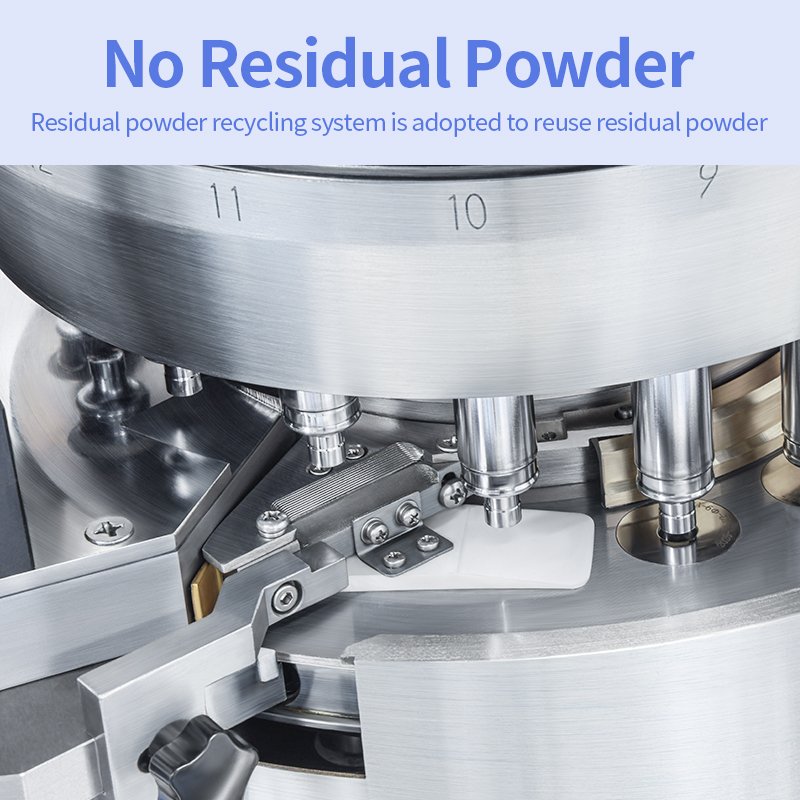
Esta prensa rotativa de próxima generación demuestra la eliminación de residuos a través de tres sistemas integrados:
Hoja primaria: 0.15mm de espacio para contención API
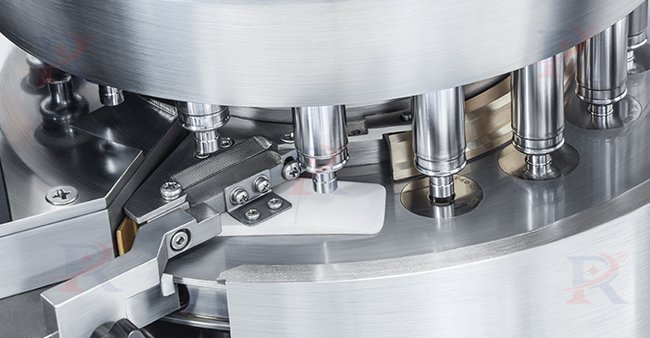
Los canales de recolección en ángulo redirigen el polvo al alimentador forzado
Las aletas de aislamiento evitan el reflujo durante la compresión.
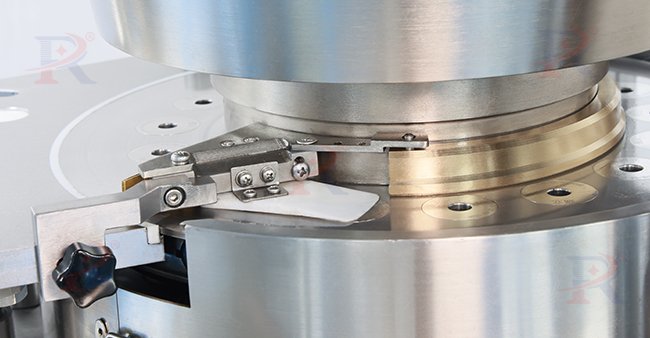
360° collar de succión alrededor de la periferia de la torreta
Resultado: 0.5% tasa de recuperación de material vs.. Pérdida promedio de la industria entre 4% y 7%.
Los residuos de polvo de la torreta provienen de la física, no negligencia. Reimaginando la tecnología raspadora, implementar recuperación de circuito cerrado, y aprovechar el control de succión activo, Las prensas modernas como la serie HGZP de Ruidapacking demuestran que se puede lograr una contención casi perfecta.. En una era de mayor escrutinio por parte de la FDA y API costosos, Esto no es opcional: es fabricación farmacéutica..