Choosing a tablet press manufacturer involves more than comparing machine output. Your tablet size, formulación, production volume and packaging plans all influence the equipment you need. En esta guía, we look at tablet press machine manufacturers from different markets, compare their rotary tablet press offerings and highlight practical questions to ask before you choose a supplier.
This guide is published by Ruida Packing and includes Ruida alongside other manufacturers. The order is for presentation and does not represent a performance ranking.
Tablet Press Manufacturers at a Glance
| Manufacturer | Tablet press focus | Application or buyer consideration |
|---|---|---|
| Compactación de Fette | FE rotary tablet presses with Fill-O-Matic feeding and containment versions. | Production projects where changeover and operator protection matter. |
| KORSCH | Rotary tablet presses for development and production, including exchangeable turret designs. | Tablet development and the transition toward production. |
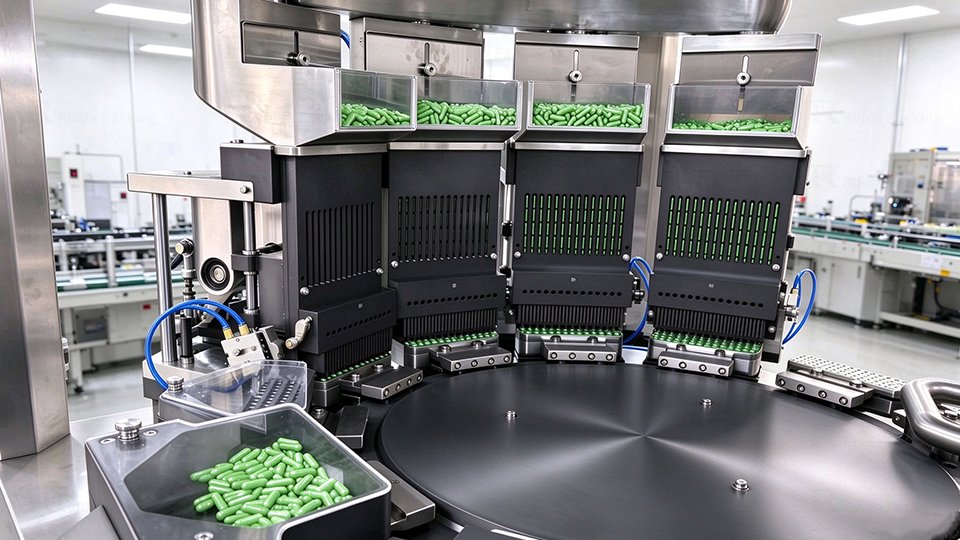
| Embalaje Ruida | Rotary and high-speed tablet presses; RQ-HGZP equipment combines forced feeding, monitoreo de presión, filling adjustment and tablet rejection. | Tablet production projects that also require counting, equipo de embotellado o envasado en blister. |
| Grupo IMA | PREXIMA production tablet presses, including bilayer capability on the PREXIMA 800. | High-volume or bilayer tablet projects. |
| GEA | NexGen tablet presses with Air Compensator technology and configurable compression modes. | Formulations that call for a specific compression approach or containment configuration. |
| Síntegono | TPR tablet presses for development and production; TPR 700 supports bilayer production with conversion parts. | Projects that need to account for tablet format and conversion parts. |
| ACG | PROTAB rotary tablet presses for development and production. | Formulation and tooling development before production scale-up. |
| Natoli Ingeniería | Rotary production tablet presses, including the NP-500 with extended compression dwell time. | Formulations where compression time is a consideration. |
| Cadmach | Tablet presses for multiple production scales and specialized tablet formats. | Tab-in-tab or trilayer tablet projects. |
| Kikusui Seisakusho | Rotary tablet presses for pharmaceutical and nutraceutical applications, including multilayer tablet press machines. | Bilayer or trilayer tablet production. |
How We Selected These Manufacturers
This guide features ten manufacturers that offer rotary tablet presses for pharmaceutical, nutraceutical and other production applications. They were selected to illustrate different equipment ranges, production scales and tablet formats, based on available manufacturer information. This is not an independent performance test or a ranking of the world’s best suppliers. Ruida Packing publishes this guide and is included in the selection; the order is for presentation only.
Tablet Press Machine Manufacturers
Compactación de Fette
Fette Compacting is based in Schwarzenbek, Germany, and specializes in equipment for industrial tablet production. Its portfolio includes tablet presses, tooling and process equipment for pharmaceutical, nutritional and chemical applications.
Its FE series uses the Fill-O-Matic feeding system to deliver powder into the tablet press. The series is designed with access for operation, changeover and maintenance, while the FE55 and FE75 also have containment versions for projects with operator-protection requirements.
KORSCH
KORSCH is a tablet compression specialist based in Berlin, Germany. Its rotary tablet press range covers product development and production, with equipment for different tablet formats and batch sizes.
The XL 100 is a small-scale rotary tablet press for development and clinical batches. Its exchangeable turret accommodates standard tooling sizes, and a mixed turret allows B and D tablet formats to be developed on the same turret.
Embalaje Ruida
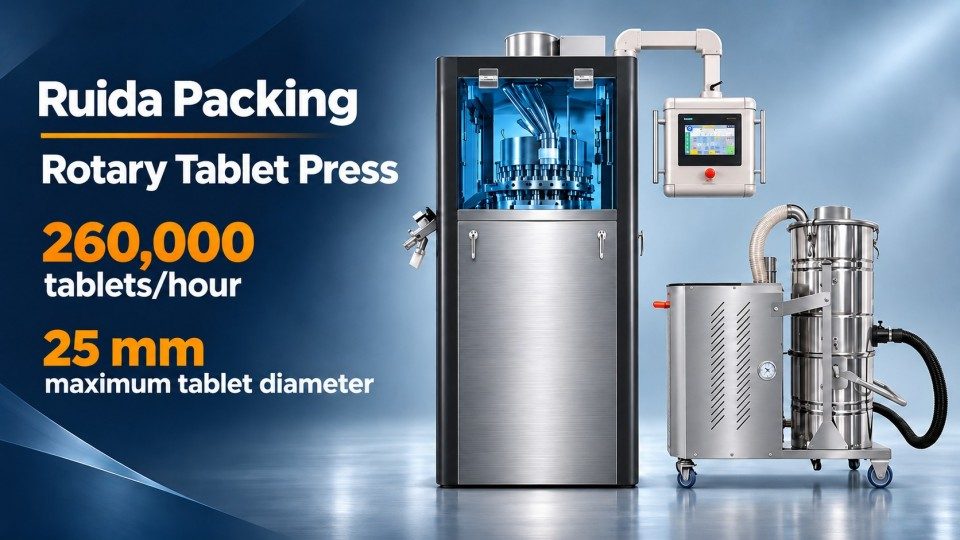
Maquinaria de embalaje Co. de Guangzhou Ruida., Limitado. is a Chinese manufacturer of pharmaceutical and packaging equipment. Its product range includes rotary tablet presses, tablet counting and bottling equipment, máquinas de envasado en blíster y estuchadores.
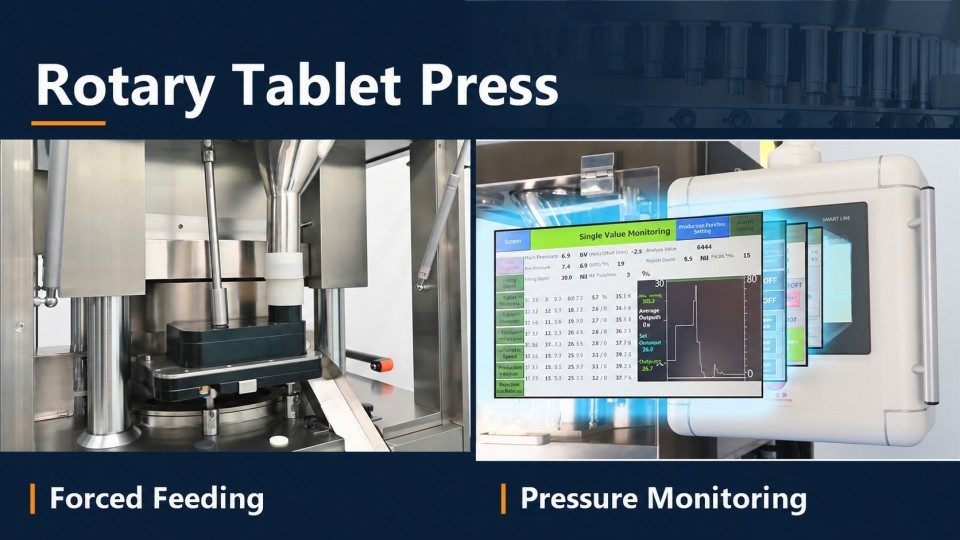
The RQ-HGZP high-speed tablet press series combines forced feeding, compression-pressure monitoring, automatic filling adjustment and tablet rejection. The feeder delivers powder or granules into the dies, while the control system monitors pressure and adjusts filling depth to help manage peso de la tableta.
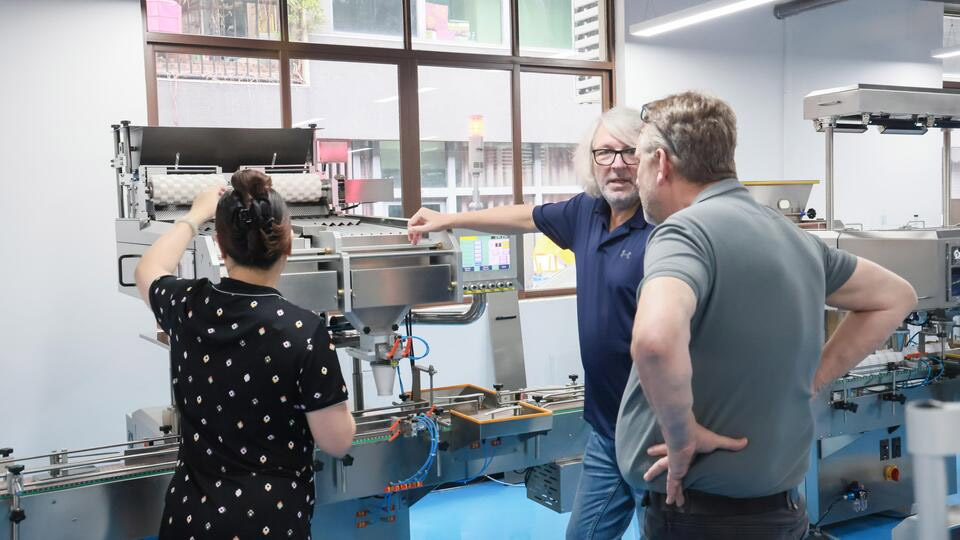
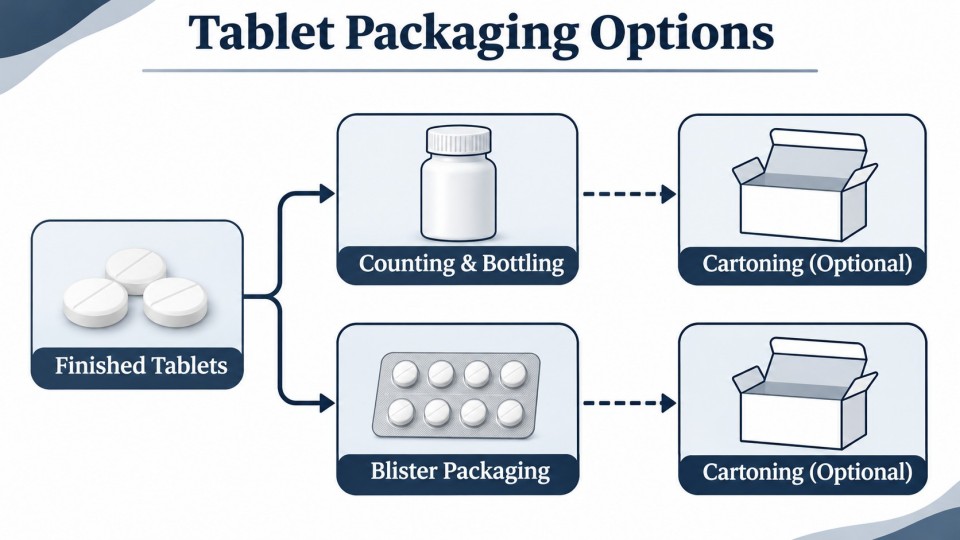
The RQ-HGZP-26D–40D series also uses precompresión and hydraulic pressure stabilization. For projects covering tablet production and packaging, Ruida supplies equipment for downstream bottling, blister packaging and cartoning. These equipment categories address different packaging formats: counting and bottling equipment places tablets into containers, while blister packaging equipment forms individual pockets for tablets.
Grupo IMA
IMA Group is an Italian manufacturer of automated processing and packaging equipment, with roots in Bologna. Its pharmaceutical business covers solid-dose processing as well as packaging machinery.
The PREXIMA range includes tablet presses for production. The PREXIMA 800 is designed for high-volume production and supports bilayer tablets, providing an option for projects that combine two layers in one tablet.
GEA
GEA is an engineering group headquartered in Düsseldorf, Germany. It supplies processing equipment for several industries, including pharmaceutical manufacturing; tablet presses are part of its equipment portfolio.
Its NexGen Press range uses Air Compensator technology at the pre-compression and main-compression stations. The system provides different compression modes; according to GEA, these can help address problems such as capping and sticking, depending on the formulation and settings.
Síntegono
Syntegon is a processing and packaging technology company headquartered in Waiblingen, Germany. Its pharmaceutical equipment portfolio includes TPR tablet presses for development and production.
The TPR 200 Plus is intended for research, clinical production and smaller batches. The TPR 700 addresses higher-volume production and supports bilayer tablets with conversion parts.
ACG
Founded in Mumbai, India, ACG supplies products for solid-dose manufacturing, incluyendo cápsulas, machinery, packaging materials and inspection solutions. Tablet compression is part of its machinery portfolio.
The PROTAB 300 is designed for research and small- to medium-batch production. Its turret supports the evaluation of different formulations and tooling, including applications involving pharmaceutical and nutraceutical granules.
Natoli Ingeniería
Natoli Engineering is headquartered in St. Charles, Missouri, en los Estados Unidos. In addition to tablet presses, it supplies compression tooling, replacement parts and related technical services.
Its production tablet press range covers different output requirements. The NP-500 is designed to extend compression dwell time—the time the tablet material remains under compression—an aspect relevant to formulations that require more time under pressure.
Cadmach
Cadmach is an Indian manufacturer of tablet presses and related pharmaceutical processing equipment. Its tablet press portfolio is organized around small, medium and high production scales.
The company also offers tablet presses for specialized tablet formats, including tab-in-tab and trilayer tablets. These machines address products with a different structure from a conventional single-layer tablet.
Kikusui Seisakusho
Kikusui Seisakusho is a Japanese machinery manufacturer based in Kyoto, with a history in pharmaceutical tablet production equipment. Its portfolio includes rotary presses for pharmaceutical, nutraceutical and other applications.
The range includes high-speed production tablet press machines as well as tablet presses designed for bilayer and trilayer tablets. These multilayer tablet press machines serve projects that require more than one layer within a tablet. When comparing multilayer equipment, identify the number of layers and tablet dimensions in the project brief: these requirements affect the tablet press configuration and tooling you need to discuss with each supplier.
How to Compare Tablet Press Manufacturers
Give each manufacturer the same project brief: tablet dimensions and target weight, características de formulación, tamaño del lote, required output and intended market. Ask each supplier to explain its proposed tablet press and identify what is included in the quotation.
Compare the Complete Proposal
Check the tablet press configuration alongside golpes, muere, estampación, auxiliary equipment and spare parts. If you produce several tablet formats, establish which parts are included for each format and which will require a separate purchase. Ask how the proposed operating output will be evaluated with your material rather than comparing catalogue maximums alone. For a fair comparison, give each manufacturer the same tablet specifications and ask it to explain the tooling and operating conditions behind its proposed output. Record the assumptions alongside the figure.
Consider Total Cost of Ownership
The initial machine price is only one part of the investment. Include tooling, replacement parts, instalación, entrenamiento del operador, maintenance and the time needed for cleaning and product changeover in your comparison. Check service arrangements and shipping costs for replacement parts in your market; these details can affect the cost of keeping the machine in production. For a facility that changes products regularly, compare the expected work involved in cleaning and replacing tooling. Also clarify which spare parts are included initially and which must be ordered separately.
Discuss Documentation and Downstream Equipment
For pharmaceutical projects, identify the technical and qualification documents your facility needs and ask what the manufacturer can provide. Discuss cleaning requirements, equipment records and electronic controls where relevant to your process and market. If you also plan to bottle or blister-pack tablets, include the packaging format and target output in the project brief. Ask how the proposed equipment will handle the tablet size and shape, and discuss the expected capacity of each stage. This helps you identify the equipment scope before comparing a complete project quotation.
Documents to request may include:
- Equipment specifications and technical drawings
- Operating, cleaning and maintenance manuals
- Material certificates for product-contact parts
- Factory acceptance test (GORDO) documentos, where agreed
- Installation qualification (coeficiente intelectual) and operational qualification (OQ) documentación, where required
- Calibration records for relevant instruments
Confirm which documents the manufacturer will provide and which your facility will prepare, based on the project and intended market.
Preguntas frecuentes
What information should I provide before requesting a tablet press quotation?
Provide the tablet size, target weight and shape, formulation or material characteristics, salida requerida, batch size and destination market. Include additional tablet formats and packaging plans. This information helps suppliers identify the tablet press, tooling and auxiliary equipment in their proposals and makes quotations easier to compare. If you expect to add another tablet format later, include it in the initial discussion so that extra tooling or future equipment changes can be identified.
What affects the price of a tablet press machine?
The machine configuration, capacidad de producción, estampación, controles, auxiliary equipment and requested documentation all affect a quotation. Instalación, capacitación, envío, spare parts and downstream packaging equipment can add to the project cost. Ask for an itemized proposal showing standard equipment, optional items and project services so that the quotations can be compared on the same basis.
What documents should I ask a tablet press manufacturer to provide?
Ask about equipment specifications, operating and maintenance manuals, and the technical documents required by your facility. For a pharmaceutical project, discuss qualification documentation and support, including IQ/OQ information where relevant. Agree on the document scope and delivery timing before ordering, using your facility requirements and intended market as the basis. It is useful to ask which documents are included in the equipment price and which require a separate quotation. You can also confirm the language and format of the manuals and the contact for technical questions after delivery.
Can a tablet press manufacturer help with packaging equipment?
Sí. Some suppliers also provide tablet counting and bottling systems, blister packaging machines or cartoners. Check which equipment the supplier offers and whether its proposed packaging equipment suits your tablet and packaging format. If you are comparing a complete project, ask the supplier to identify each machine and any associated accessories in the quotation. This makes it easier to understand what is included and what still needs to be sourced.
Conclusión
The right tablet press manufacturer is the one whose equipment and support match your product and production plan. A clear project brief helps suppliers explain the machine, tooling and services they propose, so you can assess their quotations against the same requirements. Compare manufacturers using the same tablet specifications, output requirements and quotation details, then review the tooling, documentation and service included in each proposal.
Ruida Packing supplies rotary tablet presses and tablet packaging equipment. Contacte con Ruida Packing to discuss your tablet specifications, target output and packaging requirements.