giới thiệu
Bao bì linh hoạt không phải là kiểu một gói. Đây là một danh mục bao bì rộng được xây dựng dựa trên các vật liệu và định dạng có thể uốn cong, nếp gấp, niêm phong, hoặc phù hợp với sản phẩm, không giống như chai, lọ, khay, và các vật chứa cứng khác có hình dạng cố định. Sự khác biệt đó ảnh hưởng nhiều hơn đến ngoại hình. Nó thay đổi cách đóng gói sản phẩm, đã vận chuyển, được lưu trữ, đã mở, và được bảo vệ trong suốt phần còn lại của tuyến đường.
Dành cho người mua và người lập kế hoạch đóng gói, câu hỏi thực sự không phải là liệu bao bì linh hoạt có tự động tốt hơn hay không. Câu hỏi hay hơn là tuyến đường nào phù hợp với sản phẩm, mục tiêu rào cản, kế hoạch hậu cần, và thói quen của người dùng một cách tự nhiên hơn. Đó là lý do tại sao bao bì dẻo liên tục xuất hiện ở dạng bột, chất lỏng, gói nạp tiền, Và phục vụ một lần định dạng, trong khi bao bì cứng vẫn giữ một vị trí quan trọng trong nhiều ứng dụng cần cấu trúc chắc chắn hơn hoặc phân phối lặp đi lặp lại.
Bao bì linh hoạt là gì?
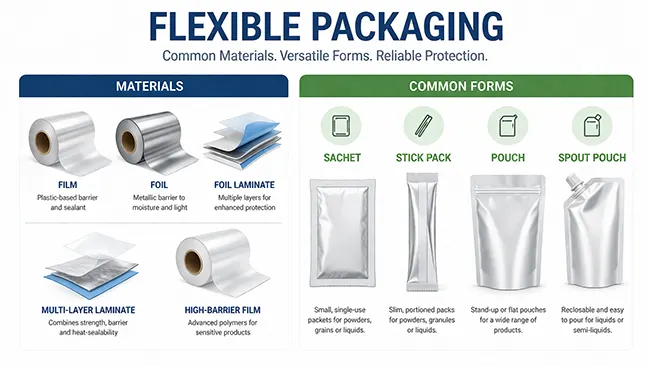
Bao bì linh hoạt là bao bì được làm từ vật liệu hoặc cấu trúc không giữ được hình dạng cứng vĩnh viễn giống như chai, lọ, lon kim loại, hoặc khay cứng. Nó thường được xây dựng từ giấy, phim ảnh, giấy bạc, hoặc sự kết hợp nhiều lớp của các vật liệu này và được sử dụng ở dạng có thể được niêm phong, cán, gấp lại, hoặc hình thành xung quanh sản phẩm.
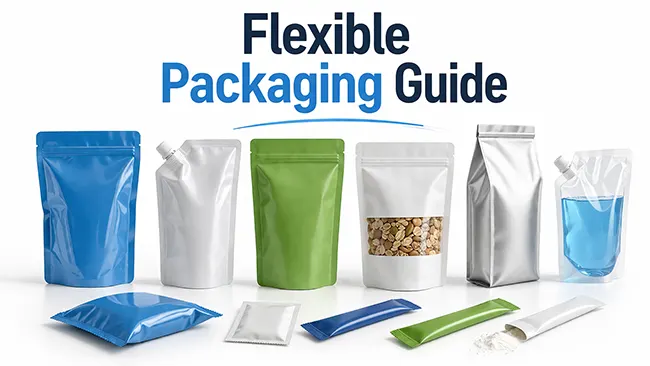
Điều này quan trọng vì nhiều người sử dụng thuật ngữ này như thể nó chỉ có nghĩa là túi. Trong thực tế, danh mục rộng hơn. Tùy thuộc vào sản phẩm và dòng, bao bì linh hoạt có thể bao gồm gói, gói dính, túi, gói dựa trên rollstock, kết thúc tốt đẹp, kết cấu nắp, và các loại định dạng khác được xây dựng từ vật liệu linh hoạt. Một số được thiết kế để sử dụng một lần. Những người khác có nghĩa là để nạp tiền, đóng lại, hoặc xử lý nhiều gói. Điểm chung không chỉ ở hình dáng. Thực tế là gói hàng dựa trên cấu trúc vật liệu linh hoạt chứ không phải là thành thùng chứa hoàn toàn cứng nhắc..
Dành cho nhóm sản phẩm, thể loại này thường trở nên hấp dẫn khi cân nặng, kích thước gói, hiệu quả lưu trữ, hoặc vấn đề kiểm soát phần. Bao bì này có thể làm giảm không gian không sử dụng, vận chuyển số lượng lớn thấp hơn, và hỗ trợ các tuyến định dạng nhỏ hoặc phục vụ một lần dễ dàng hơn nhiều tùy chọn cứng nhắc. Đồng thời, nó không tự động là câu trả lời đúng cho mọi sản phẩm. Nhu cầu bảo vệ, giữ hình dạng, yêu cầu rào cản, và điều kiện xử lý vẫn quyết định liệu một tuyến đường linh hoạt có hợp lý hay không.
Các loại bao bì linh hoạt phổ biến
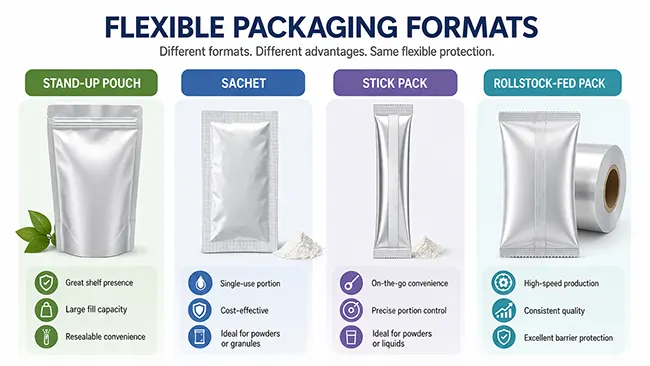
Cách dễ nhất để hiểu bao bì linh hoạt là xem xét các định dạng. Túi đựng là ví dụ quen thuộc nhất, nhưng chúng chỉ là một phần của thể loại. gói, gói dính, cấu trúc bọc dòng chảy, gói, màng bọc, và các gói được cho ăn bằng xe lăn đều thuộc cùng một họ rộng hơn.
Mỗi định dạng giải quyết một vấn đề đóng gói khác nhau. Túi đứng có thể chứa khối lượng đổ đầy lớn hơn mà không cần di chuyển vào đường chai hoặc lọ. Một gói hoạt động tốt hơn khi mục tiêu nhỏ gọn, gói phần kín. Một gói gậy đi xa hơn về phía thu hẹp, cầm tay, sử dụng một lần. Bản thân Rollstock không phải là một định dạng hướng tới người tiêu dùng, nhưng nó là một con đường sản xuất chính vì nó cung cấp năng lượng cho thiết bị hình thành, lấp đầy, và niêm phong nhiều gói linh hoạt trực tuyến.
Những khác biệt này rất quan trọng vì bao bì linh hoạt không phải là một quyết định. Một loại bột, một chất lỏng đo, và một sản phẩm nạp lại đều có thể sử dụng bao bì này, nhưng không giống nhau. Kích thước sản phẩm, điền vào phong cách, sử dụng mẫu, nhu cầu đóng cửa lại, và rào cản đòi hỏi mọi ảnh hưởng đến định dạng linh hoạt nào có ý nghĩa.
Bao bì linh hoạt khác với bao bì cứng nhắc như thế nào
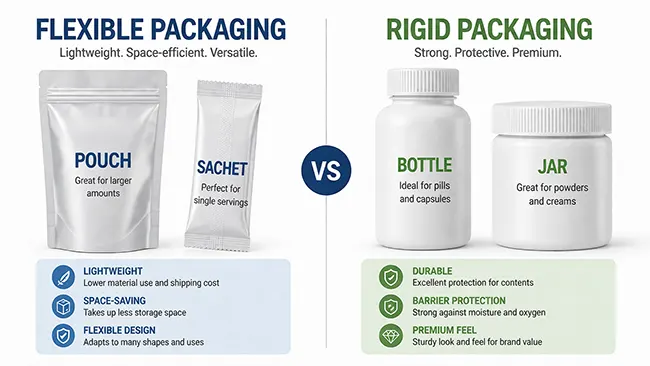
Sự khác biệt cốt lõi là cấu trúc. Bao bì linh hoạt thay đổi hình dạng dễ dàng hơn và thường phụ thuộc vào màng, giấy bạc, giấy, hoặc vật liệu dẻo nhiều lớp. Bao bì cứng chắc có hình thức cố định riêng, ngay cả khi trống rỗng. Sự khác biệt đó ảnh hưởng đến dung lượng lưu trữ, hành vi vận chuyển, xử lý người dùng, và mức độ bảo vệ của gói hàng đến từ chính vách container.
Về mặt thực tế, Bao bì linh hoạt thường làm giảm số lượng bao bì rỗng và trọng lượng bao bì. Điều đó có thể cải thiện hiệu quả vận chuyển và sử dụng kho, đặc biệt là khi sản phẩm không cần hộp đựng tự hỗ trợ. Bao bì cứng nhắc thường có ưu điểm khi giữ được hình dáng, mở lặp đi lặp lại, xếp chồng ổn định, hoặc cấu trúc bên ngoài bền hơn quan trọng hơn sự nhỏ gọn.
Trải nghiệm người dùng cũng thay đổi. Các định dạng linh hoạt thường phù hợp với các gói khẩu phần, định dạng du lịch, kích thước thử nghiệm, và các gói bán lẻ nhỏ gọn một cách tự nhiên hơn. Các định dạng cứng nhắc thường mang lại cảm giác quen thuộc hơn khi phân phối nhiều lần, kệ lưu trữ sau khi mở, hoặc các sản phẩm được sử dụng theo thời gian từ cùng một thùng chứa.
Bàn: Sơ lược về bao bì linh hoạt và bao bì cứng nhắc
| Khía cạnh | Bao bì linh hoạt | Bao bì cứng nhắc |
| Kết cấu | uốn cong, nếp gấp, hoặc phù hợp | Giữ hình dạng cố định |
| Dấu chân gói rỗng | Thường nhỏ hơn | Thường lớn hơn |
| Trọng lượng vận chuyển | Thường thấp hơn | Thường cao hơn |
| Hiệu quả lưu trữ | Thường tốt hơn cho việc đóng gói nhỏ gọn | Thường tốt hơn cho việc xếp chồng ổn định |
| Sự phù hợp của từng phần | Thường mạnh mẽ | Thường yếu hơn trừ khi sử dụng các định dạng cứng nhắc nhỏ |
| Phân phối lặp đi lặp lại | Có thể ít thuận tiện hơn tùy thuộc vào định dạng | Thường mạnh hơn |
| Giữ hình dạng | Thấp hơn | Cao hơn |
| Trình điều khiển quyết định điển hình | Cân nặng, sự nhỏ gọn, kiểm soát khẩu phần, tuyến đường linh hoạt | Kết cấu, sử dụng lặp lại, kệ ổn định, hình thức bên ngoài mạnh mẽ hơn |
Sự so sánh không phải là việc chọn ra người chiến thắng vĩnh viễn. Bao bì linh hoạt thường hỗ trợ tính hiệu quả và gọn nhẹ. Bao bì cứng nhắc thường hỗ trợ cấu trúc và xử lý lặp lại. Lộ trình phù hợp phụ thuộc vào vai trò nào quan trọng hơn đối với sản phẩm thực tế.
Chi phí như thế nào, vận chuyển, và Lưu trữ Thay đổi Quyết định
Chi phí thường là nơi cuộc trò chuyện bắt đầu, nhưng chỉ riêng chi phí vật chất hiếm khi đưa ra câu trả lời đầy đủ. Bao bì linh hoạt thường sử dụng ít vật liệu hơn, chiếm ít không gian hơn trước khi lấp đầy, và có thể cải thiện mật độ vận chuyển. Đối với bột, hạt, và nhiều sản phẩm dùng một lần, có thể tạo ra sự khác biệt rõ ràng giữa kho bãi và phân phối.
Vận chuyển là nơi sự tương phản trở nên thiết thực hơn. Một cái bật lửa, gói phẳng hơn có thể cải thiện hiệu quả vụ việc, giảm số lượng xử lý, và hỗ trợ các định dạng dễ vận chuyển hơn với số lượng lớn. Đây là một lý do khiến bao bì linh hoạt tiếp tục xuất hiện ở các định dạng thân thiện với thương mại điện tử, trường hợp sử dụng di động, và các sản phẩm theo khẩu phần.
Bao bì cứng nhắc vẫn có thể có ý nghĩa kinh tế. Một cái chai, cái lọ, hoặc lồng giặt có thể bảo vệ sản phẩm tốt hơn trong quá trình xử lý nhiều lần, có thể hiển thị rõ ràng hơn trên kệ, hoặc có thể phù hợp hơn với cách bảo quản và sử dụng sản phẩm sau khi mở. Một lộ trình trông đắt tiền hơn nếu chỉ tính riêng vật liệu đóng gói vẫn có thể hợp lý hơn khi bảo vệ sản phẩm, xử lý ổn định, và việc sử dụng lặp lại được tính đến.
Sự so sánh tốt hơn là tổng logic tuyến đường, không phải giá mỗi gói riêng biệt. Vật liệu, kho, chuyên chở, nguy cơ thất thoát sản phẩm, điền định dạng, và việc xử lý của người dùng đều có cùng một quyết định.
Trường hợp bao bì linh hoạt thường hoạt động tốt hơn
Bao bì linh hoạt thường hoạt động tốt hơn khi sản phẩm được chia thành nhiều phần, nhẹ, hoặc rất phù hợp với việc phân phối định dạng nhỏ. Bột là một ví dụ rõ ràng. gói, gói dính, và túi có thể cung cấp lượng đổ đầy đã đo mà không buộc sản phẩm phải chuyển vào chai hoặc lọ lớn hơn. Logic tương tự thường được áp dụng cho các hạt và chất lỏng đo được, đặc biệt là khi tính di động, sử dụng mẫu, hoặc các vấn đề trình bày phục vụ một lần.
Đây là nơi các định dạng sản phẩm hiện đại ảnh hưởng đến lộ trình đóng gói. Gói du lịch, gói dùng thử, gói nạp tiền, gói khẩu phần, và các sản phẩm khi di chuyển thường phù hợp với bao bì linh hoạt một cách tự nhiên hơn vì định dạng này hỗ trợ khối lượng nhỏ hơn và mang theo dễ dàng hơn. Trong nhiều trường hợp, mỗi khẩu phần có thể được giữ kín cho đến khi sử dụng, điều này cũng làm giảm khả năng tiếp xúc nhiều lần sau khi mở.
Lộ trình này không giới hạn trong một ngành. Logic gói tương tự có thể áp dụng trên các chất bổ sung, bột thực phẩm, đồ uống cô đặc, sản phẩm gia dụng, mẫu chăm sóc cá nhân, và các sản phẩm nhỏ gọn khác. Sự phù hợp mạnh nhất thường xuất hiện khi kích thước sản phẩm, sự tiện lợi, và hiệu quả đóng gói đều đi theo cùng một hướng.
Trường hợp bao bì cứng nhắc vẫn có ý nghĩa hơn
Bao bì cứng cáp vẫn có điểm mạnh rõ ràng. Nó thường có ý nghĩa hơn khi sản phẩm cần giữ hình dạng chắc chắn hơn, phân phối lặp đi lặp lại dễ dàng, hoặc một thùng chứa đứng thẳng và ổn định sau khi mở. Chai, lọ, bồn tắm, và các dạng tương tự thường phù hợp với những sản phẩm được mở nhiều lần và sử dụng trong thời gian dài hơn là tiêu thụ theo từng phần kín.
Các dạng cứng cũng có thể là lựa chọn an toàn hơn khi sản phẩm dễ bị nghiền nát hơn, khi việc trưng bày kệ phụ thuộc vào hình dạng hộp đựng chắc chắn, hoặc khi danh mục được liên kết chặt chẽ với chai hoặc lọ. Đôi khi sự phù hợp về mặt kỹ thuật chỉ là một phần của câu trả lời. Kỳ vọng của người mua cũng quan trọng.
Đây là lý do tại sao bao bì linh hoạt không nên được coi là một bản nâng cấp phổ biến. Nó thường cải thiện hiệu quả gói và tính di động, nhưng bao bì cứng nhắc vẫn hoạt động tốt hơn khi sản phẩm cần lớp đỡ bên ngoài chắc chắn hơn hoặc hộp đựng sử dụng nhiều lần quen thuộc hơn.
Tại sao rào cản cần thay đổi quyết định đóng gói
Cơ cấu chỉ là một phần của quyết định. Nhu cầu rào cản có thể thay đổi câu trả lời một cách nhanh chóng. Sản phẩm nhạy cảm với độ ẩm, ôxy, ánh sáng, mất mùi thơm, hoặc thu thập hương vị có thể cần nhiều hơn một định dạng nhỏ gọn. Nó có thể cần một cấu trúc vật liệu và phương pháp niêm phong có thể bảo vệ sản phẩm trong quá trình bảo quản, vận chuyển, và sử dụng thực tế.
Đây là lúc bao bì linh hoạt có thể hoạt động rất tốt hoặc thất bại vì những lý do sai lầm.. Một tấm phim mỏng hoặc phim có rào cản cao phù hợp có thể hỗ trợ các mục tiêu bảo vệ đòi hỏi khắt khe. Cấu trúc kém phù hợp có thể tạo ra rủi ro không đáng có, ngay cả khi gói cuối cùng trông tiện lợi và hiện đại.
Chất lượng niêm phong cũng quan trọng như việc lựa chọn vật liệu. Việc lựa chọn vật liệu kỹ càng không giúp ích nhiều nếu lớp niêm phong không nhất quán hoặc nếu đường đi khiến gói hàng chịu nhiều áp lực hơn dự kiến. Mục tiêu về thời hạn sử dụng, điều kiện khí hậu, điều kiện vận chuyển, và hành vi mở đều ảnh hưởng đến việc gói đã chọn có còn phù hợp sau lần sản xuất đầu tiên hay không.
Bao bì linh hoạt có ý nghĩa gì đối với việc lựa chọn thiết bị
Khi lộ trình đóng gói đã rõ ràng, việc lựa chọn thiết bị trở nên dễ dàng hơn nhiều. Bao bì linh hoạt không phải là một loại máy. Các định dạng khác nhau hướng tới các tuyến thiết bị khác nhau.
Gói và gói khẩu phần nhỏ gọn thường hướng tới một Máy đóng gói túi. Túi đứng, túi dây kéo, và các định dạng linh hoạt được tạo sẵn khác phù hợp một cách tự nhiên hơn với Máy đóng gói túi làm sẵn tuyến đường. Một loại bột trong một gói, một chất lỏng đo trong một gói que, và một túi làm sẵn lớn hơn đều có thể nằm trong bao bì linh hoạt, nhưng họ không tạo ra câu hỏi về thiết bị tương tự. Đường dẫn phim, phong cách niêm phong, điền vào chiều rộng, phương pháp định lượng, và phương thức xả tất cả đều thay đổi với định dạng đã chọn.
Bao bì thứ cấp cũng quan trọng. Nếu tuyến bán hàng cuối cùng cần số lượng gói hoặc hộp bán lẻ có sẵn trên kệ, dòng có thể tiếp tục vào một Máy đóng hộp sau bước gói linh hoạt chính. Điều đó có nghĩa là việc lựa chọn bao bì không chỉ ảnh hưởng đến chính bao bì mà còn, mà còn cả đường dẫn điền, tuyến đường niêm phong, xử lý sản phẩm, và trình bày cuối cùng.
Những Sai Lầm Thường Gặp Khi Lựa Chọn Giữa Bao Bì Mềm Và Bao Bì Cứng
Một sai lầm phổ biến là chỉ so sánh giá gói. Điều đó che giấu bức tranh lớn hơn. vận chuyển, kho, hiệu quả đóng gói, xử lý tổn thất, kiểm soát khẩu phần, và kiểu sử dụng của người dùng cuối thường quan trọng bằng chi phí cơ bản của gói.
Một sai lầm khác là coi tất cả các định dạng linh hoạt là có thể hoán đổi cho nhau. Một túi không phải là quyết định giống như một gói. Một gói không giống như một gói que. Tuyến đường được làm sẵn không giống với tuyến đường được cho ăn bằng xe lăn. Những khác biệt đó ảnh hưởng đến cả thiết bị và mục đích sử dụng cuối cùng.
Sai lầm thứ ba là để việc lập kế hoạch rào cản quá muộn. Nếu các yêu cầu về độ ẩm hoặc thời hạn sử dụng trở nên khắt khe hơn dự kiến, cấu trúc gói có thể cần thay đổi sau khi định dạng đã được sửa.
Sai lầm phổ biến cuối cùng là quyết định gói trước và đặt câu hỏi về thiết bị sau. Thứ tự tốt hơn là xác định nhu cầu sản phẩm, xác định vai trò đóng gói, và sau đó xác nhận định dạng, vật liệu, và đường dẫn máy với nhau.
Phần kết luận
Bao bì linh hoạt bao gồm nhiều tuyến đường vì nhiều sản phẩm được hưởng lợi từ bao bì nhỏ gọn, số lượng lớn thấp hơn, kiểm soát khẩu phần, hoặc tiện lợi dùng một lần. Bao bì cứng nhắc vẫn giữ được vị trí rõ ràng khi kết cấu chắc chắn hơn, phân phối lặp đi lặp lại, kệ lưu trữ ổn định, hoặc hình dạng thùng chứa quen thuộc quan trọng hơn.
Quyết định đóng gói mạnh mẽ nhất thường xuất phát từ việc kết hợp sản phẩm với lộ trình, không phải từ việc chọn định dạng nghe có vẻ hiện đại hơn. Khi hình thức sản phẩm, mục tiêu rào cản, xử lý nhu cầu, và đường dẫn thiết bị được xem xét cùng nhau, sự lựa chọn trở nên dễ dàng hơn nhiều để bảo vệ.
Câu hỏi thường gặp
Bao bì linh hoạt là gì?
Bao bì mềm là loại bao bì được làm từ vật liệu có thể uốn cong, nếp gấp, niêm phong, hoặc phù hợp với sản phẩm thay vì giữ một hình dạng cứng nhắc cố định.
Những sản phẩm nào thường phù hợp với bao bì linh hoạt nhất?
Bột, hạt, chất lỏng đo, gói mẫu, gói nạp tiền, và nhiều sản phẩm dùng một lần đều phù hợp.
Bao bì linh hoạt luôn có giá thấp hơn?
Không tự động. Nó thường làm giảm cân, không gian, và một số chi phí hậu cần, nhưng câu trả lời đầy đủ phụ thuộc vào cấu trúc vật chất, nhu cầu rào cản, bảo vệ sản phẩm, và tuyến đường đóng gói đã chọn.
Bao bì cuộn là gì?
Bao bì dạng cuộn dùng để chỉ vật liệu đóng gói được cung cấp ở dạng cuộn cho các tuyến thiết bị hình thành, đổ đầy, và niêm phong các gói hàng trong quá trình sản xuất thay vì bắt đầu từ một thùng chứa cứng nhắc làm sẵn.
Khi nào bao bì cứng nhắc vẫn có ý nghĩa hơn?
Bao bì cứng nhắc thường có ý nghĩa hơn khi sản phẩm cần giữ hình dạng chắc chắn hơn, phân phối lặp đi lặp lại, kệ lưu trữ ổn định, hoặc một hộp đựng có thể tái sử dụng quen thuộc.
Thiết bị nào thường được sử dụng cho các định dạng đóng gói linh hoạt?
Các tuyến phổ biến bao gồm Máy đóng gói gói, Máy đóng gói que, Máy đóng gói túi làm sẵn, Và, khi cần thiết cho bao bì thứ cấp, một máy đóng thùng.