फार्मास्युटिकल में, पौष्टिक-औषधीय, खाना, and daily chemical manufacturing, packaging efficiency is no longer just a supporting process—it has become a critical component of production competitiveness. As companies pursue higher productivity, stricter quality control, and reduced labor dependence, automated packaging technologies have rapidly evolved.
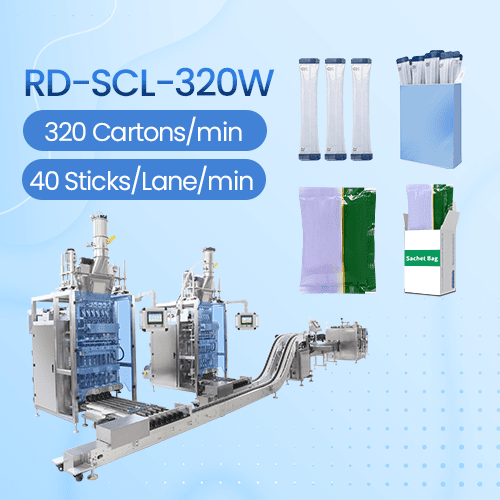
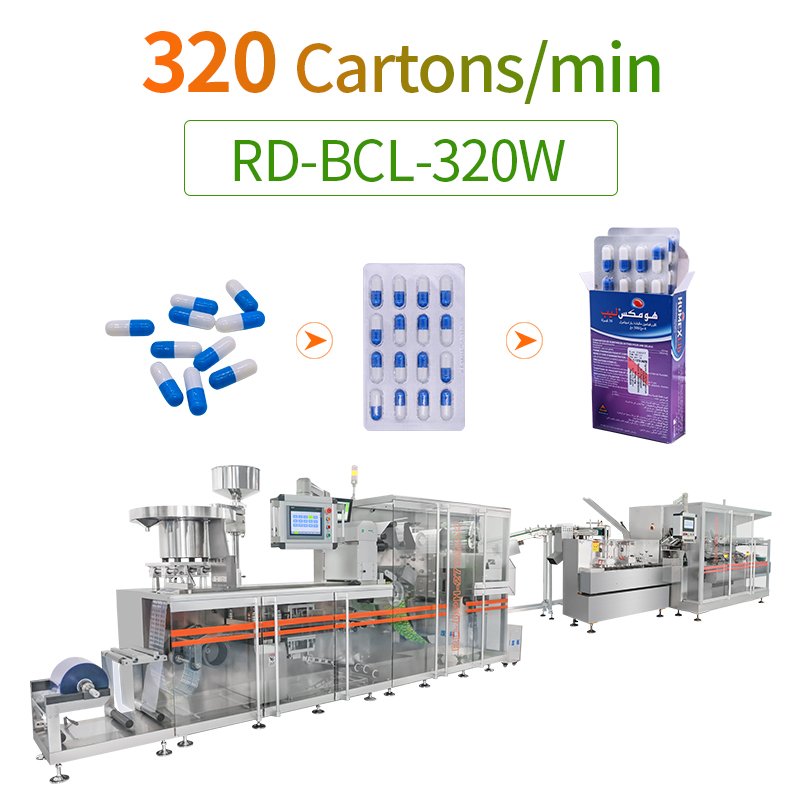
Among these innovations, the strip pack cartoning integrated production line has emerged as an important branch of packaging automation. This technology connects strip packaging machines directly with cartoning machines through intelligent conveying, गिनती, and feeding systems. The result is a continuous process that transforms loose materials into neatly packed retail-ready cartons.
This article explores the key aspects of strip cartoning packing line technology, including factory layout design, strip packaging machine principles, conveying and replenishment systems, customized cartoning processes, and modern quality control methods.
The Evolution of Packaging Automation
Traditionally, strip packaging machine and कार्टनिंग मशीन were often installed in separate areas of a factory. After strip packaging, operators manually collected and transported the small sachets or strip packs to the cartoning station. While this approach was common for decades, it created several operational problems:
Large volumes of work-in-progress inventory
Increased labor requirements
Inefficient material handling
Higher contamination risk
Lower overall production efficiency
Today, manufacturers are shifting toward fully integrated packaging lines that eliminate these inefficiencies. By connecting strip packaging machines directly with cartoners, products move continuously through the packaging process with minimal manual intervention.
This transformation not only improves productivity but also supports stricter regulatory compliance and traceability requirements common in pharmaceutical and nutraceutical industries.
Smart Factory Layout: From Fragmented Production to Integrated Systems
A successful strip pack cartoning line begins with intelligent factory layout planning. Traditional horizontal production layouts often require large floor areas and create complex logistics paths for materials and operators.
Modern packaging facilities increasingly adopt three-dimensional spatial layouts to maximize production efficiency while conserving space.
Vertical Integration Design
In manufacturing facilities, strip packaging machines are positioned at lower levels while overhead conveying systems transport finished strip packs to cartoning machines located downstream.
This design offers several advantages:
Efficient use of vertical factory space
Reduced floor congestion
Shorter material transport distances
Improved workflow organization
By transferring strip packs via elevated conveyors, products can be delivered directly above the cartoning station, where they are buffered and fed into the cartoning machine using gravity-assisted or mechanical feeding systems.
Maintenance and Operational Considerations
When designing such layouts, engineers must also consider practical operational requirements, including:
Sufficient clearance beneath the production line for maintenance
Safe and unobstructed pathways for operators
Separate routes for personnel and logistics movement
Compliance with hygiene and contamination control standards
A well-designed production layout ensures not only high efficiency but also safe, compliant, and maintainable operations.
Strip Packaging Machine: The Starting Point of the Production Line
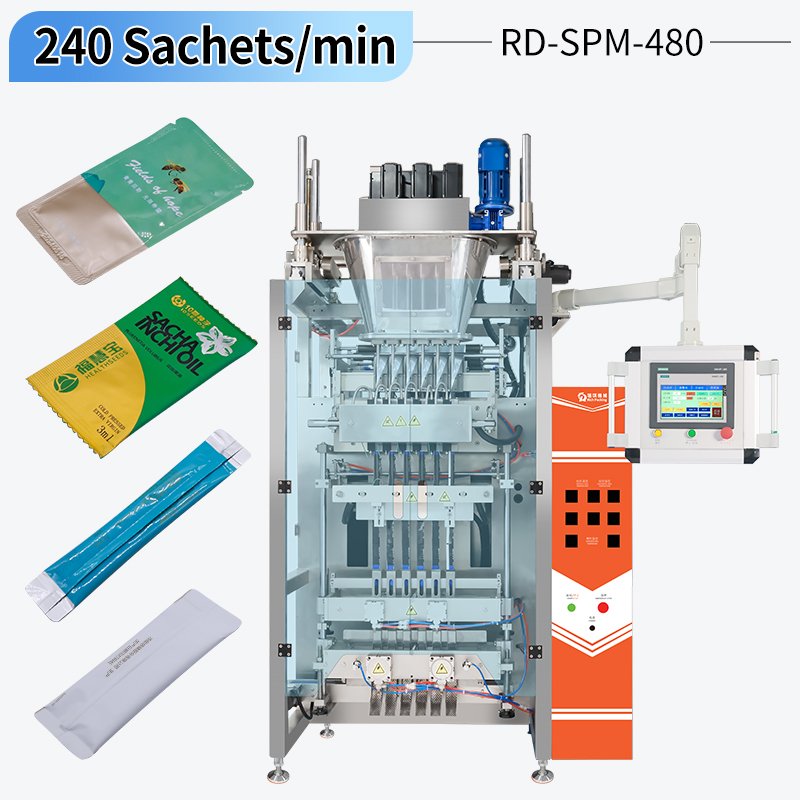
The strip packaging machine forms the core starting point of the integrated packaging system. Its primary function is to accurately fill and seal materials into individual strip packs.
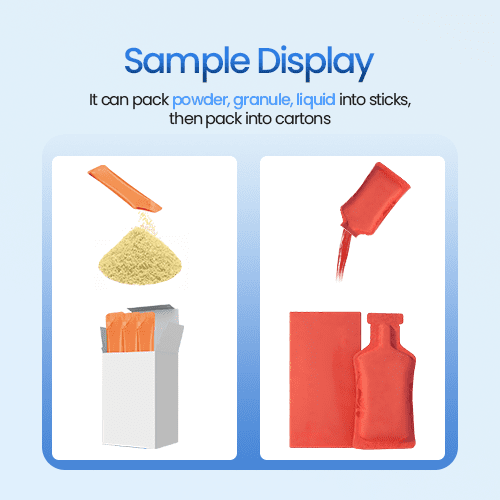
Depending on the product type, strip packaging machines can handle a wide range of materials, including: liquid supplements, powder formulations, granules, small tablets or pellets.
Each material type requires a specific filling mechanism to ensure precision and reliability.
Precision Liquid Filling Technology
For liquid products, strip packaging machines typically employ high-precision ceramic pump systems for piston filling.
Each pump is independently driven by a servo motor, allowing precise control over filling volume. This design enables operators to adjust the dosage of each pump individually, improving flexibility for different product formulations.
To maintain filling accuracy and seal integrity, the machines incorporate several key technologies:
Anti-Drip and Back-Suction Mechanisms: The pump system includes backflow and suction control, preventing liquid dripping during filling.
Servo-Controlled Filling Curves: The filling process is managed through programmable servo-controlled motion curves. By adjusting the filling speed in stages, the system minimizes splashing and improves dosing accuracy.
| भरने की मात्रा | शुद्धता |
| Above 2 एमएल | ≤ ±1% |
| 1–2 ml | ≤ ±1.5% |
| 0.5–1 ml | ≤ ±2.5% |
Such precision is essential in pharmaceutical and nutraceutical applications where dosage consistency directly affects product quality and regulatory compliance.
Packaging Formation and Sealing
After filling, the strip packaging machine performs several automated steps to complete the sachet: film unwinding, vertical sealing, horizontal sealing, easy-tear notch cutting, final sachet separation.
The machines adopts full servo control systems, ensuring synchronized movement across all mechanical components.
Another important design feature is modular construction, which allows operators to quickly change bag widths, sealing patterns, or packaging formats when switching between products.
This modularity significantly reduces downtime and enhances manufacturing flexibility.
Intelligent Conveying and Product Arrangement
Once strip packs are produced, they must be organized, counted, and transported to the cartoning machine in an orderly manner.
This stage involves more than simple conveying—it requires precise synchronization between mechanical systems and control software.
Automatic Pushing and Sorting Systems
Strip packs exiting the packaging machine are typically arranged into rows and transferred using coordinated mechanical systems. These systems include: pushing mechanisms, lifting devices, conveyor belts.
Together, they organize loose strip packs into structured stacks before transferring them into the cartoning machine’s feeding system.
Cam-driven mechanisms are often used to control pushing movements. Carefully designed cam profiles ensure stable and accurate motion even at high operating speeds.
Counting and Grouping Technology
Most retail packages contain a specific number of strip packs, जैसे कि 10 या 20 sachets per carton.
To achieve this, photoelectric sensors monitor the flow of strip packs and divide them into predefined groups.
This automated counting system ensures that:
Each carton receives the correct number of sachets
Production speeds remain consistent
Manual counting errors are eliminated
High-speed systems can perform these operations continuously without interrupting the production flow.
Buffering and Automatic Replenishment Systems
In high-speed production lines, quality inspection systems continuously monitor strip packs for defects such as: poor sealing, missing prints, incorrect coding, damaged packaging.
तथापि, rejecting defective packs can create temporary gaps in the material flow entering the cartoning machine. To prevent machine stoppages, integrated lines include buffer storage and automatic replenishment mechanisms.
When a gap is detected, the replenishment system pushes qualified strip packs from the buffer area into the main product stream.
This ensures that the cartoning machine always receives a continuous and correctly counted product supply, maintaining production stability.
Customized Cartoning Processes for Advanced Packaging
One of the most innovative aspects of strip pack cartoning lines is their ability to support customized packaging structures.
High-end nutraceutical or pharmaceutical products often require sophisticated carton designs, including: flip-top rigid boxes, multi-layer product arrangements, display-style packaging.
To accommodate these designs, cartoning machines perform several complex operations.
Carton Forming and Opening
Before filling begins, the cartoning machine must first convert flat carton blanks into three-dimensional boxes.
This is typically done using:
Vacuum suction cups to lift the carton blank
Mechanical arms to open the box
Support structures to hold the carton in place during filling
This automated forming process ensures precise carton positioning and high-speed operation.
Multi-Layer Product Loading
Some packaging designs require products to be stacked in multiple layers within the carton.
उदाहरण के लिए, a box may contain two separate layers of strip packs for improved presentation or space efficiency.
To achieve this, the cartoning machine performs sequential loading operations:
The first group of strip packs is pushed into the carton.
An internal lifting or positioning mechanism adjusts the product height.
A second group of strip packs is inserted on top of the first layer.
This process allows manufacturers to create customized packaging configurations without manual intervention.
Carton Closing and Product Discharge
After filling is complete, the machine closes the carton flaps and performs final compression to ensure secure sealing.
Any defective cartons—such as those with missing products or improperly sealed flaps—are automatically rejected by the system before leaving the production line.
This ensures that only fully compliant finished products proceed to downstream processes such as case packing or palletizing.
निष्कर्ष: The Strategic Value of Integrated Packaging Lines
Strip pack cartoning integrated production lines represent a major advancement in packaging automation. By combining precision filling, intelligent conveying, automated cartoning, and real-time quality control, these systems transform packaging from a labor-intensive process into a highly efficient and reliable operation.
For manufacturers in pharmaceutical, पौष्टिक-औषधीय, खाना, and consumer goods industries, adopting integrated packaging lines can deliver significant benefits:
Higher production efficiency
श्रम निर्भरता में कमी
Improved product consistency
Enhanced regulatory compliance
Greater packaging flexibility
As global markets demand faster production, higher quality standards, and more sophisticated packaging formats, the role of automated strip pack cartoning lines will continue to expand.