Introducción
Una tableta de desintegración oral está hecha para romperse en la lengua en lugar de tragarse como una tableta estándar.. Esa única diferencia puede afectar la forma en que se fabrica la tableta., manejado, y protegido en el pack final.
Para fabricantes, el desafío es el equilibrio. Este tipo de tableta necesita desintegrarse rápidamente en la boca, pero también necesita suficiente fuerza para pasar por la producción y el embalaje sin sufrir daños.. Es por eso que esta categoría a menudo se discute no solo en términos de velocidad de desintegración, pero también la fuerza de la tableta, exposición a la humedad, y protección del embalaje.
¿Qué es una tableta que se desintegra por vía oral??
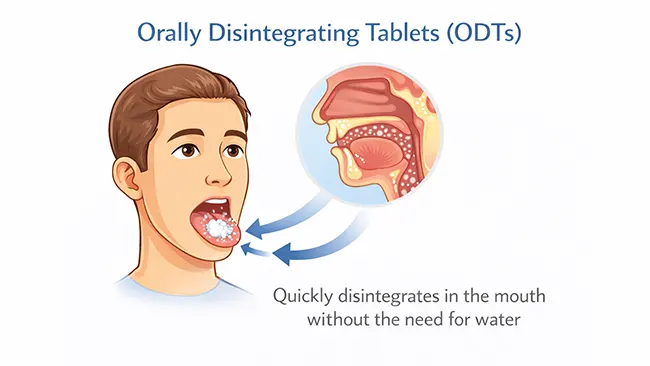
Una tableta de desintegración oral es una tableta oral sólida diseñada para desintegrarse rápidamente después de colocarla en la lengua.. Es diferente a una tableta masticable., y también es diferente de una tableta estándar que debe tragarse entera con líquido.. El formato se basa en una rápida desintegración en la boca., No se encuentra alrededor de la ruta habitual de tragar primero utilizada por muchas tabletas convencionales..
A menudo se utilizan varios términos relacionados para este tipo de tableta., incluyendo tableta ODT, tableta oral dispersable, y tableta de rápida disolución. La redacción no siempre es totalmente coherente en todo el mercado., pero la idea básica es similar: Esta es una tableta diseñada para romperse en la boca en lugar de tragarse como una tableta estándar..
Esa diferencia también importa en la producción.. Una tableta que se rompe rápidamente en la boca todavía tiene que pasar por la compresión de la tableta., transferir, manejo, y embalaje final. En la práctica, Esto significa que el producto a menudo se juzga por algo más que la velocidad de desintegración únicamente.. Fuerza de la tableta, friabilidad, sensibilidad a la humedad, enmascaramiento del sabor, y la protección de la mochila suelen formar parte de la misma discusión.
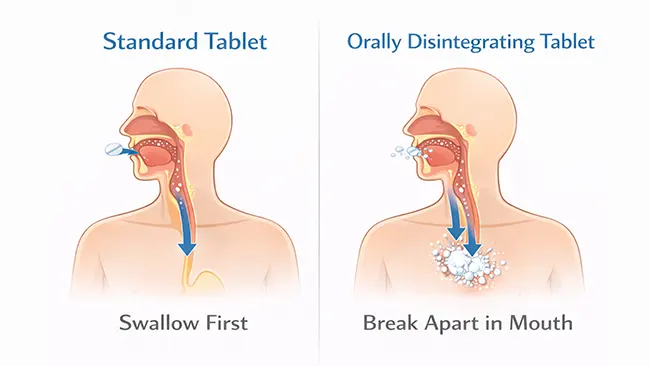
¿En qué se diferencia una tableta que se desintegra por vía oral de una tableta estándar??
Una tableta estándar generalmente está diseñada para tragarse primero y desintegrarse después.. Se espera que una tableta que se desintegra por vía oral se rompa mucho antes, en la boca, y eso cambia el objetivo desde el principio. La diferencia no es sólo la comodidad. También afecta la forma en que está construida la tableta y cuánta protección puede necesitar más adelante en la línea..
En muchos proyectos de tabletas estándar, La principal preocupación es si el producto se puede fabricar de manera consistente y permanecer estable mediante manipulación y almacenamiento normales.. Con este formato, hay un saldo extra para gestionar. El producto necesita una rápida desintegración., pero también necesita suficiente fuerza para los pasos rutinarios de producción y embalaje.. Ésa es una de las razones por las que esta categoría es más exigente de lo que parece..
El embalaje también entra antes en el debate. Muchas tabletas convencionales permiten una mayor flexibilidad en el envase final.. Con este formato, la humedad y el riesgo de manipulación a menudo son más importantes, por lo que es posible que sea necesario considerar la elección del embalaje mucho antes. en algunos proyectos, La propia estructura de la tableta marca el camino hacia una protección más fuerte y un estilo de empaque que reduce la exposición repetida después de la apertura..
Por qué la fabricación de tabletas de desintegración oral es más exigente
La principal dificultad es simple de describir.: la desintegración rápida y la fuerza de la tableta no siempre se mueven en la misma dirección. Un producto que se rompe fácilmente en la boca también puede volverse más fácil de desmenuzar., grieta, o desgaste durante la producción normal. No todos los proyectos serán muy frágiles, pero muchas tienen una ventana de proceso más estricta que las tabletas normales..
Equilibrando la rápida desintegración y la resistencia de la tableta
Esta es la compensación central. Si la tableta se vuelve demasiado blanda, el manejo aguas abajo se vuelve más difícil. Si se vuelve demasiado duro, Es posible que el producto ya no ofrezca el rendimiento rápido que el formato debe proporcionar.. Eso no crea una regla de fórmula fija para cada proyecto., pero explica por qué la dureza, friabilidad, y la tolerancia de manipulación a menudo reciben más atención aquí antes de que se confirme el paquete final.
Una forma útil de pensarlo es esta: el objetivo no es sólo la rápida desintegración. El objetivo es una desintegración rápida y suficiente fuerza física para sobrevivir a la línea.. En esa segunda parte es donde muchos proyectos se vuelven más exigentes de lo que sugieren las descripciones generales de los productos..
Enmascaramiento del sabor y límites de formulación
El gusto también importa más en esta categoría que en muchos proyectos de tabletas comunes.. Porque la pastilla empieza a romperse en la boca., El sabor y la sensación en la boca desagradables se notan antes.. Eso hace que el enmascaramiento del gusto ocupe un lugar más alto en la lista de prioridades, y esas opciones de formulación pueden influir en el comportamiento del polvo, respuesta de compresión de la tableta, y rendimiento de desintegración.
Esto no significa que cada proyecto necesite una ruta complicada. Lo que significa que la tableta rara vez se juzga por un solo criterio de valoración.. Los equipos a menudo necesitan pensar en la experiencia del usuario., comportamiento de compresión de la tableta, friabilidad, y empacar protección juntos, porque un cambio en un área puede afectar a otra.
Por qué el control de procesos es más importante
Cuando el margen es más estrecho, las pequeñas variaciones importan más. Deriva de peso, multas excesivas, daño en el borde, transferencia inestable, o el manejo brusco de la tableta puede crear mayores efectos posteriores cuando el producto ya tiene menos margen de error. Una línea que luce bien para una tablet estándar puede resultar demasiado agresiva para este formato.
Para la planificación de equipos, Eso generalmente significa mirar más allá de máquina de compresión automática solo. La compresión importa, pero también lo hace el control del polvo, transferencia de tableta, inspección, y la dulzura del camino río abajo. Una tableta que sale de la prensa de tabletas en condiciones aceptables aún puede convertirse en un problema de empaque más adelante si el resto del recorrido es demasiado accidentado..
Por qué el empaque es más importante para una tableta que se desintegra por vía oral
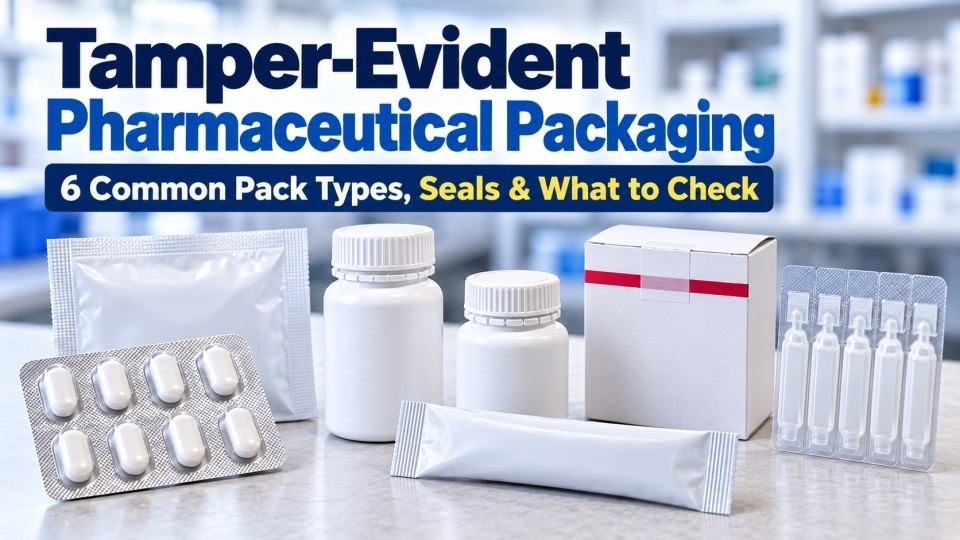
El packaging no es sólo un paso final de presentación de estos productos. En muchos casos, se convierte en parte de la protección del producto. Cuando el formato de una tableta tiene menos tolerancia a la exposición a la humedad o al manejo brusco, El paquete tiene un efecto directo sobre si el producto mantiene el rendimiento para el que fue diseñado..
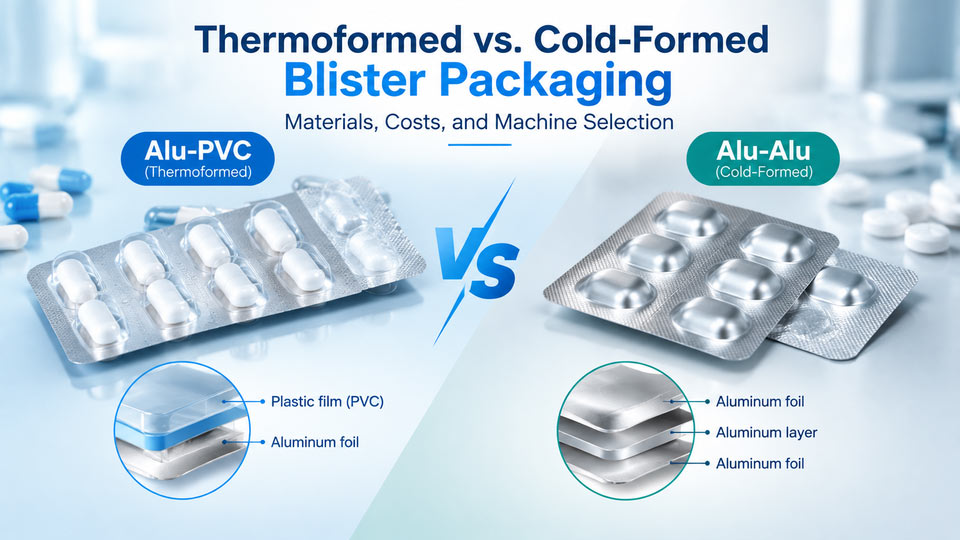
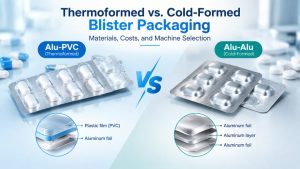
Es por eso que embalaje blíster A menudo se discute al principio de estos proyectos.. Un blister protege los comprimidos uno a uno, limita la exposición repetida después de la apertura, y admite una ruta de manejo más controlada. Para productos sensibles a la humedad, El nivel de barrera importa tanto como el estilo de la mochila.. Un paquete que parece aceptable desde el exterior aún puede no encajar bien si su protección es demasiado débil para el producto objetivo..
El embalaje de las botellas no siempre es incorrecto. En algunos casos, una ruta de embotellado respaldada por una línea de conteo y embotellado de tabletas aún puede tener sentido para el producto, mercado, y objetivo de estabilidad. La decisión simplemente necesita más cuidado del que suele necesitarse para una tableta estándar más indulgente.. La verdadera pregunta no es sólo qué paquete cuesta menos. La mejor pregunta es qué paquete protege el producto lo suficientemente bien para la ruta que realmente enfrentará..
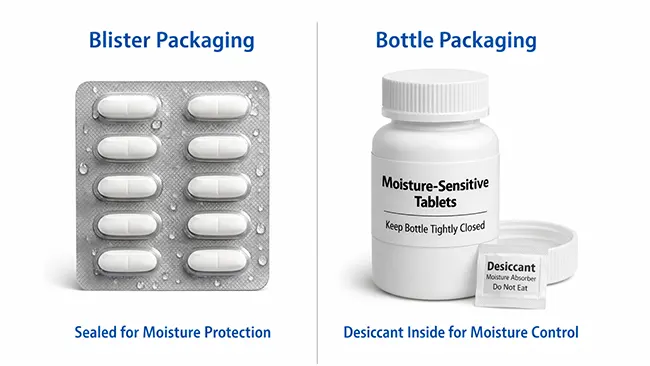
La elección del material es importante por la misma razón. Las discusiones sobre empaque para esta categoría a menudo están ligadas a la calidad del sellado., rendimiento de la barrera contra la humedad, condiciones de transporte, expectativas de almacenamiento, y objetivos de vida útil. Cuando esos puntos se dejan demasiado tarde, Los equipos pueden terminar con una tableta que funciona bien en desarrollo pero enfrenta riesgos innecesarios en el mercado..
Mesa: Tableta estándar versus tableta de desintegración oral en fabricación y envasado
| Aspecto | tableta estándar | Tableta que se desintegra por vía oral |
| Objetivo principal de rendimiento | Tragar primero, luego desintegrarse más tarde | Se deshace rápidamente en la boca. |
| Ventana de intensidad de la tableta | A menudo más indulgente | A menudo más apretado |
| Riesgo de humedad en la planificación de proyectos | A menudo se considera más tarde | A menudo considerado antes |
| Prioridad en sabor y sensación en boca. | Generalmente más bajo | Generalmente más alto |
| Papel de embalaje | A menudo más flexible | A menudo está más estrechamente vinculado a la protección del producto. |
| Enfoque de planificación de línea | Salida estable y consistencia | Salida estable además de un manejo más suave y una protección más fuerte |
Qué significa una tableta que se desintegra por vía oral para la planificación de equipos y líneas
Este tipo de proyecto no debe juzgarse únicamente por la máquina prensadora de tabletas.. La máquina prensadora de tabletas sigue siendo importante, pero también lo hacen las condiciones de transferencia, desempolvar, inspección, alimentación, embalaje, y la forma general en que el producto se mueve a través de la línea. Una tableta que funciona bien en la compresión aún puede crear problemas más adelante si la ruta descendente es demasiado accidentada para la estructura del producto..
La planificación de líneas suele funcionar mejor cuando los equipos comienzan con la forma farmacéutica en sí.. ¿Cuánto estrés de manipulación pueden soportar las tabletas?? ¿Cuánta protección contra la humedad necesita la ruta?? ¿El paquete final respalda el objetivo del producto?, ¿O solo se elige por conveniencia o costo?? Preguntas como estas son más fáciles de responder temprano que después de que se arregle la ruta..
Desde la perspectiva del equipo, Esto a menudo conduce a una revisión más coherente de la configuración de la prensa de tabletas., control de polvo, transferencia de tableta, máquina envasadora de blister de tabletas idoneidad, puntos de inspección, y final máquina estuchadora. La ruta exacta depende del producto y de los requisitos del mercado., pero el punto principal es simple: Estos proyectos normalmente funcionan mejor cuando la compresión y el empaquetado se planifican como un solo sistema en lugar de dos decisiones separadas..
Esa revisión más amplia también ayuda a evitar un desajuste común. Una línea puede parecer completa en papel, y aun así exponer el producto a demasiado estrés de manipulación o a un entorno de embalaje inadecuado. Para este tipo de tableta, El éxito de la línea a menudo depende menos de una especificación impresionante de la máquina y más de si la ruta completa se mantiene estable y protectora desde la descarga de la tableta hasta el empaque final..
Errores comunes al planificar un proyecto de tableta de desintegración oral
Un error común es centrarse demasiado sólo en la velocidad de desintegración.. Una tableta que se rompe rápidamente pero que no puede pasar por la producción y el embalaje normales sin sufrir daños aún puede convertirse en un producto comercial difícil..
Otro error es tratar el embalaje como una elección de última etapa.. Para esta categoría, el paquete final a menudo afecta la estabilidad, manejo, y robustez en el mundo real, por lo que normalmente merece atención mucho antes.
Un tercer error es suponer que la ruta estándar de una tableta se transferirá directamente con sólo cambios menores.. En algunos casos eso puede ser cierto., pero en muchos otros la combinación de límites de fuerza, sensibilidad a la humedad, y la protección del paquete cambia los requisitos prácticos más de lo esperado.
Un cuarto error es separar demasiado claramente las discusiones sobre procesos y empaques.. cuando la formulación, compresión, transferir, y el embalaje se revisan de forma aislada, Los equipos pueden pasar por alto el punto en el que las decisiones de línea pequeña crean rupturas evitables., inestabilidad, o manejar quejas más tarde.
Reflexiones finales sobre la fabricación y el envasado de tabletas de desintegración oral
Una tableta de desintegración oral no es solo una tableta estándar con una etiqueta diferente. Es un formato con un objetivo de rendimiento diferente, y ese objetivo afecta más que el momento de uso. Puede cambiar la forma en que está diseñado el producto., cuán estrictamente se debe controlar la producción, y cuánta protección debe proporcionar el paquete final.
Por eso es mejor considerar estos proyectos como una cuestión vinculada entre fabricación y embalaje.. La tableta aún necesita desintegrarse rápidamente en la boca., pero también necesita suficiente resistencia y protección para sobrevivir el camino desde la compresión de la tableta hasta el envasado final.. Cuando esos dos lados se evalúan juntos, La planificación de líneas suele volverse más clara y práctica..
Preguntas frecuentes sobre tabletas de desintegración oral
¿Qué es una tableta que se desintegra por vía oral??
Es una tableta diseñada para romperse en la lengua en lugar de tragarse como una tableta estándar..
¿Es lo mismo una tableta que se desintegra por vía oral que una tableta masticable??
No. Una tableta masticable está destinada a ser masticada. Una tableta de desintegración oral está diseñada para desintegrarse en la boca sin seguir la misma ruta de masticación inicial..
¿Por qué es más difícil fabricar tabletas que se desintegran por vía oral??
El principal desafío es el equilibrio.. El producto necesita una rápida desintegración., pero también necesita suficiente fuerza para la compresión., transferir, manejo, y embalaje.
¿Por qué el envase es más importante para una tableta que se desintegra por vía oral??
La exposición a la humedad y el riesgo de manipulación suelen ser más importantes para este tipo de producto., para que el paquete final pueda desempeñar un papel más importante en la protección.
¿Se requiere siempre un envase tipo blíster para una tableta que se desintegra por vía oral??
No siempre. El formato correcto depende del objetivo del producto., perfil de estabilidad, manejo de riesgos, necesidades del mercado, y el nivel de protección requerido durante la vida útil.
¿Por qué la planificación de líneas debería comenzar temprano para un proyecto de tableta que se desintegra por vía oral??
Porque la estructura de la tableta, tolerancia de manejo, y la protección del embalaje están estrechamente relacionados. Observarlos juntos desde el principio generalmente reduce los problemas posteriores..
Referencias
- FDA, Orientación para la industria: Tabletas de desintegración oral. (A NOSOTROS. Administración de Alimentos y Medicamentos)
- Ghourichai et al., Formulación y control de calidad de tabletas de desintegración oral.. (PMC)