
A Tablettenzählmaschine sollte die richtige Anzahl an Tabletten einlegen, Kapseln, Kapseln, oder Pillen in jede Flasche während der kontinuierlichen Produktion. Beim Produktfluss kommt es zu Fehlzählungen, Staubkontrolle, Sensorerkennung, Entladezeitpunkt, und Flaschenpositionierung funktionieren nicht mehr als ein stabiler Prozess. Ein Zähler kann einen kurzen Probendurchlauf bestehen, aber nach einer Stunde staubiger Tabletten immer noch Ausschuss erzeugen, klebrige Kapseln, häufige Flaschenstopps, oder höhere Liniengeschwindigkeit.
Für Pharma- und Nahrungsergänzungsmittelfabriken, Eine fehlende Tablette oder eine zusätzliche Kapsel kann zu einer erneuten Kontrolle führen, abgelehnte Flaschen, Produktionsverzögerung, und Dokumentationsprobleme. Geschwindigkeit ist nur dann sinnvoll, wenn die Linie einen präzisen Vorschub aufrechterhalten kann, Zählen, Entladung, und Abwärtsbewegung. Eine stabile Tablettenzählmaschine schützt die nutzbare Ausgabe, da sie dafür sorgt, dass die korrekten Flaschen durch das Verschließen transportiert werden, Versiegelung, Beschriftung, Inspektion, und Packen mit weniger Stopps.
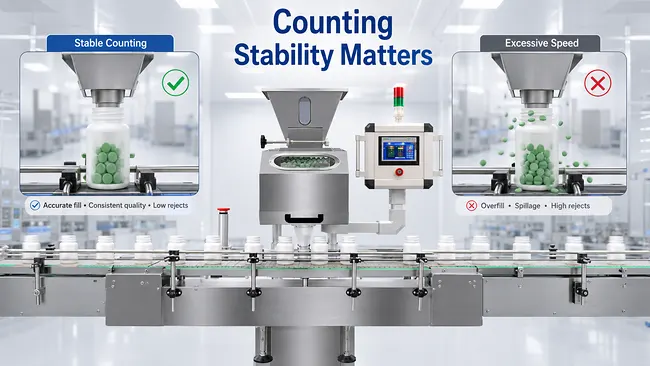
Was bedeutet eine Fehlzählung einer Tablettenzählmaschine in der Produktion??
Eine Fehlzählung bedeutet, dass die gefüllte Flasche eine andere als die eingestellte Menge enthält. Die Ursache ist nicht immer der Zählsensor. Das Produkt kann sich überlappen, bevor es den Sensor erreicht. Ein zerbrochenes Fragment kann mit einer vollen Tablette durchgehen. Eine transparente Kapsel kann ein schwaches Erkennungssignal erzeugen. Es kann sein, dass eine Flasche zu spät unter der Auslassöffnung ankommt. Ein nachgeschalteter Stopp kann den nächsten Füllzyklus stören.
Produktionsteams sollten Fehlzählungen als ein Problem der Linienstabilität behandeln. Die Tablettenzähl- und Füllmaschine muss Produkte in einzelne Stücke trennen, Erkennen Sie jedes Stück deutlich, Geben Sie sie im richtigen Moment in die Flasche, und bestätigen Sie, dass die nächste Flasche fertig ist. Wenn ein Schritt instabil wird, Die endgültige Flaschenzahl kann falsch sein, selbst wenn die Maschineneinstellungen beim Start korrekt aussahen.
Warum Geschwindigkeit allein Fehlzählungen verschlimmern kann
Hohe Geschwindigkeit reduziert die Zeit, die für die Produkttrennung und Flaschenpositionierung zur Verfügung steht. Tablets rücken näher zusammen, Kapseln springen leichter, und Softgels können in Gruppen in die Zählzone gelangen. Wenn der Zähler schneller gedrückt wird, kann sich das Produkt trennen, Der Sensor empfängt unklare Signale und das Austragssystem erhält einen ungleichmäßigen Produktstrom.
Deshalb sind Nenndrehzahl und nutzbare Leistung unterschiedlich. Die Nenngeschwindigkeit beschreibt, was der Tablettenzählautomat unter geeigneten Bedingungen erreichen kann. Die nutzbare Leistung ist die Anzahl der korrekten Flaschen, die in einer Schicht nach der Reinigung produziert werden, Nachfüllen, Umstellung, Alarm, und nachgelagerte Haltestellen. Eine langsamere, aber stabile Linie kann mehr angenommene Flaschen produzieren als eine schnellere Linie, die häufige manuelle Überprüfungen erfordert.
Die Geschwindigkeit sollte mit dem tatsächlichen Produkt getestet werden, Flasche, Anzahl der Füllungen, und nachgeschalteter Ausrüstung. Eine Tablettenzählmaschine für staubige Kräutertabletten verhält sich nicht wie eine für glatt überzogene Tabletten. Ein Zähler, der für transparente Kapseln verwendet wird, erfordert auch eine andere Erkennungsaufmerksamkeit als einer, der für undurchsichtige Pillen verwendet wird.
Häufige Ursachen für Fehlzählungen der Tablettenzählmaschine
Fehlzählungen sind in der Regel auf mehrere kleine Probleme zurückzuführen und nicht auf einen offensichtlichen Fehler. Die folgende Tabelle zeigt, wo es häufig zu Stabilitätsverlusten kommt.
| Bereich | Risiko einer Fehleinschätzung | Praktischer Kontrollpunkt |
| Staubansammlung | Staub bedeckt den Erfassungsbereich oder schwächt das Signal | Verwenden Sie ein versiegeltes Zähldesign, Staubsammlung, und regelmäßige Reinigung |
| Produktüberlappung | Zwei Teile passieren zusammen und werden falsch erkannt | Vibration anpassen, Spurverteilung, und Vorschubgeschwindigkeit |
| Zerbrechliche Tabletten | Bruchstücke gelangen in den Zählweg | Reduzieren Sie die Aufprallpunkte und überprüfen Sie die Bröckeligkeit der Tablette vor dem Abfüllen |
| Klebrige Kapseln | Produkte haften vor der Trennung aneinander | Verwenden Sie eine stufenweise Trennung und vermeiden Sie eine Überfütterung der Gleise |
| Transparente Kapseln | Erkennungssignale werden inkonsistent | Testen Sie echte Kapseln und bestätigen Sie die Sensorreaktion vor der Produktion |
| Flaschenpositionierung | Das Produkt fällt herunter, bevor der Flaschenhals ausgerichtet ist | Überprüfen Sie die Flaschenerkennung, Timing des Förderers, und Entladungskontrolle |
| Verstopfung der Entladung | Tabletten- oder Kapselbrücke am Auslass | Passen Sie die Auslassöffnung an die Produktgröße und -form an |
| Stromabwärts gelegene Haltestellen | Nach dem Zählen werden die Flaschen wieder gefüllt | Kappen synchronisieren, Versiegelung, Beschriftung, und Zeitpunkt der Ablehnung |
Diese Aufschlüsselung zeigt, warum die stabile Zählung vom gesamten Produktpfad abhängt. Der Trichter, Vibrationsspuren, Sensoren, Auslassöffnung, Flaschenförderer, und Ablehnungslogik müssen zusammenarbeiten.
Wie Staub die Stabilität der Tablettenzählmaschine beeinflusst
Staub ist einer der häufigsten Gründe dafür, dass ein Tablettenzähler im Dauerbetrieb an Genauigkeit verliert. Tabletten können beim Füttern Pulver freisetzen, Vibration, und Entlastung. Einige nutrazeutische Tabletten, Kräutertabletten, und unbeschichtete Produkte erzeugen mehr Staub als herkömmliche beschichtete Tabletten. Durch zerbrochenes Produkt können sich auch feine Partikel im Bereich der Zählzone ansammeln.
Staub kann den Strahlengang verdecken, die Signalklarheit verringern, Fehlalarme auslösen, und die Reinigungshäufigkeit erhöhen. Es kann auch in mechanische oder elektrische Bereiche gelangen, wenn die Struktur der Tabletten-Kapsel-Zählmaschine nicht geschützt ist. Die ersten paar Flaschen könnten richtig sein, während spätere Flaschen instabil werden, wenn sich Staub ansammelt.
Eine stabile elektronische Zählmaschine sollte Staub kontrollieren, bevor er die Erkennung beeinträchtigt. Versiegelte Strukturen, Anti-High-Dust-Zähltechnologie, und eine Staubsammelbox schützen den Zählbereich. Betreiber benötigen weiterhin klare Reinigungsverfahren, Das Maschinendesign sollte jedoch die Geschwindigkeit verringern, mit der Staub zu einem Produktionsproblem wird.

Produkttrennung: Warum Vibrationseinstellungen die Genauigkeit beeinflussen
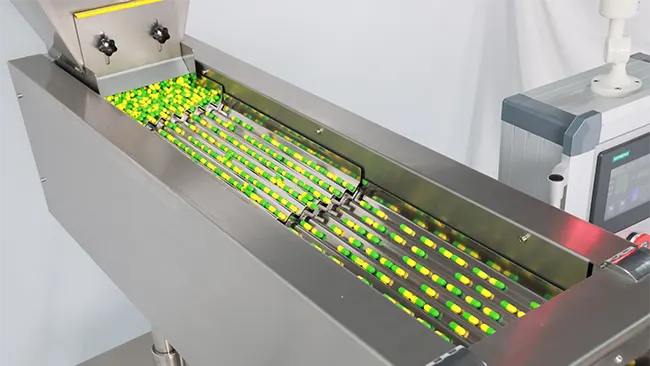
Vibration ist nicht nur eine Bewegungsmethode. Es steuert, wie Tablets, Kapseln, und Kapseln werden vor dem Zählen getrennt. Wenn die Vibration zu schwach ist, Produkte können sich überschneiden. Wenn es zu aggressiv ist, Tabletten können abprallen, drehen, Chip, oder ungleichmäßig am Sensor ankommen.
Unterschiedliche Produkte erfordern ein unterschiedliches Trennverhalten. Runde Dragees können problemlos fließen. Flache Tabletten können gestapelt werden. Kapseln können rollen. Kapseln können zusammenkleben. Unregelmäßige Pillen benötigen möglicherweise mehr Zeit, um sich in einer einzigen Bahn einzuordnen. Eine Tabletten- und Kapselzählmaschine sollte es den Bedienern ermöglichen, den Produktfluss anzupassen, anstatt jedes Produkt durch das gleiche Bahnverhalten zu zwingen.
Die mehrstufige Vibration ist sinnvoll, da die Trennung stufenweise erfolgt. In der ersten Stufe wird das Produkt verteilt. In späteren Phasen wird der Abstand vor der Erkennung verfeinert. Wenn der Produktabstand stabil ist, Der Sensor empfängt klarere Signale und das Austragssystem erhält einen vorhersehbaren Durchfluss.
Wie Sensoren und Flaschenzeit die Zählgenauigkeit beeinflussen
Sensoren benötigen einen sauberen und konsistenten Produktweg. Die optische oder Infraroterkennung muss jeweils ein Produkt identifizieren und dabei Staub ignorieren, Fragmente, und Signalrauschen. Eine transparente Kapsel, glänzendes Softgel, oder unregelmäßige Pillen müssen möglicherweise getestet werden, da Oberfläche und Form die Erkennungsreaktion beeinflussen können.
Ebenso wichtig ist das Timing der Flaschen. A counter can count correctly but still fill incorrectly if the bottle is not positioned under the discharge port. Bottle detection, conveyor movement, filling head alignment, and discharge gate timing must match the selected bottle size and fill count.
Auf einem Zähl- und Abfülllinie für Tabletten oder Kapseln, the counter also depends on upstream and downstream equipment. Bottle unscrambling, Trockenmitteleinbringung, Verschließen, Induktionsversiegelung, Beschriftung, Kontrollwägen, and rejection can all affect line rhythm. If a downstream station stops, the counter must pause and restart without disturbing the next count.
Tablet Counter Features That Help Reduce Miscounts
Stable counting depends on design details that become important during long production runs. Useful features include sealed counting areas, anti-dust detection, adjustable multi-level vibration, smooth discharge, product-friendly gates, Flaschenüberwachung, fault alarms, and fast cleaning access.
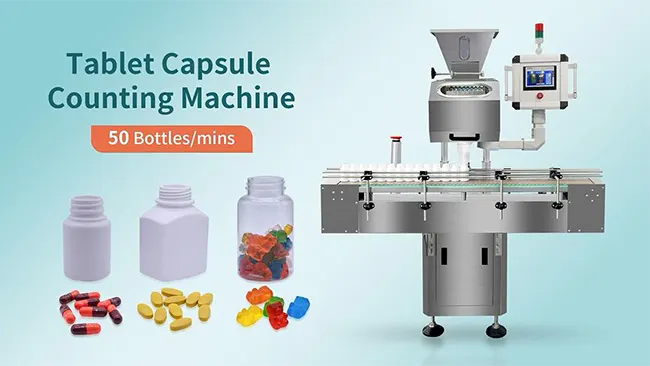
Ruida Packing’s RD-DSL-8C 8-lane electronic counting machine is designed for tablets, Hartkapseln, Weichkapseln, und Pillen. Its specified production range is 10-50 bottles per minute depending on bottle, Produkt, and fill quantity. The machine uses anti-high-dust electronic counting, multi-level vibration separation, a patented flap dispensing mechanism, online monitoring, optional customized discharge ports, and a dust collection box. These features support stable counting when products create dust, vary in shape, or need careful handling.
The goal is not only to count fast. The goal is to keep correct bottles moving through the line with fewer rejects, fewer stops, and less manual checking.
How to Test Tablette Counting Stability Before Routine Production
A short sample test can confirm that a machine can count a product. A production test should confirm that the machine can keep counting after dust appears, the hopper level changes, bottles pause, and the line restarts.
Factories should test the actual product, Flasche, target count, speed range, and downstream connection. Dusty tablets should run long enough for dust behavior to appear. Softgels should be tested for separation performance before counting, especially when their surface stickiness causes pieces to cling together. Narrow-neck bottles should be checked for discharge blockage risk during filling. Transparent capsules should be tested for detection consistency.
The team should record accepted bottles, reject bottles, alarm frequency, Staubansammlung, broken product, Reinigungszeit, and stop-start behavior. If problems increase only after speed rises, product separation may be the limit. If errors appear after downstream stops, bottle timing and restart logic should be reviewed. If accuracy drops after cleaning, reassembly and sensor alignment need attention.
Abschluss
Tablet counting machine miscounts usually appear when speed outruns stability. Staub, poor separation, weak detection signals, bottle timing, discharge clogging, and downstream stops can all reduce counting accuracy during real production.
For pharmaceutical and supplement bottling, stable output is more valuable than a high speed number that cannot be maintained. A reliable counter should control product flow, protect the detection area, handle dust, monitor faults, and stay synchronized with the full bottle packaging line.
Discuss Your Counting Project
If your tablets, Kapseln, Kapseln, or pills create dust, stick together, break easily, or require different bottle counts, share your product size, bottle type, Zielausgabe, and filling quantity with Ruida Packing. A sample-based counting test can help confirm whether an tablet or capsule counting line fits your production plan.
Häufig gestellte Fragen
Why does a tablet counting machine miscount?
A tablet counting machine may miscount when products overlap, dust affects the sensor, fragments enter the counting path, or the feeding speed is too high for stable separation.
Is faster Tablette counting always better?
NEIN. Faster counting is useful only when product separation, Erkennung, Entladung, and bottle timing remain stable. If speed creates more rejects or rechecks, usable output may drop.
What products are difficult for a tablet counter?
Staubige Tabletten, transparent capsules, Kapseln, sugar-coated tablets, fragile tablets, irregular pills, and sticky products can be difficult because they affect feeding, Trennung, or detection.
How can manufacturers reduce miscounts?
Manufacturers can reduce miscounts by testing real samples, adjusting vibration, controlling dust, confirming sensor performance, using suitable discharge ports, and verifying the counter with the full bottling line.
Where does a tablet counting machine fit in a bottling line?
It usually sits after bottle feeding and before checkweighing, Verschließen, Versiegelung, oder Beschriftung. It must stay synchronized with upstream bottle supply and downstream packaging equipment.
Should counting stability be tested before buying a Tablettenzählung Maschine?
Ja. Testing should cover continuous running, Staubansammlung, stop-start behavior, bottle changes, Reinigung, and downstream connection, not only the first accurate bottles.
What is more important für A Tabletschalter, speed or stability?
Both matter, but stability is usually more important during routine tablet production. A stable tablet counter can produce more accepted bottles over a shift than a faster machine with frequent stops and rejects.
Referenzen
[1] Pharmazeutische Technologie – Ensuring Correct Tablet Count
https://www.pharmtech.com/view/ensuring-correct-tablet-count
[2] FDA – Aktuelle gute Herstellungspraxis (CGMP) Vorschriften
https://www.fda.gov/drugs/pharmaceutical-quality-resources/current-good-manufacturing-practice-cgmp-regulations