انتقلت الفيتامينات الصمغية من "فيتامينات الأطفال" إلى المكملات الغذائية السائدة. طعمها مألوف, أشعر بسهولة أن تأخذ, وهذا وحده يساعد الكثير من الناس على البقاء ثابتين. The trade-off is that gummies are more “food-like,” so serving size, extra ingredients, and storage conditions can affect your experience more than you might expect.
When people compare gummy vitamins vs pills, the differences usually show up in three places: dose clarity (how easy it is to track what you took), ingredients beyond the vitamin (المحليات, acids, flavors), and stability (how the product holds up during storage).
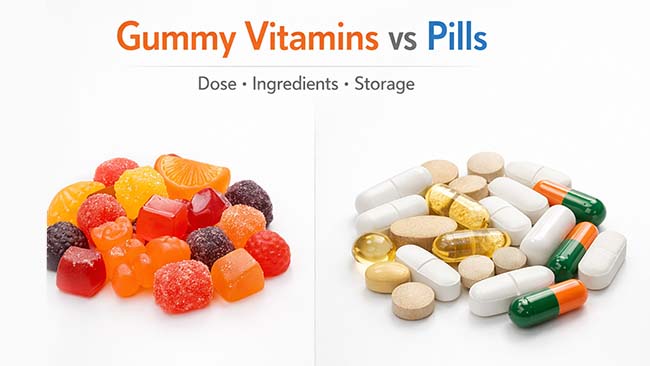
Gummy vitamins vs pills: choose in 60 seconds
Start with your routine and your household. For most people, gummy vitamins vs pills isn’t about “better” or “worse”—it’s about which format you’ll actually use correctly and store safely.
Gummies tend to fit people who dislike swallowing tablets or who skip pills because they feel like a chore. The taste and chew can make daily use easier to stick with, especially when the goal is a simple habit you repeat.
Pills or capsules tend to fit people who want dose tracking to feel straightforward and who prefer fewer taste-related ingredients. If you’re watching sugar closely, trying to avoid sour flavors, or you want more strength and format options, tablets and capsules often feel simpler.
If you have kids at home, gummies need stricter storage because they can look like candy—keep them out of reach, and use child-resistant packaging when available. Also try to avoid leaving the bottle open on a counter; with gummies, “easy access” is part of the risk.
If you’re planning to make supplements, remember that dosage form influences moisture-control strategy and often nudges you toward a bottle route or a blister route later.
طاولة 1: Gummies vs tablets vs capsules quick comparison
| What you’re comparing | حلوى الجيلاتين | الأجهزة اللوحية | كبسولات |
| Dose clarity | Often “2+ per serving” | Often clear per tablet | Often clear per capsule |
| Extra ingredients | More likely | Often fewer | Often fewer |
| Storage sensitivity | More sensitive to heat/humidity | Usually less sensitive | Varies by shell |
| Kid safety at home | Needs extra caution | Still caution | Still caution |
| Common packaging | Mostly bottles | Bottles or blisters | Bottles or blisters |
| Best fit for | People who avoid pills | People who want simple tracking | People who prefer easy swallowing |
What’s inside gummies besides vitamins: سكر, المحليات, acids, flavors
A gummy is a food-style format. That doesn’t make it low quality, but it does mean you’re often taking more than vitamins.
Added sugar is the obvious difference. Even if the amount per serving is small, it can matter when gummies become a daily habit. Many “low sugar” or “sugar-free” gummies rely on sugar alcohols to keep texture and sweetness; some people tolerate them well, while others notice digestive discomfort, especially with multiple gummies or multiple products.
Gummies also often use acids to balance sweetness and keep the taste bright (you’ll commonly see acids listed on the label). If you’re sensitive to sour products, this is one reason gummies can feel different from tablets even when the vitamin amounts look similar.
Gummies may also include colors, flavors, and texture agents to keep the product consistent and appealing. If you prefer “as few extras as possible,” tablets or capsules may match your preference better. If you’re comfortable with a food-style ingredient list, gummies can still be a reasonable choice.
Serving size and dosage math: how to read the label
In gummy vitamins vs pills comparisons, serving size is where many people get thrown off. It’s very common to see “Serving Size: 2 gummies” or more, while the Supplement Facts panel lists amounts per serving. FDA’s supplement labeling guidance explains that serving size comes from the label’s directions for use.
A simple routine helps: find Serving Size first, then read amounts per serving, then decide how many pieces fit your routine. If your serving is two gummies and you take one, you’re often taking about half the listed amount.
Units can add confusion. mg and mcg differ by a factor of 1,000, and some vitamins may be listed in IU. ال %DV line can help you compare products quickly, but it’s not a personal prescription. If you’re choosing between two brands, %DV plus the serving size line is often enough to spot big differences.
One more practical quality check: look for labels that are easy to follow and consistent. Clear directions, clear serving size, and straightforward ingredient lists are small signals that the product was designed for normal users, not just for marketing.
Why gummies change faster: heat, humidity, and time
Gummies depend on a stable moisture balance to keep texture. Heat and humidity can push that balance around, leading to sticking, clumping, softening, or deformation. Tablets and capsules can also be affected by moisture and heat, but gummies often show changes sooner because texture is part of what you notice first.
Common trouble spots include a warm car, a steamy bathroom cabinet, a kitchen shelf near heat or steam, or frequent opening in humid air. Storage habits can stay simple: keep supplements cool and dry, close lids quickly and tightly, and avoid bathrooms if humidity swings are common. MedlinePlus notes that heat and moisture can damage medicines and that bathroom storage is often a poor choice because humidity and temperature changes can reduce potency or cause products to go bad sooner. (medlineplus.gov)
If your gummies start sticking together, that doesn’t automatically mean they’re “dangerous,” but it is a sign your storage setup isn’t working. In that case, switching location (cooler/drier) and paying attention to closure can make a noticeable difference.
Bottle vs blister: what each package protects, and what it can’t
Packaging is one of the most practical parts of gummy vitamins vs pills—it affects moisture exposure and how people track doses.
Most gummies come in زجاجات. Bottles are convenient, but repeated opening lets room air in. In humid places, that moisture matters, which is why desiccant packets are common in bottles. If the desiccant is present, leave it in place and focus on keeping the lid closed between uses.
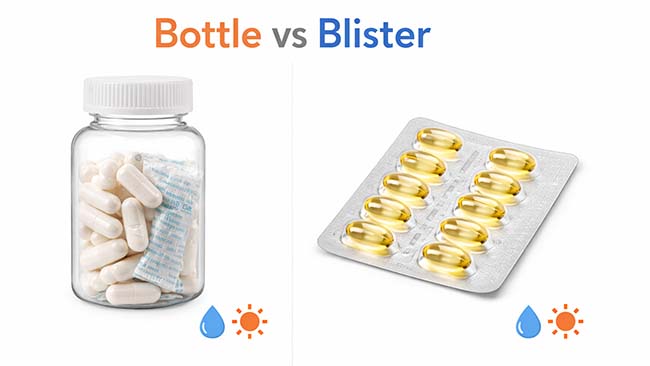
التغليف بالبثور is usually unit-dose: you open one pocket at a time. That reduces repeated exposure for unopened units and can help routine tracking. For moisture-sensitive products, blisters can be a practical choice because the remaining pockets stay sealed while you use the rest.
Also pay attention to safety features. Tamper-evident seals help you see whether a package was opened before you bought it, and child-resistant closures reduce accidental access at home. These aren’t “extra” details for gummies—they’re part of responsible daily use.
Packaging still can’t replace sensible storage. If a product sits in heat for long periods, both bottles and blisters can suffer.
Pills and capsules: what usually feels clearer, and what can still go wrong
Tablets and capsules often feel easier to track because “one tablet” or “one capsule” is a simple unit. That makes comparisons across products less confusing, especially when you’re switching strengths or brands.
They still have predictable storage issues. Tablets can absorb moisture and become softer or crumbly, chip during handling, or show wear on coatings. Capsules can become brittle in very dry or warm conditions, or stick and deform in humidity, depending on shell material and storage environment.
If you like tablets but dislike swallowing, capsules can be a middle option: still easy to count, often easier to swallow, and usually fewer taste-related ingredients than gummies.
If you want to make supplements: how dosage form affects packaging route and line steps
If you’re building a product, choose dosage form with packaging in mind early. Three decisions reduce later rework: how sensitive the formula is to moisture and heat, your shelf-life target, and whether you want bottle packaging or blister packaging. Even in consumer education content like gummy vitamins vs pills, these packaging choices show up as real differences users notice later.
A typical bottle route on a supplements counting and bottling line often follows this workflow. often follows this flow: عد, then desiccant or cotton insertion, then sealing, then labeling, then cartoning. On a packaging floor this is where terms like bottle unscrambler, آلة عد الأقراص / gummy vitamins counting machine, آلة السد, induction sealing machine, tablet counting and bottling line, و آلة التعبئة في الكرتون appear, because those steps define the route and the main control points.
A typical blister packing route often follows this flow: forming and sealing, then coding and inspection, then cartoning. This is where a آلة تعبئة الفقاعات is usually mentioned, because the pack is formed and sealed at that stage and becomes the basic unit you ship and store.
Different formats create different places to control moisture exposure, dose presentation, and inspection. Decide format early, then align your packaging route, basic checks, and label logic to that choice.
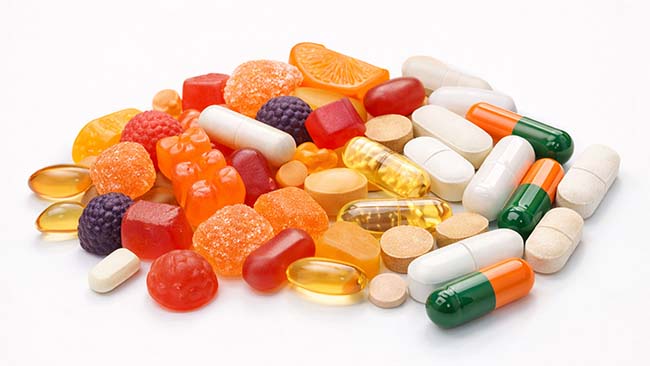
Two checklists: one for buyers, one for new brands
For buyers, start with Serving Size, then check amounts per serving, then scan for added sugar, sugar alcohols, and acids if those matter to you. Choose packaging that matches your environment, follow storage directions, and keep gummies out of reach in shared households.
For new makers, decide dosage form and packaging format together, define a stability target before locking packaging, map your line flow step by step, and decide what “consistency” means for your product (count accuracy, moisture control, appearance checks). Make serving size logic easy to follow, and plan child-safety and tamper evidence as part of packaging from the start.
خاتمة
Gummies often help people stay consistent; tablets and capsules often make dose tracking and ingredient simplicity easier. The best choice depends on your routine, your sensitivity to sweeteners and acids, and your storage environment.
When comparing gummy vitamins vs pills, don’t stop at the front label. Serving size, ingredient list, packaging format, and storage habits explain most of the differences people notice after a few weeks.
التعليمات
1) Are gummy vitamins less effective than pills, or do they work the same?
Both can be effective when taken consistently; the bigger differences are dose tracking, ingredient extras, and storage behavior.
2) Why do gummy vitamin labels often say “Serving Size: 2 gummies”?
Many formulas need more than one piece to reach the target dose; the Supplement Facts numbers are typically per serving.
3) Do gummy vitamins expire faster than pills and capsules?
Gummies often show texture changes sooner if stored warm or humid, so storage habits matter more.
4) Are sugar-free gummy vitamins always a better choice?
They can reduce added sugar, but sugar alcohols can bother some people, especially at higher intakes.
5) Which is better for kids: gummies or chewables?
Safety and supervision matter most; gummies can increase accidental overuse because they taste like candy.
6) What nutrients are harder to fit into gummies?
Some minerals and higher-dose formulas can be harder to deliver in a small gummy serving without taste and texture trade-offs.
7) Bottle vs blister packaging: which protects better from moisture?
Blisters reduce repeated exposure because you open one pocket at a time; bottles rely more on tight closure and desiccants.
8) Where should I store vitamins at home?
A cool, dry place away from heat and steam is a good default; bathrooms are often humid.
المراجع
FDA — Dietary Supplement Labeling Guide (Serving Size & Supplement Facts)
MedlinePlus — Storing your medicines (heat and moisture guidance)